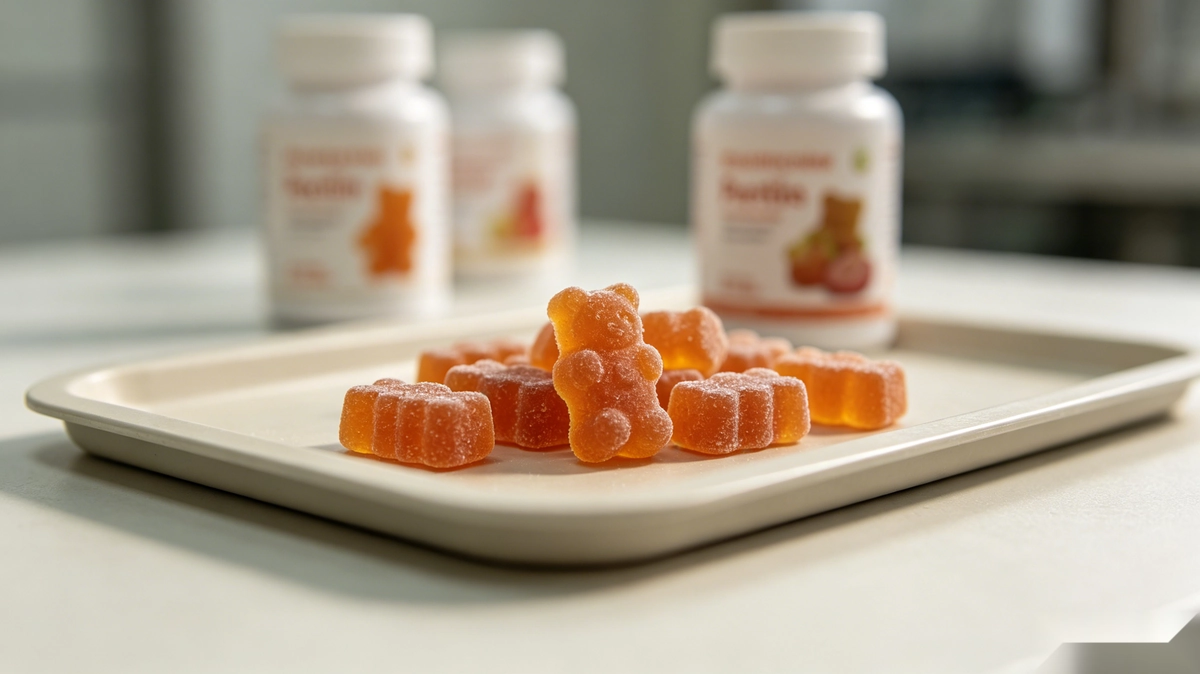
Depending on the formula and packaging, mushroom gummies may carry a shelf life of 12 to 24 months. The date printed on the bottle or pouch should still come first.
That date assumes the product has been stored properly. Heat, humidity, a damaged seal, or frequent exposure to moisture can shorten the useful life of the gummies, even when the best-by date has not passed.
Some people use the word “last” to ask how long the effects continue after taking a gummy. Functional mushroom products do not usually have a clear effect window, though. Lion’s mane, reishi, cordyceps, and chaga gummies are different from intoxicating or psychedelic mushroom products.
For most shoppers, the more useful question is simple: are the gummies still good, or is it time to throw them out?
How Long Do Mushroom Gummies Last Before They Expire?
Many commercial mushroom gummies are given a shelf life somewhere between 12 and 24 months. That range is common, but it is not a universal rule.
The actual shelf life depends on:
- The type and amount of mushroom ingredient
- The gummy base
- Moisture and water activity
- Supporting vitamins, botanicals, or flavors
- The bottle, pouch, or sachet used
- Storage and shipping conditions
- The stability data behind the product
A mushroom extract may remain stable as a raw material, but that does not automatically mean the finished gummy will hold its texture, flavor, appearance, and ingredient specifications for the same amount of time.
The final product needs to be evaluated as a complete system.
If you are checking an older bottle, start with the printed best-by or expiration date. Then look at the seal, storage history, and condition of the gummies themselves.
Do Functional Mushroom Gummies Have a Fixed Effect Window?
Not usually.
Functional mushroom gummies made with lion’s mane, reishi, cordyceps, and chaga are generally designed for routine supplementation. They do not normally create the clear onset and comedown associated with intoxicating mushroom products.
Some users may notice changes in energy, focus, or relaxation, while others may not feel anything obvious after one serving.
The complete formula matters. A mushroom gummy may also contain caffeine, melatonin, B vitamins, ashwagandha, or other ingredients that are more noticeable than the mushroom component itself.
That is why a statement such as “mushroom gummies last four to six hours” does not apply broadly to functional supplements. There is no single duration that fits every mushroom species, extract, serving size, and formulation.
What Affects Mushroom Gummy Shelf Life?
The mushroom ingredient matters, but shelf life is rarely determined by one ingredient alone.
Mushroom Powder and Mushroom Extract Behave Differently
A concentrated mushroom extract can deliver more material in a smaller serving. A lower-concentration powder may require a heavier formula load.
That difference can affect:
- Taste
- Color
- Gummy texture
- Drying time
- The amount of solids the gummy can hold
Mushroom powders and extracts can also bring earthy or bitter notes. Balancing those flavors may require changes to acids, sweeteners, or flavor systems, and those adjustments can influence how the gummy performs during storage.
A high-load multi-mushroom blend may behave differently from a simple lion’s mane formula. This is one reason shelf life should be based on the finished product rather than copied from another gummy on the market.
Moisture Is Often the First Problem to Watch
Moisture control has a direct effect on texture, appearance, and storage performance.
When too much available moisture remains in a gummy, the pieces may become sticky, sweat inside the package, or clump together. Poor moisture control may also increase microbiological concerns.
When too much moisture is lost, the gummies can become hard, dry, and difficult to chew.
Moisture can move between the gummy, the surrounding air, and the package over time. Research on moisture and shelf life in sugar confections shows why water activity and moisture migration play such an important role in confectionery stability.
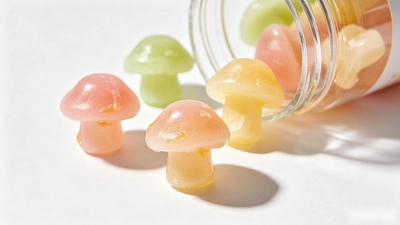
The problem may not appear immediately. Gummies can look fine when packed and start sticking later after warehouse storage, ocean freight, or delivery through a hot and humid region.
For products intended for warm markets, packaging should be reviewed alongside water activity before the formula is finalized. Waiting until finished bottles begin clumping is much harder—and more expensive—to correct.
Brands can also review this guide on why gummy supplements become sticky during storage and shipping for a closer look at the issue.
The Gummy Base and Supporting Ingredients Matter
Both pectin and gelatin can produce stable mushroom gummies when the formula and process are controlled properly. Neither base automatically guarantees a longer shelf life.
Sweeteners, acids, oils, natural colors, vitamins, and botanical extracts can all change the way a gummy sets and ages.
Even a small formula revision may affect texture, drying behavior, color stability, or moisture levels. For that reason, switching one ingredient late in development should not be treated as a purely cosmetic change.
Packaging Can Protect—or Undermine—the Formula
A stable gummy can still fail in poor packaging.
Bottles, resealable pouches, and individual sachets provide different levels of protection from moisture, air, light, and physical damage.
The closure matters just as much as the container. A loose cap, damaged induction seal, or weak pouch zipper can expose the gummies to humidity every time the package is handled.
A desiccant may help, but it cannot fix a gummy that was packed with too much moisture or placed in a container with a poor seal.
The formula, drying process, container, closure, and shipping environment need to work together.
How Long Do Mushroom Gummies Last After Opening?
There is no standard rule that says every bottle must be used within 30, 60, or 90 days after opening.
A properly stored product may remain acceptable through its labeled date. Once opened, however, the gummies are exposed to ambient air and humidity each time the container is used.
To help protect them:
- Close the package tightly after every use
- Keep wet hands and utensils out of the container
- Store the gummies away from sunlight and heat
- Do not leave them in a car
- Avoid bathrooms and other humid areas
- Keep the original desiccant in place if one is included
- Follow the storage directions on the label
Refrigeration is not always necessary. Moving a container repeatedly between a cold refrigerator and a warm room can create condensation inside the package.
Unless the label specifically calls for refrigeration, a cool, dry cabinet is usually the better option.
How Can You Tell When Mushroom Gummies Have Gone Bad?
The printed date is the first thing to check, but it should not be the only thing.
Throw the gummies out if you notice:
- Visible mold
- A sour, fermented, or unusual smell
- Water droplets inside the package
- Gummies melted into one solid mass
- Severe drying or hardening
- A major change in color
- A broken safety seal
- Packaging that no longer closes properly
A slight change in color or firmness does not always mean the product is unsafe. Natural colors and botanical ingredients can change gradually during storage.
The opposite is also true: normal appearance does not prove that the functional ingredients still meet their original specifications.
A gummy may look and smell fine even after an active or marker compound has begun to decline. When the product is far past its date, the package has been damaged, or the gummies have changed significantly, replacing them is the safer choice.
How Is a Mushroom Gummy Shelf Life Established?
A credible shelf-life date should be based on the finished gummy in its final commercial packaging.
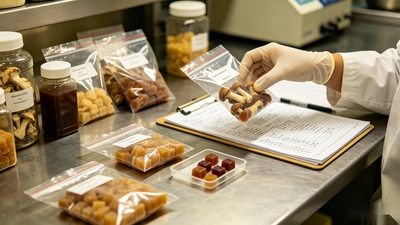
Manufacturers may monitor:
- Appearance and color
- Flavor and odor
- Texture
- Moisture or water activity
- Microbiological quality
- Relevant active or marker compounds
- Seal and package performance
- Changes under expected storage conditions
Accelerated stability testing can help identify problems earlier by placing the product under controlled stress. Real-time stability testing shows how the gummies perform over the intended storage period.
Packaging should be part of both evaluations.
A formula tested in a sealed bottle should not automatically receive the same expiration period after being moved into a lightweight pouch. A meaningful change in extract concentration, serving size, gummy base, or sweetener system may also require the shelf-life basis to be reviewed again.
For dietary supplements sold in the United States, 21 CFR 111.70 requires manufacturers to establish specifications for components, finished products, and packaging that comes into contact with the supplement.
The regulation does not assign one standard shelf life to every mushroom gummy. The date still needs to make sense for the actual formula and packaging being sold.
What Should Private Label Buyers Check?
A standard “24-month shelf life” line in a quotation is not enough by itself.
Before approving a private label mushroom gummy, buyers should confirm:
- How the proposed shelf life was selected
- Whether the finished formula was included in stability work
- Whether testing used the final bottle or pouch
- Which physical, microbiological, and active specifications are monitored
- Whether the packaging suits the target shipping climate
- How retained samples are handled
Buyers should also request a batch-specific Certificate of Analysis and make sure it matches the lot being shipped.
A COA confirms whether a batch met its release specifications. It does not prove how the product will perform after 12, 18, or 24 months. Batch release testing and stability testing answer different questions.
Frequently Asked Questions
Do mushroom gummies expire?
Yes. Check the best-by or expiration date on the package and follow the labeled storage instructions. The date on the individual product is more reliable than a general estimate found online.
How long do mushroom gummies last after opening?
There is no universal after-opening period. A tightly closed product stored in a cool, dry place may remain usable through its labeled date, but humidity, heat, and poor handling can shorten that time.
Do mushroom gummies need to be refrigerated?
Usually not, unless the label says otherwise. Refrigeration can introduce condensation when the container is repeatedly moved between cold and warm conditions.
The Bottom Line
Mushroom gummies may carry a shelf life of 12 to 24 months, but the package date should always come first.
Storage history matters too. Heat, moisture, and a damaged seal can shorten the life of the product, while proper packaging and moisture control help protect it.
For brands developing a mushroom gummy, shelf life should be addressed during formulation—not added as an afterthought once production is complete. An experienced gummy supplement manufacturer should be able to discuss ingredient load, water activity, packaging, testing, and shipping conditions before the formula moves to scale-up.