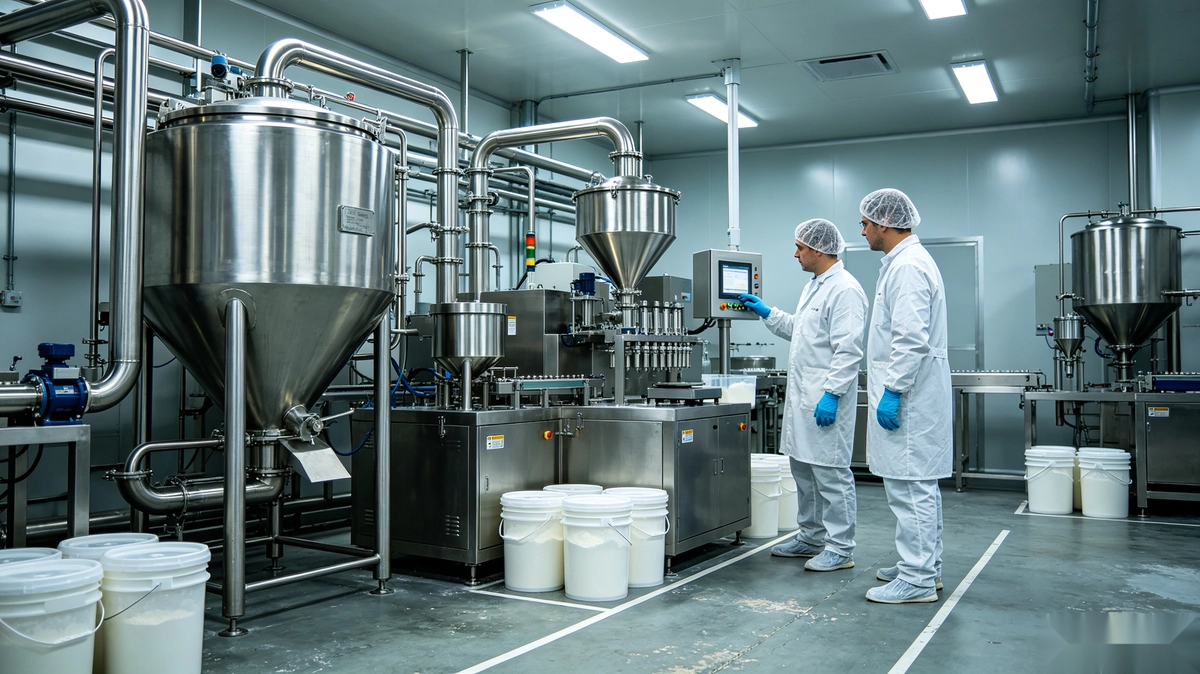
Many supplement projects do not fail because the idea is weak. They fail because the process has too many loose ends.
The formula is not ready for production. Packaging is quoted separately. Testing is unclear. Label information does not match the final formula. Export documents are discussed only when the batch is almost finished.
That is where turnkey supplement manufacturing can be useful.
For supplement brands, importers, distributors, and private label companies, a turnkey manufacturer can help connect formula development, sampling, production, packaging, quality testing, and documentation into one coordinated project. But “turnkey” should not be treated as a vague promise.
Before choosing a partner, buyers need to know what is included, what may cost extra, and what still needs to be confirmed by the brand.
Quick Summary
Turnkey supplement manufacturing usually includes:
Formula review, sample development, ingredient sourcing, production, packaging coordination, quality testing, and document support.
It does not automatically include:
Regulatory approval, unlimited sample revisions, every market-specific test, Free Sale Certificate, custom molds, or special packaging costs.
Best for:
New supplement brands, importers, distributors, private label buyers, and cross-border sellers that want fewer suppliers to manage.
Ask before quotation:
What is included? What is quoted separately? What documents are available? Who is responsible for final label compliance?
What Does Turnkey Supplement Manufacturing Mean?
Turnkey supplement manufacturing is a service model. It is not a dosage form, certification, or shortcut that removes all responsibility from the brand.
In practice, a turnkey supplement manufacturer may support:
- formula review or formula development
- ingredient sourcing
- sample development
- dosage form selection
- bulk production
- packaging coordination
- quality testing
- batch documents
- export document support
The real value is not just convenience. The real value is coordination.
A full-service supplement manufacturer should help make sure the formula, packaging, label information, testing scope, and shipment documents are aligned before bulk production starts.
A simple way to judge a turnkey supplier is this:
Can they clearly explain what happens from product idea to finished goods, and can they show what is included at each stage?
What Is Included in Turnkey Supplement Manufacturing?
Every supplier defines turnkey service differently. This is why buyers should ask for a clear project scope before comparing prices.
| Project Area | What May Be Included | What Buyers Should Confirm |
|---|---|---|
| Formula | Formula review, ingredient adjustment, dosage form advice | Who owns the formula? Can it be adjusted for the target market? |
| Ingredients | Ingredient sourcing, specification review, supplier coordination | Origin, allergen status, non-GMO, organic, Halal, Kosher, or vegan requirements |
| Sampling | Trial samples, taste adjustment, texture review, serving size confirmation | How many sample revisions are included? |
| Production | Gummies, capsules, tablets, powders, softgels, or liquid drops | MOQ, batch size, lead time, and production line availability |
| Packaging | Bottles, caps, pouches, labels, cartons, outer boxes | Bottle size, label material, barcode, batch code, expiration date position |
| Testing | COA, microbiology, heavy metals, or other agreed tests | Which tests are included? Which tests cost extra? |
| Documents | COA, specification, packing list, commercial invoice, export files | Which documents are available before shipment? |
| Label Support | Ingredient information, serving size, Supplement Facts or nutrition panel support | Final market compliance responsibility |
| Shipping Support | Export packing and shipment coordination | Incoterm, destination, consignee, and customs requirements |
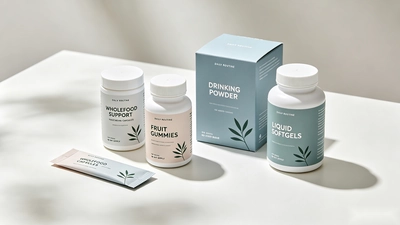
A serious turnkey quote should show the full project, not just the lowest unit price.
Factory note: For gummies, bottle size and piece count should be confirmed before final quotation. A 60-count bottle and a 90-count bottle may look like the same product, but they can change bottle size, label height, carton layout, shipping volume, and final cost.
What May Not Be Included by Default?
This is where many buyers misunderstand turnkey service.
Some suppliers include more support in the base quote. Others quote only production first and add packaging, testing, documents, or revisions later.
| Item | Why Buyers Should Confirm It Early |
|---|---|
| Stability testing | May be needed for shelf-life claims or certain markets |
| Free Sale Certificate | May depend on product type, company setup, and destination country |
| Halal or Kosher documents | Must be confirmed before ingredient sourcing |
| Custom bottle mold | Usually separate from standard packaging cost |
| Special packaging film | May affect MOQ, lead time, and storage requirements |
| Multiple sample revisions | Can affect development fee and project timeline |
| Market-specific label review | Usually requires local regulatory support |
| Special active ingredient testing | May not be included in a basic COA |
| Extra export documents | Should be confirmed before production starts |
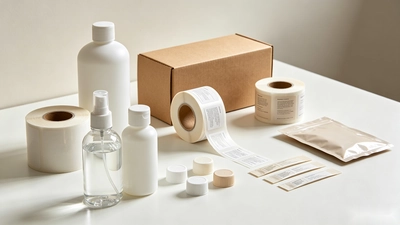
Turnkey manufacturing does not mean every service is automatically included. It means the manufacturer can coordinate the project, but the scope still needs to be written clearly.
Turnkey vs. Private Label vs. Contract Manufacturing vs. OEM/ODM
These terms are related, but they are not the same.
| Model | Best For | Key Difference |
|---|---|---|
| Private Label | Faster product launch | Usually based on an existing or semi-ready formula with custom branding |
| Contract Manufacturing | Brands with their own formula | The factory produces according to buyer specifications |
| OEM/ODM | Custom product development | OEM follows the buyer’s concept; ODM may help create formula and product ideas |
| Turnkey Manufacturing | Full-process support | The manufacturer coordinates formula, production, packaging, testing, and documents |
Turnkey manufacturing can include private label, OEM, or ODM work. The difference is the level of project coordination.
If a buyer only needs an existing formula with a custom label, private label may be enough. If the buyer needs formula adjustment, packaging planning, testing, and export support under one process, turnkey manufacturing is usually a better fit.
For buyers comparing different production models, Jiabei’s OEM/ODM supplement manufacturing services page explains how custom supplement development usually works from formula discussion to finished product.
When Does Turnkey Supplement Manufacturing Make Sense?
Turnkey service is most useful when a project needs technical and operational support across several steps.
You Have a Product Idea but No Production-Ready Formula
A product idea is not the same as a production-ready formula.
A buyer may want sleep gummies, electrolyte stick packs, collagen capsules, magnesium tablets, or herbal liquid drops. Before production, the factory still needs to check dosage, serving size, taste, texture, stability, fill weight, flowability, packaging compatibility, and cost.
For gummies, this may involve flavor masking, pectin or gelatin base selection, sugar-free options, moisture control, and heat-sensitive ingredient review.
For capsules and tablets, the factory may need to check active ingredient load, excipient choice, powder flow, tablet hardness, or capsule fill weight.
Factory note: For capsule products, a high-dose formula may not fit into the capsule size the buyer wants. In that case, the serving size, capsule size, or formula load should be reviewed before sampling.
You Want One Supplier to Coordinate Formula, Packaging, and Documents
Some buyers can manage several suppliers. Others prefer one manufacturer to coordinate the technical details.
This is especially useful when the project involves custom packaging, special ingredients, batch testing, export documents, or multiple product formats.
Instead of working separately with a formula consultant, packaging supplier, testing lab, and factory, the buyer can manage the project through one coordinated process.
The benefit is fewer gaps between formula, label, packaging, and batch documents.
You Plan to Launch Multiple Dosage Forms
A brand may start with one product and later expand into gummies, capsules, tablets, powders, softgels, or liquid drops.
A turnkey manufacturer can help review which ingredients fit each format. Some botanical extracts taste too strong for gummies. Some minerals are difficult to load at high dosage. Some oils are better suited for softgels. Some powders need moisture-resistant packaging.
If your first launch is a gummy product, Jiabei’s gummy supplement manufacturer page gives a more specific view of gummy OEM and private label production.
You Need Export-Ready Documents
For importers and distributors, the product is only one part of the order.
They may also need COA, product specification, ingredient list, packing list, commercial invoice, production date, expiration date, batch number, and other market-specific files.
The earlier the document list is confirmed, the smoother the shipment and distributor review usually become.
What Brands Should Prepare Before Requesting a Quote
A turnkey manufacturer can support the process, but the buyer still needs to provide direction.
Before asking for a quote, prepare:
- target market
- sales channel
- product positioning
- dosage form preference
- main active ingredients or desired function
- target price range
- packaging preference
- estimated order quantity
- certification needs
- claims direction
- required documents
- reference products or packaging examples
The clearer the buyer is, the easier it is for the manufacturer to recommend a realistic formula and packaging plan.
For example, an Amazon product, pharmacy retail product, and distributor-import product may need different packaging, testing, label details, and documentation. They may look similar on the outside, but the project requirements are not always the same.
What to Send a Manufacturer for a Faster Quote
If you want a more accurate quote, send a clear project brief. It does not need to be perfect, but it should give the manufacturer enough information to review feasibility and cost.
Use this simple format:
| Information | What to Provide |
|---|---|
| Product type | Gummies, capsules, tablets, powder, softgel, liquid drops |
| Target market | U.S., EU, Middle East, Southeast Asia, domestic market, etc. |
| Main ingredients | Active ingredients, dosage target, or reference formula |
| Desired function | Sleep, beauty, energy, digestion, sports nutrition, immunity, etc. |
| Serving size | Pieces, capsules, tablets, scoops, sachets, or ml per serving |
| Estimated quantity | Trial order, first batch, or annual estimate |
| Packaging idea | Bottle, pouch, stick pack, blister, carton, display box |
| Required documents | COA, specification, Halal, Kosher, Free Sale Certificate, export files |
| Sales channel | Amazon, retail, pharmacy, distributor, cross-border e-commerce |
| Reference product | Photos, label, flavor, packaging, or market benchmark |
| Expected launch time | Target sampling date or shipment date |
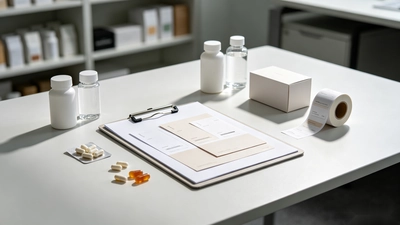
This saves time for both sides. It also helps avoid a common problem: the buyer receives a price, but the price is based on assumptions that were never confirmed.
What Should Be Clear in a Turnkey Manufacturing Quote?
A turnkey quote should make the project scope easy to understand. If the quote only shows a unit price, the buyer may not know what is really included.
A complete quote should clarify:
- formula development or formula review cost
- sample cost and sample revision policy
- ingredient and production cost
- packaging cost
- label printing cost
- carton or outer box cost
- testing cost
- document cost
- mold or special packaging cost
- MOQ
- lead time
- shipping term
Example: Why Two Turnkey Quotes Can Look Different
A buyer may receive two quotes for the same gummy supplement.
Supplier A includes custom bottle, cap, label printing, carton, COA, basic microbiology testing, and one round of sample adjustment.
Supplier B gives a lower unit price, but testing, label printing, carton, and sample revisions are listed separately.
On paper, Supplier B looks cheaper. In practice, it may not be the lower-cost project.
For turnkey supplement manufacturing, buyers should compare the complete scope, not only the first number on the quotation sheet.
Factory note: A low unit price is useful only when the buyer knows what the price includes. Otherwise, it is not a real comparison.
Quality, Testing, and Documentation Buyers Should Check
Quality should be discussed before production, not after the goods are finished.
For U.S.-market projects, buyers often refer to 21 CFR Part 111 dietary supplement cGMP requirements when discussing manufacturing, packaging, labeling, and holding operations for dietary supplements.
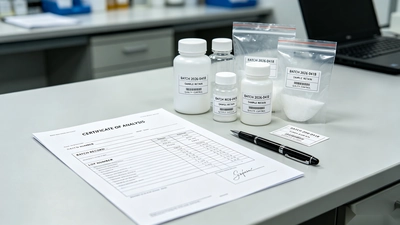
Depending on the formula and target market, buyers may need to confirm:
- Certificate of Analysis
- finished product specification
- microbiological testing
- heavy metals testing
- active ingredient testing when applicable
- batch number
- production date
- expiration date
- packaging specification
- retained sample policy
- batch record when available
Not every order needs the same document package. A domestic private label order and an export order for distributor registration may have different requirements.
The important point is simple: confirm the testing and document list before bulk production starts.
For more detail on batch documents, Jiabei’s supplement COA documents guide explains what buyers should check before approving a batch.
Packaging and Label Support Is Not Legal Approval
Turnkey manufacturers often help with packaging and label coordination. This may include bottle selection, pouch structure, label printing, carton layout, serving size, ingredient order, Supplement Facts or nutrition panel support, and batch code position.
This support is useful, but it is not the same as legal approval.
A manufacturer can help make sure the label information matches the formula and production documents. The brand owner or importer should still confirm final label compliance in the selling country.
For the U.S. market, the FDA dietary supplement labeling guide is a useful reference for understanding basic labeling expectations.
This is especially important for claims, warning statements, ingredient names, serving size, Supplement Facts format, and market-specific label language.
If packaging is a major part of the project, this supplement packaging manufacturer checklist can help buyers prepare better questions before production.
A Practical Turnkey Manufacturing Timeline
A good turnkey process should make each decision visible before production starts.
| Stage | Buyer Confirms | Manufacturer Provides |
|---|---|---|
| Project Brief | Product idea, market, dosage form, budget, sales channel | Initial feasibility review |
| Formula Review | Ingredients, dosage, claims direction, special requirements | Formula suggestion or technical adjustment |
| Sampling | Flavor, texture, color, serving size, product format | Trial sample and revision support |
| Packaging Confirmation | Bottle, pouch, label, carton, pack count, barcode | Packaging plan and cost confirmation |
| Quotation | Quantity, formula, packaging, testing, documents, Incoterm | Clear cost breakdown and MOQ |
| Production | PO, deposit, approved sample, final specs | Bulk production based on confirmed requirements |
| QC and Documents | Required tests and document list | COA, batch details, and agreed documents |
| Shipment Support | Destination, consignee, shipping terms | Packing list, commercial invoice, shipment coordination |
The best time to solve problems is before production. Once the formula, packaging, testing scope, and documents are confirmed, the project is much easier to manage.
Red Flags When Choosing a Turnkey Supplement Manufacturer
Not every supplier that says “turnkey” can manage a full project properly. Buyers should watch for these warning signs.
The Supplier Cannot Explain What Is Included
If the supplier cannot clearly separate formula work, sampling, packaging, testing, and documents, the project may become confusing later.
The Quote Leaves Out Packaging or Testing
A low price may not include custom packaging, label printing, COA, extra testing, export files, or sample revisions. Missing items do not disappear. They usually return later as extra cost.
MOQ Changes Without a Clear Reason
MOQ can change when formula, packaging, raw materials, or production line requirements change. That is normal. But the supplier should explain why.
Label Support Is Sold as Regulatory Approval
This is a serious red flag. Label support can help, but final compliance depends on the target market and proper regulatory review.
Batch-Level Documents Are Unclear
If a supplier cannot explain what documents come with each batch, buyers may face problems with distributors, import clearance, or quality complaints.
The Supplier Says Every Formula Is Easy
Experienced manufacturers know that some formulas are difficult. Some ingredients are bitter. Some absorb moisture. Some are unstable in gummies. Some are hard to compress into tablets. Some need special packaging.
A reliable manufacturer should point out possible issues early, not promise that everything is simple.
Turnkey Supplement Manufacturing Checklist for Buyers
Before choosing a turnkey supplement manufacturer, ask:
- Which parts of the project are handled in-house?
- What is included in the quote?
- What is quoted separately?
- Can you support my dosage form and target market?
- What is the MOQ for this formula and packaging type?
- How many sample revisions are included?
- What can change the price after sampling?
- What tests are included before shipment?
- Can you provide a COA for each batch?
- What documents are available for export?
- Who is responsible for final label compliance?
- What can delay production after sample approval?
- Can you explain the full timeline from project brief to shipment?
These questions help buyers compare suppliers more fairly. They also reduce the risk of hidden costs, missing documents, and unclear responsibility.
Is Turnkey Supplement Manufacturing Right for Your Brand?
Turnkey supplement manufacturing is usually a good fit for brands that want full-process support.
It may be suitable if you are:
- a new supplement brand with a product idea
- an importer looking for export-ready products
- a distributor building a private label line
- a cross-border seller preparing for multiple markets
- a company that needs formula, production, packaging, testing, and documents coordinated together
- a brand planning to launch several dosage forms under one product line
It may not be the best fit if you already have a complete formula, fixed packaging suppliers, finished regulatory review, and only need low-cost filling or packing.
The right turnkey partner should help you see the full project before production starts. That includes formula feasibility, MOQ, sample plan, packaging cost, testing scope, document list, and shipment support.
If you already have a product idea, formula direction, or reference sample, you can contact Jiabei’s team to review the project scope before sampling and quotation.
FAQ
What is turnkey supplement manufacturing?
Turnkey supplement manufacturing is a full-service model where one manufacturer helps coordinate formula development, sampling, production, packaging, testing, and documentation.
Is turnkey supplement manufacturing the same as private label?
No. Private label usually uses an existing or semi-ready formula with custom branding. Turnkey manufacturing is broader and may include custom formula development, packaging, quality testing, and export support.
What information should I send before requesting a turnkey supplement manufacturing quote?
Send your product type, target market, dosage form, main ingredients, serving size, estimated quantity, packaging preference, required documents, certification needs, and any reference product.
Are testing and export documents included in turnkey supplement manufacturing?
Not always. Some basic documents may be included, but microbiology, heavy metals, stability testing, Free Sale Certificate, Halal or Kosher documents, and market-specific files should be confirmed before ordering.
Who is responsible for supplement label compliance?
The manufacturer can provide formula information, ingredient details, and packaging support. The brand owner or importer should confirm final label compliance for the target market.