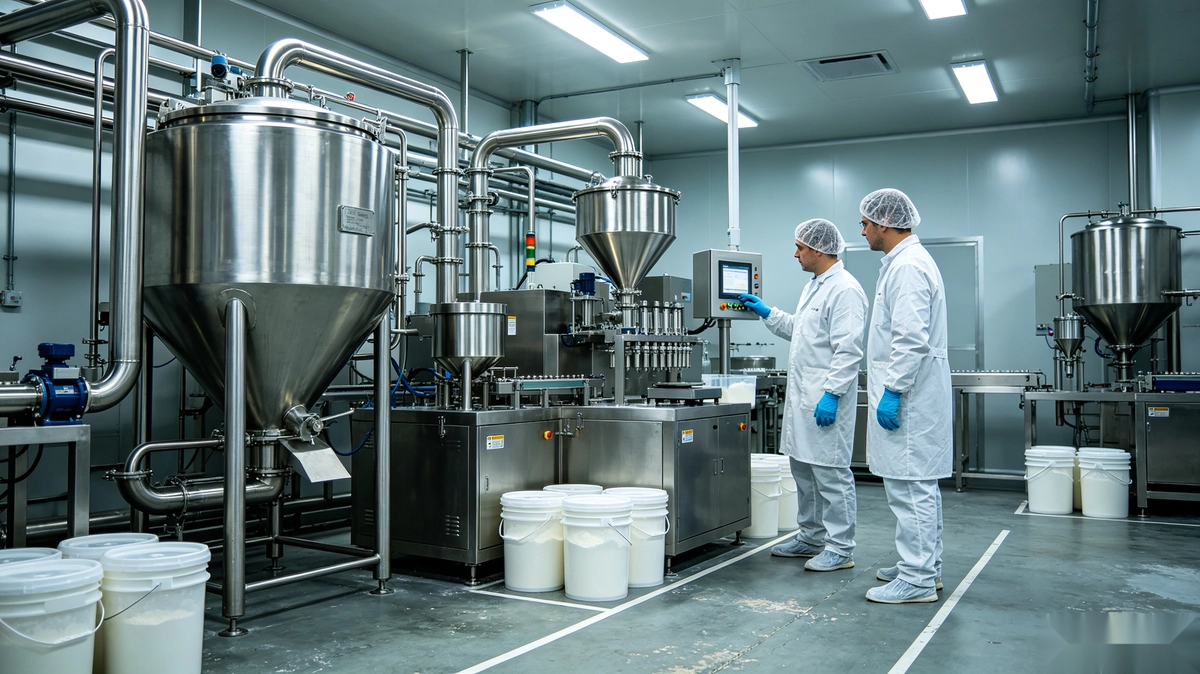
Many buyers do not start with a perfect formula.
They may start with a product idea, a reference sample, a label photo, or a simple question: can you make this for my brand?
That is where choosing the right dietary supplement manufacturer matters. A good factory should not only quote a price. It should help you check the formula, dosage form, packaging, documents, MOQ, lead time, and export details before the project goes too far.
Some buyers already have a finished formula. Some need help turning an idea into a real product. Some want to build a full private label supplement line with gummies, capsules, powders, liquids, and tablets.
Before starting production, these are the questions worth asking.These questions matter even more when a brand expects one supplier to coordinate the whole project, and our turnkey supplement manufacturing checklist shows what to confirm across formula development, packaging, testing, documents, and quotation scope.
1. What kind of dietary supplement manufacturer do I actually need?
Not every supplier in the supplement industry does the same job.
Some companies only sell raw materials. Some only provide bottles, labels, or packaging materials. Some are trading companies that collect orders and send them to different factories.
A real dietary supplement manufacturer should be able to help with more than production. For private label and OEM supplement projects, buyers usually need help with formula discussion, sample development, packaging, quality control, documents, and shipment preparation.

Before choosing a factory, start with these questions:
| Question | Why It Matters |
|---|---|
| What product format do I want? | Gummies, capsules, powders, liquids, tablets, and softgels all have different production requirements. |
| Do I already have a formula? | A finished formula needs review. A product idea needs development support. |
| Which market will I sell in? | Different markets may need different documents, label information, and compliance checks. |
| What packaging do I need? | Bottles, pouches, jars, stick packs, and cartons affect MOQ, cost, and lead time. |
| What order quantity am I planning? | A trial order and a repeat order should be planned differently. |
A good manufacturer should not only ask, “How many units do you need?” The factory should first understand what you want to make, how you plan to sell it, and what may affect production.
2. Can one factory handle gummies, capsules, powders, liquids, and tablets?
Yes, but only when the factory has the right production setup and real experience with different dosage forms.
Multi-format production is useful for supplement brands that want to build more than one product line. A brand may start with gummies, then add capsules, powders, liquid drops, or tablets later. Working with one manufacturer can make communication, documents, packaging, and quality control easier.
But every dosage form has limits.
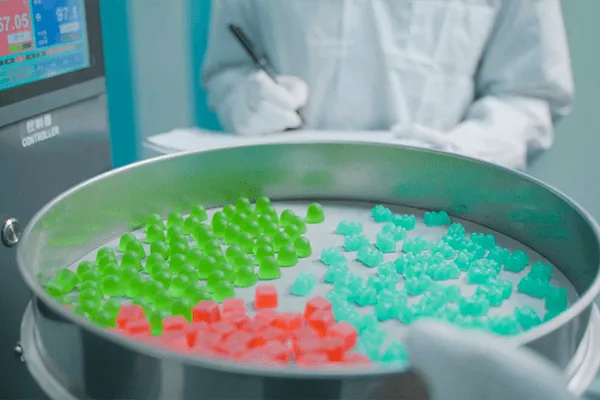
Gummies are popular for vitamins, minerals, beauty formulas, sleep support, kids’ nutrition, and daily wellness products. They are easy to use and easy to market, but the formula needs to consider taste, texture, pectin or gelatin base, sugar system, acid balance, moisture, and active ingredient stability. For gummy projects, Jiabei Health provides gummy supplement manufacturing support from formula discussion to private label packaging.
Capsules are suitable for herbal extracts, mushroom blends, amino acids, minerals, and complex formulas. They are clean and practical, but capsule capacity is limited. If the dosage is too high, the formula may need a larger capsule size, more capsules per serving, or another format.
Powders work well for collagen, electrolytes, protein, mushroom coffee, fiber, greens, and hydration products. Powder projects need attention to flavor, solubility, sweetness, mouthfeel, filling weight, and packaging style. Buyers planning powder products can also review our powder supplement manufacturing capabilities.
Liquids and drops are often used for herbal drops, mushroom drops, vitamin drops, and wellness blends. They look simple, but the base liquid, taste, sediment, dropper bottle, and label direction should be checked early.
Tablets and softgels can also be suitable for certain formulas, depending on the ingredient type, dosage, and market positioning.
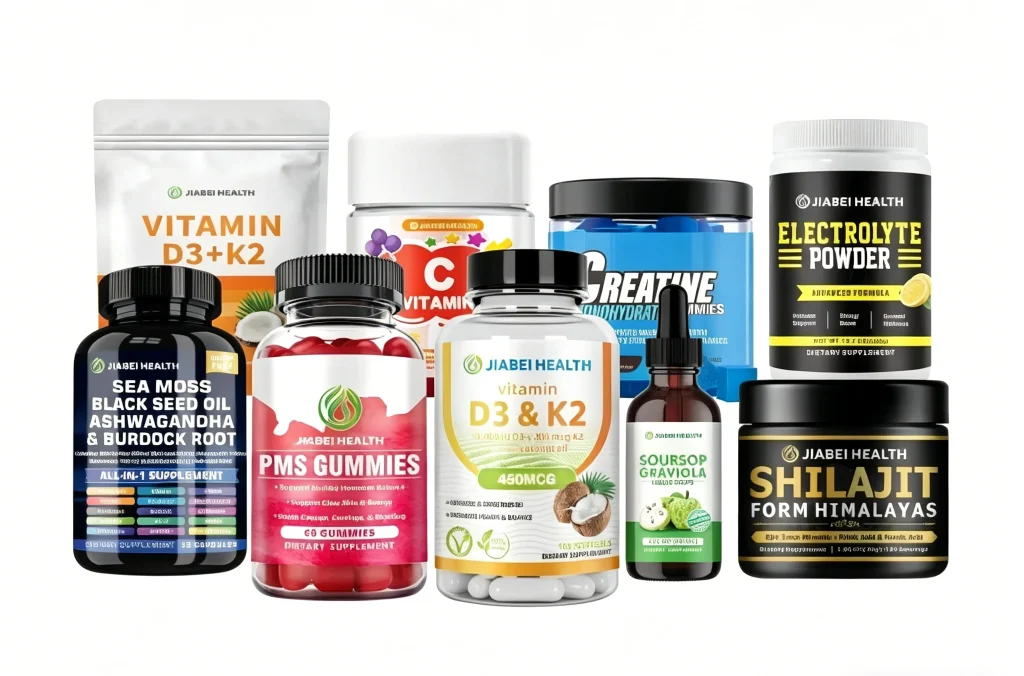
A real dietary supplement manufacturer should not only say, “Yes, we can make it.” The factory should also tell you which format is more practical for your formula, budget, and sales channel.
3. What if I only have a product idea, not a finished formula?
This is very common.
Many supplement projects begin with a simple idea: a sleep gummy, a mushroom capsule, a collagen powder, an electrolyte stick pack, or a kids’ multivitamin. That is enough to start a discussion, but not enough to confirm production.
At this stage, the factory needs to understand:
- Who the product is for
- What function you want to highlight
- Which dosage form you prefer
- Which active ingredients you want to use
- What flavor or taste direction you want
- What serving size you are considering
- What packaging style you prefer
- Which market you plan to sell in
- Whether you have a reference product
A formula that looks attractive on paper may not always work in real production.
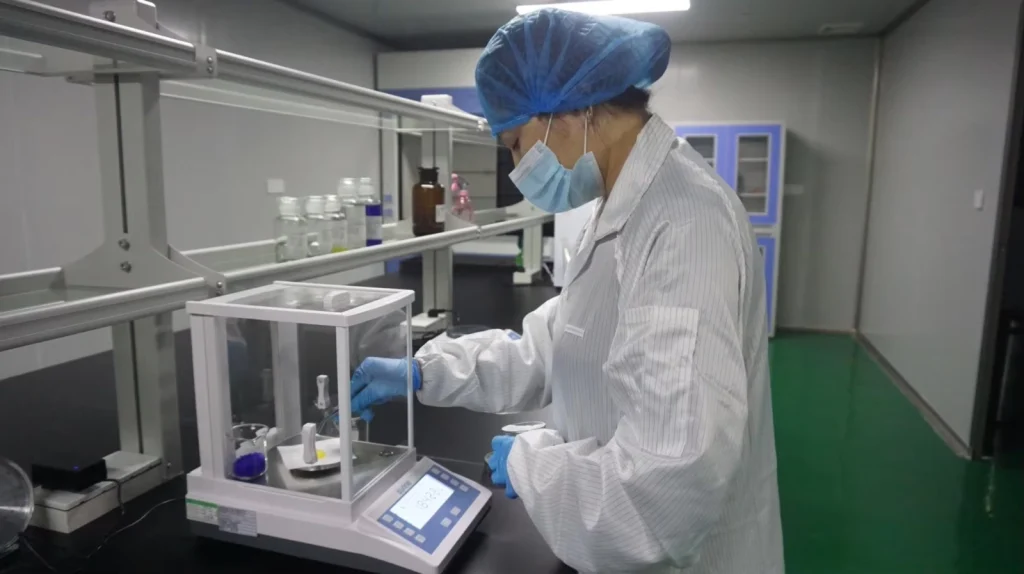
Some herbal extracts are too bitter for gummies. Some high-dosage formulas do not fit well into capsules. Some powders need flavor masking. Some ingredients are sensitive to moisture, heat, or pH.
That is why formula discussion should happen before sampling and quoting.
| Formula Factor | What the Factory Should Check |
|---|---|
| Dosage | Can the target dosage fit the selected format? |
| Taste | Will the active ingredients affect flavor or mouthfeel? |
| Stability | Will the formula stay stable during production and storage? |
| Market position | Does the formula match the buyer’s product concept and users? |
A good factory should help buyers avoid problems before they happen, not simply push every idea into production.
4. Can the manufacturer make a product similar to my reference sample?
Yes, a reference product can be very helpful.
Many buyers send a competitor product, Amazon listing, label photo, or sample bottle and ask whether something similar can be developed. This is a normal starting point for private label supplement projects.
The goal is not to copy another brand exactly. The better approach is to understand the product direction, then adjust the formula, dosage, flavor, packaging, and positioning for your own brand.
A reference product helps the manufacturer understand:
- Dosage form
- Main ingredients
- Serving size
- Label structure
- Packaging style
- Flavor direction
- Market positioning
- Selling points
From there, the product can be adjusted.
For example, you may want a similar gummy product but with a pectin base. You may want a similar capsule formula but with vegan capsules. You may want a similar powder product but with a cleaner sweetener system. You may want the same product direction but different packaging for your sales channel.
When sending a reference product, explain what you want to keep and what you want to change. This makes the development process much easier.
5. What information should I prepare before asking for a quote?
A clear inquiry saves time.
You do not need a complete technical file at the beginning. But the more useful information you provide, the faster the factory can check cost, MOQ, sample time, and whether the formula can actually be made.
Before asking for a quote, prepare these details if possible:
- Product format: gummy, capsule, powder, liquid, tablet, or softgel
- Main active ingredients
- Target dosage or serving size
- Flavor or color preference
- Bottle count, pouch size, stick pack weight, or packaging idea
- Destination market
- Estimated order quantity
- Private label or custom formula requirement
- Reference product link or photo
- Required documents, if already known
For example, this inquiry is too broad:
“I want to make a mushroom gummy. How much?”
A better inquiry would be:
“We want to develop a pectin-based mushroom gummy for adults, with Lion’s Mane and Reishi, fruit flavor, 60 gummies per bottle, private label packaging, and export to the United States.”
With this information, the manufacturer can give a more useful reply instead of a vague price range.
For a white label project, buyers should also confirm whether the quoted MOQ applies to each formula, flavor, or packaging version. These white label supplement manufacturer quote checks cover the details that are often missed before a first order.
6. How does packaging affect the whole supplement project?
Packaging is not just the final step.
For supplement products, packaging affects cost, MOQ, lead time, label layout, carton size, shipping volume, shelf presentation, and even product stability. If packaging is discussed too late, the formula may be ready but the order can still be delayed.
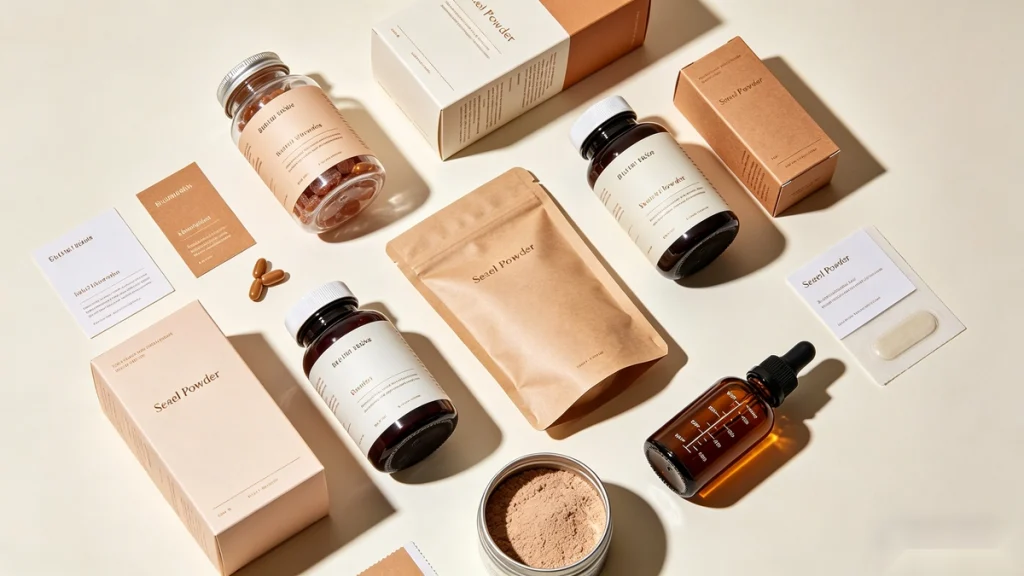
Different packaging choices create different production and supply chain requirements.
| Packaging Choice | What It Affects |
|---|---|
| Bottle | Label size, serving count, cap type, seal, carton size |
| Pouch | Printing MOQ, sealing method, shelf display, storage |
| Stick pack | Filling weight, powder flow, filling accuracy, outer box |
| Jar | Product positioning, shipping volume, label space |
| Custom carton | Design time, printing lead time, retail appearance |
Standard bottles or jars are usually faster for early-stage projects. Custom printed packaging can look more premium, but it often requires more time and higher MOQ.
For private label supplement projects, packaging should be discussed together with the formula. A product that looks good in a sample bottle may need a different packaging plan for real production, shipping, and retail presentation.
Good packaging should match the formula, brand position, sales channel, and logistics plan. For buyers who need full project support, Jiabei Health can help with OEM and ODM supplement services from formula discussion to packaging preparation.
7. What documents should I ask a supplement manufacturer for?
For export supplement projects, documents should be confirmed early.
Document needs depend on the product type, destination market, shipping method, buyer’s import requirements, and label claims. A reliable manufacturer should be able to explain what documents are available and what should be checked before production.
Common document support may include:
- COA
- Product specification
- Ingredient information
- Label information support
- Factory certificates
- Export documents
- Certificate of Free Sale when applicable
- Certificate of Origin when needed
- Packing list and invoice support
- Shipping and customs clearance document support
COA is especially important for B2B supplement buyers because it helps show quality information for a batch or product.
Factory certifications also matter when buyers evaluate a manufacturer. Jiabei Health supports quality and compliance systems including GMP, HACCP, BRCGS, FSSC 22000, BPJPH Halal, and KETETAPAN HALAL.
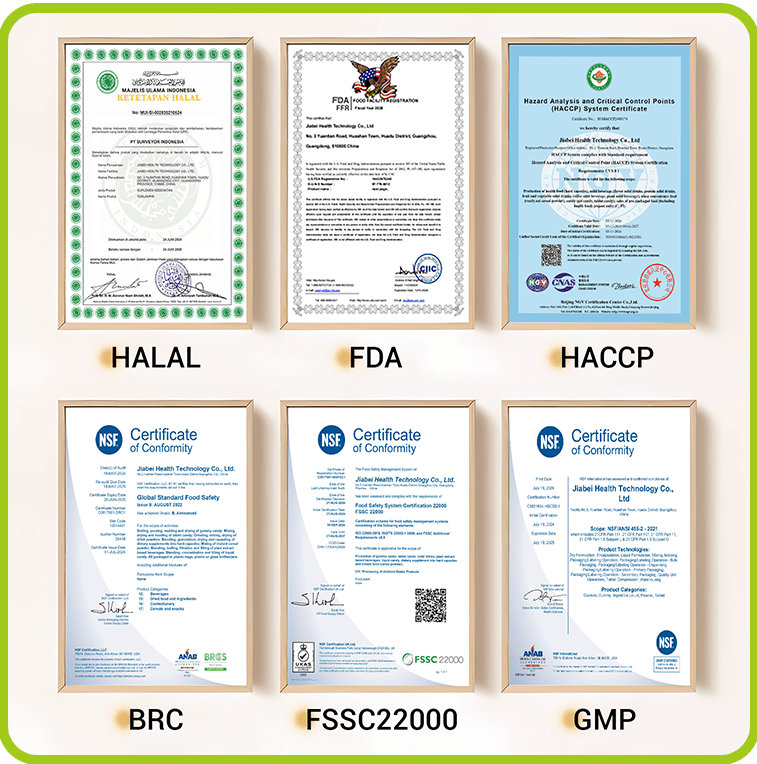
Documents should not be treated as something to ask for after production is finished. If your product is going to an export market, required documents should be discussed before the order moves too far.
8. How do I know if a dietary supplement manufacturer is reliable?
A reliable manufacturer is not always the one that gives the fastest answer or the lowest quote.
In supplement manufacturing, some questions must be checked before price and production can be confirmed. If a factory says yes to everything without asking about formula, dosage, packaging, destination market, and documents, buyers should be careful.
Here are practical signals to check:
| Factor | What to Check |
|---|---|
| Physical factory | Real production address, factory photos, video meeting, or on-site visit when possible |
| Product capability | Whether the factory has experience with your dosage form |
| Formula discussion | Whether they ask about dosage, taste, stability, and users |
| Certifications | Whether the certificates match your product and market needs |
| Communication | Whether replies are specific, technical, and project-based |
| Packaging support | Whether packaging can be discussed before mass production |
| Documents | Whether COA, specifications, and export documents can be prepared |
| Scalability | Whether the factory can support trial orders and repeat orders |
A good factory should not only make the product. It should help buyers avoid problems before they happen.
For example, if a buyer wants a high-dosage gummy with several bitter herbal extracts, the manufacturer should explain the possible taste issue, texture challenge, and formula limit. This kind of feedback may slow down the first quotation, but it protects the order later.
In private label supplement manufacturing, professional communication is part of quality control.
9. How long does sampling and production usually take?
The timeline depends on product complexity.
A simple capsule project with standard packaging is usually faster than a custom gummy with special flavor, custom mold, custom bottle, and printed carton. A powder project with stick packs may also need more time for filling tests and packaging confirmation.
Sampling time may be affected by:
- Formula complexity
- Ingredient availability
- Flavor adjustment
- Color and texture requirements
- Packaging selection
- Testing needs
- Label confirmation
For many regular projects, production can often be arranged around 15 days after key details are confirmed. For urgent orders, the schedule should be discussed before production planning, especially when custom packaging, special ingredients, or export documents are involved.
Buyers can help shorten the timeline by confirming these details early:
- Formula plan
- Product format
- Packaging style
- Label content
- Order quantity
- Shipping method
- Required documents
Delays often happen not because the factory cannot produce, but because formula, label, packaging, or documents are not confirmed in time.
A smooth supplement project usually starts with a clear brief.
10. Why work with Jiabei Health for private label supplement projects?
Jiabei Health supports private label and OEM/ODM supplement projects for global B2B buyers.
We work with multiple supplement formats, including gummies, capsules, powders, liquids, tablets, and selected softgel projects. Buyers can discuss formula ideas, dosage form selection, packaging options, label information, COA support, quality documents, export documents, and logistics coordination.
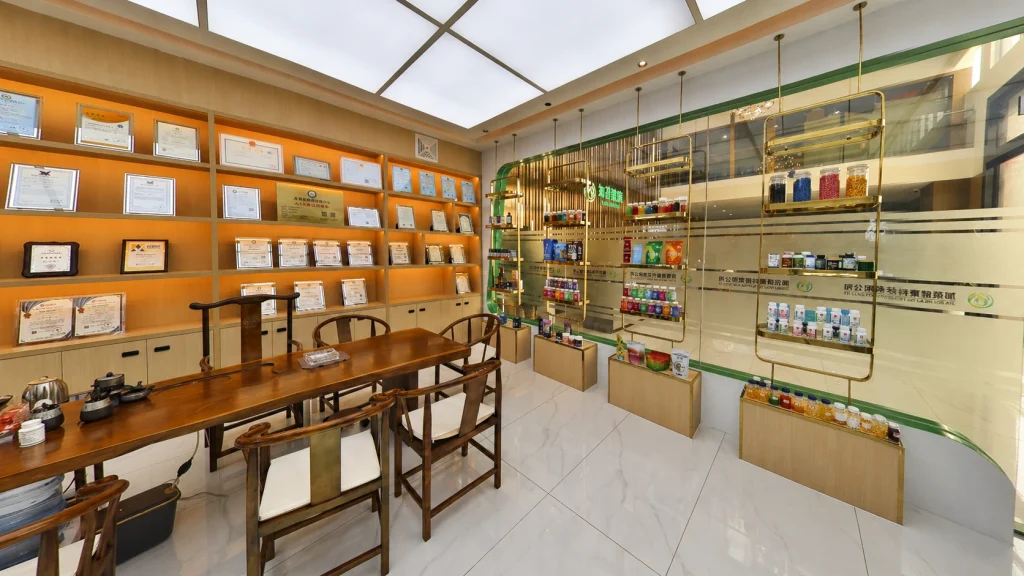
Our project support includes:
- Private label supplement manufacturing
- Custom formula discussion
- Gummies, capsules, powders, liquids, and tablets
- Bottle, pouch, stick pack, jar, and carton packaging
- Label and packaging support
- COA and quality document support
- Export document support
- Global logistics coordination
For buyers, the goal is not only to find a factory that can produce. The goal is to find a dietary supplement manufacturer that can help check the product before production, reduce avoidable mistakes, and move the order from idea to finished product in a clear way.
Jiabei Health is suitable for brands, importers, distributors, and health product companies that need practical OEM/ODM support, not just a product catalog.
11. What should I send before starting a project?
Before starting a private label supplement project, you can send the basic product details first.
Useful information includes:
- Product type
- Main ingredients
- Target dosage
- Product format
- Flavor preference
- Packaging idea
- Bottle count or serving size
- Reference product
- Destination market
- Estimated order quantity
- Required documents
- Shipping destination
If you already have a formula, send us the ingredient list, dosage, product format, packaging idea, and destination market.
If you only have a product idea, send the reference product or the main function you want to develop. Our team can help check whether the formula is suitable for gummies, capsules, powders, liquids, or tablets, and what should be confirmed before sampling.
If you are looking for a dietary supplement manufacturer for your next private label project, contact Jiabei Health to review your formula, packaging plan, documents, and production details.
FAQ
Can Jiabei Health produce private label dietary supplements?
Yes. Jiabei Health supports private label dietary supplement projects, including gummies, capsules, powders, liquids, tablets, packaging, label support, COA support, and export documents.
What supplement formats can Jiabei Health manufacture?
Jiabei Health supports multiple supplement formats, including gummies, capsules, powders, liquid drops, tablets, and selected softgel projects depending on formula and packaging requirements.
Can I customize the formula?
Yes. Formula customization can include active ingredients, dosage, flavor, color, sweetener system, capsule type, serving size, and packaging format. The final formula should also consider taste, stability, compliance, and production requirements.
Do you provide COA and export documents?
Yes. Jiabei Health can support COA and related export documents according to the product type, destination market, shipping method, and order requirements.
What should I send before starting a private label supplement project?
You can send the product type, main ingredients, target dosage, product format, packaging idea, reference product, destination market, estimated quantity, and required documents. These details help the factory check the formula, packaging, cost, sampling, and production plan more accurately.