Weight management supplements are not limited to old-school fat burner pills. Today, the category covers a lot more ground — metabolism support capsules, appetite control formulas, fiber powders, carb support tablets, stimulant-free products, meal replacement powders, and lean body support supplements. For a brand, that’s both an opportunity and a headache.
Picking ingredients that look good on a label is the easy part. The harder part — the part most guides skip — is figuring out what actually works on a production line. A formula can read beautifully on paper and still turn out bitter, unstable, impossible to dose correctly, or wrapped in claim language that gets you flagged. I’ve seen brands burn through a year of development only to discover their flagship product can’t be made at scale without tasting like regret.

This isn’t theory. This is what happens on the floor.
1. The Full Spectrum of Weight Management Supplements
Ask ten consumers what a weight management supplement is and you’ll get six different answers. That’s because the category has splintered into subcategories that target different parts of the equation. Product developers need to understand the distinction before they formulate anything.
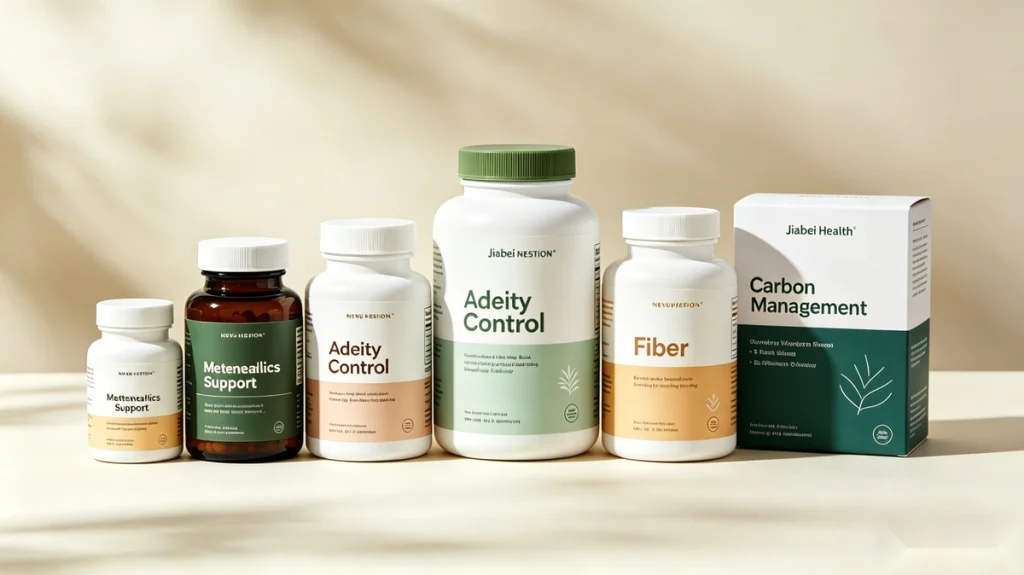
Here’s what you’re actually looking at in the market today:
- Metabolism support supplements — built around thermogenic or metabolic rate ingredients, often caffeine or green tea extract.
- Appetite control formulas — focused on satiety signals, frequently using fiber or compounds like 5-HTP.
- Fiber and satiety products — powders or capsules that expand in the stomach to promote fullness.
- Carb blocker supplements — targeting enzymes that break down starches, with white kidney bean extract as the go-to.
- Thermogenic supplements — a subset of metabolism products that emphasize heat production, usually with stimulants.
- Stimulant-free weight management formulas — for the growing audience that wants metabolic or appetite support without the jitters.
- Meal replacement powders — high-protein, fiber-fortified shakes aimed at reducing overall calorie intake.
- Lean body support supplements — positioned more toward body composition than scale weight, often including L-carnitine or CLA.
One of the most expensive mistakes I see is brands trying to blend too many positionings into one formula. They end up with a product that doesn’t clearly stand for anything. Decide early which lane you’re in. It makes ingredient selection, dosing, label claims, and even packaging choices a whole lot simpler downstream.
2. Key Ingredients: What They Do and How They Differ
Once your positioning is locked, you match ingredients to that direction. The market has settled around several heavy hitters, but each one carries production quirks that matter the moment you move from spreadsheet to actual powder or capsule.
| Ingredient | Common Positioning | Typical Dosage Form | Key Production Note |
|---|---|---|---|
| Green Tea Extract | Metabolism support | Capsules | Standardize for EGCG; bitterness limits other formats. |
| Caffeine | Energy / thermogenic | Capsules, tablets | Cumulative stimulant load and label caution statements need review. |
| L-Carnitine | Lean body / sports nutrition | Capsules | Hygroscopic; encapsulation humidity control is non-negotiable. |
| White Kidney Bean Extract | Carb support | Capsules, tablets | pH-dependent activity; test stability in finished matrix. |
| Fiber (Glucomannan, Psyllium) | Satiety / fullness | Powders, capsules | Flowability, caking, and mouthfeel demand real formulation work. |
| Apple Cider Vinegar | Daily weight management | Gummies, capsules | pH, taste masking, and shelf stability turn gummies into a serious R&D project. |
| CLA | Body composition / sports nutrition | Softgels or capsules | Isomer purity separates effective from commodity. |
| Chromium | Blood sugar / metabolic support | Tablets, capsules | Micro-dose ingredient; blend uniformity must be verified. |
Green Tea Extract is almost synonymous with metabolism support, but standardization varies wildly. Most manufacturers work with extracts standardized to a specific EGCG content, which directly dictates bitterness. I’ve had brands insist on putting green tea in a gummy, only to shelve the project after the first prototype came back undrinkably astringent. Capsules remain the practical default for a reason.
Caffeine, whether from coffee, tea, or synthetic sources, is still the backbone of thermogenic and energy-focused products. The production side is less about sourcing — caffeine is a commodity — and more about label compliance. A 2021 review on dietary supplement stimulants flagged that many multi-ingredient products don’t disclose total caffeine clearly, which is exactly the kind of oversight that gets you flagged at customs or on Amazon. If you’re combining caffeine with green tea, guarana, or yerba mate, track the cumulative load. And add caution statements up front.
L-Carnitine leans toward sports nutrition and lean body positioning rather than weight loss per se. From a manufacturing standpoint, it pulls moisture from the air. If your encapsulator doesn’t control humidity tightly, you’ll get soft capsules that clump. Experienced manufacturers account for this in the encapsulation suite and in the finished product’s desiccant and barrier packaging.
White Kidney Bean Extract works as a carb blocker by inhibiting amylase. It’s stimulant-free and easy to explain, which brands love. The catch: its activity drops in acidic environments. If your formula includes ascorbic acid, citric acid, or acidic fruit powders, you must verify the extract remains active in the finished product. I’ve seen brands skip this test and wonder why their carb blocker reviews were underwhelming.
Fiber ingredients like glucomannan and psyllium appear mostly in satiety and meal replacement products. Clinical data on glucomannan shows modest but consistent satiety effects when taken before meals — but only if the powder actually disperses well and doesn’t taste like cardboard. A fiber powder that clumps on the spoon or drinks like sand won’t get a second order, regardless of what the label claims.
Apple Cider Vinegar has become a staple in daily weight management and cleanse-adjacent products, especially gummies. But here’s the part nobody likes to discuss: ACV’s acidity makes it a genuine formulation headache. You have to manage pH not just for stability but also for palatability — and increasingly, for concerns around dental erosion from acidic gummies. If a brand wants an ACV product that survives shelf life and taste panels, they usually end up looking at a formulation path very similar to our slimming gummies with apple cider vinegar — a base of ACV with enough buffering and flavor engineering to hold up over time.
CLA is positioned around body composition. The spec that actually matters is the isomer ratio. A lot of commodity CLA has lower active isomer content. If your brand wants data to back up the label, you source material with a verified isomer profile and insist on batch-specific assays.
Chromium is a micro-dose mineral often added to metabolism or blood sugar support blends. The production concern isn’t the ingredient itself — it’s blend uniformity. When you’re adding micrograms to a blend that weighs hundreds of milligrams per serving, you need documented mixing protocols and assay testing to prove the dose is actually there. I’ve seen lab reports where chromium content varied by 40% between samples from the same batch because the mixing step was rushed.
3. Choosing a Dosage Form: What Works for the Consumer and the Production Line
Dosage form isn’t a marketing decision. It dictates which ingredients you can realistically use, what dose you can deliver, how the product ages on the shelf, and what your production cost actually looks like.
| Dosage Form | Best Suited For | Manufacturing Consideration |
|---|---|---|
| Capsules | Bitter extracts, functional actives (green tea, caffeine, white kidney bean) | Masks taste; wide dose range; handles hygroscopic ingredients with proper setup. |
| Powders | Fiber, meal replacement, electrolytes, high-dose ingredients | Flowability, flavor masking, and anti-caking are non-negotiable. |
| Gummies | Light daily support, mild flavors (apple cider vinegar, chromium) | Cannot handle high-dose bitter actives; pH and shelf stability are major R&D efforts. |
| Tablets | Carb support, metabolism blends, cost-sensitive projects | Cost-stable at scale, but swallowability and coating matter to consumer experience. |
| Liquid / Drops | Herbal support, very light positioning | Rarely suitable for genuinely effective weight management doses. |
Capsules win on versatility. They hide bitterness, handle hygroscopic ingredients, and accommodate a wide range of active doses. For weight management formulas built around plant extracts, caffeine, or carb blockers, capsules are the path of least resistance — and the format where contract manufacturers tend to have the fewest unexpected delays.
Powders are unbeatable when you need to deliver a large dose of fiber, protein, or meal replacement nutrients. But anyone who has tried to launch a powder product learns quickly that taste, texture, and mixability make or break retention. You don’t get a second chance after a clumpy first scoop.
Gummies own the “light daily support” conversation, especially for ingredients like apple cider vinegar or chromium. But gummies hit a hard ceiling fast. You cannot cram 500 mg of a bitter green tea extract into a 4-gram gummy and expect anyone to enjoy it. The format itself limits what kind of weight management product you can credibly build.
For most weight management formulations, capsules and powders give you the highest combination of dose flexibility and production reliability. Brands serious about getting it right usually look for a manufacturer that handles powder and capsule supplement manufacturing under one roof — it eliminates the pain of coordinating two different production lines when you eventually want to expand your SKU range.
4. Claims, Safety, and Compliance: What You Don’t Say Matters as Much as What You Do
Weight management is one of the most scrutinized supplement categories, and the line between an acceptable support claim and a drug claim is razor-thin. The FDA and FTC have a long history of warning letters in this space, and Amazon’s compliance bots follow the same pattern.
The simplest rule: you sell products that support weight management — not products that cause weight loss.
Here’s a practical reference. The left column will attract regulator attention. The right column keeps you in safer territory.
| Avoid | Prefer |
|---|---|
| Guaranteed weight loss | Supports weight management when combined with diet and exercise |
| Burns fat fast | Supports metabolic rate |
| Melts belly fat | Supports thermogenesis |
| Treats obesity | Supports healthy body composition |
| No diet or exercise needed | Supports active lifestyle goals |
This isn’t about being clever with words. These distinctions directly affect whether your label clears customs, passes platform checks, and stays off warning letters. Brands that push too far on claims almost always pay for it later, either in reformulated labels or pulled listings.
Then there’s the ingredient safety side. Many weight management products include caffeine or caffeine-containing botanicals — green tea, guarana, yerba mate, kola nut — and some don’t label total caffeine clearly. That’s a problem. Regulators and informed consumers increasingly expect transparency around cumulative stimulant levels. If your formula’s total caffeine per serving pushes above a certain threshold, add voluntary caution statements about sensitivity, sleep, and cardiovascular conditions. Doing that upfront builds trust with both buyers and retail platforms.

Stimulant-free products avoid that particular issue, but they aren’t automatically safer from a compliance standpoint. Any ingredient with a potent mechanism — even fiber or carb blockers — still needs proper usage directions, contraindication disclosures, and safety data behind it. If you can’t produce a reasonable safety rationale for your formula, your manufacturing partner should be able to. If they can’t, walk away.
5. Developing Your Product: A Roadmap That Won’t Waste Your Time
This is where the conversation shifts from understanding the category to building something real. Here’s the sequence that has saved more than one brand from an expensive dead end.
- Lock in your positioning first. Appetite support, metabolism, fiber/satiety, thermogenic, non-stimulant — pick one primary lane. You can layer in secondary angles later, but if you don’t know what the product is mainly for, you’re not ready to select ingredients.
- Choose your dosage form based on ingredient reality, not trend reports. Bitter extracts and stimulants pull you toward capsules. Fiber and meal replacement pull you toward powders. Gummies come later, for lighter daily-use concepts.
- Select ingredient candidates with standardized actives. Don’t just ask for “green tea extract.” Ask for the EGCG standardization, the extraction solvent, and a typical organoleptic profile. The more amorphous your material spec, the more variability you’ll see batch to batch.
- Prototype and taste-test early. The single most common mistake I see at this stage: a brand falls in love with their formula on paper, then skips the benchtop tasting because they’re in a hurry. That shortcut has killed more products than any ingredient shortage ever has. Request a benchtop sample and get honest, unfiltered feedback from actual people.
- Review your label claims before finalizing the formula. Write out every statement — front panel, supplement facts, back panel. Have someone with regulatory experience review them. If a claim is borderline, fix it now, not after the labels are printed.
- Set your quality specifications. Decide up front what you want on the certificate of analysis for every batch: active marker assays, heavy metals, microbial limits, disintegration or dissolution where relevant. If a manufacturer squirms when you ask for those specs in writing, that’s your signal.
- Confirm packaging, export documents, and logistics. This includes primary packaging (bottles, pouches, stick packs), secondary packaging (cartons, labels), and everything required for shipping: allergen statements, shelf-life data, country-of-origin documentation. Delays here are among the most common launch killers for international brands, and they’re almost entirely avoidable when you work with a supplement development team that handles stability testing, flavor optimization, and export paperwork as a standard part of the process.
6. Evaluating a Manufacturing Partner: The Checklist That Cuts Through the Sales Pitch
By now, you’ve probably spoken to several manufacturers and the pitches all sound the same. Here’s how you cut through that.
- Certifications that matter for your market. GMP is the floor. Depending on where you sell, you may also need ISO 22000, HACCP, BRCGS, FSSC 22000, NSF, or Halal certification. Don’t accept a logo on a website. Ask to see a current certificate with a scope that covers your product type. Before committing, review manufacturing certifications against this checklist and see quickly who backs up their claims with paperwork.
- R&D capability beyond blending. Can they adjust the formula if the first prototype doesn’t taste right or doesn’t hit your active marker? Or do they just blend what you send and fill capsules? The latter gets you a product. The former gets you a product people buy twice.
- Quality control rigor. Ask specifically about HPLC testing for actives, heavy metals, microbiology, and whether they provide a batch-specific COA for every run. If they can’t tell you what happens when a batch fails specification, they’re either not testing enough or not being straightforward.
- Customization scope. Some manufacturers can only handle a limited set of formats or bottle sizes. If you need a specific capsule size, a custom powder flavor profile, a unique gummy shape, or private label packaging that doesn’t look generic, confirm they can do it before you pay for formula development.
- Scalability and MOQ transparency. A manufacturer that works well at 1,000 units might stumble at 10,000, or vice versa. Get clear on lead times, minimum order quantities, and what happens when you need to scale quickly.
7. Frequently Asked Questions
Do weight management supplements actually work?
Some ingredients have modest evidence behind them — glucomannan’s satiety effect, green tea’s metabolic support, white kidney bean’s carb blocking — but no supplement works in isolation. Weight management still comes down to diet, physical activity, sleep, stress, and genetics. As Mayo Clinic notes in their expert review on weight-loss supplements, the evidence for most over-the-counter products is limited, and even the more studied ingredients show only small effects. That’s why responsible brands position their products as support, not standalone solutions.
Are there side effects or risks?
Yes. Stimulant-based products can cause jitters, elevated heart rate, or sleep disruption in caffeine-sensitive individuals. Fiber-based products can cause bloating or digestive discomfort if the dose is introduced too quickly. This is why label directions, caution statements, and transparent ingredient lists matter — for customer safety and your own legal exposure.
How do I choose between a fat burner, appetite controller, and carb blocker?
It depends on what your customer’s primary struggle actually is. Snacking and portion control? Appetite or fiber product. Energy and workout performance? Metabolism or thermogenic. Starch-heavy meals? Carb blocker. The mistake is cramming all three into one product and diluting the dose of each.
What’s the best dosage form for someone new to supplements?
Capsules are the easiest starting point — familiar, portable, easy to dose. Powders work well for people already used to shakes or smoothies. Gummies appeal to people who dislike swallowing pills, but they come with the trade-offs discussed earlier.
Can a brand develop a formula that’s truly unique?
Yes, but uniqueness usually doesn’t come from a secret miracle ingredient. It comes from how you combine known ingredients, the standardization you insist on, the dosage form you choose, and the positioning you build around it. A well-executed product with a clear point of view on the category will stand out more than a product chasing novelty for novelty’s sake.
8.The Bottom Line
Weight management supplements will keep evolving, and the brands that last are rarely the ones chasing extremes. The brands that stay choose a clear position, pick ingredients they can defend with data, pick dosage forms their customers actually want to use, and work with manufacturers who don’t cut corners.
If you’re ready to move from research to development, request a custom supplement quote and talk through your concept with a team that works in this category every single day.