1. Why Deep Sleep Supplements Are Not Just “Sleep Products”
When brands enter the sleep supplement category, the first instinct is often to start with melatonin. That’s not wrong, but it’s also not a product strategy.
The real decision happens before you choose any single ingredient. What are you actually building — a deep sleep product, a calm mood formula, a stress support supplement, a night recovery drink, a melatonin-free alternative, or a daily relaxation gummy?
These directions are not interchangeable. Each one changes your ingredient panel, your dosage form, your flavor profile, your label claims, your target markets, and your manufacturing cost.
When we work with brands at our OEM development stage, we always ask this question first: “Which direction are you taking?” Most brands haven’t decided yet. Once that decision is made, everything else — ingredient selection, dosage form, certifications needed, production scale — falls into place.
That’s what this guide covers.
2. Deep Sleep, Stress Support, and Calm Mood Are Different Formula Directions
The terms “sleep support,” “stress relief,” and “calm mood” often get used together in marketing copy. But from a formulation standpoint, they are distinct product categories that pull from different ingredient strategies, dosage ranges, and even different consumer usage occasions.
2.1 Deep Sleep Support
A deep sleep formula is built around ingredients that target sleep architecture — helping users fall asleep faster, stay asleep longer, and improve sleep quality. Common ingredients include melatonin, magnesium glycinate, glycine, and GABA. These formulas often position for nighttime use only. At Jiabei Health, these account for a major share of our OEM sleep supplement manufacturing.
2.2 Stress Support
Stress support formulas are different. They target cortisol regulation and the body’s adaptive stress response. Key ingredients include ashwagandha (especially clinically studied extracts like KSM-66), L-theanine, lemon balm, and GABA. These products can be taken during the day or at night, making them more flexible. Many brands position them for daily, long-term use — which means formulation decisions around taste and serving size take on greater importance.
2.3 Calm Mood Support
Calm mood support sits between sleep and stress — it’s about mental tranquility without sedation. Ingredients like L-theanine, GABA, magnesium, and select botanical extracts (lemon balm, chamomile, passionflower) fit here. These formulas are often marketed as “daytime calm” or “focused relaxation,” making them more versatile for brand positioning.
2.4 Night Recovery
This is a distinct subcategory that overlaps with sports nutrition. Night recovery formulas use magnesium, glycine, collagen, and electrolytes to support muscle repair and hydration during sleep. Important note: collagen is included for its recovery function, not as a sleep ingredient — mixing these two claims creates confusing label copy and regulatory risk.
Key Takeaway for Brands: Don’t build your formula first and then figure out the product positioning later. Decide which category you’re targeting, then let that decision guide ingredient selection, dosage form, and claims language.
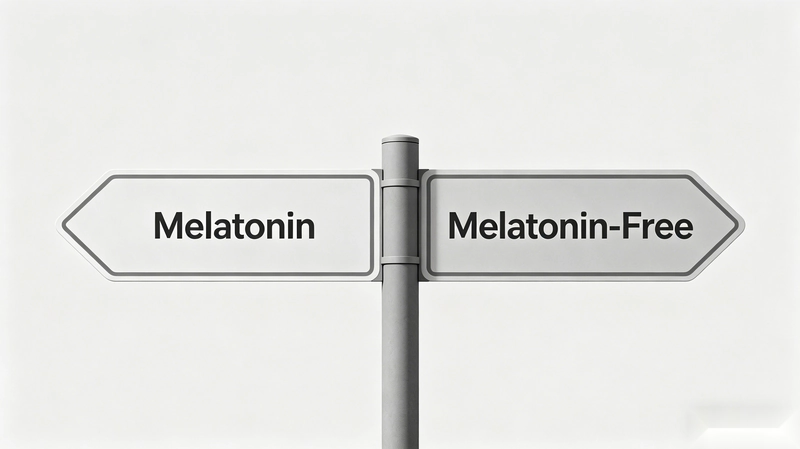
3. Melatonin or Melatonin-Free Sleep Supplement: The First Decision
Once you’ve identified your product direction, the most important binary decision is: will your formula include melatonin or not?
This decision impacts far more than just one ingredient.
3.1 What Melatonin Does (and What It Doesn’t)
Melatonin is a hormone that helps regulate the body’s circadian rhythm. The NIH notes that it plays a key role in regulating sleep-wake cycles through interaction with the suprachiasmatic nucleus and the retina. However, research suggests it’s generally more effective for sleep onset issues than for sleep maintenance — meaning it may help users fall asleep but is less likely to help those who wake up frequently during the night.
3.2 Market-Specific Considerations
Melatonin’s regulatory status varies significantly by market:
- United States: Melatonin is sold as a dietary supplement. FDA registration applies. Structure-function claims like “supports restful sleep” are permitted under 21 CFR 101.93(a). Jiabei Health’s facility is FDA-registered.
- European Union: Melatonin is classified as a novel food ingredient in some EU countries, and the regulatory pathway is more restrictive. Some member states consider it a prescription-only substance.
- Other Markets: Many countries have dose restrictions, require specific registrations, or limit melatonin to certain product categories. Always verify before selecting this ingredient path.
For brands targeting multiple markets, we offer wholesale melatonin gummies with customizable dosing to fit different regulatory requirements.
3.3 Long-Term Use Positioning
Another strategic consideration: melatonin products are often positioned for occasional or short-term use. If your brand wants to position a product for daily, long-term use, a melatonin-free formula built around magnesium, glycine, or botanicals may be a stronger fit. This choice also affects your label claim options: “nighttime support” reads differently on a daily-use product than “sleep aid.”
3.4 Gummy Compatibility
Melatonin’s low effective dose (typically 1–10 mg) makes it well-suited for gummies. However, when combining melatonin with ingredients like magnesium glycinate (which requires much higher doses), the gummy format can become challenging due to serving size and taste constraints. We’ll explore this in more detail in the dosage form section.
Summary: The melatonin or melatonin-free decision is a branching point. Make it early, and let it guide your market entry strategy, formulation approach, and claims language.
4. Common Ingredients Used in Deep Sleep Supplement Formulas
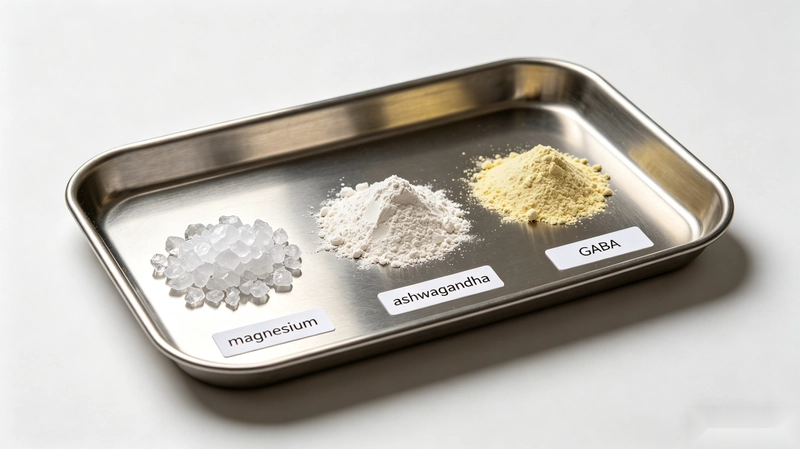
Below is a manufacturing-focused overview of the most common ingredients in deep sleep, stress support, and calm mood supplement formulas. Each comes with practical considerations that affect production feasibility, cost, and consumer experience.
| Ingredient | Common Positioning | Manufacturing Note |
|---|---|---|
| Melatonin | Sleep onset support | Market rules, dose limits, and target user group need checking per export destination |
| GABA | Relaxation and calm support | Frequently used in both sleep and stress blends; flexible across multiple dosage forms |
| Magnesium Glycinate | Nighttime relaxation | Serving size and taste matter significantly, especially in gummies; requires careful flavor masking |
| L-Theanine | Calm mood and relaxed focus | Highly flexible for gummies, capsules, and powders; generally well-tolerated for taste |
| Glycine | Sleep support and recovery | Better suited for powders or capsules when dosage is high; gummy serving size becomes impractical |
| Lemon Balm | Herbal relaxation | Extract quality and flavor affect finished product significantly; natural herbal notes need masking |
| Chamomile / Passionflower | Botanical sleep support | Better for herbal-positioned products; consider extract standardization |
| Ashwagandha | Stress support | Bitter taste profile requires masking in gummies and powders; KSM-66® offers standardized potency |
These ingredient choices directly inform which dosage forms are viable — which brings us to the next section.
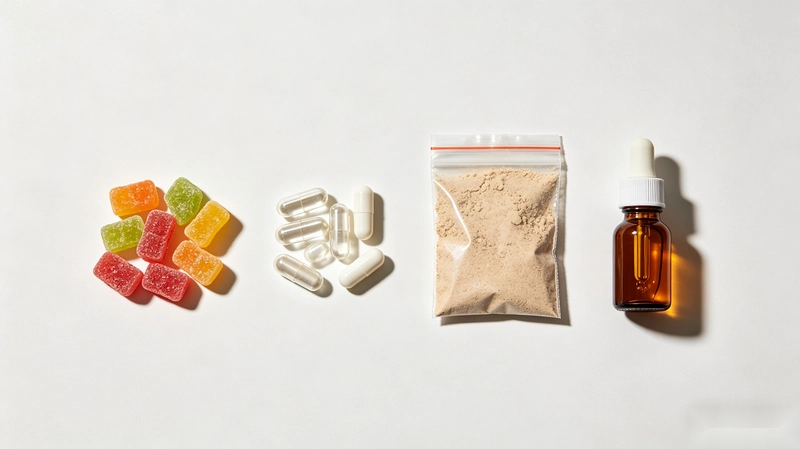
5. Best Dosage Forms for Deep Sleep Supplements
Dosage form selection is one of the most consequential decisions in product development. It affects everything from ingredient loading to consumer perception, production cost, packaging, and shelf stability.
5.1 Gummies
Gummies are the fastest-growing format in the sleep supplement category. They appeal strongly to younger demographics and consumers who prefer a food-like experience over swallowing pills. We’ve invested significantly in this category as a sleep gummy manufacturer.
However, gummies have real formulation constraints:
- High-dose ingredients like magnesium glycinate and glycine are difficult to fit into a reasonable serving size.
- Heat-sensitive ingredients may degrade during the gummy cooking process.
- Ashwagandha and certain botanicals introduce bitterness that requires pre-production flavor development.
- Sugar content and “clean label” expectations need to be balanced.
Gummies work best when your formula is built around low-dose, heat-stable ingredients.
If your brand needs broader gummy manufacturing capabilities beyond sleep products, we also operate as a comprehensive gummy supplement manufacturer.
5.2 Capsules
Capsules are the most versatile format for sleep supplements. They handle herbal complexes, high-dose minerals, and multi-ingredient blends well, and they sidestep most taste-masking challenges entirely. As a capsule supplement manufacturer, Jiabei Health produces vitamin capsules, herbal formulations, and nutraceutical blends for sleep support applications.
Capsules are the recommended format when:
- Your formula includes ashwagandha, lemon balm, valerian, or other bitter botanicals.
- You’re targeting high-dose magnesium or glycine.
- Your brand positioning is clinical or science-driven.
5.3 Powder Stick Packs
Powders excel for high-dose formulas — particularly night recovery blends that combine magnesium, glycine, collagen, and electrolytes. Our capabilities as a powder supplement manufacturer include custom blending, flavor masking, and solubility optimization.
Key considerations for powders:
- Flavor and dissolvability must be addressed upfront during R&D.
- Stick packs, pouches, or jars each imply different usage occasions and price points.
- Powders create a “ritual” experience — mixing and drinking — that many nighttime products leverage well.
5.4 Liquid Drops
Liquid drops offer fast absorption and precise dosing, making them suitable for small-dose sleep formulas. As a liquid supplement manufacturer, Jiabei Health produces liquid vitamins, herbal liquid extracts, and functional liquid supplements including sleep support formulations.
Liquid format considerations:
- Stability and microbial safety need to be validated early.
- Flavor masking for bitter actives requires specialized technology.
- Dropper bottle, syrup, or functional drink packaging all affect shelf presence and cost.
5.5 Tablets and Softgels
Tablets and softgels remain widely used in the sleep category. They’re cost-effective at scale, familiar to consumers, and handle most ingredient types well. They are not necessarily the first recommendation for new brand launches — gummies and capsules tend to offer better shelf differentiation — but they remain a reliable option for value-positioned products.
6. Taste, Texture, and Stability Issues Buyers Often Miss
One of the most common ways brands run into development delays is by underestimating taste, texture, and stability challenges. These issues surface during pilot batches — not on paper — which is why working with a manufacturer that tests early matters.
6.1 Common Taste Challenges by Ingredient
- Ashwagandha: Naturally bitter and earthy. Requires aggressive flavor masking in gummies and powders. Even in capsules, the powder smell can linger. Our KSM-66 ashwagandha gummy formulas use mixed berry flavoring specifically to counter bitterness.
- Magnesium Glycinate: Has a distinct mineral taste that becomes more noticeable at higher doses. In gummies, this can clash with sweet fruit profiles. Our magnesium glycinate gummies use carefully balanced flavor systems to mitigate this.
- Botanical Extracts (Lemon Balm, Valerian, Chamomile): Even “pleasant” herbal notes can become overwhelming when concentrated. Extract quality and standardization levels directly affect taste intensity.
- GABA and L-Theanine: Relatively neutral in taste. These are the most format-flexible ingredients from a flavor perspective.
6.2 Texture and Serving Size Trade-offs
- Gummies + High-Dose Minerals: Magnesium glycinate and glycine require large serving sizes. In gummy format, this can push the product beyond 2–3 gummies per serving, which hurts the consumer experience and increases per-unit cost.
- Powders + High Solubility Ingredients: Glycine and electrolytes dissolve well; magnesium glycinate can be more variable. Testing solubility in your target liquid volume is essential.
6.3 Stability Considerations
- Melatonin: Generally stable, but degradation can occur under certain pH conditions or prolonged heat exposure. Shelf-life testing should cover your target climate zones.
- Probiotic or Enzyme Blends: If incorporating these into a sleep formula, moisture sensitivity becomes a critical concern — capsules offer better protection than gummies.
- Liquids: Require preservative systems or aseptic processing. Stability testing under accelerated conditions (elevated temperature and humidity) is standard practice.
Our recommendation for brands: involve manufacturing feedback at the formula concept stage, not after you’ve finalized a spec sheet. That’s where cost overruns and timeline delays get prevented. In our magnesium glycinate supplement development, for instance, we tested raspberry lemonade flavor profiles to provide a taste reference for brands entering this category.
7. Claims and Labeling for Sleep and Stress Supplements
Label claims determine what your customers see and what regulators review. Getting this wrong can result in rejected shipments, regulatory warning letters, or product reclassification.
7.1 Structure-Function Claims: What’s Allowed
In the U.S., dietary supplements can make structure-function claims that describe how a nutrient or dietary ingredient affects the normal structure or function of the human body, without referencing a disease. These claims do not require FDA pre-approval but must be submitted to the FDA within 30 days of first marketing under 21 CFR 101.93(a).
Claims we recommend for sleep and relaxation products:
- Supports restful sleep
- Supports relaxation
- Supports a calm mood
- Supports a healthy stress response
- Supports normal sleep cycles
- Melatonin-free nighttime support
Claims to avoid:
- Treats insomnia
- Reduces anxiety
- Cures sleeplessness
- Guarantees deep sleep
- Anti-anxiety supplement
These latter claims cross the line from structure-function into disease treatment language, which can trigger FDA enforcement action. For comprehensive guidance, brands can reference the FDA’s structure-function claims page and the NIH Office of Dietary Supplements fact sheet collection, which provides ingredient-specific safety and efficacy information.
7.2 Market-Specific Labeling Requirements
Different markets have different labeling standards:
| Market | Key Requirements |
|---|---|
| United States | Supplement Facts panel; structure-function claim notification; FDA facility registration |
| European Union | Nutrition and health claims regulation (NHCR); ingredient-specific authorization |
| Southeast Asia / Middle East | Halal certification; country-specific ingredient registrations; local-language labeling |
Our facility holds GMP, FSSC 22000, HACCP, BRCGS, and Halal certifications, with FDA registration for U.S. market distribution. This certification framework supports compliance documentation across all major export regions.
7.3 Documentation and Traceability
Beyond labeling, brands should prepare for distributor and retailer documentation requests: Certificate of Analysis (COA), third-party testing reports, heavy metal and microbial testing results, and Halal or Kosher certificates if applicable. We provide batch-level COA with lot traceability as part of our standard quality package. Raw material traceability is maintained from sourcing through to finished product release.
8. What Brands Should Prepare Before Requesting a Quote
If you’re ready to move from concept to quotation, having the following information prepared will significantly speed up the process. We’ve structured this as a checklist — complete what you can, and we’ll work through the rest together.
Brand Preparation Checklist
| # | Information Needed | Why It Matters |
|---|---|---|
| 1 | Target market(s) | Determines regulatory pathway, certifications, and label requirements |
| 2 | Melatonin or melatonin-free | The foundational formulation decision — see Section 3 |
| 3 | Preferred dosage form | Gummy, capsule, powder, liquid, or tablet — each has different MOQ and production timelines |
| 4 | Key active ingredients | If undecided, our R&D team can recommend based on your product direction |
| 5 | Target daily serving size | Impacts dosage form feasibility and per-unit cost |
| 6 | Flavor direction (if applicable) | Essential for gummies and powders; informs early-stage flavor development |
| 7 | Packaging format | Bottle, pouch, stick pack, blister, or jar |
| 8 | Label claim direction | Shapes ingredient selection and dose validation |
| 9 | COA and testing requirements | Heavy metal, microbial, potency, third-party verification |
| 10 | Certifications needed | Halal, Kosher, organic, Non-GMO, etc. |
| 11 | Target shipping countries | Affects export documentation and logistics coordination |
| 12 | Estimated order quantity | Determines production scheduling and unit pricing |
Submitting this information with your initial inquiry allows us to provide a more accurate timeline and quotation, rather than going through multiple rounds of discovery.
9. How We Support Your Deep Sleep Supplement Project
Jiabei Health is a full-service dietary supplement contract manufacturer. We support brands at every stage — from concept development and formula R&D to finished product manufacturing, packaging, and global logistics.
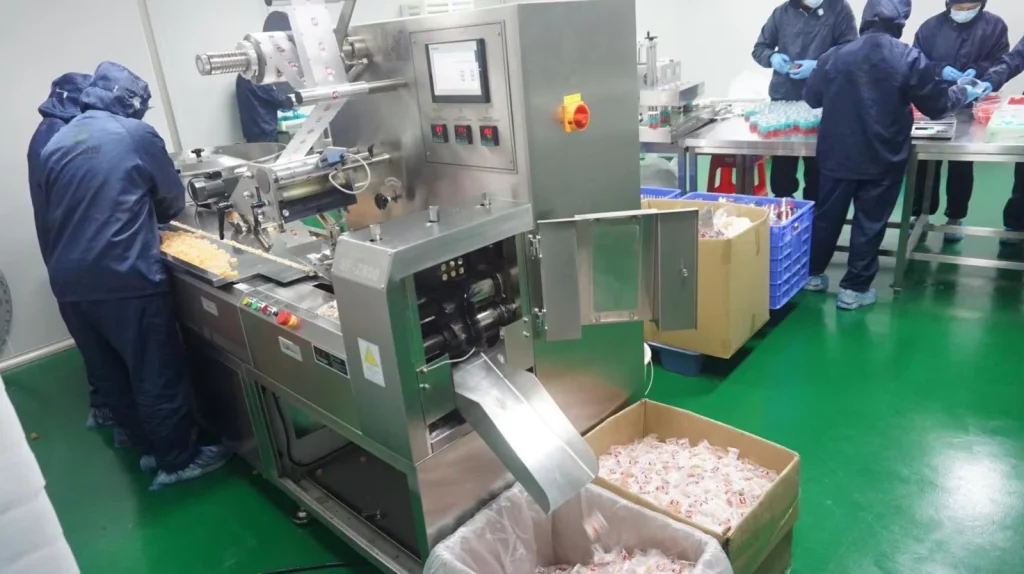
9.1 Manufacturing Capabilities
- Custom Formula Development: Our R&D team develops formulations based on your target market, functional positioning, and ingredient strategy — covering OEM and private label manufacturing.
- Multiple Dosage Forms: We manufacture gummies, capsules, powders, liquids, and tablets under one roof.
- Private Label Packaging: Complete packaging solutions including bottle filling, labeling, cartoning, and shrink-wrapping.
9.2 Quality and Certifications
Our facility operates under GMP, FSSC 22000, HACCP, and BRCGS food safety and quality management systems. We are Halal-certified and FDA-registered, supporting product distribution across the U.S., European Union, Southeast Asia, and Middle East markets.
Quality control includes in-process checks throughout production, finished product testing before release, and batch-level COA support.
9.3 Global Logistics Support
We assist with export documentation including free sale certificates, certificates of origin, shipping compliance files, and labeling coordination for target markets.
10. Frequently Asked Questions
Q: What is a deep sleep supplement formula?
A deep sleep supplement formula targets sleep quality rather than just sleep onset. It typically includes ingredients that promote relaxation, support natural sleep architecture, and help maintain sleep through the night — such as magnesium glycinate, glycine, and GABA.
Q: Can brands develop melatonin-free sleep supplements?
Yes. Many brands are deliberately choosing melatonin-free positioning to appeal to consumers concerned about long-term hormone use or seeking daily-use products. Common melatonin-free ingredients include magnesium glycinate, L-theanine, GABA, glycine, and botanical extracts like lemon balm and passionflower.
Q: Are gummies suitable for deep sleep supplement formulas?
It depends on your ingredient panel. Gummies work well for low-dose, heat-stable ingredients. But if your formula includes high-dose magnesium glycinate or glycine, the serving size can become impractical in gummy form. We recommend discussing your target ingredient profile before committing to a dosage form.
Q: Which ingredients are commonly used in sleep and stress support supplements?
Common sleep support ingredients include melatonin, magnesium glycinate, glycine, and GABA. Stress support formulas often feature ashwagandha, L-theanine, lemon balm, and GABA. The ingredient selection should align with your product positioning — sleep onset, sleep maintenance, stress response, or calm mood.
Q: Can magnesium, GABA, and L-theanine be used together in one formula?
Yes. These three ingredients are complementary and commonly combined in sleep and relaxation formulas. From a manufacturing perspective, the primary consideration is total serving size and how it interacts with your chosen dosage form.
Q: What should brands prepare before starting a private label sleep supplement project?
Refer to the checklist in Section 8. The most important items to have ready: target market, melatonin/melatonin-free decision, preferred dosage form, key ingredients, and estimated order quantity. We can guide you through the rest.
Q: What is the typical MOQ for private label sleep gummies or capsules?
MOQ varies by dosage form and formula complexity. For gummies and capsules, our standard private label MOQ starts from 500 units. Custom formulations may have different minimums — we’ll clarify during your initial consultation.
Q: Can Jiabei Health help with custom packaging and COA documents?
Yes. We provide private label packaging solutions and batch-level COA documentation as part of every project. Additional documentation — including third-party testing reports, Halal certificates, and export paperwork — is coordinated during the production process.
11. Conclusion: Building Your Sleep Supplement Pipeline
Not every brand starts with a finished formula. Some come with a full spec sheet. Others come with a concept and a packaging idea. Both paths work — as long as the foundational decisions in this guide get addressed early.
Deep sleep supplements aren’t one category. The direction you pick — deep sleep, stress support, calm mood, night recovery, melatonin-based, or melatonin-free — determines your ingredient strategy, dosage form, flavor work, and claims. Define it early, and the rest falls into place.
The projects that move fastest from concept to delivery share a few things: a clear product direction, an honest understanding of dosage form trade-offs, and a realistic idea of claims and market requirements. The checklist in Section 8 is built to get you there.
If you’re ready to move forward — or still working through some of these decisions — our team is available to discuss your requirements, answer formulation questions, and prepare samples or a quote.
Let’s build your deep sleep supplement. [Contact Jiabei Health →]