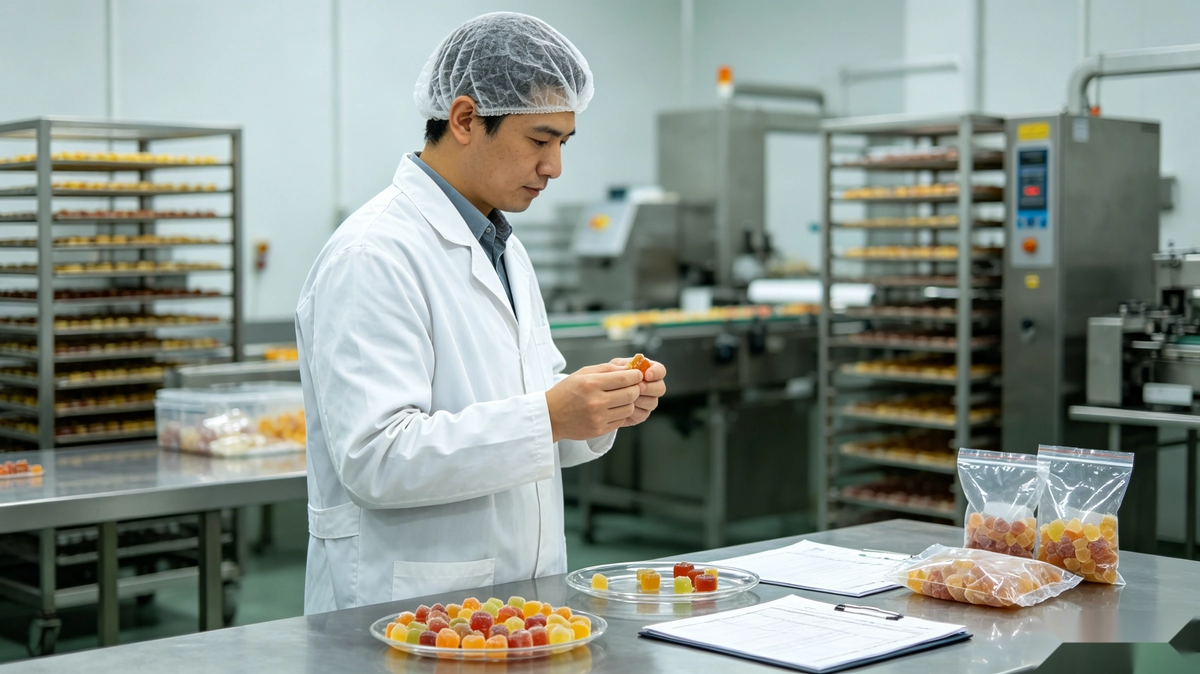
A liver support supplement sounds simple. Pick a few botanicals, blend them, fill some capsules, and ship.
Then you watch a batch of NAC turn gelatin capsules brittle in the stability chamber. Or you taste the first prototype and realize milk thistle and dandelion root together are so bitter nobody would swallow it twice. Or you discover that the “detox” claim you planned for the label makes the product unmarketable in half your target countries.
That last one hurts the most, because by then you’ve already invested in the formula.
We work on the manufacturing side. This is what we tell brands who come in with “liver support” on their mind and no clear picture of what that actually takes to build.
Before the Formula Even Starts, There’s a Legal Line
Liver support supplements are supplements, not drugs. The FDA’s guidance on dietary supplements draws the line at intended use.
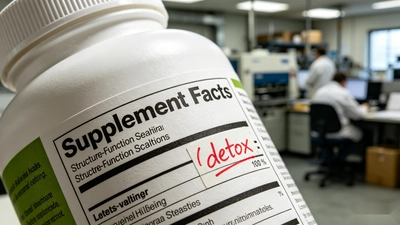
“Supports healthy liver function” is a structure-function claim. Fine.
“Reverses fatty liver” or “treats cirrhosis” makes the same bottle an unapproved new drug.
Why “detox” is the most expensive word in this category
The word detox has become the category’s favorite trap. It’s everywhere in liver product marketing. But it implies removing harmful substances that cause disease, which pushes the product across the line. Brands that spend months building a “liver detox” formula can end up holding a product they can’t legally market the way they imagined.
The safer language describes normal physiology: “supports the body’s natural detoxification pathways.” Same idea, different legal lane.
This isn’t legal advice. It’s the conversation any responsible manufacturer has with a brand before the first sample gets made. What you can’t say shapes everything you can build.
The Ingredients That Actually Go Into a Liver Support Supplement
A handful of ingredients keep showing up in this category. Antioxidants that work in liver cells. Compounds that stimulate bile flow. Nutrients in the glutathione pathway. Supporting vitamins and minerals.
Here’s how each one behaves when you try to turn it into a product—not when you read about it in a study.
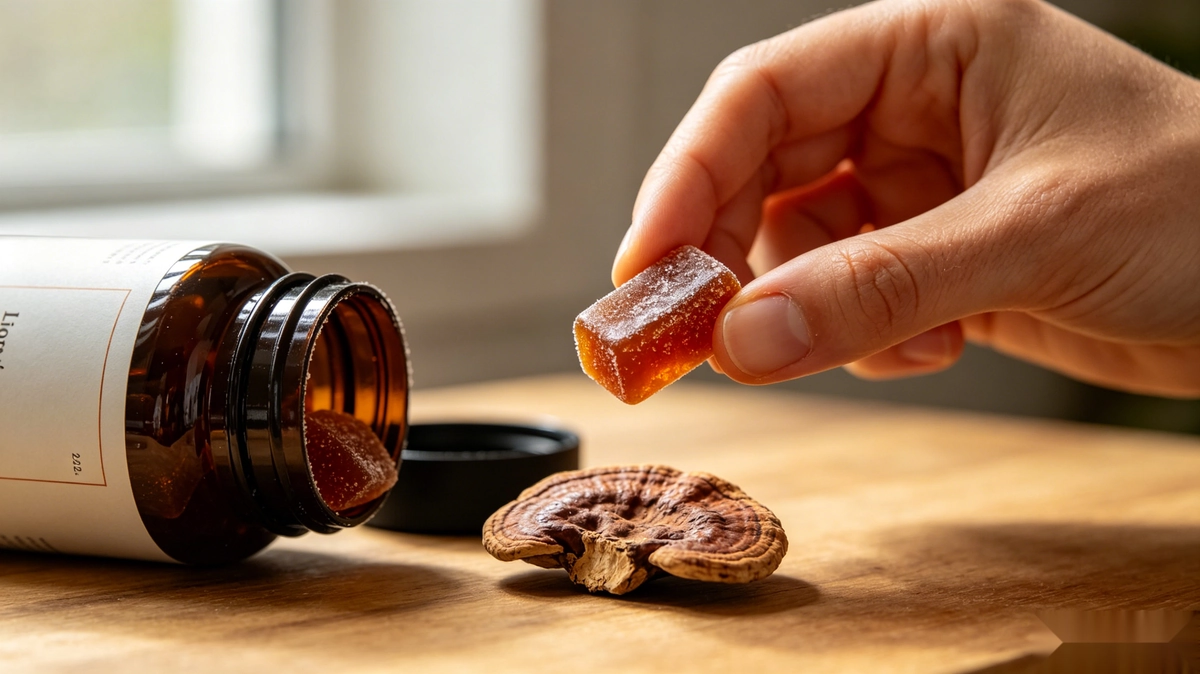
Milk Thistle (Silymarin) — the reference standard with a flow problem
The anchor ingredient. The NCCIH overview covers what the evidence does and doesn’t support.
In the factory, it’s the silymarin percentage that matters. We standardize to 80% and verify by HPLC at incoming inspection. But the real headache is particle size.
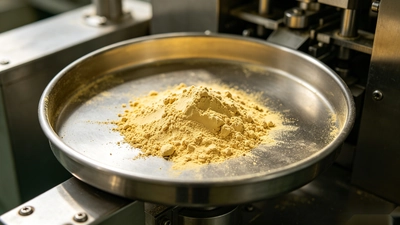
Unmicronized silymarin powder flows unevenly through the encapsulation machine. Fill weights start drifting. Sometimes the fix is switching to a finer grade. Sometimes it means adjusting the excipient ratio. Either way, this problem announces itself at the filling head, not in the spec sheet.
For brands that want a faster start, we keep a private label milk thistle capsule formulation that skips the early formulation trial and error.
N-Acetyl Cysteine (NAC) — great for glutathione, hard on capsules
NAC feeds the glutathione system. In the hospital, it treats acetaminophen overdose. In a supplement capsule, it creates an acidity problem nobody sees coming.
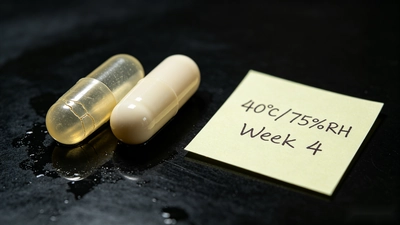
At 40°C and 75% humidity on accelerated stability, NAC’s acidity crosslinks gelatin capsule shells. They turn brittle. Disintegration slows. We’ve seen it enough times that HPMC capsules are now the default for any NAC-containing formula. The cost ticks up. The alternative is a batch that fails stability and goes nowhere.
Turmeric / Curcumin — bioavailability changes everything
Curcumin is in here for inflammation, but unformulated curcumin powder barely gets absorbed. The research community doesn’t debate this much.
Making it bioavailable means choosing between phytosomal complexes, phospholipid delivery, or piperine co-formulation. Each option changes bulk density, per-unit cost, and dissolution behavior. A brand that writes “turmeric” on the label without locking down which curcumin form is buying a surprise during R&D.
Artichoke Leaf — works until it absorbs moisture
Stimulates bile flow. The production story is moisture.
Artichoke extract pulls humidity from the air fast enough to turn a powder blend into paste. Blending equipment gums up. Capsule filling heads clog. Step one is controlling the production environment. Step two is often a flow aid like silicon dioxide pre-blended before the main mix.
Dandelion Root — consistent if you standardize it
A bitter, a diuretic, a natural pairing with milk thistle. The challenge is consistency from batch to batch. Dandelion composition shifts with geography and harvest season. Standardizing to a marker like inulin or total phenolics keeps the variation manageable.
Choline — the one that caps your tablets if you don’t watch the binder
Helps move fat out of the liver. Bitartrate is common and cheap—and severely hygroscopic. In a tablet, if the binder system isn’t right, you get capping and lamination during compression. Citicoline avoids this but costs more. The failure only shows up at the press during your pilot run.
Glutathione — popular, debated, and expensive in liposomal form
Reduced glutathione’s oral absorption keeps researchers arguing. Consumer demand keeps it in formulations anyway. Liposomal delivery solves the uptake problem, but manufacturing gets specialized and the dose cost jumps.
Worth remembering: people bring IV-level expectations to an oral glutathione capsule. The biology doesn’t work that way, and the label claim needs to stay in the realm of what’s plausible.
The supporting cast: vitamin E, B vitamins, zinc, selenium
Vitamin E, B vitamins, zinc, selenium round out many formulas. Vitamin E is fat-soluble and has to be evenly distributed through the blend, or some capsules get a lot and others get none.
Zinc and selenium work better in chelated forms, but incoming heavy metal testing matters here. Mineral sources from some regions carry lead and cadmium that the finished product cannot afford to contain.
The Format Decides More Than Marketing Does
| Format | What it handles well | Where it breaks down |
|---|---|---|
| Capsules | Multi-herb blends, high active loads, no compression needed | Large daily serving may need 3-4 capsules |
| Tablets | More actives per unit, lower per-unit cost | Plant extracts demand strong binders; stickiness kills press speed |
| Softgels | Lipid ingredients—solubilized curcumin, vitamin E | Dry herbals at meaningful doses don’t fit easily; suspension fills complicate stability |
| Powders | “Daily wellness drink” angle, flexible serving size | Bitter taste from milk thistle, dandelion, NAC; clean-label masking is hard |
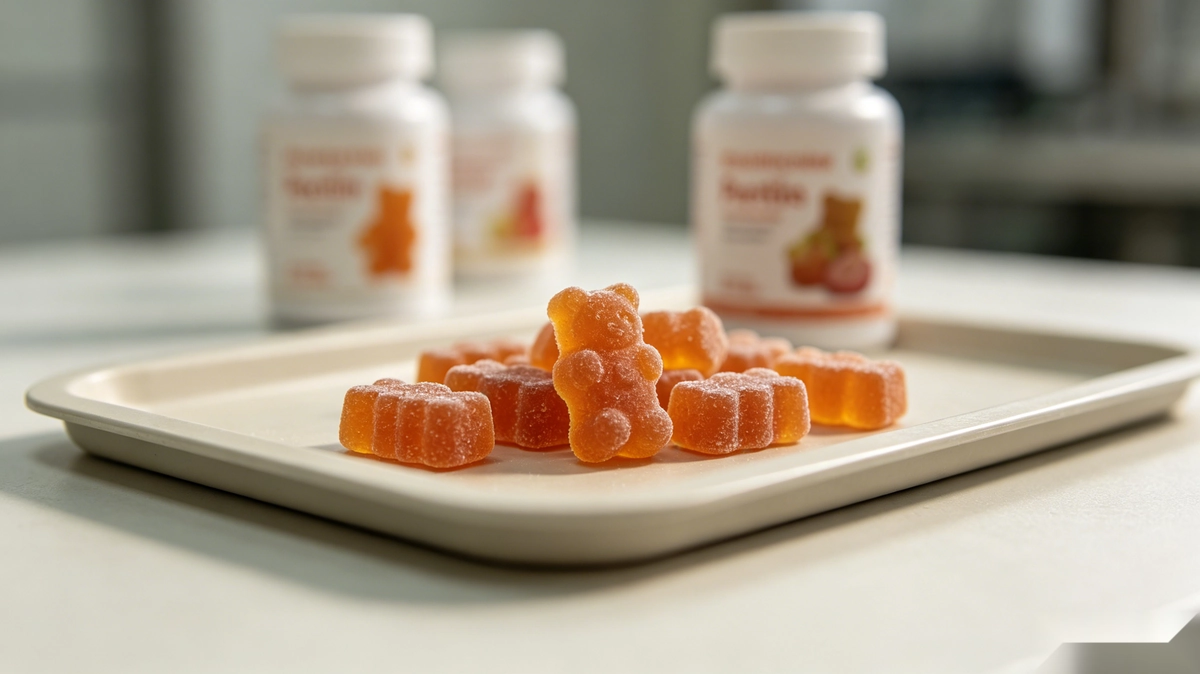
| Gummies | Consumer familiarity, no swallowing issue | Active load limits; bitterness vs. palatability; hard to look “clean and natural” |
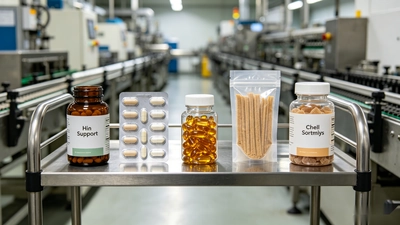
Capsules handle the most complexity
Capsules usually win for liver formulas because they’re forgiving. Too many actives or challenging powder behavior can still be managed. For brands going this route, having production set up properly from the start keeps the timeline short. Our capsule supplement manufacturing services handle custom blending, filling, packaging, and export paperwork in one workflow.
Tablets pack more in, but the press won’t wait
Tablets offer cost efficiency and more actives per unit. But liver formulas with high botanical extract loads need serious compression aids. Silymarin and NAC both have sticky tendencies that slow press output. Get the binder system wrong, and the whole run moves at half speed with defective tablets piling up.
Softgels work for oils, not dry botanicals
Softgels excel with lipid-based ingredients—solubilized curcumin, vitamin E, CoQ10. But they fall apart as an option for dry herbals above a certain dose. Suspension fills can work, but stability testing gets more complicated and development time stretches.
Powders promise convenience and deliver bitterness
Powders and drink mixes look attractive for the daily wellness angle. But milk thistle is bitter. Dandelion root is bitter. NAC tastes sulfurous. Masking that without dumping in sugar or artificial flavors takes iterative development work. If the brand wants clean-label flavoring, the masking toolbox shrinks further.
We run custom powder supplement formulations through solubility and sensory screening early because the bench-top blend never predicts what the drink will actually taste like in a glass.
Gummies are where liver formulas go to struggle
Gummies are the most limiting format for this category. Getting 200 mg of silymarin into something that tastes like candy and holds its shape is genuinely hard. Most liver gummy products lean on intense fruit flavors and sugar that undercut the whole “clean and natural” positioning.
What to Sort Out Before You Ask a Manufacturer for a Quote
A short conversation with a manufacturer goes further when you’ve thought through a few things.
| Question | Why it matters |
|---|---|
| Target market? | US, EU, GCC, and SEA have different claim rules and document requirements |
| Ingredient direction? | Copying a competitor copies their formulation problems too |
| Dosage per serving? | Drives capsule count, tablet size, cost per unit—math first, label later |
| Packaging and count? | Desiccant needs, closure quality, bottle feel all matter for premium positioning |
| Certifications needed? | USP, NSF, Informed-Sport add audit cost—budget them in from day one |
| Testing depth? | Micro, heavy metals, assay are standard; stability data is extra but tells you the real shelf life |
Nail the basics, or the project loops in circles
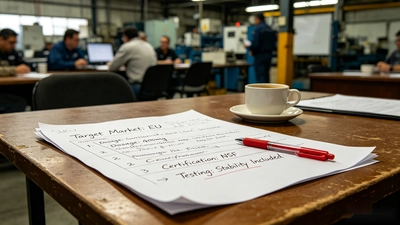
Once those parameters are clear, the project moves forward instead of sideways. Whether it’s a new formulation from scratch or an adaptation of an existing concept, OEM and ODM supplement manufacturing takes it through pilot batches, stability evaluation, and final production, with documentation built for the target market.
The Paperwork That Proves Your Product Is Real
Every liver support product ships with documents. The brands that don’t get burned are the ones that ask for the right ones.
Raw material identity — the first place quality breaks down
Every lot of milk thistle, NAC, and turmeric gets verified against its spec sheet by FTIR or HPLC. Accepting a supplier COA without checking is where most quality failures start.
Heavy metals and microbials — what the soil and the humidity bring
Botanicals absorb what’s in the soil. USP<2232> sets the limits. ICP-MS is the method. Lead, cadmium, arsenic, mercury—caught in raw material or caught in the finished product, the lab will find them eventually.
Multiple botanical powders also mean higher bioburden risk. TAMC, TYMC, E. coli, Salmonella, S. aureus are baseline. Products sold in hot, humid markets need microbial stability data, not just a release pass.
Potency, disintegration, stability — the tests that tell you it’ll hold up
The silymarin or NAC content has to hit within ±10% of label. An overage creates as much of a regulatory problem as a shortfall.
A capsule that holds together when it shouldn’t is a brick. Disintegration testing catches more problems than anyone expects at the design stage.
Accelerated and real-time stability data tell you whether the product holds up at end of shelf life. For formulas with hygroscopic extracts or acidic NAC, skipping stability isn’t saving money—it’s deferring a problem.
Export documents don’t write themselves
COA. GMP certificate. Certificate of Free Sale. Possibly halal or kosher certification, product registration dossiers for specific markets. These don’t generate themselves. A manufacturer with FSSC 22000, HACCP, and an established quality management system makes the paperwork move faster. We handle quality and certification support across the full package so what customs and retailers need gets built in from the start.
Liver Support Is a Category Where Manufacturing Experience Doesn’t Show on the Label
A liver supplement looks straightforward. A few botanicals. Some capsules. A label. Done.
Underneath, there are dozens of small decisions that each seem minor until one of them goes wrong. The silymarin particle size that kept fill weight steady. The capsule shell material that didn’t crack at month six. The excipient tweak that stopped the tablet press from jamming. The microencapsulation step that made a NAC-containing gummy actually taste acceptable.
Consumers never see these decisions. But they feel the result when the product works the same at day 180 as it did at day one.
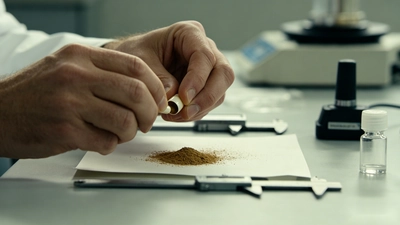
Our R&D and quality team spends its time on exactly this—raw material evaluation, pilot batches, stability samples, documentation aligned to the market where the product will actually sell. It’s behind-the-scenes work. In this industry, that’s where reputations get built.
A liver support formula isn’t ready until someone has checked its dissolution profile, tasted it at full serving strength, and confirmed the claims are legal where the bottle will sit on a shelf. That’s the moment brand building actually starts.
Frequently Asked Questions
Is a supplement for liver support safe for daily use?
For most healthy adults, a well-formulated supplement for liver support is designed for daily use. But “daily” depends on the formula. A product built around milk thistle and artichoke leaf is different from one stacked with high-dose NAC or multiple herbal extracts. The brand’s job is to test the formula at the labeled daily dose and confirm it holds up in stability. The consumer’s job is to follow the label. No supplement in this category should be positioned as something you take forever without review.
What’s the difference between a liver support supplement and a liver detox?
This is the question that separates compliant products from regulatory risk. A liver support supplement describes normal physiological function—helping the body do what it already does. A “liver detox” implies removing harmful substances that cause disease, which crosses into drug claim territory. Many brands want to use “detox” because it sells. Few understand it can make their product unsellable. The safer framing is “supports the body’s natural detoxification pathways.”
Does milk thistle actually work?
Milk thistle is the most studied botanical in this category, and the NCCIH overview gives a balanced summary of the evidence. From a manufacturer’s perspective, the question isn’t just whether it works—it’s whether the form in the capsule delivers enough silymarin to match what the studies used. Many products list “milk thistle extract” but don’t standardize to a meaningful silymarin percentage. That’s a formulation choice, not a reflection on the ingredient itself.
Which is better: liver support capsules or gummies?
Capsules. Almost every time, for this category. Capsules can carry the active loads that liver formulas demand. Gummies struggle to deliver a meaningful dose without tasting like medicine or loading up on sugar. There are exceptions with microencapsulation and advanced flavor masking, but if you’re starting from scratch, capsules are the safer path to a product that actually delivers what the label promises.
What should I check before manufacturing a supplement for liver support?
Start with your target market, because the claims you can make and the documents you’ll need change by country. Get clear on your ingredient direction—don’t just copy a competitor’s label. Lock in your dosage per serving, because that drives capsule count and cost per unit. Decide on packaging and certifications early. And ask your manufacturer what testing they include as standard: COA, heavy metals, microbials, disintegration, and stability. If stability testing is optional, pay for it.