1. Introduction: The Shift Toward High-Purity and Ethical Creatine
The global creatine market has traditionally been defined by one dominant narrative: mass-market creatine monohydrate at highly competitive prices. For years, most brands prioritized volume rather than differentiation, competing almost entirely on cost. But the landscape of sports nutrition in 2024–2025 has changed dramatically. As consumers become more educated, as regulatory scrutiny tightens, and as premium positioning becomes a core growth strategy for supplement brands, the market is entering a new era—one where purity, traceability, and certification matter just as much as physiological performance.
Against this backdrop, Creapure Creatine and vegan-certified creatine have risen from niche categories to front-running premium segments. Their growth is not accidental. It reflects broader consumer values: clean-label expectations, trust in manufacturing transparency, and a willingness to pay for quality. For wholesalers, distributors, and private-label brands, these trends open the door to a more profitable, loyalty-driven market segment—one that competitors cannot easily replicate.
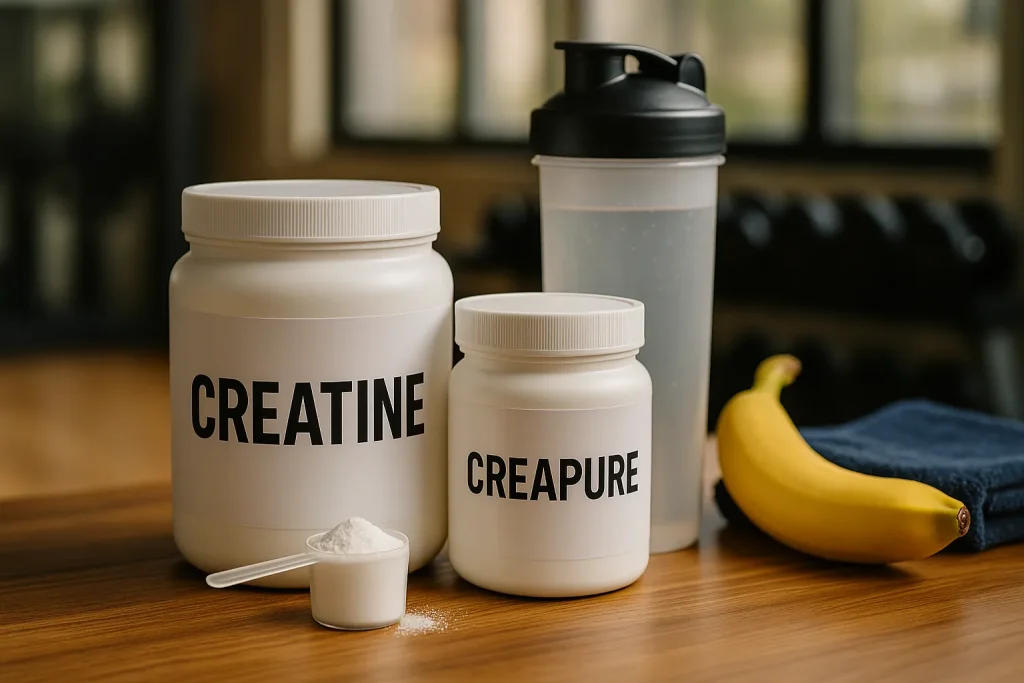
This article explores why Creapure®, a German-produced creatine known for its unmatched purity, and vegan-certified creatine, a product aligned with ethical and clean-label consumer preferences, are reshaping global demand. More importantly, it will outline how wholesale buyers and supplement brands can capitalize on these accelerating shifts to expand product lines, strengthen brand identity, and achieve higher profit margins.
2. Understanding the Premiumization of Creatine: From Commodity to High-Value Ingredient
Before diving into Creapure® and vegan certification, it’s essential to understand how and why the creatine category is evolving. Historically, creatine was seen as a commodity ingredient. Consumers viewed all creatine monohydrate as interchangeable, and manufacturers rarely differentiated their products beyond price or packaging.
Three major forces have disrupted this dynamic:
2.1 Consumers Are Looking Beyond “Basic Performance”
As fitness culture becomes more holistic, buyers are evaluating creatine through filters like purity, source transparency, sustainability, traceability, and ingredient ethics. They are not just asking, “Does it work?” but also:
- “Is it clean?”
- “Is it safe?”
- “Is it ethical?”
- “Who manufactured it?”
- “Does it align with my lifestyle?”
Premium creatine satisfies these deeper questions.
2.2 Regulatory Pressure is Increasing
In markets like the U.S., EU, Australia, South Korea, and Saudi Arabia, authorities are tightening scrutiny on contamination, heavy metals, and ingredient claims. Premium creatine sources have a strong advantage because their manufacturing systems are built around pharmaceutical-grade quality control.
2.3 Brands Are Positioning Higher-Margin SKUs
In an industry where customer acquisition costs are rising, supplement brands increasingly rely on differentiated, high-value SKUs to maximize return on each customer. Creapure® and vegan creatine fit this model perfectly.
The result is a market where premium creatine is no longer a niche—it is becoming a strategic category with strong long-term growth potential.
3. What Is Creapure®? The Gold Standard of Creatine Purity
3.1 A German Brand, Not a New Form of Creatine
One of the most common misconceptions among new buyers is thinking Creapure® refers to a different type of creatine. It does not. Creapure Creatine is creatine monohydrate produced by AlzChem GmbH in Germany under exceptionally strict quality and purity controls.
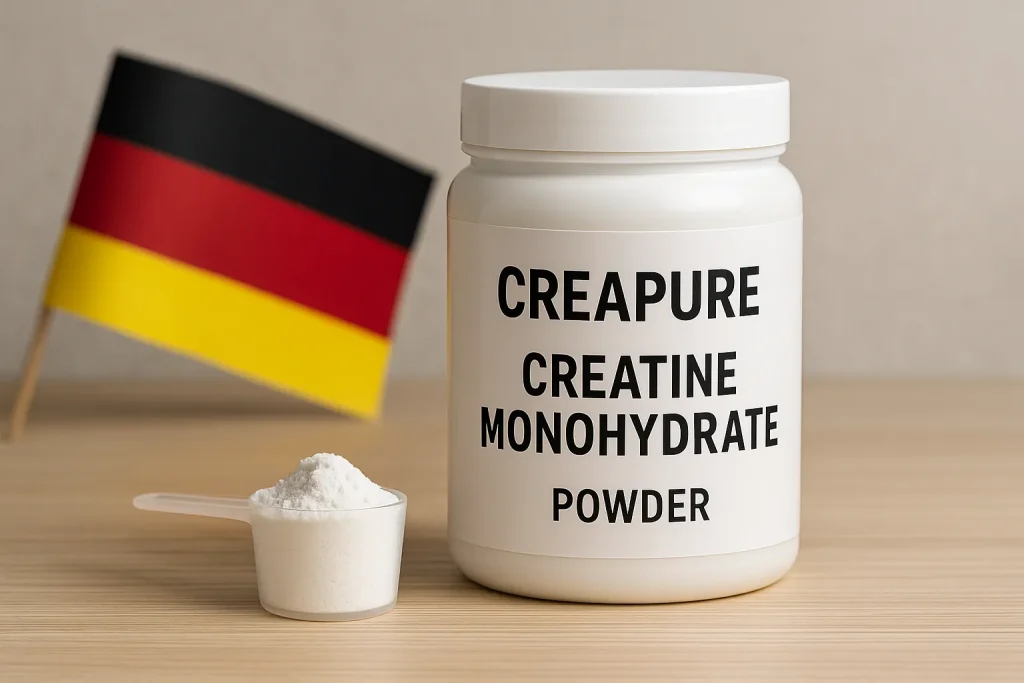
The differentiator is not the molecule—it is the manufacturing process, purity level, and reputation for safety.
3.2 Why Creapure® Earned Global Trust
Creapure® built its global reputation on three pillars:
1. Exceptional Purity: ≥ 99.95%
This is significantly higher than typical 99.0–99.5% purity levels seen in the broader market. In high-end sports nutrition, this level of purity translates into superior stability and reduced degradation.
2. Ultra-Low Impurities (DHT & Creatinine)
Creapure® is known for having some of the lowest impurity levels in the world:
- DHT (Dihydro-1,3,5-triazine): Not Detected
- Creatinine: Extremely Low
These impurities can appear during poor-quality synthesis. Their absence indicates precision manufacturing.
3. German Production Standards
Each batch is produced in Germany under:
- ISO 9001 standards
- GMP
- Full traceability records
- Consistent batch-to-batch performance
- Verified documentation
For many buyers, “Made in Germany” is itself a marketable advantage.
3.3 Scientifically Credible and Athlete-Approved
Beyond manufacturing, Creapure® is widely used by competitive athletes. Its purity, trust, and traceability make it a preferred choice for professional sports organizations, where contamination risk is unacceptable.
4. Who Is Buying Creapure®? Understanding the Target Market
Not every consumer will pay a premium for Creapure®. But the segments that do are some of the most valuable in sports nutrition:
4.1 Performance-Driven Athletes
These buyers want:
- Maximum purity
- Minimal impurities
- Consistency
- Lab-verified safety
Creapure® is considered the “gold standard” within this group.
4.2 Premium Wellness Consumers
These include shoppers who consistently choose:
- Clean-label supplements
- Non-GMO products
- Third-party tested formulas
- Premium imported ingredients
For them, Creapure® checks all boxes.
4.3 High-End Brands Seeking Differentiation
Brands that target an upscale audience use Creapure® to stand out. Adding Creapure® to product pages often increases perceived value, enabling significantly higher pricing.
4.4 Retailers Building Premium Shelves
Many brick-and-mortar stores and boutique fitness shops stock Creapure® specifically because:
- Its brand awareness is high
- Its reputation reduces return risk
- It helps justify premium shelf pricing
In other words, the Creapure® logo itself drives sales.
5. The Rise of Vegan Creatine: Why Ethical and Clean-Label Products Are Surging
While Creapure® represents premium purity, vegan-certified creatine addresses another consumer demand: lifestyle alignment and ethical sourcing.
5.1 The Hidden Issue: Creatine Isn’t Always Vegan by Default
Although creatine is synthesized chemically, certain:
- Catalysts
- Processing agents
- Filtration aids
- Carrier materials
- Lab reagents
…may come from animal-derived sources.
This means not all creatine is automatically vegan, even though consumers often assume it is.
5.2 Vegan Certification Solves This Transparency Problem
A vegan-certified creatine verifies:
- No animal-derived chemicals
- No animal products used in any part of synthesis
- No cross-contamination in manufacturing
- Compliance with global vegan standards
For vegan consumers, ethical athletes, and religious dietary groups, this certification carries significant weight.
5.3 The Global Vegan Trend Is Growing Quickly
Market data shows:
- The number of vegans and vegetarians has multiplied across the U.S., U.K., Germany, and Australia.
- Younger consumers (Gen Z) prioritize lifestyle-aligned supplement choices.
- Clean-label claims—vegan, non-GMO, allergen-free—drive conversion in e-commerce.
For these groups, vegan certification is not a nice-to-have; it’s a purchase requirement.
5.4 Vegan Creatine’s Positioning Advantage
Vegan creatine allows supplement brands to:
- Enter the clean-label segment
- Differentiate from competitors
- Upsell at higher price points
- Build trust with educated consumers
Like Creapure®, vegan creatine occupies a defensible premium niche.
6. Creapure® vs Regular Creatine: Why the Market Is Splitting Into Two Tiers
To understand the market shift, consider the rapidly widening gap between premium and commodity creatine.
6.1 Tier 1: Premium Creatine (Creapure®, Vegan)
Characteristics include:
- Highest purity
- Low or non-detectable impurities
- Branded ingredients
- Certification credibility (vegan, kosher, halal)
- Strong consumer trust
- Consistent pricing
- Ideal for branding and storytelling
These products attract discerning buyers and justify premium retail prices.
6.2 Tier 2: Commodity Creatine (Mainstream Market)
Commodity creatine still dominates in volume, but suffers from:
- Price pressure
- Inconsistent purity
- Variable batch quality
- Less transparency
- Limited differentiation
For brands targeting mass-market fitness consumers, commodity creatine makes sense.
But for brands pursuing high-margin SKUs, tier 1 is the future.
7. Why Creapure® and Vegan Creatine Are Expanding Worldwide
7.1 Trust and Transparency Are Replacing “Low Price Wins”
Consumers now research:
- Certificates of Analysis
- Factory origin
- Impurity markers
- Ethical certifications
Premium creatine sources outperform here.
7.2 Branding Is Becoming Ingredient-Driven
Much like “KSM-66® Ashwagandha” or “Cognizin® Citicoline,” Creapure® benefits from brand recognition. Adding “Creapure® inside” elevates perceived value instantly.
7.3 Retailers and Marketplaces Promote Certified Ingredients
Amazon, iHerb, Vitacost, and EU marketplaces heavily promote:
- Vegan-certified
- Clean-label
- German-made
- Third-party tested
This strong retail alignment accelerates premium creatine adoption.
8. Business Opportunities: How Wholesalers Can Capitalize on These Trends
8.1 Add a Premium Creatine Line Based on Creapure®
This helps you:
- Reach higher-margin customers
- Distinguish your brand
- Meet the expectations of elite athletes and influencers
8.2 Launch a Vegan Creatine SKU
Ideal formats:
- Vegan creatine monohydrate powder
- Vegan creatine capsules
- Clean-label pre-workout with vegan-certified creatine
- Creatine blends (BCAA + Creatine, Electrolytes + Creatine)
8.3 Combine Both: Vegan Creatine + Premium Quality Positioning
A dual strategy captures two fast-growing market trends at once:
- Ethical consumers
- Quality-driven athletes
8.4 Tell a Strong Ingredient Story
Premium creatine gives you a marketing edge:
- German quality
- Ultra-high purity
- Vegan-friendly production
- Full traceability
- Third-party testing
This storytelling increases conversion and trust.
9. Conclusion: The Future of Creatine Is Premium, Transparent, and Ethical
The creatine industry is evolving, and the direction is unmistakable: the market is shifting from cheap mass-market powders to high-quality, certified, and trustworthy premium ingredients. As consumers become more conscious of what they consume—and as brands search for ways to differentiate—Creapure® and vegan-certified creatine will play an increasingly dominant role.
For wholesalers and brand owners, this is not just a trend—it is a strategic opportunity. By expanding into premium creatine categories, you can attract higher-value customers, build a stronger brand proposition, and secure long-term competitiveness in the global sports nutrition market.
The next chapter of creatine is already here. And it is cleaner, purer, and more ethical than ever.
10.FAQ
What makes Creapure Creatine different from regular creatine monohydrate?
Creapure Creatine is manufactured in Germany under strict pharmaceutical-grade standards and is known for exceptional purity levels (≥99.95%) with extremely low impurities like DHT and creatinine. Regular creatine varies widely in purity and consistency, depending on the factory and synthesis method.
Is Creapure Creatine worth the higher price for supplement brands?
Yes. Creapure Creatine delivers stronger marketing credibility, premium positioning, and higher consumer trust, which helps brands command better margins and stand out in a crowded creatine market. Its quality story directly supports higher pricing and long-term customer loyalty.
Why are more consumers searching for vegan-certified creatine?
Many consumers want clean-label, ethical, and plant-aligned supplements. Vegan-certified creatine guarantees that no animal-derived chemicals or catalysts were used in synthesis, making it attractive to vegans, vegetarians, and lifestyle-conscious buyers.
Can supplement brands combine Creapure Creatine with vegan certification?
Yes. Creapure Creatine is vegan-friendly and often used in clean-label or fully vegan supplement lines. Brands frequently pair Creapure® with vegan certification to maximize trust, transparency, and premium market positioning.
Is Creapure Creatine a good choice for high-end pre-workouts and performance formulas?
Absolutely. Creapure Creatine is one of the most trusted ingredients among elite athletes and performance-focused users. Its ultra-high purity, safety assurance, and strong brand recognition make it ideal for premium formulas and competitive sports nutrition products.