Many people search for liquid chlorophyll for body odor because liquid formats are often perceived as stronger or faster than capsules or gummies. The reasoning seems intuitive: if something is already dissolved, it must act more quickly.
In practice, however, whether liquid chlorophyll is more effective depends less on the format itself and more on the underlying cause of the odor.
Body odor is not a single biological process. It can arise from bacterial activity on the skin, oral microbial imbalance, or metabolic by-products processed through the liver and gut. If you are unfamiliar with how these categories differ, it is helpful to first understand the different types of body odor and how they develop. Format choice only becomes meaningful once the mechanism is clear.
This article focuses specifically on liquid chlorophyll as a delivery format—what it may change, what it likely does not change, and how to interpret existing evidence without marketing exaggeration.
Why Liquid Chlorophyll Feels More Potent
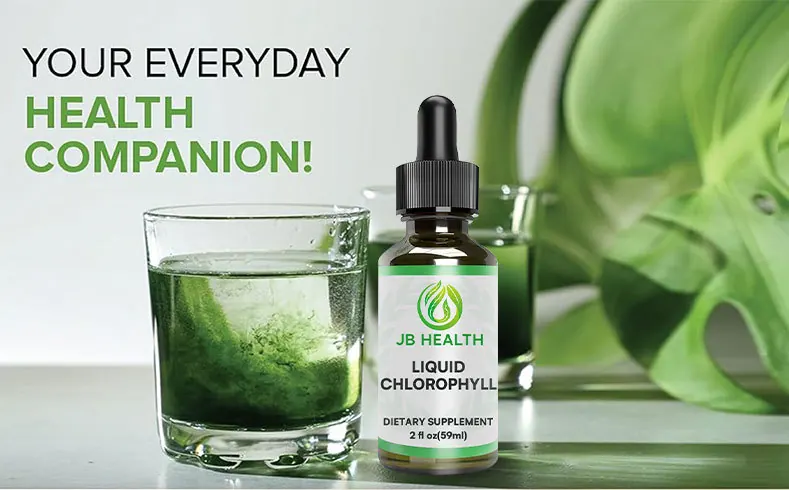
Liquid chlorophyll has a strong sensory presence. It is deeply pigmented, often bright green, and typically has a noticeable taste—sometimes described as grassy, herbal, or mint-like depending on flavoring. That sensory intensity creates a psychological impression of potency.
There are three main reasons liquid formats tend to feel “stronger”:
- Immediate ingestion perception – There is no capsule shell to dissolve. The liquid is swallowed directly, which creates the sense of faster action.
- Visible color – The green hue reinforces the idea of concentrated plant compounds.
- Taste exposure – A strong taste often signals “active” ingredients to consumers.
However, perceived potency is not the same as measured biological effect. The body does not respond to visual intensity. It responds to molecular interactions.
The key question is not whether liquid chlorophyll feels stronger—but whether its mechanism of action depends on absorption speed at all.
Does Absorption Speed Actually Matter?
Chlorophyll and its commonly used derivative, chlorophyllin, are porphyrin-based molecules structurally related to heme (the iron-containing component of hemoglobin). In supplements, chlorophyllin is often used because it is water-soluble and more stable in liquid systems.
When discussing odor, the proposed mechanisms are generally indirect:
- Binding certain odor-related metabolites in the digestive tract
- Influencing gut microbial by-products
- Reducing specific compounds associated with metabolic odor
Importantly, these proposed effects do not necessarily depend on rapid systemic absorption. In many discussions, chlorophyllin is thought to act locally within the gastrointestinal environment before significant bloodstream distribution.
Small clinical studies have explored chlorophyllin in metabolic odor conditions, particularly trimethylaminuria (TMAU), a condition associated with trimethylamine accumulation, as discussed in clinical research on chlorophyllin and metabolic odor.Research published in medical databases such as PubMed has examined chlorophyllin’s role in reducing trimethylamine levels in certain populations. These studies are limited in size but suggest that the mechanism is more related to internal binding and metabolic processing than to rapid systemic circulation.
If the primary interaction occurs in the digestive tract, then the difference between liquid and capsule formats may not be as dramatic as commonly assumed. Capsules dissolve quickly in gastric fluid. Once dissolved, the compound exists in a liquid environment anyway.
In other words, the argument that “liquid works faster because it is liquid” may oversimplify the physiology.
Liquid vs Capsule vs Gummy: A Functional Comparison
Format still matters—but for practical rather than purely biochemical reasons.
Below is a simplified comparison of the three common delivery forms:
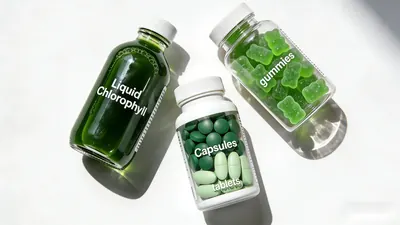
| Factor | Liquid | Capsules | Gummies |
|---|---|---|---|
| Dose Flexibility | High (adjustable drops) | Fixed per capsule | Fixed per serving |
| Taste Exposure | Strong | None | Pleasant |
| User Compliance | Moderate | High | Very High |
| Perceived Speed | High | Moderate | Moderate |
| Long-Term Consistency | Variable | Stable | Stable |
| Formulation Stability | Requires careful control | High | High |
Liquid chlorophyll drops allow fine dose adjustment. This can be useful during short observation periods or when brands design flexible intake protocols. Capsules offer standardized intake and neutral taste, making them easy to integrate into structured routines. Gummies prioritize taste and adherence, often improving long-term consistency.
For brands evaluating delivery systems, the choice is less about intrinsic molecular superiority and more about positioning, compliance, and usage patterns. If you are reviewing commercial formats, you can see how a liquid chlorophyll drops format is typically structured in product development.
Where Liquid Chlorophyll May Offer Practical Advantages
Liquid chlorophyll may provide advantages in the following situations:
1. Flexible Dose Adjustment
Some individuals prefer starting with smaller amounts and adjusting gradually. Liquid formats allow micro-adjustment without splitting capsules.
2. Beverage Integration
Liquid chlorophyll can be added to water, smoothies, or functional beverages. This supports “green drink” positioning.
3. Short-Term Evaluation Periods
For those testing whether chlorophyll makes any difference in odor perception, liquid format may simplify experimentation due to adjustable intake.
However, none of these advantages automatically translate into stronger biochemical effect. They are logistical advantages.
Where Liquid Chlorophyll Will Not Change the Outcome
It is equally important to discuss boundaries.
Liquid chlorophyll is unlikely to resolve odor driven by:
- Apocrine bacterial breakdown on the skin (typical underarm odor)
- Hormonal fluctuations affecting sweat composition
- Poor hygiene or external environmental factors
- Dermatological imbalances unrelated to metabolic by-products
If odor originates primarily from bacterial action on sweat lipids at the skin surface, altering internal chlorophyll intake may have limited impact. Format choice—liquid versus capsule—would not change this.
Similarly, if odor is due to endocrine or dermatological conditions, chlorophyll format is not the determining variable.
Professional analysis requires separating metabolic odor contexts from external bacterial odor contexts.
How Long Does Liquid Chlorophyll Take to Work?
Searches such as “how long does liquid chlorophyll take to work” reflect another common misunderstanding: expecting immediate deodorizing action.
Unlike topical deodorants, chlorophyll supplements—liquid or otherwise—do not act directly on sweat glands. If any effect occurs, it would likely depend on:
- Repeated intake
- Interaction with digestive metabolites
- Individual metabolic variation
- Diet composition
In small metabolic studies, observation periods often span weeks rather than days. Expecting same-day odor elimination is unrealistic.
Consistency matters more than format.
Evidence Quality and Limitations
The existing literature around chlorophyllin and odor is limited in scale. Some research has explored metabolic odor conditions, but these studies are generally small and focused on specific populations.
There is no robust evidence demonstrating that liquid chlorophyll is categorically superior to capsule or gummy forms for generalized body odor.
This distinction is important.
Marketing language frequently labels chlorophyll as an “internal deodorant.” That phrase is not a clinical classification. It is a simplification.
Scientific discussions focus on specific compounds, specific metabolic pathways, and specific contexts—not universal deodorizing claims.
The Real Determining Factor: Mechanism Over Format
When evaluating liquid chlorophyll for body odor, the hierarchy of importance should be:
- Identify odor source
- Understand proposed mechanism
- Evaluate evidence strength
- Choose format based on compliance and practicality
Format comes last.
If the mechanism does not align with the odor type, no format will change the outcome.
If the mechanism does align, then liquid format may offer convenience—but not necessarily superior efficacy.
Final Perspective
Liquid chlorophyll is not inherently more powerful than capsules or gummies. It may feel more immediate due to its sensory characteristics and adjustable dosing, but biological action is determined by molecular interaction and metabolic context—not visual intensity.
For individuals dealing with odor concerns, the more productive approach is to:
- Clarify the type of odor involved
- Review evidence without marketing language
- Choose a format that supports consistent intake
Liquid chlorophyll may have a role in specific metabolic odor discussions, but it is not a universal solution. The distinction between perception and physiology is crucial.
Understanding that difference allows more rational decisions—and avoids disappointment driven by unrealistic expectations.
FAQ
Does liquid chlorophyll work faster than capsules?
Short answer: not necessarily. The perceived speed often relates to how it’s consumed rather than how it acts in the body.
How long does liquid chlorophyll take to affect body odor?
If any change occurs, it usually requires consistent use over time. Immediate results are unlikely.
Is liquid chlorophyll better than gummies?
It depends on preference and consistency. Format choice affects routine more than molecular action.
Can liquid chlorophyll stop underarm sweat odor?
Chlorophyll supplements do not directly affect sweat glands. If odor is primarily bacterial, topical approaches may be more relevant.