Not All Garlic Works the Same in Supplements
Garlic has been used for centuries, but not every form of garlic works well in modern supplement products. When it comes to formulation, stability, odor, and consumer acceptance matter far more than traditional usage.
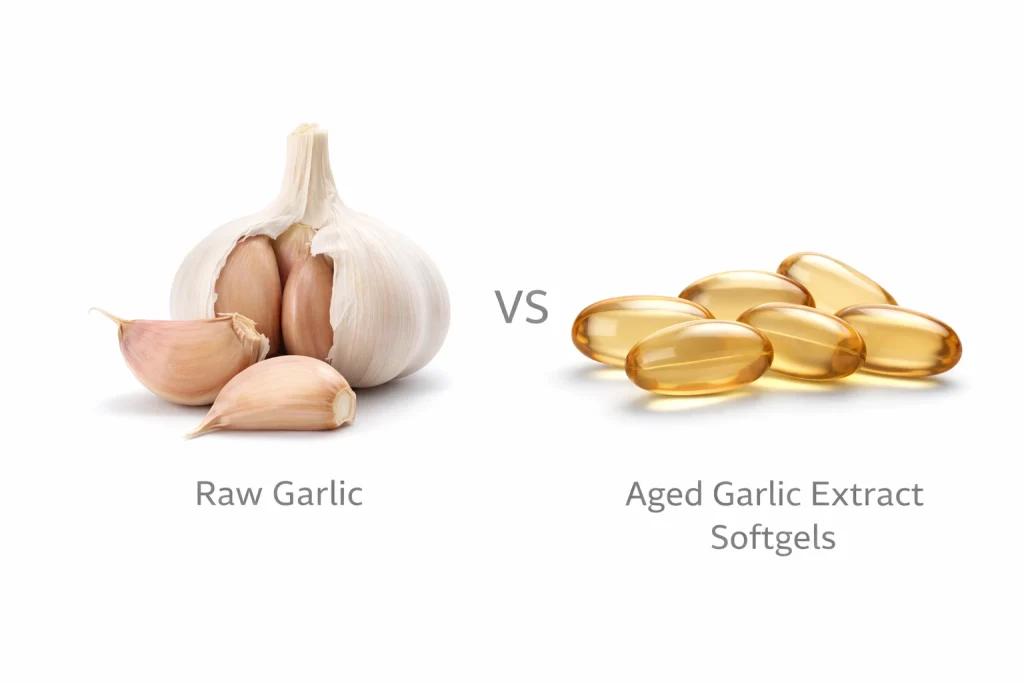
This is where the difference between aged garlic extract and raw garlic becomes important. For brands developing capsules or softgels, choosing the wrong form can lead to formulation challenges, inconsistent quality, and poor customer experience.
Can Raw Garlic Be Used in Supplements at All?
Technically, raw garlic can be used in supplement formulations. However, in practice, it presents several limitations.
First, raw garlic has a strong and persistent odor. This affects not only consumer acceptance but also repeat purchase behavior. Products with noticeable garlic smell are often difficult to position in premium markets.
Second, raw garlic contains unstable compounds that can degrade over time. This creates challenges in maintaining consistent potency across batches, especially for products intended for long shelf life.

For these reasons, raw garlic is more commonly seen in traditional or low-cost products rather than standardized, export-oriented supplements.
Aged Garlic Extract vs Raw Garlic: A Practical Comparison
From a formulation perspective, the difference between aged garlic extract and raw garlic is not just about processing — it directly affects product quality and usability.
| Factor | Aged Garlic Extract | Raw Garlic |
|---|---|---|
| Odor | Odorless or mild | Strong and persistent |
| Stability | High | Low |
| Active Compounds | Stable (S-allyl cysteine) | Unstable (Allicin) |
| Consistency | Standardized | Variable |
| Suitability for Supplements | Excellent | Limited |
In practical terms, aged garlic extract is significantly easier to standardize, scale, and position in modern supplement products.
Why Most Supplement Brands Don’t Use Fresh Garlic
Fresh garlic, while widely recognized in food applications, is rarely used in commercial supplement manufacturing.
One of the main reasons is odor. Fresh garlic produces a strong smell that is difficult to mask, especially in capsules or softgels. This directly impacts user experience.
Another issue is variability. Fresh garlic can vary in composition depending on origin, storage, and processing conditions. This makes it difficult to achieve consistent labeling and product performance.
As a result, most brands targeting international markets prefer more stable and controlled forms such as aged garlic extract.
What Happens to Allicin During Processing
Allicin is often associated with garlic’s activity, but it is also highly unstable. Once garlic is processed, allicin begins to degrade quickly.
During the aging process, these unstable compounds are converted into more stable components, such as S-allyl cysteine (SAC). This shift improves both product stability and shelf life.
From a manufacturing perspective, this is a key advantage. Stable compounds allow for better quality control, consistent labeling, and improved product reliability in global markets.
Which Garlic Form Is Actually Used in Softgel Supplements
In the current supplement market, aged garlic extract is the preferred choice for softgel products.
The main reasons are practical:
- It is odorless, making it easier to formulate consumer-friendly products
- It offers better stability, which supports longer shelf life
- It can be standardized for consistent quality
For this reason, most softgel supplements on the market use aged garlic extract rather than raw garlic.
If you are developing a garlic supplement line, working with a reliable aged garlic extract softgels manufacturer can make formulation and production much easier.
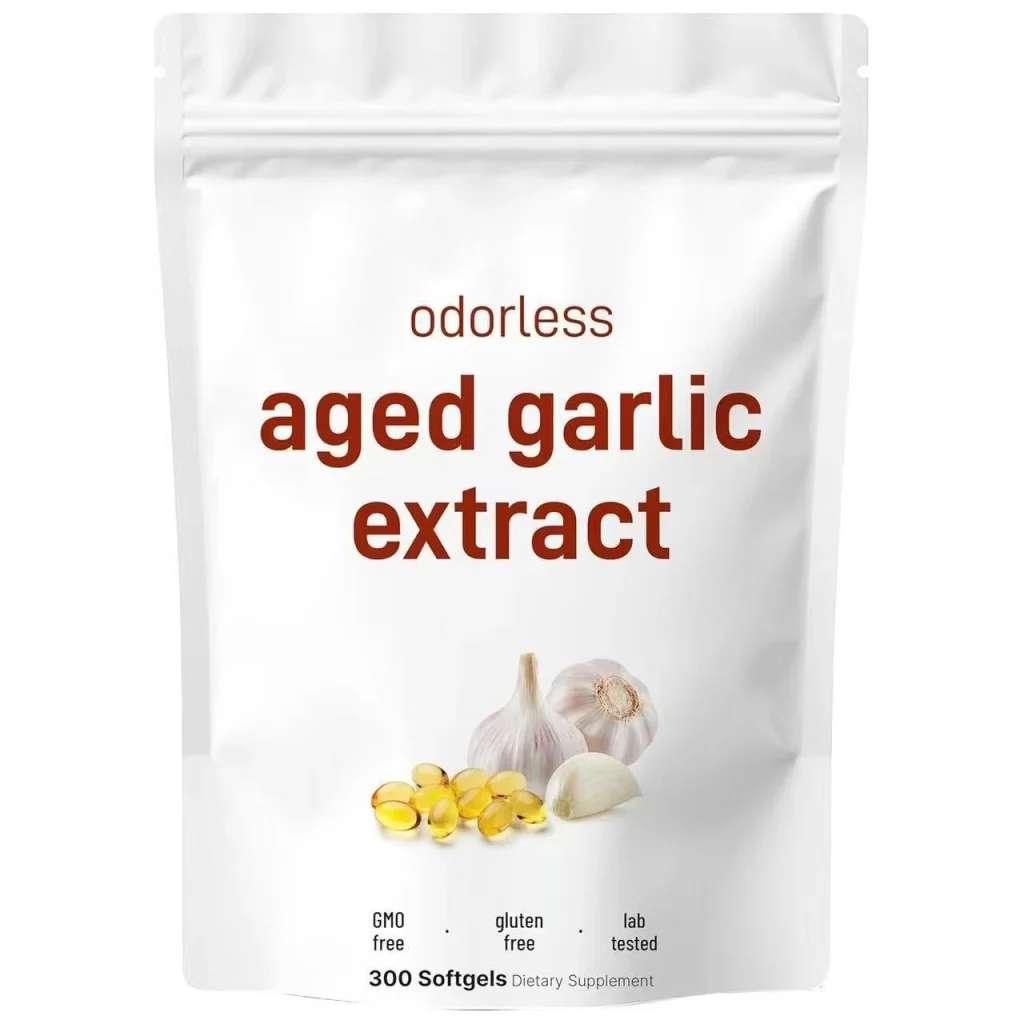
Jiabei Health provides flexible solutions for odorless garlic supplement manufacturer projects, including formulation, packaging, and export support.
Quick Answer for Buyers
If you are deciding between different garlic forms, here is a simple reference:
- Premium supplements → Aged garlic extract
- Odorless products → Aged garlic extract
- Softgel formulations → Aged garlic extract
- Budget-oriented products → Raw garlic powder
When Should You Choose Aged Garlic Extract Over Raw Garlic
Aged garlic extract is generally the better choice when your product requires:
- Consistent quality across batches
- Odorless formulation
- Long shelf life
- Positioning in mid-to-high-end markets
Raw garlic may still be used in low-cost formulations, but it is less suitable for standardized, export-focused products.
How to Choose the Right Garlic Ingredient for Your Product
Choosing the right garlic form depends on your product strategy.
If your goal is to develop a scalable, consumer-friendly supplement, aged garlic extract provides a more reliable foundation. It simplifies formulation, improves product stability, and aligns better with market expectations.
For brands planning softgel or capsule products, aged garlic extract is generally the more practical and commercially viable option.
FAQ
What is the main difference between aged garlic extract and raw garlic?
Aged garlic extract is processed to stabilize its active compounds and reduce odor, while raw garlic contains unstable compounds and a strong smell that can affect product consistency and consumer acceptance.
Is aged garlic extract better for supplements than raw garlic?
In most cases, yes. Aged garlic extract is more stable, easier to standardize, and more suitable for odorless supplement formulations such as capsules and softgels.
Why is raw garlic rarely used in commercial supplements?
Raw garlic has a strong odor and unstable composition, making it difficult to maintain consistent quality and user experience in large-scale supplement production.
What happens to allicin in aged garlic extract?
Allicin is unstable and degrades during processing. In aged garlic extract, it is converted into more stable compounds, which improves shelf life and product consistency.
Which form of garlic is best for softgel supplements?
Aged garlic extract is the preferred option for softgel supplements due to its stability, odorless nature, and suitability for standardized manufacturing.