An all in one protein supplement sounds simple enough: put protein and several useful ingredients into one scoop instead of asking consumers to buy four or five separate products.
The formula is rarely that simple.
Protein already takes up a meaningful part of a serving. Add creatine, collagen, fiber, carbohydrates, electrolytes, vitamins, minerals, or botanical ingredients, and the powder gets bigger fast. Flavor becomes harder. Texture changes. Costs move. Eventually, an impressive ingredient list can become a product nobody wants to drink twice.
That is the real question behind an all-in-one formula:
Not how many ingredients can fit on the label, but which ingredients deserve to be there.
Quick answer: An all in one protein supplement uses protein as the nutritional base and combines it with selected ingredients around a specific use case, such as sports recovery, daily nutrition, plant-based nutrition, or convenient meal support. There is no single standard all-in-one formula.
What Is an All in One Protein Supplement?
A regular protein powder is usually built around one primary objective: delivering protein.
An all-in-one protein powder goes further.
The protein might be combined with creatine and carbohydrates for a post-workout product. Another formula might use whey, collagen, fiber, and micronutrients for daily nutrition. A vegan version may rely on several plant proteins and additional ingredients to build a more complete product around one serving.
That does not mean every all-in-one powder is nutritionally complete.
“All in one” is a product concept, not a standardized nutritional definition. What matters is what the formula actually provides per serving and what job the product is meant to perform.
That difference becomes obvious when you look at products already on the market.
What Current All-in-One Protein Formulas Actually Look Like
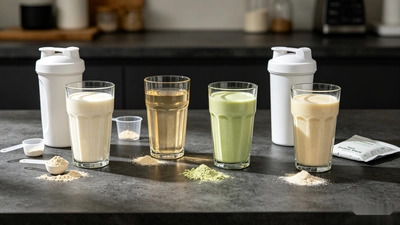
There is no dominant formula template.
Myprotein’s current All-in-One Recovery uses a 70 g serving to provide 30 g protein alongside 22 g carbohydrates, 5 g creatine monohydrate and 1.5 g HMB. Its protein system combines whey concentrate and whey isolate.
Bulk takes a different route with Clear Whey All-in-One. A 50 g serving provides 29 g protein and 17 g carbohydrate, with 3 g creatine; the ingredient list also includes glutamine and BCAAs. It is built around hydrolyzed whey isolate and a lighter clear-drink format rather than the usual creamy shake.
Bulk’s Vegan All In One changes the architecture again. Its 60 g serving provides 29 g protein and 19 g carbohydrate, while the protein blend includes pea protein isolate, brown rice protein, pumpkin seed protein, flaxseed powder, and quinoa flour.
Pure Protein’s All in One Powder moves away from that performance-heavy model. Its current product combines 15 g whey protein, 10 g collagen and 6 g fiber with 14 vitamins and minerals, making the concept much closer to everyday nutrition.
| Product Direction | Protein | Other Major Components | What the Formula Is Trying to Do |
|---|---|---|---|
| Performance recovery | 30 g | Carbs, 5 g creatine, HMB | Combine several post-training ingredients |
| Clear performance | 29 g | Carbs, creatine, glutamine, BCAAs | Deliver a lighter sports drink format |
| Vegan performance | 29 g | Multi-source plant protein, carbs | Build a more complex plant-based shake |
| Daily nutrition | Whey + collagen | Fiber, vitamins, minerals | Broaden protein into everyday nutrition |
The numbers are more useful than the marketing language.
A 50–70 g serving tells you something immediately: once several gram-level ingredients are combined with a meaningful protein dose, the scoop often has to grow.
That leads to the first rule of all-in-one formulation:
Every ingredient competes for space.
Start With the Protein Base, Not the Extras
It is easy to get distracted by creatine, collagen, greens, probiotics, mushrooms, or whatever ingredient is trending.
But protein is still the structural center of the product.
The protein system affects serving size, taste, texture, cost, and how much room remains for everything else.
| Protein Base | Where It Fits Well | Main Formulation Trade-Off |
|---|---|---|
| Whey concentrate | Mainstream and value-oriented formulas | More powder may be required for the same protein target |
| Whey isolate | Higher-protein and leaner-positioned formulas | Higher raw material cost |
| Milk protein / casein | Creamier daily nutrition shakes | Higher viscosity |
| Pea + rice or other plant blends | Vegan and dairy-free products | More work on taste, grit and suspension |
Whey concentrate and isolate are familiar choices because they can support relatively straightforward sports or daily protein products.
Plant protein is where development usually becomes more interesting.
A specification sheet may tell you the protein percentage. It will not tell you exactly how the finished shake feels.
Pea protein can introduce earthy or beany notes. Some plant proteins produce more sediment. Increasing protein concentration can make mouthfeel rougher. A flavor system that worked at the first prototype may stop working after the protein dose is raised.
So the relevant question is not simply:
Which protein is best?
It is:
Which protein system gives this particular product enough protein without creating a serving size, sensory, or cost problem later?
The Three Tests Every All-in-One Protein Formula Has to Pass

Before worrying about whether a formula has enough headline ingredients, run it through three tests.
1. The Dose Test
Can the formula include enough of each important ingredient to justify putting it there?
This sounds obvious. It is where many concepts start to break.
Suppose a brand wants:
30 g protein
5 g creatine
10 g collagen
6 g fiber
carbohydrates
electrolytes
vitamins and minerals
Protein, creatine, collagen and fiber alone already consume substantial physical space.
Flavor powder, sweeteners, processing aids and the rest of the formula still need room.
The result may be a very large serving before manufacturing has even been discussed.
This does not mean large servings are wrong. Myprotein currently uses a 70 g serving in one performance-oriented all-in-one product, for example.
The question is whether that serving size matches the intended product.
A 70 g recovery shake can make sense.
A brand trying to sell the same formula as a compact 35 g daily protein scoop has a different problem.
That is why gram-level ingredients should be resolved early.
Do not design a front label first and calculate the scoop later.
2. The Sensory Test
Will somebody willingly drink it every day?
A formula can work perfectly in Excel and fail completely in a shaker bottle.
Protein has its own flavor and texture.
Then minerals may add salty, metallic, or bitter notes. Botanical extracts can bring color and bitterness. Fiber changes viscosity. Plant proteins can introduce grit. Some ingredients increase foam or leave more sediment at the bottom of the bottle.
One additional ingredient may be manageable.
Six additional ingredients can change the entire flavor system.
This is why flavor development should not be treated as the last decorative step before production.
It is part of formulation.
A technically impressive powder that tastes unpleasant is still a weak product.
3. The Product Logic Test
Do all the ingredients still point toward one customer and one use occasion?
This is where marketing often creates trouble.
A brand starts with a performance protein.
Then collagen sounds attractive.
Fiber makes the label look more complete.
Mushrooms are trending.
Greens add another front-panel callout.
A probiotic would give the sales team something else to mention.
Eventually the product is supposed to support sports performance, beauty, digestion, immunity, energy and daily nutrition at the same time.
That is usually a warning sign.
A strong all-in-one formula does not need to contain everything.
It needs a reason for everything it contains.
What Else Can Go Into an All in One Protein Supplement?
Once the protein system and product purpose are clear, the supporting ingredients become easier to evaluate.
The useful question is not merely what an ingredient can add.
It is what that ingredient costs the formula in return.
| Ingredient | Why a Brand May Add It | What It Costs the Formula | When It May Not Make Sense |
|---|---|---|---|
| Creatine | Performance positioning | Several grams of serving space | General daily nutrition with no performance focus |
| Carbohydrates | Energy and recovery positioning | More calories and serving weight | Lean or low-carb positioning |
| Collagen | Broader protein / lifestyle positioning | Significant serving space | When conventional protein intake is the main message |
| Fiber | Daily nutrition and satiety positioning | Higher viscosity | Light or clear protein drinks |
| Electrolytes | Sports and hydration positioning | Salty/mineral flavor challenges | Products with no hydration use case |
| Vitamins & minerals | Broader daily nutrition | Taste and premix complexity | Simple performance formulas |
| Digestive enzymes | Product differentiation | Less impact on weight, but adds complexity | When there is no clear formulation reason |
| Botanicals | Lifestyle differentiation | Bitterness, color, odor, stability issues | When the dose exists mainly for label decoration |
Creatine Is a Good Example
Creatine makes logical sense in many sports-oriented formulas because protein and creatine already belong naturally in the performance nutrition space.
The NIH Office of Dietary Supplements includes both protein and creatine in its professional overview of supplements used for exercise and athletic performance.
But “protein + creatine” still does not automatically make a good product.
The amount matters.
The serving size matters.
The rest of the formula matters.
If creatine is part of the core proposition, room should be designed for it from the beginning rather than squeezed into an already crowded powder.
Fiber Changes More Than the Nutrition Panel
Fiber is attractive in daily nutrition products, but formulators notice its physical effect quickly.
The same powder can feel substantially thicker after fiber is added.
That can be useful if the target is a substantial breakfast-style shake.
It is much less useful if the brand wants something light and easy to drink after training.
This is a good example of why ingredient selection and product positioning cannot be separated.
Minerals Can Be Harder to Hide Than Consumers Realize
A vitamin/mineral premix looks simple on a specification.
Taste can be another story.
Depending on the mineral source and inclusion level, a formula may develop salty, metallic, chalky, or bitter notes that were not present in the base protein.
Now the flavor system has to work harder.
Sometimes the solution is better masking.
Sometimes the better solution is a simpler formula.
More Ingredients Do Not Automatically Mean a Better Product
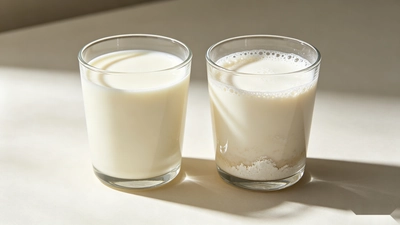
There is a point during product development where adding one more ingredient stops improving the formula.
That point is easy to miss because ingredient count is visible on the label while formulation compromises are not.
Consumers do not see the development spreadsheet.
They notice that the scoop is enormous.
Or that the shake is too thick.
Or that the chocolate flavor leaves a mineral aftertaste.
Or that they need 500 mL of water before it becomes drinkable.
This is the difference between a label-driven formula and a consumer-driven formula.
A label-driven formula asks:
What else can we put on the front panel?
A consumer-driven formula asks:
What will make this product better for the person actually using it?
Those questions often produce very different ingredient lists.
Three Formula Directions That Actually Make Sense
All-in-one does not need one formula template. It needs internal logic.
Performance & Recovery: Protect the Serving Size First
Imagine the brief calls for 30 g protein and 5 g creatine.
Those two numbers already define a substantial part of the formula.
If carbohydrates are also important to the positioning, the serving gets larger again. Myprotein’s current recovery formula illustrates this clearly: its 30 g protein and 5 g creatine sit inside a 70 g total serving that also contains carbohydrates and HMB.
At that point, adding collagen, greens and several grams of fiber because they are commercially attractive may not improve the product.
It may simply make the scoop larger.
A cleaner concept could be:
whey protein system + creatine + carbohydrate system + selected electrolytes
Everything points toward training and recovery.
That is enough.
Daily Nutrition: Texture Matters More Than the Ingredient Count
A daily-use protein product has a different job.
The consumer may drink it in the morning, at work, between meals, or as part of a smoothie. Flavor fatigue and texture matter because usage can be frequent.
A formula could combine a dairy protein system with fiber and selected vitamins and minerals. Collagen might fit if it supports the intended positioning.
The key question becomes:
Will this still feel pleasant on day 20, not just during the first sample tasting?
That changes development priorities.
You may accept slightly less front-label complexity in exchange for better mouthfeel, a manageable serving size, and a flavor consumers can use every day.
Plant-Based Protein: Do Not Just Replace the Whey
This is one of the easiest mistakes to make.
Take a whey formula.
Remove whey.
Add pea protein.
Call it vegan.
The sensory profile can change dramatically.
Plant-based products should usually be treated as their own formulation system. Protein combinations, flavor masking, sweetness, viscosity, and sedimentation may all need adjustment.
Bulk’s current Vegan All In One is a useful market example: instead of relying on one protein, it uses pea, brown rice, pumpkin seed, flaxseed and quinoa-based ingredients within the blend.
The lesson is not that every brand needs five plant sources.
It is that plant protein architecture deserves deliberate development rather than a simple dairy-to-plant substitution.
All in One Protein Supplement vs Regular Protein Powder
Neither format is inherently better.
They solve different jobs.
| Regular Protein Powder | All in One Protein Supplement | |
|---|---|---|
| Main objective | Deliver protein | Combine several relevant functions |
| Formula complexity | Lower | Higher |
| Typical serving | Often smaller | Can become much larger |
| Flavor difficulty | Lower | Usually higher |
| Texture challenge | More predictable | Depends heavily on added ingredients |
| Product differentiation | Often based on protein/flavor | More room for concept differentiation |
| Development cost | Usually lower | Usually higher |
| Best fit | Simple protein intake | One defined multi-ingredient use case |
If a consumer only wants protein, a straightforward protein powder may be the better product.
There is no prize for making a simple problem more complicated.
An all-in-one formula makes more sense when it genuinely replaces several things the same consumer would otherwise use in the same routine.
Is an All in One Protein Supplement a Meal Replacement?
Sometimes the categories overlap.
They are not automatically the same thing.
A sports formula containing whey, creatine and electrolytes can reasonably be described as all-in-one within its intended performance routine, but it is clearly different from a product built around broader daily nutrition.
At the other end of the market, some protein smoothie products deliberately combine protein with collagen, fruit and other functional ingredients and position themselves much closer to a convenient meal. FlavCity, for example, currently markets several protein smoothies with 25 g protein, 10 g collagen, real fruit and functional mushrooms.
The label itself should answer the question.
Look at:
protein
total calories
fat
carbohydrates
fiber
micronutrients
serving size
Then look at the intended use.
Do not assume the phrase “all in one” automatically means “complete meal.”
How to Read an All-in-One Protein Label in 60 Seconds
You do not need to analyze every ingredient before you can understand the architecture of the product.
Start with serving size.
Then look at protein grams.
Suppose Product A uses a 32 g serving and provides 25 g protein, while Product B uses a 60 g serving and provides 25 g protein.
Neither number tells you which product is better.
But the second formula clearly has much more material allocated to something other than the primary protein.
Now find out what.
Check carbohydrates, collagen, fiber, creatine, fats and other gram-level ingredients.
Next, look at the ingredients promoted heavily on the front panel. Are their amounts disclosed? Do they appear central to the formula, or are they simply part of a long ingredient story?
Then look at calories and macros.
A recovery product with carbohydrates should not be judged against the same numbers as a low-carbohydrate daily protein.
Finally, ask the simplest question:
Does this formula match what I am buying it for?
That 60-second check tells you more than counting how many ingredient names appear on the package.
How an All-in-One Protein Formula Is Actually Developed

For a brand, formulation works better when decisions happen in the right order.
Define the Consumer First
“People who use protein” is too broad.
A post-workout customer, a vegan consumer looking for everyday protein, and someone wanting a convenient breakfast product have different expectations.
That decision affects nearly everything downstream.
Set the Protein Target and Approximate Serving
Before adding ten secondary ingredients, decide how much protein the product is supposed to provide.
Then estimate how much space remains.
This is where some concepts need to be simplified before expensive sampling begins.
Brands developing custom blends can work through these early decisions with a powder supplement manufacturer before locking the full ingredient list.
Add Ingredients That Support One Core Idea
Now evaluate creatine, fiber, collagen, electrolytes, micronutrients, botanicals, or other additions.
Each should survive the three tests:
Dose. Sensory. Product logic.
If an ingredient fails all three, popularity is not a good reason to keep it.
Prototype the Whole Formula
Do not evaluate the protein, fiber system, mineral premix and flavor separately and assume the final powder will behave the same.
It will not always.
The combined prototype is where you start seeing:
viscosity
grit
foam
sediment
sweetness
aftertaste
color
aroma
That feedback may change the ingredient list.
That is normal.
Test the Product the Way the Customer Will Use It
A laboratory sample that looks fine in a cup is not enough.
If the package tells customers to shake it with water, test it in water.
If the serving is supposed to work in a shaker bottle, use a shaker bottle.
Check what happens immediately after mixing and after it sits for a few minutes.
A product has to survive the use occasion, not just the formulation document.
Finalize Specifications Before Commercial Production
Once the formula is approved, finished-product specifications, testing requirements and batch documentation need to be defined.
For private label buyers, a batch-specific supplement COA can help connect finished-product test results with the batch being released.
For dietary supplements manufactured for the U.S. market, FDA’s dietary supplement CGMP requirements under 21 CFR Part 111 cover areas including specifications, production controls, quality control, manufacturing records, testing, packaging and labeling.
Formulation Note
The most expensive version of an all-in-one protein formula is not necessarily the one with the most costly ingredients.
It can be the formula that reaches sampling with too many unresolved decisions.
If the serving size, protein target, major gram-level ingredients and product positioning are still moving at the same time as flavor development, every revision affects several other variables.
Resolve the big numbers first.
Then tune the product.
Developing a Private Label All in One Protein Supplement
A private label project does not need to begin with a finished formula.
A useful development brief can be much simpler:
Who is the product for?
What should one serving accomplish?
Which protein source do you prefer?
How much protein should it provide?
Which two or three supporting ingredients are genuinely important?
What flavor and packaging format do you want?
What market will the product be sold in?
From there, the manufacturer can evaluate serving size, ingredient compatibility, flavor difficulty and manufacturing feasibility before sampling.
Jiabei Health provides OEM and ODM supplement manufacturing services for custom powder projects, including formula development, flavor adjustment, blending, packaging, testing and export documentation.
The goal should not be the longest ingredient list in the category.
It should be a product whose formula, flavor, serving size and positioning still make sense when they all meet in the same scoop.
Frequently Asked Questions
What is an all in one protein supplement?
An all in one protein supplement combines protein with selected nutritional or functional ingredients in one powder. Depending on the product, those ingredients may include creatine, carbohydrates, collagen, fiber, electrolytes, vitamins, minerals, or other functional components. There is no single standard formula.
Is an all in one protein supplement the same as a meal replacement?
No. Some all-in-one products provide broader nutrition and may overlap with meal-replacement positioning, while others are primarily sports protein formulas with additions such as creatine or electrolytes. The nutrition panel and intended use are more important than the phrase “all in one.”
Can creatine and protein be combined in the same powder?
Yes. Creatine and protein are commonly combined in performance-oriented powder products. During formulation, brands still need to account for creatine dose, protein target, total serving weight, flavor, mixability and the intended use of the finished product.
Can an all in one protein supplement be custom formulated?
Yes. Protein source, protein level, creatine, collagen, fiber, carbohydrates, micronutrients, flavor, sweetener system, serving size and packaging can all be adjusted around a brand’s target market. The best starting point is usually the target consumer and product purpose rather than a long ingredient wish list.