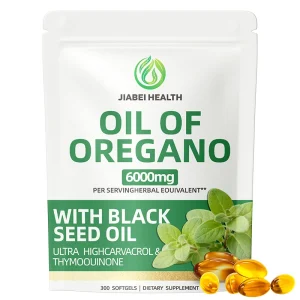
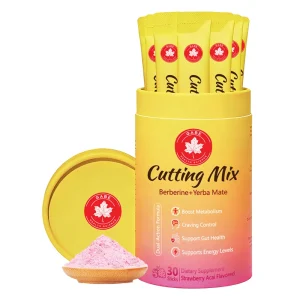
These berberine softgels combine berberine HCl with yerba mate, chromium, magnesium, cinnamon, 5-HTP, fructooligosaccharides (FOS) and ginger in one multi-ingredient formula.
The current formula provides 300 mg of berberine HCl per three-softgel serving, with 150 softgels and 50 servings per pouch.

Unlike a basic single-ingredient berberine supplement, this formula is designed for brands looking for a broader product concept around metabolic wellness, weight management, digestive support and active lifestyle positioning.
Product Overview
| Specification | Details |
|---|---|
| Product Type | Berberine Softgels Complex |
| Berberine | 300 mg Berberine HCl per serving |
| Serving Size | 3 Softgels |
| Supporting Ingredients | Yerba Mate, Chromium, Magnesium, Cinnamon, 5-HTP, FOS, Ginger |
| Count | 150 Softgels |
| Servings per Container | 50 |
| Current Packaging | Resealable Stand-Up Pouch |
| Optional Packaging | Bottle or Custom Pouch |
| Formula | Existing Formula or Custom Development |
| Service | Private Label / OEM / ODM |
What’s in the Formula?
This is not a standard berberine-only product. The formula combines eight ingredients, each contributing a different component to the overall product concept.
| Ingredient | Current Formula* | Role in the Formula |
|---|---|---|
| Berberine HCl | 300 mg | Primary berberine component |
| Yerba Mate Extract | 300 mg | Adds a botanical energy component |
| Chromium | 200 mcg* | Trace mineral commonly used in metabolic formulas |
| Magnesium | 200 mg* | Adds mineral nutrition to the formula |
| 5-HTP | 100 mg | Broadens the formula beyond metabolism alone |
| Cinnamon Bark Extract | 100 mg | Botanical commonly used in metabolic wellness products |
| Fructooligosaccharides (FOS) | 500 mg | Adds a prebiotic component |
| Ginger Extract | 50 mg | Adds a digestive-oriented botanical component |
*The amounts above reflect the current reference formula. Final ingredient forms, elemental mineral amounts and Supplement Facts should be confirmed against the approved production specification before label printing.
Why Yerba Mate Matters in This Formula
Yerba mate gives the formula a different direction from a conventional berberine supplement. It introduces a botanical energy component that can work well in active lifestyle and weight-management product concepts.
However, the amount of yerba mate extract alone does not tell you exactly how much caffeine the finished product contains. Caffeine levels depend on the raw material, extraction ratio and standardization specification.
Brands that want to understand this ingredient in more detail can review our yerba mate caffeine content guide.
A Different Approach to Standard Berberine Softgels
Many berberine softgels on the market keep the concept relatively simple: a higher-dose berberine formula, sometimes combined with an oil-based delivery system.
This formula takes a different approach.
Instead of making berberine the only story, it combines berberine HCl with yerba mate, chromium, magnesium, cinnamon, 5-HTP, FOS and ginger.
That makes it more suitable for brands looking to develop a broader metabolic wellness or weight-management SKU rather than another single-ingredient berberine product.
It also gives brands more room to differentiate the product through ingredient balance, positioning and packaging.
For brands that like this ingredient direction but prefer a drinkable format, our berberine yerba mate powder sticks use a related multi-ingredient concept in a single-serve powder format.
What Matters When Putting Berberine into a Softgel
Developing a berberine softgel is not simply a matter of moving a capsule formula into a softgel shell.
Berberine HCl, botanical extracts, minerals and other suspended ingredients all contribute to the total fill load. Their physical characteristics can affect:
- Fill volume
- Suspension stability
- Viscosity
- Fill uniformity
- Softgel size
- Number of softgels required per serving
This becomes especially important in a multi-ingredient formula like this one, where berberine is only one part of a larger blend.
Before sampling, the target formula should therefore be reviewed against practical softgel fill capacity and serving-size requirements rather than assuming that every capsule formula can be transferred directly into a softgel.
Brands evaluating this dosage form can learn more about our softgel supplement manufacturing capabilities, including formula review, fill preparation, encapsulation and commercial production.
Custom Berberine Softgel Formula Options
The pictured product can be used as a starting formula, but it does not need to remain fixed.
Depending on the product brief, the following areas can be adjusted:
| Customization Area | Options |
|---|---|
| Berberine Formula | Berberine level and ingredient combination |
| Supporting Ingredients | Yerba mate, minerals, botanicals and other functional ingredients |
| Serving Format | Ingredient load, softgel size and serving count |
| Pack Size | Custom softgel count |
| Packaging | Stand-up pouch, bottle, label and retail carton |
| Branding | Private label or fully customized packaging |
A simpler berberine-focused formula can also be evaluated if your brand does not need the full multi-ingredient blend.
Customer-supplied formulas can be reviewed before sampling to determine whether the requested ingredient load and serving format are practical for softgel manufacturing.
150-Count Pouch or Bottle?
The current product uses a 150-softgel resealable stand-up pouch.
This format offers a relatively large front-facing design area and gives the product a lighter, more lifestyle-oriented appearance than a conventional supplement bottle.
For brands selling through traditional supplement retail channels, however, a bottle may still be the more familiar presentation.

The better choice depends on:
- Softgel count
- Finished softgel size
- Retail channel
- Shipping requirements
- Shelf presentation
- Brand positioning
Both pouch and bottle formats can be developed around the final product specification.
Specification and Label Review
Because this is a multi-ingredient formula, the production specification should be confirmed before final packaging artwork is approved.
This is particularly important for ingredients such as magnesium and chromium.
For minerals, the weight of the raw material and the amount declared as elemental mineral are not necessarily the same. The finished Supplement Facts panel should therefore be prepared from the approved formulation and ingredient specifications rather than copied directly from a preliminary concept label.
The same applies to the softgel serving description, supporting ingredients and shell composition.
For each project, the final label should match the approved:
- Ingredient specification
- Serving size
- Softgel count
- Raw material form
- Finished-product testing requirements
- Target-market labeling rules
Batch-specific documentation and testing can then be prepared according to the agreed specification.
Berberine Softgels FAQ
What are berberine softgels?
Berberine softgels are dietary supplements that deliver berberine in a softgel dosage form rather than a conventional two-piece capsule or tablet. Formulas can range from simple berberine-only products to multi-ingredient combinations like this one.
How much berberine is in this formula?
The current reference formula provides 300 mg of berberine HCl per three-softgel serving.
Is this a single-ingredient berberine supplement?
No. This is a multi-ingredient formula combining berberine HCl with yerba mate, chromium, magnesium, cinnamon, 5-HTP, FOS and ginger.
Can the berberine dosage and supporting ingredients be changed?
Yes. The amount of berberine and the supporting ingredient combination can be adjusted. The final formula needs to be reviewed together with the target serving size and practical softgel fill capacity.
Can this product be packed in bottles instead of pouches?
Yes. The current version uses a 150-count stand-up pouch, but bottle packaging, different softgel counts, custom labels and retail cartons can also be developed.