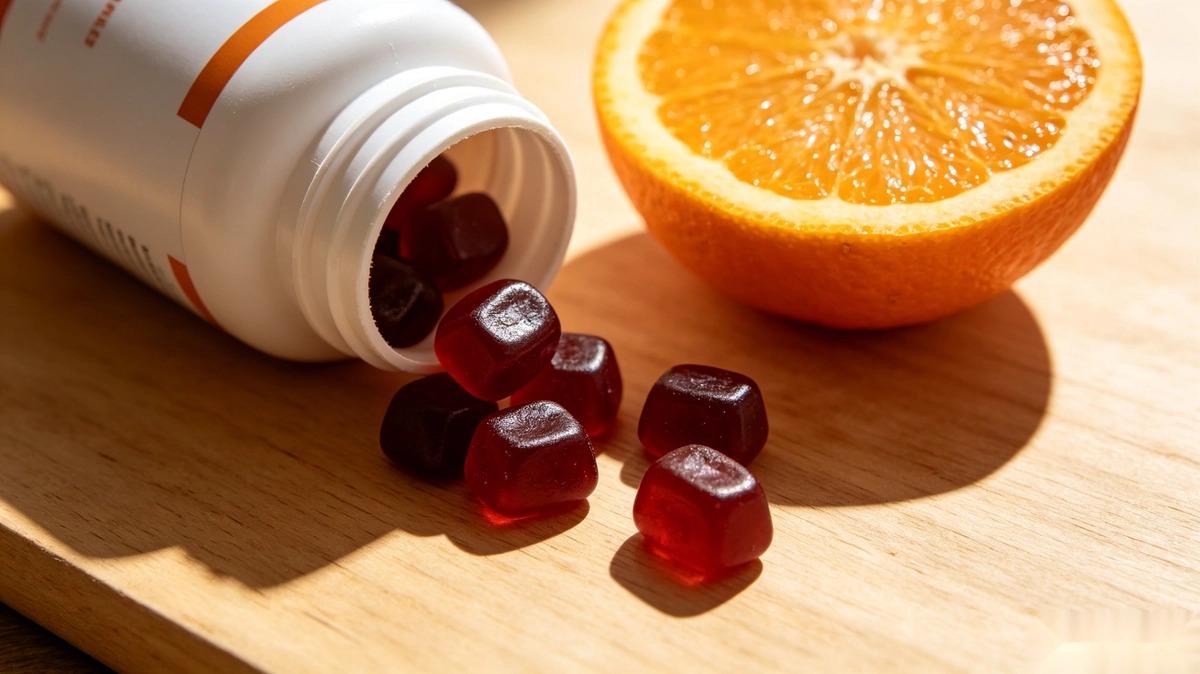
When I first started mixing collagen prototypes in a pilot kitchen fourteen years ago, no one talked about “private label collagen” as a serious business model. You had a handful of bulk powder traders, and you had finished brands that had spent years building their own factories. The idea that a startup could walk into a plant, sit down with a formulator, and walk out six weeks later with a shelf-ready beauty supplement that actually tasted decent? That wasn’t the norm.
Now? Everyone’s in the collagen game — and most of them are working with OEM and ODM partners to get there. So when a brand founder types “collagen supplement manufacturing” into a search bar, they’re not looking for a dictionary definition. They’re trying to figure out who can actually build their product, what format makes sense, why one collagen source costs triple another, and which manufacturer will still answer emails six months after the invoice is paid.
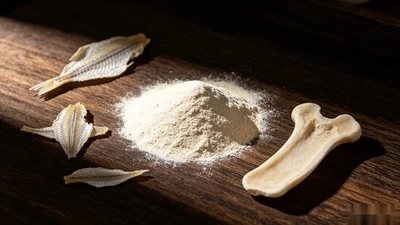
I’ve spent the last decade and a half inside exactly those conversations. I’ve formulated collagen powders that needed to dissolve perfectly in iced coffee, gummies that couldn’t melt in a Dubai warehouse, and capsules that had to fit six actives into a size 00 shell. This guide is what I wish every first-time collagen brand would read before they send their first sourcing email.
1. What Collagen Supplement Manufacturing Actually Includes
A lot of brands walk into their first sourcing conversation thinking manufacturing means “you give me collagen powder and I put it in a tub.” That’s packaging. Manufacturing is something else entirely, and it starts way further upstream.

Here’s what’s actually inside the tent:
Collagen source selection. You can’t formulate anything until you know whether you’re working with bovine hide, marine scales, chicken sternum, or a blend — because that choice determines solubility, taste, certification eligibility, and serving size economics. More on this in the next section, because it’s the decision ripple that touches everything.
Formula development. Pure collagen is rare in commercial products. Most formulas combine collagen peptides with vitamin C, hyaluronic acid, biotin, maybe a botanical or two. How those ingredients play together — whether they clump, discolor, or degrade — is a formulation problem, not a sourcing problem. A decent manufacturer catches incompatibilities at bench scale. A great one doesn’t let them happen at all because they’ve seen the failure modes before.
Dosage form choice. Powder, gummy, capsule, tablet, or liquid. I’ve watched brands fall in love with a format first and then try to force their collagen dose into it — which is completely backwards. The format should serve the dose and the brand positioning, not the other way around. Later in this guide I’ll walk you through exactly what each format can and can’t do.
Flavor and texture work. This is where the art lives. Hydrolyzed collagen has a distinct taste. Marine collagen poorly processed can carry a fish note that amplifies in humidity. Gummies with collagen can stiffen into leather or slump into a sticky puddle over a six-month shelf life. Fixing any of this takes bench iterations, not just a formula on paper.
Sample testing, bulk production, and packaging. Only after the bench work is stable do you move to pilot and commercial scale. And packaging isn’t cosmetic — a moisture-sensitive gummy in the wrong jar-seal combination will fail quietly during transit and show up on a retailer’s shelf looking nothing like the sample you approved.
COA and export documents. I’ve seen containers stall at customs for weeks because a brand didn’t know they needed a Certificate of Origin or a specific health certificate. Your manufacturer should be able to tell you — before you ship — what paperwork your destination market requires.
If you’re going to work with a manufacturer on a custom collagen product, you want one that treats this entire sequence as one connected system. That’s what full-service OEM and ODM work actually involves: not just filling a tub, but running the process from concept to compliance.
2. Choosing the Right Collagen Source (Without Going Down a Science Rabbit Hole)
I’m not going to explain molecular weight distributions to you in this section. What I am going to tell you is what source choice means for your brand’s taste, cost, label claims, and target market access — because that’s what actually matters when you’re developing a product.
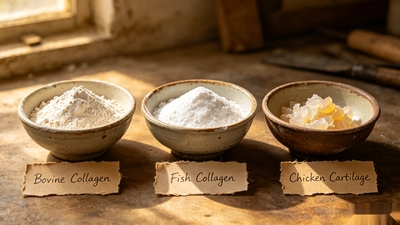
Bovine collagen. This is the workhorse. Type I and III, abundant in skin and connective tissue. From a manufacturing standpoint, bovine collagen is generally the easiest to work with — milder taste than marine, broadly available, and usually the most cost-effective on a per-serving basis. It can carry Halal and Kosher certification if the sourcing is documented properly, but that requires verification, not assumption. For brands targeting mainstream or value-conscious beauty and wellness segments, bovine is often the pragmatic starting point.
Marine collagen. Primarily Type I, and typically positioned as the premium beauty ingredient. Marine collagen peptides often test with a lower average molecular weight, which some research links to better absorption — though I’d add that peptide sequence matters as much as size. The real-world challenge with marine is taste and odor. Enzymatic hydrolysis plus physical deodorization can produce genuinely neutral marine collagen, but not every supplier invests in that. If you’re aiming for the premium beauty segment where “marine” carries cachet, it’s worth paying for properly processed material. If you’re tight on cost, marine can erode your margin without delivering a proportionally better consumer experience.
Chicken collagen (Type II). This is the joint-health specialist, not a beauty ingredient. It works through oral tolerance mechanisms, not through direct collagen replenishment. If your product is about joints, you’re probably looking at this. If it’s about skin, you’re probably not.
Hydrolyzed collagen peptides. This is what the industry uses for almost all powders, gummies, and ready-to-mix products. Hydrolysis breaks down the native protein into smaller peptides that dissolve in cold water and won’t gel. When I formulate a stick pack meant to disappear into a glass of water in 15 seconds, I’m specifying hydrolyzed peptides every time.
Multi-collagen blends. These mix bovine, marine, and chicken to claim multiple collagen types. They’re commercially appealing as a “complete” story, but formulation-wise, you’re now juggling different solubility profiles, taste notes, and allergen statements. Also, reaching a meaningful dose of each type can push total serving size quite high — something to watch if you’re considering a format with limited active capacity.
When I help a brand work through this decision, the conversation starts with “who is buying this and where is it being sold?” because source selection isn’t a purity contest. It’s a supply chain, cost, label, and certification decision disguised as an ingredient question.
And if you’re building a beauty-positioned product, you don’t just need a good source story — you need to know there’s real evidence behind what you’re selling. This 2023 systematic review and meta-analysis, covering 26 randomized controlled trials and over 1,700 participants, confirmed that oral collagen peptides consistently improve skin hydration and elasticity. That’s not a marketing line; that’s the clinical foundation a lot of modern collagen beauty claims are built on, and it’s worth knowing when you’re writing your label and your brand narrative.
3. Collagen Supplement Formats: A Real-World Comparison
I’ve watched enough brands launch across different formats to tell you this: the format is your product’s business model in physical form. It dictates your maximum collagen dose, your packaging cost, your shipping profile, and what kind of shelf space you’ll fight for. The table below lays out the landscape, but the real decision lives in the tension between dose, experience, and cost.
| Format | Collagen per Serving | Consumer Experience | Key Manufacturing Challenges |
|---|---|---|---|
| Powder | 5–15 g easily | Mixes into drinks; high-dose, transparent | Solubility in cold water, deodorization, anti-caking in humid conditions |
| Gummies | 0.5–2 g (often multiple pieces) | Enjoyable daily ritual; strong lifestyle appeal | Limited active load per piece, texture stability, moisture migration, flavor masking over shelf life |
| Capsules / Tablets | ~0.5–0.7 g per capsule | Convenient, precise multi-ingredient delivery | Bulky collagen limits per-capsule dose; flowability for encapsulation; dissolution performance |

Collagen Powder
If your brand promise is “a meaningful dose of collagen,” powder is the most honest format. You can deliver 10 grams of collagen in a single serving without asking the consumer to eat a handful of anything. Jar, pouch, or stick pack — the packaging flexibility covers mass, value, and premium portable segments.
The manufacturing side isn’t trivial, though. Solubility has to be dialed in so that the powder vanishes into cold liquid. Taste needs to be neutral enough that an unflavored version actually tastes like nothing (harder than it sounds). And in humid climates, collagen powder can clump into something un-scoopable. I’ve spent countless formulation hours on exactly these three variables.
For a much deeper dive into what goes into producing powders that actually perform, I’ve written separately about powder supplement manufacturing — covering blend uniformity, particle behavior, and the packaging specifications that protect product integrity through global distribution.
Collagen Gummies
Gummies are what happen when supplementation meets confectionery, and for beauty brands, that’s often a perfect match. The ritual feels less clinical, the format is social-media-friendly, and consumers genuinely enjoy taking them.
The catch — and there’s always a catch — is what I call the “payload problem.” A finished gummy weighs about 3 to 4 grams, and within that you need to fit your collagen, your other actives, your gelling system, sweeteners, flavors, and moisture-managing agents. Most collagen gummies top out at around 1 to 2 grams of collagen per serving, and that usually requires two to three pieces. If your brand story is built around a clinical 5- or 10-gram collagen dose, gummies become a math problem you can’t solve.
Texture is the other battlefield. Collagen can accelerate staling or softening in a gummy base. Flavor systems have to mask not only the inherent collagen note but also any bitterness from co-formulated actives. And then there’s stability testing — hot, humid, cycling temperatures — because a gummy that leaves the factory perfect and arrives at a distribution center in Singapore as a single fused block is not a product, it’s a recall.
I’ve compared these two formats in detail elsewhere: collagen gummies vs powder breaks down the trade-offs from a product strategy perspective — dose, cost, and consumer behavior. If you’re on the fence, that piece might save you a multi-month detour.
And if beauty is the core of your brand, I’ve also covered what it takes to build a full beauty supplement portfolio through OEM — from formats to claim strategy. That’s the world where collagen, hyaluronic acid, and targeted actives combine into multiple SKUs under one brand umbrella.
Collagen Capsules and Tablets
Capsules and tablets aren’t the format for high-dose collagen, full stop. A size 00 capsule holds roughly 500 to 700 mg of powder, and achieving a 5-gram collagen dose would mean swallowing seven to ten capsules a day — which consumers simply won’t do.
Where capsules shine is functional combination. A single capsule can deliver collagen plus vitamin C, biotin, hyaluronic acid, zinc, and a botanical — all precisely measured, all in one swallow. For brands targeting consumers who want a simple daily pill rather than a drink to mix or a gummy to chew, capsules are still a perfectly legitimate path.
The manufacturing watchpoints: powder blend flowability (collagen is bulky and can bridge in encapsulation equipment), hygroscopicity control, and dissolution testing. A capsule that doesn’t release its contents properly is an expensive way to deliver nothing.
4. The Custom Collagen Formulation Process, Step by Step
I’ve walked through this process with enough brands to know that the ones who understand the timeline panic less. So here’s what a real custom formulation project looks like, from first conversation to finished product.

Step 1: Define the product goal. What benefit are you delivering — skin hydration, wrinkle improvement, joint comfort, overall wellness? Who’s buying it? Where? What collagen dose per serving do you need to support your claims? These answers shrink the format and source options immediately.
Step 2: Choose the collagen source. Based on goal, target market, certification needs, and budget, we lock in the collagen type and origin. This is where the bovine-versus-marine-versus-blend decision gets finalized.
Step 3: Lock in the dosage form. Powder, gummy, capsule. The target dose from Step 1 usually makes this call — if you need 10 grams per serving, powder is the obvious answer. If the brand is beauty-lifestyle and the dose is lower, gummies enter the conversation.
Step 4: Design the formula. My team builds the complete matrix: collagen percentage, co-active ingredients, flavor system, sweetener profile, colorants if any. We check that everything is market-compliant and ingredient-compatible.
Step 5: Develop and iterate bench samples. Small-scale prototypes get evaluated for taste, solubility, texture, and appearance. If the powder doesn’t dissolve fast enough, we adjust. If the gummy texture trends too rubbery, we reformulate. This loop typically runs two to four weeks.
Step 6: Flavor and texture fine-tuning. The bench iterations continue until the sensory profile is locked. For powders, that’s solubility and mouthfeel. For gummies, that’s chew, moisture, and flavor intensity. For capsules, it’s fill consistency and targeted dissolution.
Step 7: Confirm packaging. The right container and closure system isn’t just branding — it’s the primary defense against moisture and physical damage. I’ve written a detailed guide to the packaging questions brands should ask manufacturers before committing to a format, because packaging choices made late in development are exponentially more expensive to change.
Step 8: Production and documentation. Once formulation, format, and packaging are all confirmed, we scale to commercial production, conduct finished product testing, issue the COA, and prepare export documents for the destination market.
This entire sequence is what I’d call full private label and custom manufacturing integration — not just a production run, but a development process that produces a stable, compliant product capable of clearing customs without surprises. If you want to see how all these steps connect from initial concept to global delivery, I’ve mapped out the entire supplement manufacturing process in more detail.
5. Quality Control: The Stuff You Can’t See on a Label
Brands ask me about certifications all the time, and credentials absolutely matter. But certifications are the public outcome of a quality system. What I care about more is whether that system is woven into the manufacturing process or bolted on at the end as a final check.
A manufacturer with genuine quality discipline tests raw materials on arrival — identity, purity, heavy metals, microbial limits. They verify that the collagen peptides match the supplier’s molecular weight profile because that directly affects solubility and absorption. They pull in-process samples during gummy production to confirm that heat exposure isn’t degrading active ingredients. They retain finished product samples for the entire shelf life and can pull batch records within hours if a question ever arises.
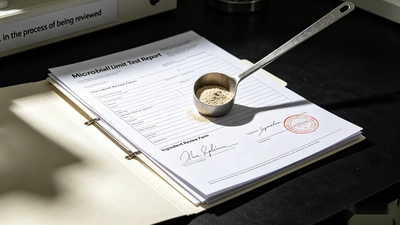
The certifications to look for include GMP, HACCP, and FSSC 22000 or BRCGS — these are the globally recognized food safety management standards. Halal and Kosher certifications need to be current and cover the specific product you’re producing, not just the facility in general. Certificates of Origin, Free Sale Certificates, and market-specific health documentation should be standard outputs, not special requests.
Documentation isn’t paperwork. It’s proof that everything happened the way you said it did.
6. How to Compare Collagen Supplement Manufacturers
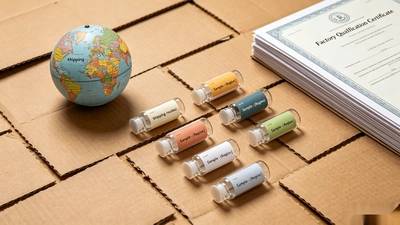
If I were a brand evaluating manufacturers for a collagen product, here’s what I’d actually care about, in order:
Multi-format capability. You might launch with a powder, but if you add a gummy SKU next year, do you want to start a whole new vendor search? Keeping your product portfolio under one manufacturing roof keeps your IP, quality records, and supply chain manageable.
Real formulation expertise, not just filling. Some manufacturers are excellent contract packagers: you give them a finished formula and they execute. That works for brands with internal R&D. Most collagen startups, however, need a partner who can recommend sources, design flavor systems, and foresee stability problems before they become production disasters. The OEM/ODM capability gap is real.
Documentation readiness. If a manufacturer hesitates or takes weeks to produce a COA, GMP certificate, or Certificate of Origin, that tells you something about their operational maturity. Ask to see sample documentation during the evaluation phase. Serious manufacturers don’t treat this as a special favor — it’s part of their daily workflow.
Target-market export experience. The label requirements and permitted ingredient lists for the US, EU, Middle East, and Southeast Asia are all different. A manufacturer with experience in your market can review your label before you print it — which is infinitely cheaper than fixing a compliance problem after production.
Packaging guidance. The wrong jar, lid liner, or pouch film can ruin a perfectly good product. A manufacturer that actively guides you on packaging specifications — not just prints your artwork — is actively protecting your product.
Flexibility across private label and custom. Some brands want to launch fast with a proven formulation and custom branding. Others need a fully bespoke formula. The best manufacturing partners offer both paths without forcing you into one lane.
Price matters, but it should be the last filter, not the first. I’ve seen brands save ten cents a unit on powder only to spend thousands fixing formulation errors that a more experienced (and slightly more expensive) manufacturer would have caught at bench scale.
7. FAQs
What does collagen supplement manufacturing actually mean?
It’s the full development and production sequence — source selection, formulation, format choice, flavor and texture development, sample iteration, commercial production, packaging, and delivery of all compliance documentation required for the target market.
Can collagen supplements be made as gummies, powders, capsules, or tablets?
Yes. Each format has different dose limits and technical challenges. Powders handle high collagen servings easily. Gummies offer strong consumer appeal but constrain active load per serving. Capsules and tablets work well for combination products with precise multi-ingredient dosing but aren’t ideal for high-dose collagen alone.
Which collagen format is best for a private label brand?
It depends on your target dose, brand positioning, and consumer. Beauty-lifestyle brands often lean toward gummies. Brands built around high-potency collagen tend to prefer powder. Combination wellness products often work best in capsules. There’s no universal “best” — only the format that fits your specific strategy.
Can a manufacturer develop a custom collagen formula from my concept?
Yes, if they have in-house R&D capability. This is the difference between a manufacturer that only executes existing formulas and one that can take your product idea and translate it into a stable, scalable, commercially viable product.
What documents are typically needed for collagen supplement export?
At minimum: Certificate of Analysis, GMP certificate, Certificate of Origin, and relevant religious dietary certifications. Depending on the destination, you may also need a Free Sale Certificate, health certificate, or additional label compliance paperwork. Your manufacturer should advise on market-specific requirements.
How should brands evaluate collagen supplement manufacturers?
Look at multi-format capability, formulation depth, documentation readiness, export experience in your target market, packaging guidance, and flexibility across private label and custom development paths. Cost should be evaluated in the context of what services are included, not as an isolated number.
Where to Go from Here
I’ve watched collagen products go from niche pharmacy powders to global beauty staples in a single career span. The brands that succeed aren’t the ones with the biggest ad budget — they’re the ones that treat manufacturing as part of their product strategy, not a commodity line item.
If you’re mapping out a collagen supplement right now, here are three things you can do this week:
- Pin down your target collagen dose per serving — because that number will eliminate certain formats immediately and save you weeks of theoretical debate.
- Decide whether your brand is built around a single flagship format or multiple SKUs across different formats, because that decision determines what kind of manufacturing partner you need.
- Find a manufacturer who can walk through this entire guide with you as a conversation, not a sales pitch — someone who answers your questions with specifics, not just reassurances.
I’ve spent the last 14 years helping brands do exactly that — build collagen products that hold up in the real world, across real supply chains, in real markets. If you’re ready to start that conversation, you know where to find us.