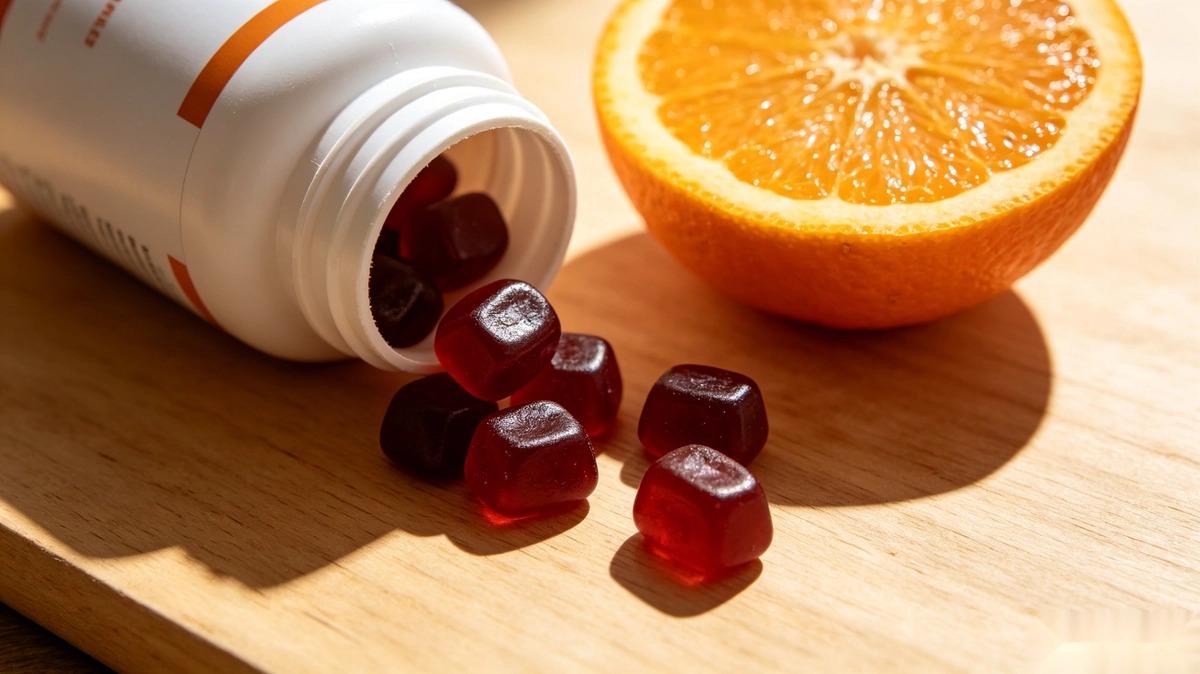
When comparing elderberry syrup vs gummies, syrup usually offers more flexibility in serving size, while gummies are easier to carry and take without measuring. Neither format is automatically stronger.
The real difference comes from the elderberry ingredient, the amount in a full serving, added sugar, supporting ingredients, and storage requirements. A clearly labeled gummy may be a better choice than a syrup with vague concentration claims—and the reverse can also be true.
Here is how to compare them without relying on packaging, texture, or large front-label numbers.
Elderberry Syrup vs Gummies at a Glance
| Factor | Elderberry Syrup | Elderberry Gummies |
|---|---|---|
| Serving | Measured with a spoon, cup, or dropper | Fixed number of gummies |
| Serving flexibility | Usually easier to adjust | Usually fixed per piece |
| Portability | Less convenient for travel | Easy to carry |
| Taste | May have a stronger berry or herbal taste | Usually sweeter and easier to chew |
| Added sugar | Varies by formula | Common, but low-sugar options exist |
| Storage | Some require refrigeration after opening | Usually stored at room temperature |
| Formula capacity | Can accommodate a larger liquid serving | Limited by gummy size, flavor, and texture |
A well-labeled gummy may be a better choice than a poorly explained syrup. The dosage form matters, but the formula matters more.
How Syrup and Gummies Differ in Formulation and Use
A liquid formula has more physical space for elderberry juice, powder, or extract. It can also provide a larger serving without requiring the user to chew several pieces.
That does not make syrup simple to formulate.
Botanical ingredients may have a strong taste, create sediment, or behave differently during storage. Some liquid products need to be shaken before use. Others may require refrigeration after opening.
Flavor, ingredient uniformity, preservation, and opened-bottle stability are all important parts of professional liquid supplement manufacturing.
Gummies have a different set of constraints. The active ingredients must fit into a relatively small piece alongside the gelling system, sweeteners, flavors, acids, and other supporting ingredients.
Adding more elderberry extract can increase bitterness, deepen the color, change moisture levels, or weaken the gummy texture. An experienced gummy supplement manufacturer has to balance botanical load with flavor, texture, stability, and practical serving size.
This is one reason some products require two or three gummies per serving. The number of gummies in the full serving matters more than the amount shown for one piece.
Is Elderberry Syrup Stronger Than Gummies?
Not necessarily.
Some syrups provide more elderberry material per serving, but the word “syrup” does not prove concentration. You still need to identify the type of elderberry ingredient and how its amount is expressed.
Compare the Elderberry Ingredient
An elderberry label may list:
- Elderberry juice
- Elderberry juice concentrate
- Elderberry fruit powder
- Elderberry extract
- Black elderberry extract
- Sambucus nigra fruit extract
- Fresh berry equivalent
These terms do not describe the same type of ingredient.
For example, a syrup may display 5,000 mg of fresh elderberry equivalent, while a gummy lists 100 mg of concentrated extract. The first figure may represent the quantity of fresh fruit used before processing. The second may refer to the actual weight of a concentrated extract.
The larger number is not automatically the stronger one.
A fair comparison may require additional information, such as the extract ratio, concentration method, or amount of actual extract in the serving.
Large front-label numbers can be accurate while still being difficult to interpret. Always check what the number represents before comparing products.
Compare the Full Serving
Start with the serving size shown at the top of the Supplement Facts panel.
For gummies, check how many pieces make one serving. For syrup, check whether the serving is measured in teaspoons, tablespoons, or milliliters.
Suppose a gummy provides 50 mg per piece, but two gummies make one serving. The relevant amount is 100 mg per serving.
The same applies to syrup. A bottle may list an amount for one teaspoon even though the suggested use calls for two teaspoons per day.
Compare:
- The amount per full serving
- The number of servings suggested per day
- The total amount supplied by the labeled daily use
Do not compare one gummy with one teaspoon unless those are the complete serving sizes for both products.
What Research Can and Cannot Tell Us
There is not enough evidence to conclude that elderberry syrup is inherently more effective than elderberry gummies.
The National Center for Complementary and Integrative Health notes that only a limited number of studies have examined elderberry for colds, flu, and other upper respiratory symptoms. Existing research does not establish that one supplement format works better than another.
Claims that syrup works faster or that gummies are less effective simply because they are chewable go beyond what the dosage form can prove.
The elderberry ingredient, its specification, the full serving, and the rest of the formula are more useful comparison points.
How to Read the Label Before You Buy
Two elderberry products may look similar on the front of the package and still be very different once you read the Supplement Facts panel.
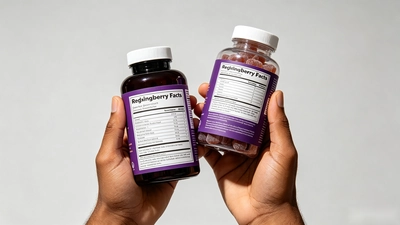
1. Identify the Elderberry Form
Look for a specific ingredient description rather than relying on the word “elderberry” alone.
An extract, powder, juice concentrate, and fresh berry equivalent may all be declared differently. A label that identifies Sambucus nigra also gives you more information than one that only says “elderberry blend.”
A less detailed label does not automatically indicate poor quality, but it does make comparison harder.
2. Compare the Amount Per Full Serving
Use the full serving—not the amount per gummy or per partial spoonful.
For gummies, note how many pieces make one serving. For syrup, confirm the measured volume.
Then review the suggested use. Some products recommend more than one serving per day, which changes the total daily amount.
3. Check the Extract or Equivalent Information
Useful details may include an extract ratio, fresh berry equivalent, juice concentrate ratio, standardization information, or the amount of actual extract per serving.
Not every label provides all of these details. When a product uses a large equivalent claim, look for an explanation of what that number means.
Without that context, the number may sound impressive but remain difficult to compare.
4. Compare Added Sugar Per Daily Serving
Both syrups and gummies may contain added sugar. Neither dosage form is automatically the lower-sugar option.
A gummy may contain a small amount per piece but require three pieces per serving. A syrup may taste sweeter while providing a similar amount of added sugar per labeled serving.
Check the added sugar line and calculate the total based on the number of servings you expect to take each day.
The ingredient list may include sweetening ingredients such as cane sugar, glucose syrup, tapioca syrup, honey, fruit juice concentrate, sugar alcohols, or high-intensity sweeteners.
“Made with honey” and “naturally sweetened” do not mean sugar-free.
Sugar-free gummies may use sugar alcohols or other sweetening systems. These can work well for some people, but they may not suit everyone.
5. Review the Rest of the Formula
Many elderberry products also contain vitamin C, zinc, echinacea, or other ingredients commonly used in seasonal wellness formulas.
More ingredients do not automatically make a product better. They change the purpose of the formula and may overlap with other supplements you already take.
Check the amount of each additional active ingredient, along with allergens, gelatin or pectin, flavors, preservatives, age guidance, and storage instructions.
A larger serving may reflect a combination formula rather than a higher elderberry amount.
Taste, Storage, and Everyday Convenience
Syrup requires more handling. You need to open the bottle, measure the serving, and usually rinse the spoon or cup afterward.
It may also be less convenient to carry, particularly after opening.
Some people still prefer it. A liquid serving may be easier than chewing several gummies, and some products provide more than one labeled serving option.
Before buying, check whether the syrup must be refrigerated, whether it needs to be shaken, and how long it should be used after opening.
Gummies remove most of the measuring. They are easy to carry, and the serving is already divided into pieces.
Their sweeter flavor may be easier for people who dislike herbal liquids. On the other hand, someone who does not enjoy sweet or chewy supplements may prefer syrup.
Gummies also need appropriate storage. Heat and moisture can cause them to soften, stick together, or lose their intended texture.
Because gummies resemble candy, they should be stored securely and kept out of children’s reach.
Taste and appearance are not reliable measures of concentration. A darker or thicker syrup is not necessarily stronger. A sweeter gummy is not necessarily weaker.
Color, thickness, and flavor may come from fruit concentrates, sweeteners, acids, colors, thickeners, or other ingredients.
What About Elderberry Syrup and Gummies for Children?
For children, begin with the age information on the label rather than choosing a product based only on taste.
Do not estimate a child’s serving by reducing an adult serving. Adult products may contain elderberry or supporting ingredients in amounts that were not designed for younger users.
Syrup can be measured accurately when the product includes a suitable cup, spoon, or dropper. Use the supplied device rather than a household spoon.
Gummies provide a fixed serving, but they can be mistaken for candy. Store them securely and supervise their use.
Check the full ingredient list as well. Products containing honey should not be given to infants under 12 months, according to CDC guidance on foods to avoid for infants.
Age limits may also differ when the formula contains zinc, vitamins, herbs, or other active ingredients.
The FDA’s guidance for dietary supplement consumers recommends discussing supplement use with a doctor, pharmacist, or other healthcare professional. This is especially important for children, people taking medication, and anyone with an existing health condition.
Which One Is the Better Choice for You?
Syrup may be a better fit when:
- You prefer liquid supplements.
- You want a measured serving.
- You do not mind using a cup, spoon, or dropper.
- The storage instructions work with your routine.
- The label clearly explains the elderberry ingredient and concentration.
Gummies may be a better fit when:
- Portability matters.
- You prefer a fixed serving.
- You dislike the taste or texture of herbal liquids.
- You are more likely to remember a chewable supplement.
- The added sugar and complete formula meet your needs.
Syrup provides more room for a larger liquid serving. Gummies provide convenience in a compact form. Those are practical differences, not proof of quality or effectiveness.
The better comparison comes from the Supplement Facts panel. Identify the elderberry ingredient, calculate the full serving, review added sugar and supporting ingredients, and check the storage instructions.
Choose the better-labeled product first and the more convenient format second.
Frequently Asked Questions
Can You Take Elderberry Syrup and Gummies Together?
Taking both may duplicate elderberry and supporting ingredients such as vitamin C, zinc, or other herbs. Do not combine products simply to increase the serving. Compare both labels and ask a healthcare professional when you are unsure about overlapping ingredients.
Does Elderberry Syrup Need to Be Refrigerated?
It depends on the formula. Some syrups require refrigeration after opening, while others are labeled for room-temperature storage. Follow the instructions on the bottle rather than assuming that every elderberry syrup has the same requirements.
Can Elderberry Gummies Be Sugar-Free?
Yes. Sugar-free elderberry gummies are available, but they still need a sweetening and bulking system. Check the ingredient list for sugar alcohols, high-intensity sweeteners, or other sugar alternatives.
Is a Darker or Thicker Elderberry Syrup More Concentrated?
Not necessarily. Color and thickness may come from elderberry juice concentrate, sweeteners, thickeners, or other fruit ingredients. The Supplement Facts panel and extract information are more reliable than appearance.