When a supplement brand starts sourcing an OEM or ODM manufacturing partner, the FSSC 22000 certificate is often one of the first documents that changes hands. But a PDF certificate on its own doesn’t tell the full story — and we’ve seen too many buyers treat it as a checkbox without knowing what to look for behind it.
This guide is written from inside the factory. It covers what FSSC 22000 certification actually means in a supplement manufacturing environment, how to read the certificate scope correctly, which supporting documents to request, and what warning signs suggest the system might exist only on paper.
What Is FSSC 22000 Certification?
FSSC 22000 is a GFSI-recognized certification scheme for food safety management systems. It builds on ISO 22000 and adds sector-specific prerequisite programs and additional FSSC requirements. The official FSSC 22000 scheme is maintained by the Foundation FSSC and is designed to be applicable across the whole food supply chain — including dietary supplement manufacturing.

Unlike a one-time factory audit, FSSC 22000 certification requires an organization to operate a continuously maintained food safety system. Certified sites go through initial certification and then ongoing surveillance audits, typically on an annual or triennial cycle depending on the certification body. Unannounced audits are a standard part of the scheme, which is one reason this certification carries more weight with international buyers than a static quality certificate.
Why FSSC 22000 Certification Matters in Supplement Manufacturing
Supplement manufacturing covers a wide range of formats — gummies, capsules, powders, liquids — and each brings its own food safety risks: cross-contamination of active ingredients, moisture control in gummy lines, allergen carryover in shared powder blending suites, and microbial stability in liquid fills.
FSSC 22000 applies a structured hazard analysis approach to all these areas. It ties raw material receiving, production line hygiene, foreign material control, allergen management, sanitation, and finished product release into a single documented system that is audited regularly. For a brand buyer, this means the factory’s food safety performance isn’t based on a one-off snapshot, but on an ongoing, externally verified cycle.
From our side of the table, we also see that FSSC 22000 makes a real difference when international customers audit the facility. The system already provides the documentation backbone, traceability records, and process controls that most large retailers and distributors expect, which saves time and reduces corrective action requests during onboarding.
How to Verify an FSSC 22000 Certificate – A Step-by-Step Guide for Buyers
Before you sign a supply agreement, do these checks. They take only a few minutes and can save you from selecting a manufacturer whose certificate doesn’t really cover what you need.

Step 1. Read the scope statement carefully
The scope tells you exactly which product categories and processes are certified. For supplement manufacturing, look for wording like “production of dietary supplements in gummy, capsule, and powder formats.” A broad statement such as “manufacture of food products” is too vague to be useful. If the scope isn’t clear, ask for the certificate annex or the production category list attached to the latest audit report. In our experience, a factory that can provide these details quickly has a well-maintained system.
Step 2. Check the certification body
FSSC 22000 certificates can only be issued by accredited certification bodies. Verify that the body is listed under an IAF MLA signatory or can be found through the FSSC’s own partner list. An unknown or unaccredited certification body often means the certificate isn’t recognized in international supply chains.
Step 3. Use the COID number for verification
Every FSSC 22000 certificate carries a unique COID number. Look this number up on the FSSC Public Register, which is updated daily. The register will show whether the certificate is active, suspended, or withdrawn. This is the fastest way to catch an expired certificate or one that was changed without notice. If you want to understand how to check further, FSSC also explains how to check the authenticity of an FSSC 22000 certificate using the QR code, COID, or organization name.
Step 4. Match the site address
Ensure the production address on the certificate matches the actual manufacturing site you’re sourcing from. In some cases, a group may hold one certificate for a head office while actual production happens at an uncertified site — the scope should clearly state which facility is covered.
Step 5. Confirm the certificate covers your product type and processes
Even within supplement manufacturing, some certificates exclude certain activities like packaging, storage, or export handling. Look for inclusions like “packaging,” “warehousing,” or “contract manufacturing” if those services are part of your agreement.
What Documents Should Buyers Request Beyond the Certificate?
A certificate alone is not enough to confirm a factory’s day-to-day food safety performance. When we work with brand clients on new supplement projects, the following documents are typically part of the initial quality documentation package. Ask your manufacturer if they can provide these without hesitation:
- Latest FSSC 22000 audit report summary — this shows non-conformities, observations, and the overall audit outcome. A clean report with minor findings is normal; repeated major non-conformities are a concern.
- Food safety manual table of contents — it gives you a snapshot of the system structure without requiring the full manual upfront.
- Product-specific HACCP plan — for the supplement category you’re sourcing, this details hazard analysis, critical control points, and monitoring procedures.
- Allergen management program — especially relevant for shared lines where milk, soy, or gluten-containing ingredients are handled.
- Cleaning and sanitation validation records — these show how changeover cleaning is controlled between production batches, a key point for gummy and powder lines.
- Certificate of Analysis (COA) protocol — for batch release, always review the supplement COA to confirm active ingredient levels, microbial limits, heavy metals, and lot traceability. A COA is a batch-level document, not a factory-level certificate, and it’s your direct link to product quality.

A manufacturer that can provide these documents within a reasonable timeframe is one that operates a living food safety management system, not one that just holds a certificate for the wall.
FSSC 22000 vs GMP, HACCP, BRCGS, and ISO 22000
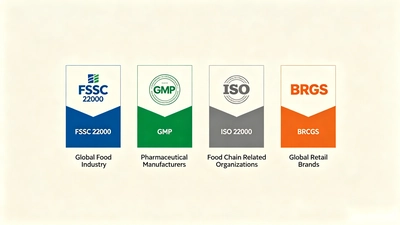
Buyers often encounter multiple certifications in supplement manufacturing. The table below explains how FSSC 22000 compares to other common standards, so you know what each one answers — and what it doesn’t.
| Certification / Standard | What It Focuses On | GFSI Recognized | Key Relevance for Supplement Buyers |
|---|---|---|---|
| FSSC 22000 | Full food safety management system with prerequisite programs | Yes | Covers system, process, and facility controls, widely accepted in EU, Asia, and North American markets |
| GMP (e.g., 21 CFR Part 111) | Manufacturing practices specific to dietary supplements | Not a GFSI scheme | Required for U.S. compliance; focused on personnel, equipment, production, and quality control |
| HACCP | Hazard analysis and critical control points | No | Core methodology, often embedded within FSSC 22000 or GMP; not a standalone management system |
| ISO 22000 | Food safety management system basis for FSSC 22000 | No (FSSC 22000 adds sector PRPs for GFSI recognition) | Good foundation, but lacks the sector-specific prerequisite programs required for GFSI recognition |
| BRCGS | Food safety and quality certification standard | Yes | Strong in UK and certain retail markets; similar level of rigor to FSSC 22000 but different scheme governance |
For U.S. dietary supplement projects, we always recommend buyers understand both FSSC 22000 and GMP requirements. Our GMP certified supplement manufacturer article explains what additional checks apply when the target market includes the United States. And when FDA registration enters the conversation, the requirements shift again — refer to the FDA registration and supplement manufacturing checks for a clear separation between FSSC 22000 compliance and FDA-related expectations. The U.S. dietary supplement GMPs are defined in 21 CFR Part 111, which applies to manufacturers, packagers, labelers, and holders of dietary supplements.
How FSSC 22000 Applies to Gummies, Capsules, Powders, and Liquids
Different supplement formats create different food safety demands, and we see these play out directly on the factory floor.

Gummies
For gummy supplement manufacturing, the biggest challenges under FSSC 22000 are moisture control during cooking and cooling, microbial stability in the finished product, and allergen cross-contact when multiple recipes share deposit lines. A strong HACCP plan will address cooking temperatures, cooling tunnel parameters, and changeover cleaning validation.
Capsules
Capsule filling lines introduce risks around powder containment, dust control, and weigh station accuracy. FSSC 22000 requires documented controls for foreign material detection (sieves, metal detectors) and for preventing mix-ups between active ingredients during batch changes.
Powders
Powder supplement manufacturing under FSSC 22000 focuses heavily on raw material receiving checks, blending uniformity, foreign material management, and allergen carryover. Powder blending suites often run multiple formulations back to back, so cleaning records and allergen swab testing become essential parts of the system.
Liquids
Liquid supplement lines add thermal processing, pH control, and aseptic filling considerations. FSSC 22000 addresses these through prerequisite programs and specific operational PRPs that cover water quality, CIP (clean-in-place) systems, and environmental monitoring.
For buyers, the takeaway is straightforward: when reviewing a manufacturer’s FSSC 22000 certificate, check that the product categories you intend to source are explicitly within the certified scope, and ask how the factory’s HACCP plan addresses the specific risks of that format.
Red Flags When Reviewing a Manufacturer’s Food Safety Certification
After working with hundreds of buyer audits and supplier qualification processes, here are the signals we’ve learned to spot early:
- The certificate scope is too broad or looks copied — “Food products” or “food and beverages” without any supplement-specific categorization often means the factory’s supplement production wasn’t actually assessed separately.
- The manufacturer can’t provide the latest audit report — A certified site should have access to its own audit summary. If they claim the report is confidential or unavailable, question whether the system is operationally maintained.
- The COID number doesn’t return an active status — Check the Public Register. An expired, suspended, or non-matching record is a hard stop.
- The site address doesn’t match the production location — If the certificate address is a sales office and production happens elsewhere, the production site itself must be certified. Insist on seeing the certificate that covers the actual manufacturing address.
- Supporting documents are repeatedly delayed — A genuine FSSC 22000 system generates routine records: HACCP plans, cleaning logs, allergen assessments. If a factory drags its feet on sharing any of these, the system likely exists on paper only.
- The certification body is unrecognized — Cross-check the certification body’s accreditation. An FSSC 22000 certificate from an unaccredited body is not accepted under the GFSI framework and will be rejected by most international buyers.
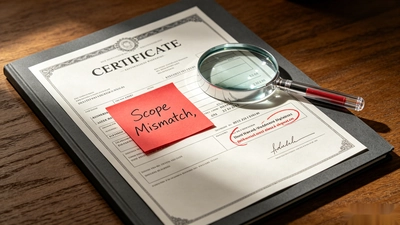
These red flags don’t require an auditor’s expertise to spot. The checks are straightforward, and they tell you a lot about how the manufacturer approaches food safety when nobody’s watching.
How Jiabei Health Supports Certified OEM/ODM Supplement Manufacturing
Within Jiabei Health, the FSSC 22000 certification is part of a broader quality infrastructure that also includes GMP, HACCP, BRCGS, and Halal certifications. The system covers raw material receiving, production, packaging, warehousing, and export documentation for dietary supplement projects across gummy, capsule, powder, and liquid formats.

For brand buyers, this means a few practical things:
- The FSSC 22000 certificate is supported by a complete food safety manual, product-specific HACCP plans, and routine audit documentation that we share openly during qualification.
- When a new product moves from formulation to production, the food safety system ensures allergen controls, process validations, and traceability are handled before the first commercial batch is made.
- Buyers can review our quality certifications page to see how GMP, FSSC 22000, HACCP, BRCGS, and Halal certifications work together across different supplement manufacturing projects.
- For brands that need end-to-end support, Jiabei Health provides OEM/ODM supplement manufacturing services covering formulation, packaging design, regulatory documentation, and production — all under a certified system that is audited regularly by international certification bodies.
We don’t send a certificate and stop there. When a buyer comes with questions about scope, audit reports, or HACCP documentation, the answers come directly from the quality and production teams that maintain the system day to day.
Frequently Asked Questions About FSSC 22000 Certification and Supplement Manufacturing
Is FSSC 22000 certification mandatory for supplement manufacturers?
No, it’s not legally mandatory in most countries. However, many international buyers and retailers require GFSI-recognized certification as a condition of supply. In practice, for export-oriented supplement manufacturers, FSSC 22000 has become a market requirement.
How can buyers verify an FSSC 22000 certificate?
Use the COID number on the certificate to check the manufacturer’s status on the FSSC Public Register. Also verify the certification body’s accreditation and ensure the scope matches the product types and production site.
Does FSSC 22000 replace GMP for dietary supplements?
No. FSSC 22000 and GMP address different aspects. For the U.S. market, compliance with 21 CFR Part 111 GMP is still required. FSSC 22000 provides a comprehensive management system, but it doesn’t replace product-level GMP obligations.
What should buyers check in the certificate scope?
Confirm that the scope lists the specific supplement formats (e.g., gummies, capsules, powders) and processes (manufacturing, packaging, warehousing) relevant to your project. A vague scope should be clarified through the certificate annex.
Can one FSSC 22000 certificate cover multiple production sites?
A single certificate may cover multiple sites only if all sites are listed on the certificate and were included in the audit. If your product is made at a site not listed, that site must hold its own certification.
Is ISO 22000 the same as FSSC 22000?
No. FSSC 22000 uses ISO 22000 as its management system base but adds sector-specific prerequisite programs and scheme requirements to achieve GFSI recognition. An ISO 22000 certificate alone does not meet GFSI benchmarks.
What documents should buyers request from an FSSC 22000 certified manufacturer?
At minimum, request the latest audit report summary, the product-specific HACCP plan, the allergen management program, cleaning validation records, and the COA protocol for batch release.
Does FSSC 22000 apply to gummies, capsules, powders, and liquid supplements?
Yes. FSSC 22000 can be applied to all these formats, as long as the scope of the certificate explicitly lists them. Each format has different prerequisite program requirements, so always check that the factory’s system covers your specific product category.