For most buyers, the decision to move forward does not fail on formulation.
It fails on timing and expectations.
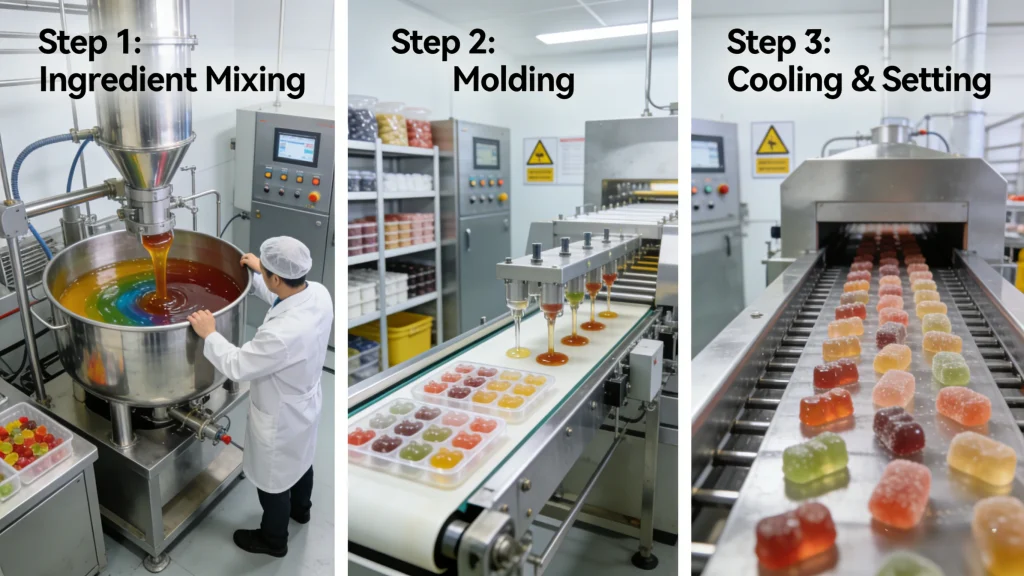
Understanding gummy manufacturing MOQ lead time is essential once feasibility, compliance, and taste challenges have been addressed. This article walks through what actually happens between contract confirmation and the first production run—and where delays most often occur.
Why MOQ and Lead Time Are Evaluated Together
MOQ and lead time are often treated as separate questions.
In practice, they are linked.
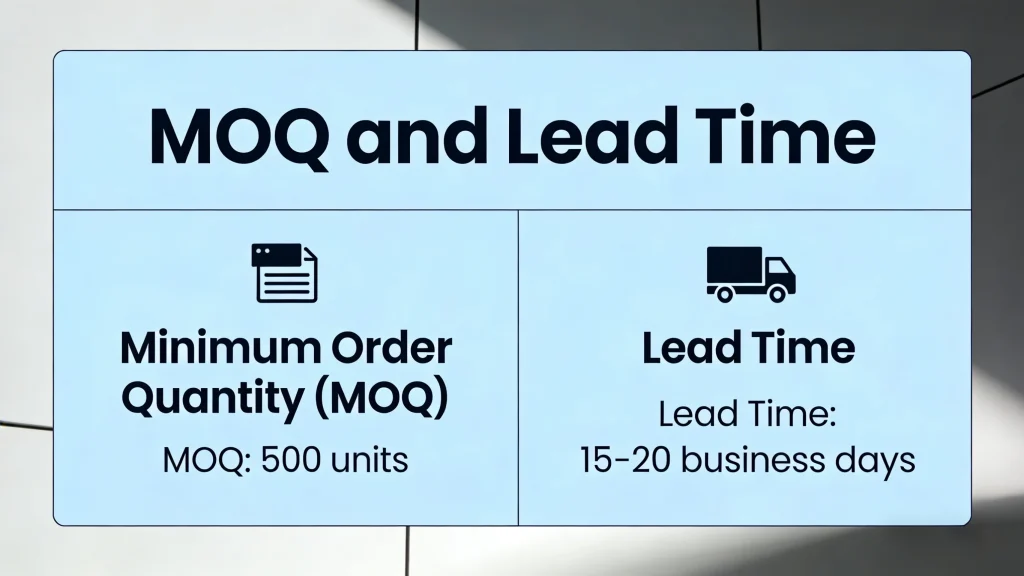
MOQ reflects:
- Production efficiency thresholds
- Line utilization requirements
- Packaging setup constraints
Lead time reflects:
- Formula finalization speed
- Compliance documentation readiness
- Packaging and material availability
Buyers who optimize one without considering the other often encounter avoidable delays.
A Realistic Timeline: From Agreement to First Batch
While every project differs, most custom gummy projects follow a similar sequence.
Week 0–1: Technical Alignment and Formula Lock
This stage includes:
- Finalizing active load targets
- Confirming bitterness control strategy
- Aligning on pectin vs gelatin systems
Projects stall here when feasibility was not fully addressed earlier.
This stage often depends on whether the maximum active load pectin gummies can be reliably supported without compromising stability.
Week 1–2: Pilot Sampling and Adjustments
At this stage, manufacturers prepare pilot samples to confirm:
- Texture and mouthfeel
- Flavor balance
- Dosage uniformity
Revisions here are normal—but repeated changes extend lead time quickly.
Week 2–3: Packaging Confirmation and Compliance Review
Packaging decisions often dictate MOQ.
This includes:
- Bottle vs pouch selection
- Label layout confirmation
- Compliance documentation review
Delays frequently occur when packaging decisions are postponed.
Week 3–4: Raw Material and Packaging Procurement
Once specifications are locked:
- Raw materials are allocated
- Packaging components are sourced
- Production slots are scheduled
Buyers with incomplete documentation or late changes often lose their reserved window.
Week 4–6: First Production Run
The first production run focuses on:
- Batch consistency
- In-process controls
- Finished product testing
Finished-product COAs are typically generated at this stage.
Finished batches typically undergo third-party COA verification before release and shipment
What Actually Determines MOQ in Gummy Manufacturing
MOQ is not arbitrary.
Key factors include:
- Depositing line efficiency
- Packaging changeover time
- Active ingredient cost structure
- Quality control sampling requirements
Custom molds, specialty packaging, or high-risk actives can increase MOQ thresholds.
Why “Low MOQ” Claims Often Mislead Buyers
Some suppliers advertise extremely low MOQs.
Buyers should ask:
- Is this a pilot run or commercial batch?
- Does the MOQ include full QC testing?
- Are packaging and compliance costs excluded?
Low MOQ without full process support often results in higher per-unit risk later.
How Lead Time Expands (Common Buyer Mistakes)
Most delays come from:
- Late formulation changes
- Unclear packaging decisions
- Incomplete compliance documentation
- Underestimating sampling cycles
Understanding these bottlenecks helps buyers plan more realistic launch schedules.Working with a GMP certified gummy manufacturer helps reduce delays caused by documentation gaps and process misalignment.
How Jiabei Health Structures MOQ and Lead Time Planning
Jiabei Health supports private label buyers by:
- Aligning MOQ with production efficiency
- Providing realistic lead time estimates upfront
- Locking critical decisions early
- Supporting compliance documentation and logistics
Our focus is predictability—so buyers can plan launches with confidence.
Where Buyers Typically Go Next
Once MOQ and lead time are confirmed, buyers usually move to:
- Cost structure discussions
- Long-term production planning
- Scale-up strategy
These considerations often shape the final sourcing decision, especially when brands are comparing nutraceutical gummy manufacturers on formula support, testing, and production readiness.
FAQ
What affects gummy manufacturing MOQ lead time the most?
Formula complexity, packaging decisions, and compliance readiness are the main factors influencing both MOQ and lead time.
Can lead time be shortened for repeat orders?
Yes. Once formulas and packaging are locked, repeat orders typically move faster than initial production runs.
Why do custom gummy projects experience delays?
Delays usually result from late-stage changes, packaging revisions, or incomplete documentation rather than production issues.
Is low MOQ always better for new brands?
Not necessarily. Extremely low MOQs may limit process controls and increase risk during commercialization.
Conversion CTA
If you are planning a custom gummy project and need clarity on MOQ and realistic lead time, an early planning discussion can help align expectations before commitments are made.
MOQ and lead time planning should not be evaluated in isolation. These execution factors sit alongside formulation limits, compliance requirements, and process selection within a complete high active gummy manufacturing guide.