1. Stop Guessing in the “Magnesium Maze”
If you’re comparing magnesium citrate vs glycinate, you’re probably not trying to become a nutrition expert.
You just want one thing:
- Sleep better
- Fix digestion
- Stop feeling constantly tense
But instead, you’re standing in front of 10 different magnesium options, all claiming to be “the best.”
Here’s the truth most brands won’t tell you:
There is no “best magnesium.” There is only the right one for your body.
As a manufacturer handling magnesium raw materials at scale, we’re not here to sell you the most expensive form — we’re here to help you pick the one that actually works.
2. A 60-Second Self-Test: Which “Magnesium Type” Are You?
Forget chemistry. Let’s make this practical.
If you are…
“Always struggling in the bathroom” type
- Constipation
- Sluggish digestion
You’ll likely benefit from magnesium citrate
“Late-night overthinking / burnout” type
- Stress, anxiety
- Poor sleep
- Muscle tension
You’ll likely benefit from magnesium glycinate
“I want both” type
- Stress + digestion issues
You may need a combination strategy (we’ll explain later)
3. Quick Comparison (So You Don’t Overthink It)
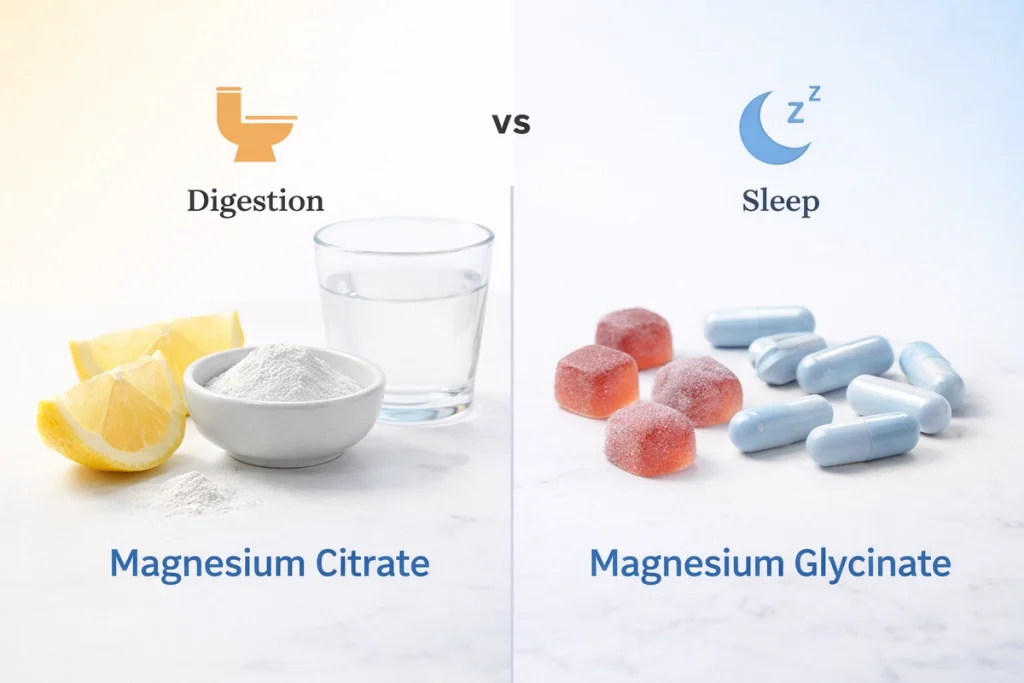
| Feature | Magnesium Citrate | Magnesium Glycinate |
|---|---|---|
| Primary Use | Digestion support | Sleep & stress support |
| Absorption | Good | High & gentle |
| Gut Effect | Laxative effect | No irritation |
| Best For | Constipation | Anxiety, sleep, recovery |
Both forms are well absorbed, but they behave very differently in the body.
4. Magnesium Citrate: The Gut “Cleaner”
Think of magnesium citrate as a water magnet.
It pulls water into your intestines, making everything move more smoothly.
That’s why it’s commonly used for digestion support and occasional constipation.
Why people choose it:
- Fast digestive relief
- Affordable and widely used
- Works consistently
Honest warning:
If you have a long meeting tomorrow… don’t overdo it.
Because yes — it works that well.
Best for:
- Digestive support
- Short-term use
- Cost-conscious users
5. Magnesium Glycinate: The “Calm System” Mineral
Magnesium glycinate is different.
It’s bound to glycine — an amino acid linked to relaxation and nervous system balance.
That changes everything.
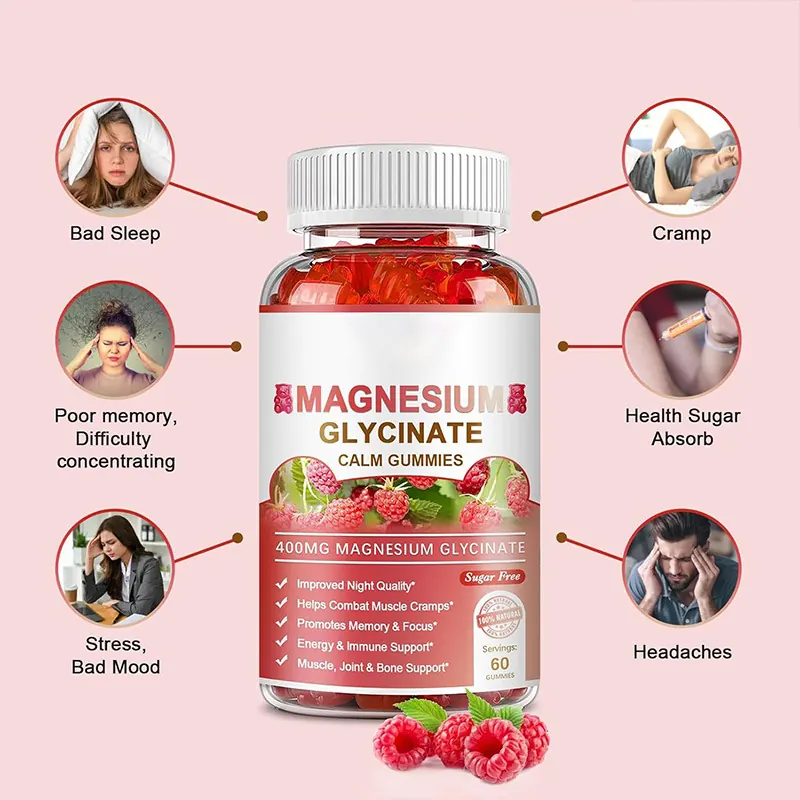
Instead of irritating the gut, your body treats it like nutrition — not a mineral overload.
What it does well:
- Supports deeper sleep
- Helps reduce stress and tension
- Relaxes muscles
It’s also much easier on the stomach, making it ideal if other magnesium forms cause discomfort.
Best for:
- Sleep support
- Anxiety and stress
- Daily long-term use
If you’re exploring sleep-friendly formats, products like Magnesium Glycinate Gummies are increasingly popular because they combine high compliance (taste + convenience) with gentle absorption.
6. The Manufacturing Truth: Why Some Magnesium Doesn’t Work
Here’s what most comparison articles won’t tell you.
Not all magnesium supplements are created equal — even if the label says “glycinate.”
Problem 1: Fake Chelation (Dry Blending)
Some manufacturers simply mix:
- magnesium oxide
- glycine
That is NOT real magnesium glycinate.
Real chelation requires controlled reactions and verification methods like FT-IR testing to ensure molecular bonding.
Problem 2: Hidden Contaminants
Minerals are highly sensitive to heavy metal contamination.
That’s why serious manufacturers operate under:
- BRCGS
- FSSC 22000
- HACCP systems
These are not marketing labels — they directly affect product safety.
Problem 3: Source Compliance
For global brands, sourcing matters.

For example:
- Halal-certified amino acids (BPJPH / KETETAPAN)
- Non-animal-derived glycine
These details impact:
- Market access
- Consumer trust
- Regulatory approval
7. A Note for Brands: How to Build a Better Magnesium Product
If you’re not just a consumer but a brand, here’s where it gets interesting.
What’s changing in the market:
Consumers are no longer asking:
“How much magnesium is inside?”
They’re asking:
“What form is it?”
Formulation strategy:
Magnesium citrate
- Works well in powders
- Easy to flavor (citrus profiles)
- Good for hydration blends
Magnesium glycinate
- Ideal for capsules
- Stable for daily use
- Also trending in gummies (sleep category)
From a formulation perspective, different magnesium forms behave very differently across:
That’s where manufacturing experience actually matters.
8. FAQ (Real Questions People Ask)
What is the main difference between magnesium citrate and glycinate?
Magnesium citrate is mainly used for digestion support, while magnesium glycinate is better suited for sleep, stress, and long-term daily use.
Is magnesium glycinate better than citrate for sleep?
In most cases, yes.
Magnesium glycinate is known for its calming effect on the nervous system, while magnesium citrate is not typically used for sleep support.
Which form is better for digestion: citrate or glycinate?
Magnesium citrate is the better choice for digestion.
It draws water into the intestines and helps promote bowel movement, while glycinate is gentler and does not have a laxative effect.
Can I take magnesium citrate and glycinate together?
When should you take magnesium citrate vs glycinate?
Magnesium citrate → typically taken during the day or with meals
Magnesium glycinate → often taken in the evening or before sleep
Does magnesium glycinate cause diarrhea like citrate?
No, that’s one of the key differences.
Magnesium glycinate is much gentler on the digestive system, while magnesium citrate may cause a laxative effect if taken in higher amounts.
9. Final Take: There’s No “Best” Magnesium
Only the right one for your goal.
- Need digestion support → citrate
- Need calm & sleep → glycinate
- Need both → structured combination
If you’re developing a magnesium-based product line or want technical specs (TDS), formulation advice, or samples — this is where the real conversation starts.