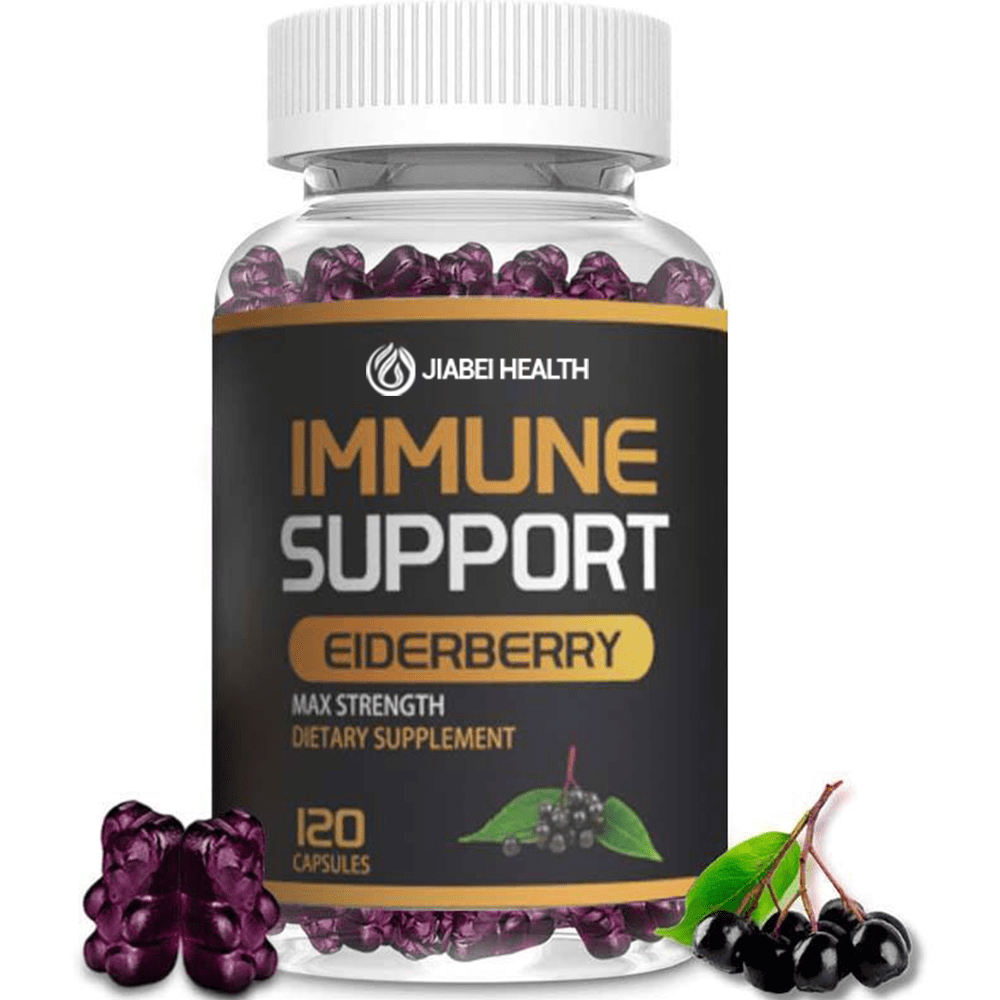
Private Label Elderberry Capsules for Custom and Bulk Supply
Jiabei Health develops private label elderberry capsules for brands that need more than a generic stock formula. The project can start with elderberry fruit powder, a concentrated extract, or a combination formula with ingredients such as vitamin C, zinc, or echinacea.
Before we quote the product, our formulation team checks whether the requested ingredients can fit into the preferred capsule size and serving count. We also review the elderberry specification, extract ratio, capsule shell, bottle count, testing requirements, and packaging plan.
This matters because two elderberry formulas with similar front-label claims may require very different raw material weights, capsule sizes, and production costs.
Private Label Elderberry Capsules at a Glance
| Specification | Available Options |
|---|---|
| Botanical ingredient | Elderberry fruit powder or concentrated extract |
| Botanical name | Sambucus nigra, subject to raw material specification |
| Formula type | Elderberry only or combination formula |
| Optional ingredients | Vitamin C, zinc, echinacea, and other compatible ingredients |
| Capsule shell | HPMC vegan capsule or gelatin capsule |
| Capsule size | Confirmed after fill-volume review |
| Serving format | Single- or multi-capsule serving |
| Packaging | Bottles, labels, cartons, or bulk capsules |
| Testing | Identity, microbiological, heavy metals, and finished-product checks |
| Documents | COA and available export documents |
| Standard bottled MOQ | May start from 500 bottles |
| Lead time | Based on formula, raw materials, and packaging |
Final specifications are confirmed after the raw material and formula are reviewed. A fruit powder and a concentrated extract cannot be treated as interchangeable simply because both are labeled as elderberry.
Choosing Elderberry Powder or Extract
The first decision is the ingredient format. Dosage should be set after that—not before.
Elderberry Fruit Powder
Fruit powder usually occupies more capsule space than a concentrated extract. It may suit brands looking for a whole-fruit or less-concentrated positioning, but the proposed amount must be checked against the powder’s density and the selected capsule size.
A higher target weight may require a larger capsule or more than one capsule per serving. It can also increase the bottle count needed to deliver the intended number of servings.
The powder weight should not be compared directly with the weight of a concentrated extract.
Concentrated Elderberry Extract
A concentrated extract can provide a specified raw-material equivalent with less physical material. This may leave more room for vitamin C, zinc, or other supporting ingredients.
The extract still needs to be defined clearly. We normally review the botanical species, plant part, actual extract weight, extract ratio, carrier, and any raw-material-equivalent claim.
A front label showing a large fresh berry equivalent may look stronger than a smaller extract weight, but the two figures describe different measurements. The raw material documentation must support whichever expression appears on the label.
For that reason, we confirm the extract specification before finalizing the Supplement Facts panel or product claims.
Custom Formula and Serving Design
Capsule capacity depends on volume, not only weight.
Two ingredients with the same gram weight can occupy very different amounts of space because their particle size and bulk density are different. A fluffy fruit powder may fill a capsule quickly, while a dense extract leaves more room for supporting nutrients.
This is where many early formula concepts need adjustment.
Elderberry-Only Capsules
A single-botanical formula keeps the product position clear and the Supplement Facts panel easier to explain.
The main decisions are:
- Fruit powder or extract
- Amount per serving
- Capsule size
- HPMC or gelatin shell
- Capsules per bottle
This format may suit brands that want a straightforward elderberry product without a long list of supporting ingredients.
Vitamin C and Zinc Formulas
Vitamin C and zinc can be added, but both affect the available fill space.
For vitamin C, we review the ingredient form and target amount. For zinc, the formula must distinguish between the zinc compound and the elemental zinc amount declared on the label.
If the combined formula no longer fits into the preferred capsule size, the practical options may be to use a more concentrated elderberry extract, reduce one of the target amounts, select a larger capsule, or move to two capsules per serving.
The last option creates more formula space, but it also changes bottle count, label directions, and cost per serving.
Botanical Blend Options
Elderberry can also be evaluated with echinacea or other compatible botanical ingredients.
Each botanical should earn its place in the formula. Otherwise, it takes up capsule space, increases testing requirements, raises raw material cost, and makes the product harder to explain.
The brand should define the intended market position before adding multiple herbs to the same serving.
A Practical Formula Review Example
A buyer may request elderberry extract, vitamin C, and zinc in one capsule.
We first check the density and target amount of each ingredient. If the blend exceeds the preferred capsule capacity, we compare realistic alternatives rather than forcing the powder into an unsuitable format.
Those alternatives may include:
- Using two capsules per serving
- Selecting a more concentrated elderberry extract
- Reducing one supporting ingredient
- Choosing a larger capsule
- Revising the serving and bottle count
This review normally happens before the sample and packaging are confirmed.
Why Brands Choose Elderberry Capsules
Capsules do not require the sugar, flavor system, acids, or gelling ingredients used in many gummy formulas. They can also contain bitter botanical extracts without extensive taste masking.
Compared with syrup, capsules use a fixed serving and do not require a measuring spoon, dropper, or opened-bottle preservation system.
Brands often choose capsules when they want:
- A formula without added sugar
- A defined amount per capsule
- Easier taste management
- Vegan HPMC shell options
- Standard bottle packaging
- Bulk capsules for local packing
Capsules are not automatically the best format for every consumer. Some buyers prefer liquid or chewable products, particularly when swallowing capsules is difficult.
Brands still comparing consumer-friendly formats can review our guide to elderberry syrup vs gummies, which explains the differences in extract labeling, full serving size, added sugar, storage, and convenience.
For a broader overview of shell options, filling, packaging, and production, see our capsule supplement manufacturing capabilities.
Testing and Quality Documentation
Botanical products require more than a supplier invoice and a general specification sheet.
Before production, the elderberry raw material should be checked against the approved project requirements. Depending on the formula and destination market, the quality plan may include:
- Raw material identity review
- Botanical name and plant-part confirmation
- Extract ratio and carrier verification
- Microbiological testing
- Heavy metal testing
- Capsule fill-weight variation
- Capsule appearance and closure checks
- Disintegration testing
- Finished-product COA
- Batch traceability
The required test panel should be confirmed before quotation. A basic elderberry-only formula may not require the same review as a multi-ingredient product intended for a tightly regulated market.
Available project documents may include COA, microbiological and heavy metal results, MSDS, Certificate of Origin, Free Sale Certificate, and other export documents where applicable.
Claims note: Elderberry products may be positioned for general wellness or appropriate structure/function support, but labels and marketing materials should not state that the product prevents, treats, or cures disease. The National Center for Complementary and Integrative Health notes that research on elderberry remains limited. The FDA’s dietary supplement information also explains that companies marketing supplements remain responsible for product safety and truthful labeling.
Claims, directions, warnings, and Supplement Facts should be reviewed for the destination market before labels are printed.
Packaging, MOQ, and Lead Time
Packaging should be selected after the capsule size, serving count, and total capsules per bottle are confirmed.
Available options may include:
- 30-, 60-, 90-, or 120-count bottles
- PET or HDPE bottles
- Standard or child-resistant caps
- Induction seals
- Desiccants
- Custom labels
- Printed cartons
- Bulk capsules without retail bottles
The bottle size depends on the capsule count, capsule size, moisture-control needs, label dimensions, and target market.
Standard bottled formulas may start from 500 bottles, subject to formula, raw material availability, and packaging requirements.
Custom projects may require a different MOQ when they involve special extract specifications, custom capsule colors, uncommon packaging, printed cartons, market-specific testing, or reserved raw material quantities.
For an approved standard project, production may take around 15 days after the formula, label, packaging, and deposit are confirmed. Custom ingredients, sample revisions, artwork review, or printed packaging can extend the schedule.
Bulk capsule supply is also available for brands or distributors that complete packaging in their own market.
From Formula Review to Production
1. Confirm the Target Market
We review the destination country, target customer, product position, required certifications, and label expectations.
2. Select the Elderberry Ingredient
The project team confirms fruit powder or extract, raw material documentation, extract ratio, and the intended amount per serving.
3. Build the Capsule and Serving Specification
We calculate fill volume, supporting ingredients, capsule size, capsules per serving, and bottle count.
4. Approve the Sample and Packaging
The customer reviews the sample, capsule shell, product appearance, label information, bottle, and carton.
5. Complete Production and Testing
After approval, the project moves through material preparation, encapsulation, inspection, testing, packaging, and export-document preparation.
Brands planning a custom project can review our private label supplement manufacturing process for a fuller overview of the steps from formula review to shipment.
What to Include in Your Quote Request
A complete inquiry allows us to evaluate the formula, capsule size, packaging, MOQ, and testing requirements more accurately.
Please include:
- Target country or sales market
- Elderberry powder or extract preference
- Required extract ratio, if known
- Target amount per serving
- Vitamin C, zinc, or other ingredients
- HPMC or gelatin shell
- Capsules per serving
- Capsules per bottle
- Bottle, cap, label, and carton requirements
- Required certificates or testing
- Estimated order quantity
When the formula has not yet been finalized, we can begin with the target market, preferred product position, and expected retail price range.
Frequently Asked Questions
Can You Customize the Elderberry Extract Strength?
Yes. The proposed strength is reviewed together with the actual extract weight, extract ratio, raw-material equivalent, capsule capacity, and intended label wording. A larger equivalent number does not always require a larger amount of physical extract.
Can Vitamin C and Zinc Be Added?
Yes. The final formula depends on the target amounts, ingredient forms, capsule size, and number of capsules per serving. Higher target amounts may require a larger capsule or two capsules per serving.
Are Vegan Elderberry Capsules Available?
Yes. HPMC capsule shells can be used for vegan product positioning. The remaining ingredients, excipients, processing aids, and packaging claims should also be reviewed when the finished product will carry a vegan claim.
What Testing Documents Are Available?
Available documentation may include finished-product COA, microbiological testing, heavy metal testing, MSDS, Certificate of Origin, Free Sale Certificate, and other project-specific documents. The exact package depends on the formula and destination market.
Can You Supply Bulk Capsules Without Retail Packaging?
Yes. Bulk supply is available for brands and distributors that package the capsules locally. Bulk container format, quantity, moisture protection, shipping cartons, and document requirements should be confirmed before quotation.