Sports supplement manufacturers can look very similar on a quotation sheet. Most can list powders, capsules, private label services, and custom formulations. The differences usually appear later—when the serving size does not fit the intended format, the powder tastes harsher than expected, the MOQ changes after packaging is selected, or the required testing was never included in the original quote.
For this reason, the right manufacturer depends less on company size and more on the actual project. A startup testing a stock creatine product has different needs from a protein brand planning a national retail launch. Products for tested athletes add another layer of supplier control and testing.
The following list covers ten manufacturers with different strengths, locations, production formats, and order models. It is not a strict best-to-worst ranking.
Sports Supplement Manufacturers at a Glance
| Manufacturer | Location | Strongest Fit | Public MOQ Information |
|---|---|---|---|
| Jiabei Health | China | Multi-format private label and export projects | Selected powder projects from 500 units |
| Vitaquest | United States | Established brands and complex custom formulas | Not publicly standardized |
| Makers Nutrition | United States | Faster launches using stock formulas | Selected stock formulas from 500 units |
| Bactolac Pharmaceutical | United States | Full-service U.S. contract manufacturing | Not publicly disclosed |
| SMP Nutra | United States | Broad private label and custom product selection | Product-dependent |
| Supplement Factory | United Kingdom | UK and European sports nutrition projects | Not publicly disclosed |
| SternLife | Germany | Protein powders and protein bars | Not publicly disclosed |
| NutraLabs | Australia | Australian dry powder and sports drink projects | Project-dependent |
| PURE Private Label | United States | Small capsule and powder launches | Published minimum from 144 units |
| Matsun Nutrition | United States | Liquid and powder supplement projects | Product-dependent |
We did not compare these companies by size alone. The list focuses on details a private label buyer can review before making contact: supported formats, sports nutrition specialization, custom development, published minimums, testing programs, manufacturing location, and the type of project each company appears structured to handle.
Jiabei Health publishes this guide and is listed first for that reason. The remaining companies are included to give buyers a broader view of the manufacturing options available.
10 Sports Supplement Manufacturers to Consider
1. Jiabei Health
Jiabei Health supports private label and custom supplement projects across powders, gummies, capsules, tablets, softgels, and liquid formats.

This range is useful for sports nutrition brands that do not want to move every new SKU to a different supplier. A brand may begin with an electrolyte powder, then add creatine gummies, energy capsules, or recovery tablets under the same manufacturing relationship.
Powder projects often require more discussion than the label initially suggests. Mineral-heavy electrolyte blends can become salty. Amino acids and botanical extracts may be difficult to mask. Powder density can change the scoop size, jar capacity, and number of servings per container. A formula may be technically manufacturable but still need adjustments before it becomes practical for regular consumers.
Jiabei’s private label powder supplement manufacturing services cover protein powders, electrolyte and hydration blends, functional drink mixes, and other custom powders. Support includes dosage review, flavor optimization, mixability improvement, and packaging in jars, pouches, sachets, or stick packs. Selected powder projects begin from approximately 500 units, while standard production is generally scheduled from around 15 days after formula, sample, and packaging approval. More complex custom projects require additional development time.
Brands can start with an established formula, provide their own specification, or develop a product through Jiabei’s OEM and ODM supplement manufacturing services. This makes the company more suitable for international brands that want multiple dosage forms, relatively accessible entry quantities, and export support from one supplier.
Jiabei may not be the right option for a buyer that requires U.S. domestic manufacturing or a named athlete-certification program. Those requirements should be identified before the manufacturer shortlist is created.
2. Vitaquest
Vitaquest is better suited to established brands developing custom products at commercial scale.
Its sports nutrition capabilities include protein powders, hydration and electrolyte products, pre-workout, intra-workout, post-workout, recovery, and performance formulas. The company also publishes GMP for Sport registration and Informed Manufacturer certification among its facility credentials.
This level of infrastructure is more likely to suit a brand with defined commercial volumes and detailed quality requirements than a business testing its first few hundred units.
3. Makers Nutrition
Makers Nutrition offers stock sports nutrition formulas alongside custom manufacturing.
Its published range includes products for creatine, hydration, pre-workout, and recovery. Some stock private label programs begin from 500 units, which can shorten the route to market for brands that do not need a completely original formula.
The main trade-off is differentiation. Buyers should establish which ingredients, doses, flavors, and packaging details can be changed before the order becomes a full custom-development project.
4. Bactolac Pharmaceutical
Bactolac Pharmaceutical is a U.S. contract manufacturer with dedicated services for sports supplements, protein powders, pre-workout, post-workout, and amino-acid products. It also presents formulation, testing, flavor work, packaging, and label application as part of its broader manufacturing operation.
The company publishes limited standard MOQ information. For a meaningful first discussion, a buyer should provide the expected annual volume as well as the proposed first order.
5. SMP Nutra
SMP Nutra combines stock private label products with custom supplement manufacturing.
Its fitness manufacturing program covers several sports-oriented product types and multiple dosage formats. This may appeal to a brand planning a wider range rather than a single powder SKU.
Catalog size alone does not confirm immediate availability. A more useful question is whether the selected formula has been produced recently and which raw materials or packaging components must be purchased specifically for the order.
6. Supplement Factory
Supplement Factory is a UK manufacturer working with protein, BCAA, pre-workout, capsule, and powder projects. It offers bespoke development as well as private label manufacturing for sports nutrition brands.
The company has also published work as an Informed Sport-certified supplier for athlete-focused supplement products. Buyers should still confirm whether that certification scope applies to the exact product and production arrangement being discussed.
7. SternLife
SternLife has a more concentrated product focus than many companies on this list.
The German manufacturer develops protein powders, functional powdered products, and several types of protein bars for private label and contract-manufacturing customers. Its work includes formulation development, recipe optimization, scale-up, and market-launch support.
It is a stronger fit for a protein-centered product line than for a brand seeking powders, gummies, capsules, and liquids from one source.
8. NutraLabs
NutraLabs focuses on Australian contract manufacturing for sports nutrition, supplements, sports drinks, and other dry blended products.
Its published services include protein powders, pre-workout products, electrolyte blends, nutraceutical powders, and packaging support. Local manufacturing may be valuable for Australian brands that want easier production oversight and domestic freight.
NutraLabs appears to evaluate projects by commercial feasibility rather than promoting one universal low minimum.
9. PURE Private Label
PURE Private Label specializes primarily in capsule and powder products and publishes a starting minimum of 144 units for qualifying custom or stock-formula projects.
It also lists sports nutrition, electrolyte, hydration, flavor development, sampling, and label-design support.
The 144-unit figure is attractive for product testing, but buyers should not assume it applies equally to a stock capsule and a complex flavored pre-workout powder.
10. Matsun Nutrition
Matsun Nutrition manufactures both liquid and powdered supplements in the United States.
Its broader capabilities include liquid vitamins, drops, shots, private label liquids, and powder manufacturing. That background makes Matsun more distinctive for hydration concentrates, liquid energy products, or supplement shots than for a conventional high-volume protein powder alone.
The applicable MOQ and production line should be confirmed for the exact dosage format rather than inferred from another product category.
What Matters More Than the Manufacturer List
From the factory side, the following issues usually reveal more about project fit than a manufacturer’s equipment list.
The Formula Has to Fit the Serving Format
A requested dose may be reasonable on paper but impractical in the chosen format.
Five grams of creatine works naturally in a scoop of powder. It does not fit comfortably into two standard capsules. A mineral-heavy hydration blend may work in a stick pack but become too concentrated for a small gummy serving.
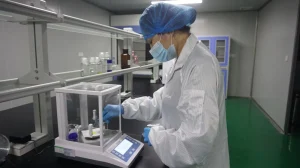
These problems should be resolved before final quotation. Otherwise, the quoted product may use a lower dose, a larger serving, or a different format from the one the brand originally expected.
A Good Ingredient List Can Still Produce a Poor Powder
Mixability and solubility are not the same thing.
A creatine product may disperse when shaken and still settle after two minutes. A pre-workout may contain the correct active amounts but foam heavily or leave a rough mouthfeel. With a bulk pre-workout supplement, serving size, active loading, flavor, and powder behavior all need to be considered together before the formula moves into commercial production. Magnesium, electrolytes, amino acids, and botanical extracts can also create bitterness, saltiness, or an aftertaste that becomes more obvious at the full commercial serving size.
A sample review should consider:
- Taste and aftertaste
- Sweetness
- Mixability
- Sedimentation
- Foam
- Powder density
- Scoop weight
- Final container size
A sample is not ready simply because the ingredient amounts are correct.
General Quality Certification Is Not Athlete Testing
GMP, HACCP, FSSC 22000, and similar systems are relevant when assessing production control, traceability, food safety, and quality management. They should not be treated as automatic proof that a product has been tested for substances prohibited in competitive sport.
Jiabei operates under GMP, FSSC 22000, HACCP, BRCGS, and Halal systems, as outlined in its supplement manufacturing quality and certifications information. A brand requiring a specific athlete-testing program should identify that separately before selecting a factory.
Programs such as Informed Sport use batch testing for prohibited substances and are designed for products marketed to tested athletes. Not every gym, hydration, or lifestyle product needs this level of certification, but the decision should be made before formulation and supplier selection.
The Bottle Quantity Is Not Always the Real MOQ
A request for 500 jars may still require a production blend larger than 500 finished units.
The minimum may be determined by the blender’s working capacity, an ingredient supplier’s order requirement, a custom flavor quantity, printed stick-pack film, a specialized scoop, or testing and setup costs.
This is why two quotes for the same bottle quantity can be difficult to compare. One may include a commercially practical batch and full testing, while another may cover only filling and basic packaging.
Repeat production also matters. A low first-order price has limited value if the next batch cannot reproduce the approved taste, powder density, serving weight, and packaging.
Questions to Ask Before Comparing Quotes
Send the same product brief to every shortlisted manufacturer. At minimum, ask:
- Have you produced this formula or a similar product at commercial scale?
- What is the minimum production or blending batch, not only the finished-unit MOQ?
- Can the requested dose fit the intended serving size and dosage format?
- Which raw-material and finished-product tests are included?
- What may change between the approved sample and commercial production?
- Does the quotation include formulation, sampling, packaging, testing, documentation, and shipment preparation?
A low unit price is only meaningful when the quoted scope is clear. Jiabei’s guide to turnkey supplement manufacturing explains why formulation, packaging, testing, documents, and logistics should be reviewed together rather than compared as separate headline prices.
Final Takeaway
A useful manufacturer shortlist is built around the product, not the size of the company.
Serving weight, dosage format, order quantity, target market, packaging, testing, and certification requirements should be defined before quotations are compared.
Jiabei Health supports private label sports nutrition projects across powders, gummies, capsules, tablets, softgels, and liquid formats. Brands can submit a formula, reference label, or initial product concept together with their target quantity and market for a manufacturing feasibility review.