Vegan supplements are no longer a niche. But most brands are still developing them like it’s 2018—swap the capsule shell, print “plant-based” on the label, and hope nobody asks questions.
That approach breaks down the moment a distributor in Germany asks for your V-Label documentation, or a retailer in Dubai wants to see cleaning validation records.
We specialize in OEM and private label manufacturing for vegan supplements — from formula to finished product.

This guide isn’t about why veganism matters. You already know that. It’s about what actually goes wrong when brands treat vegan supplement manufacturing as a marketing checkbox instead of a production discipline.
Vegan Supplements Are More Than Plant-Based Ingredients
Here’s the problem we see over and over:
A brand comes to us with a formula. The actives are plant-based. Looks clean. Then we start asking questions. What’s the capsule shell? Who supplies the magnesium stearate? Is that vitamin D3 from lichen or lanolin? What’s coating the tablet?
Silence. Or worse: “It’s natural, so it should be vegan, right?”
Wrong.
We’ve had a client almost lose their Vegan Society certification because a single excipient—magnesium stearate—came from a non-vegan batch. The CoA looked identical to the vegan one. The only clue was a three-letter grade code buried in the supplier’s internal spec sheet. Their auditor caught it. Most brands wouldn’t.
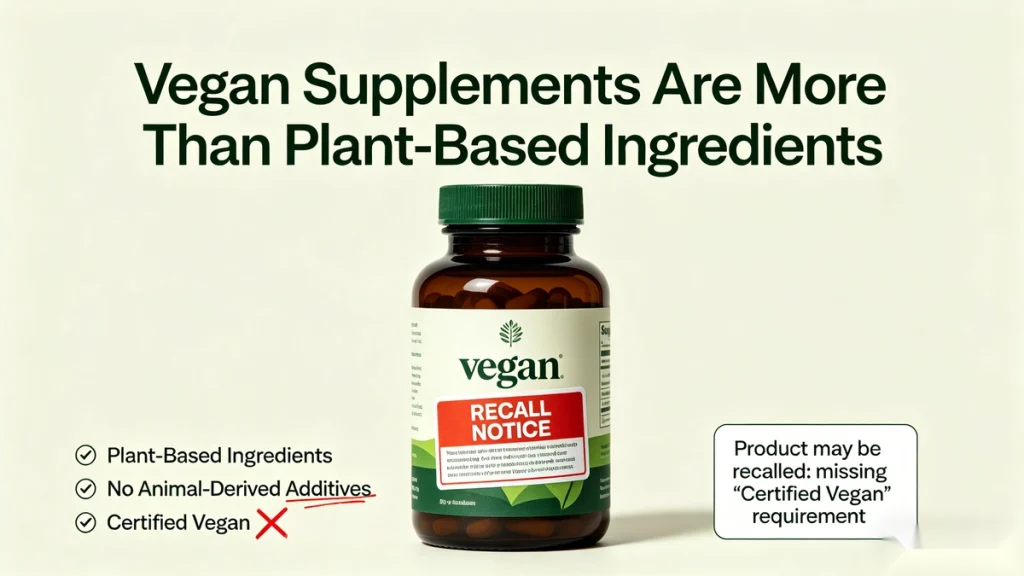
A vegan supplement isn’t defined by the front label. It’s defined by:
- Every raw material, down to the flow agent
- The capsule shell, gummy base, or softgel system
- Coatings, colors, flavors, and processing aids
- The factory’s cleaning protocols between non-vegan and vegan batches
- Supplier documentation that can survive an audit
Miss one of these, and your “vegan” product is a recall waiting to happen.
Hidden Non-Vegan Ingredients Brands Consistently Miss
Most brands fixate on the active ingredient and forget everything else. Here’s what actually trips people up:
| Risk Area | Why It Matters | What You Actually Need |
|---|---|---|
| Gelatin capsules | Still the default in many factories | HPMC capsules—and confirm they’re not blended with gelatin |
| Gelatin gummies | Obvious, but still common | Pectin-based systems. Texture will be different. Test it. |
| Fish oil omega-3 | Not vegan, period | Algae oil. More expensive, more sensitive to oxidation. |
| Vitamin D3 | 90%+ of the market is lanolin (sheep’s wool) | Lichen-derived D3. Insist on a CoA that says “lichen.” |
| Shellac coating | Insect secretion | Water-based or HPMC-based coating systems |
| Magnesium stearate | Source varies. Supplier switching happens. | Plant-source declaration. Every batch. |
| Glycerin | Can be animal fat or plant oil | Plant-derived glycerin statement from your supplier |
| Vitamin A/D carriers | Often gelatin-based beadlets | Specify plant-based protective matrices |
| Natural flavors | “Natural” does not mean vegan | Solvent and carrier review |
| Processing aids | Invisible on the label, visible in an audit | Full disclosure from manufacturing |
If the project is a vegan bone-health formula, don’t check D3 in isolation. The source, carrier system, K2 type, dosage form, and claim wording all need to line up before production; we break that down in our vitamin D3 K2 supplement formulation guide.
The pattern here is simple: if you didn’t explicitly verify it, assume it’s not vegan.
Common Types of Vegan Supplements
The market has moved far beyond basic multivitamins. Here’s what we’re actually manufacturing now:
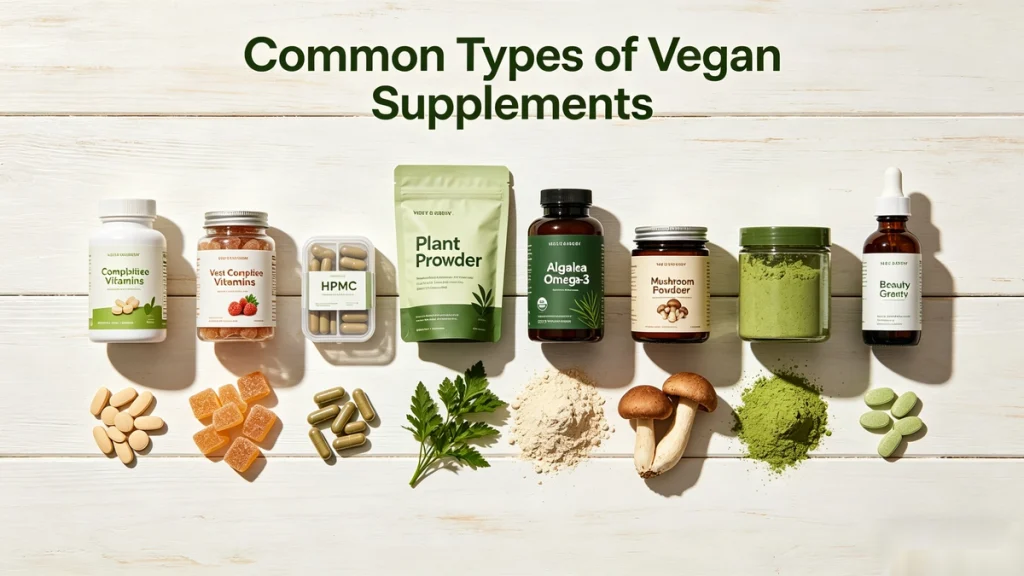
Vegan multivitamins look simple on paper but require the most document chasing. Every vitamin has a potential sourcing issue. D3, A, B12 carriers—you’re checking each one separately.
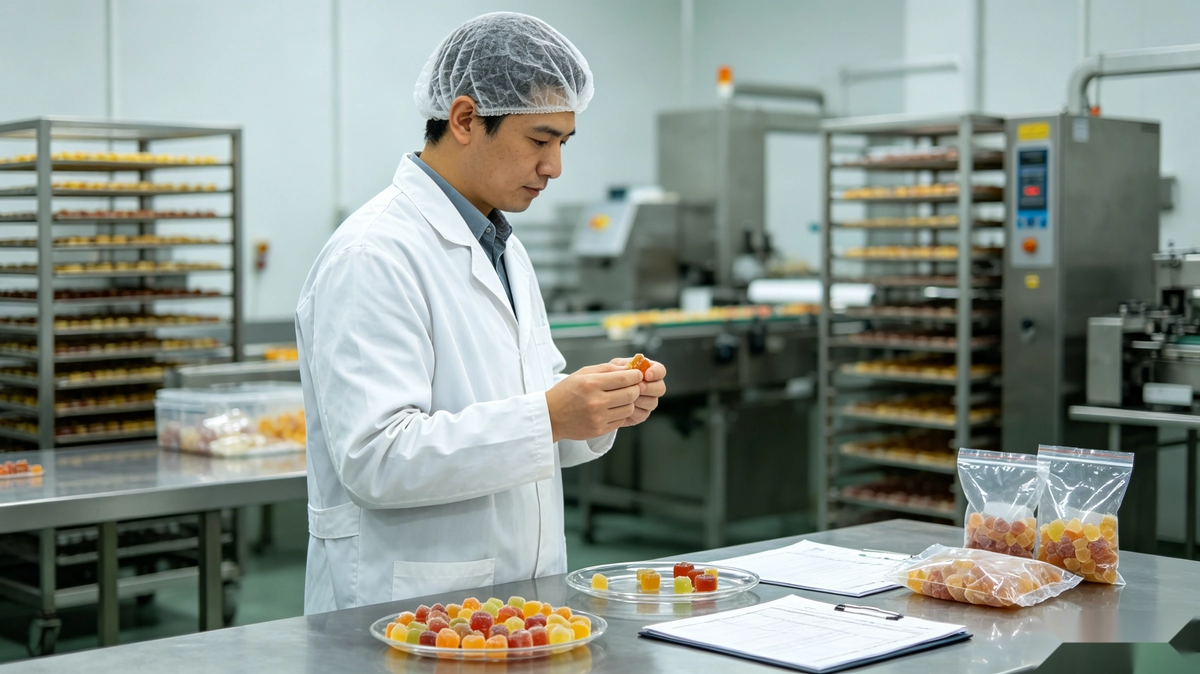
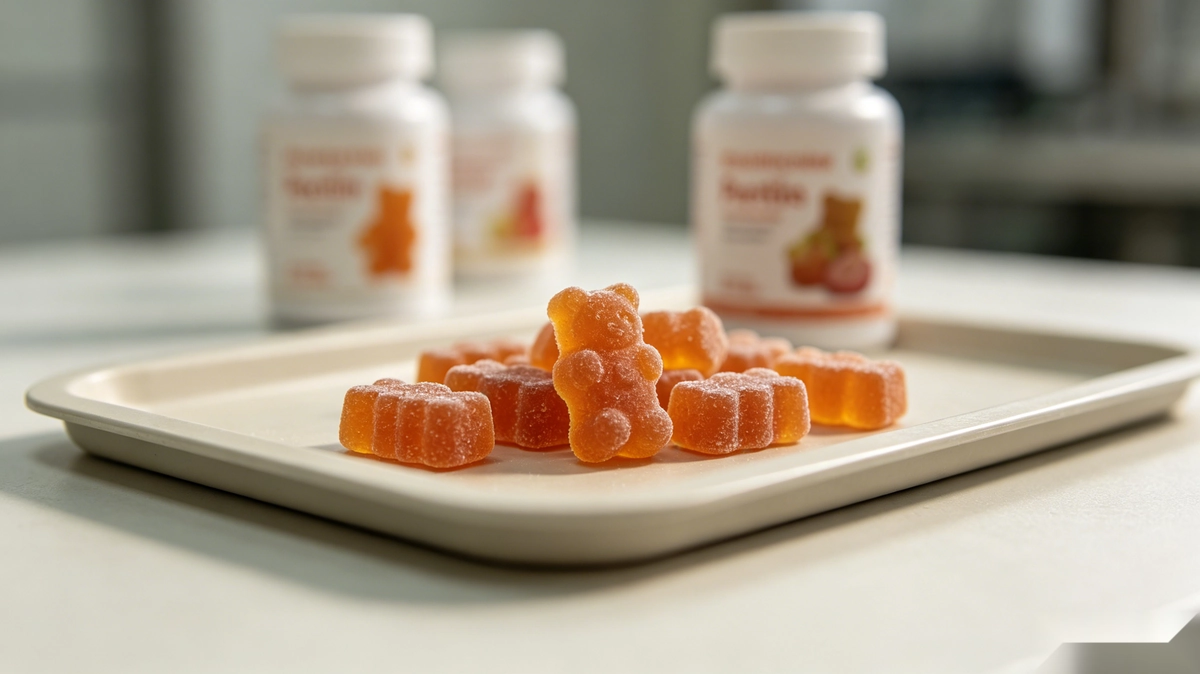
Vegan gummies are the fastest-growing category, especially for beauty, kids, and lifestyle products. Pectin is the go-to gelling agent, but it’s temperamental. pH, brix, cooking temperature—get one wrong and your gummies weep, stick, or collapse. We’ve seen brands fall in love with a gummy concept, only to discover their active dose won’t fit in a palatable serving size. That problem shows up often with vegan hair vitamin gummies, where minerals, botanical extracts, and flavor all compete for limited gummy space.
Vegan capsules (HPMC) are the workhorse. They work for herbs, mushrooms, probiotics, minerals, and amino acids. The catch: HPMC has lower bulk density and higher static than gelatin. If your powder is fluffy or moisture-sensitive, expect filling adjustments.
Plant protein powders dominate the vegan sport nutrition space. Pea, rice, soy, and blends. The formulation challenge isn’t the protein—it’s the taste, mouthfeel, and solubility. Foam control matters more than you’d think.
Algae omega-3 is the vegan answer to fish oil. Oxidation is enemy number one. If you’re not thinking about oxygen-barrier packaging and nitrogen flushing from day one, you’re building a stability failure.
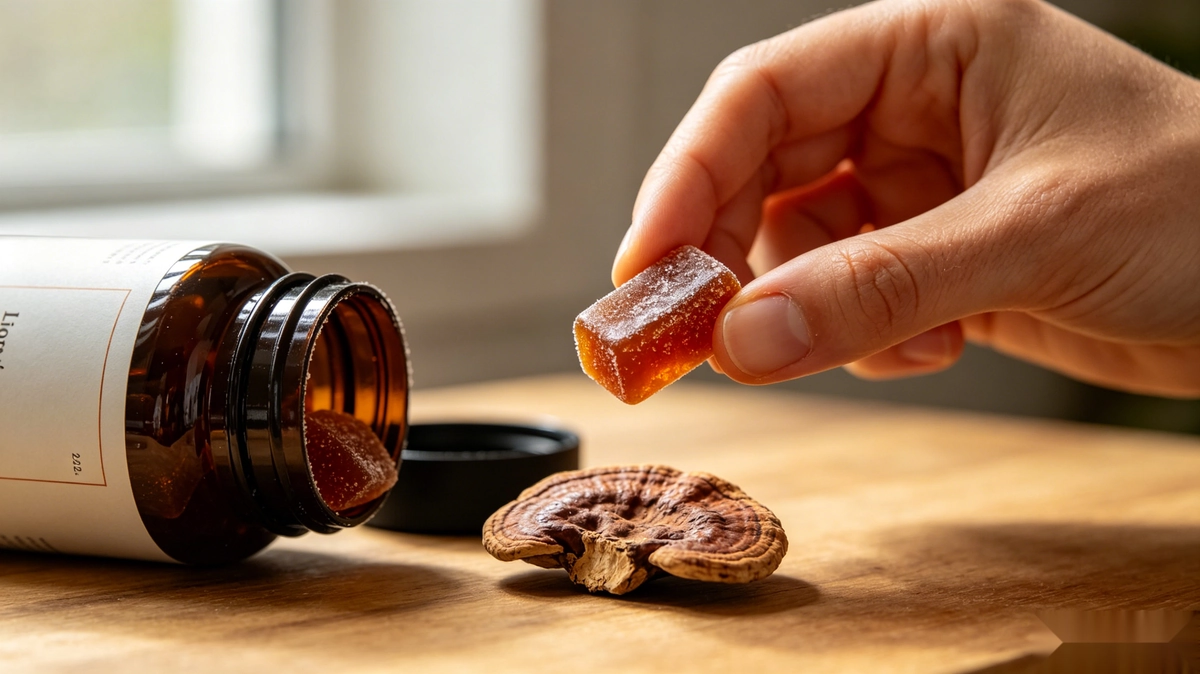
Mushroom supplements fit vegan positioning naturally. The issue is extract quality, powder flow, and moisture. Some mushroom powders are so hygroscopic they’ll gum up a capsule filler.
Green powders and beauty supplements round out the category, each with their own formulation quirks.
Which Dosage Forms Actually Work?
Every manufacturer will tell you they can do anything. The real question is: should you?
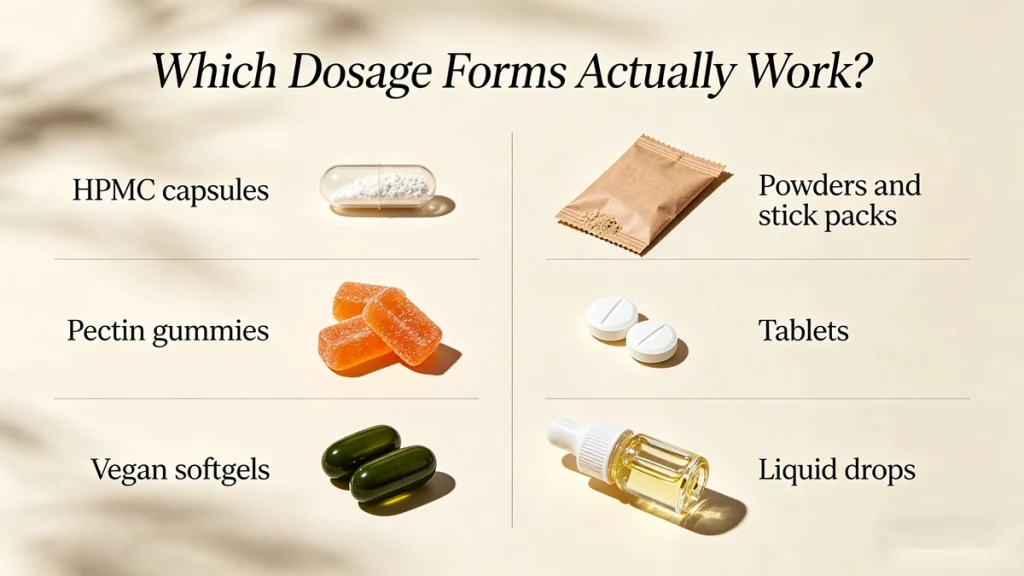
HPMC capsules are your safest bet for dry powders. Simple, stable, professional. Use them for herbs, mushrooms, probiotics, and most mineral formulas. Beware of hygroscopic ingredients—HPMC is low-moisture and brittle in dry conditions, tacky in high humidity. If you’re planning a private label capsule supplement, getting the powder specifications right early will save you a lot of filling-line headaches.
Pectin gummies are brilliant for consumer appeal, terrible for high-dose actives. If your formula needs more than 50mg of vitamin C per gummy, do stability testing before you fall in love with the concept. Pectin systems are less forgiving than gelatin—cooking temperature, pH, and drying conditions need precise control. For brands exploring this format, we’ve detailed our full gummy supplement manufacturing capabilities separately.
Vegan softgels are the right call for algae oil and other lipid formulas. The shell system (carrageenan/modified starch) is technically sensitive. Drying takes longer than gelatin softgels. Expect a longer lead time. We tell clients upfront: two extra weeks. It’s just reality.
Powders and stick packs give you dosage flexibility that gummies and capsules can’t match. The trade-off is sensory quality. Plant proteins taste like plants. Greens taste like greens. Flavor masking is the real development work. We’ve written more about powder supplement manufacturing —including particle size, flow agents, and stick-pack sealing—for brands that want to go deeper on this format.
Tablets work for high-dose minerals and herbals. Vegan coating systems exist—just stay away from shellac. Aqueous film coatings are the standard now.
Liquid drops are niche but growing. Taste, sediment, preservation, and dropper compatibility all need testing. Don’t assume a formula that works in a beaker will work in a bottle after six months on a shelf. Our liquid supplement manufacturing service includes real-time stability testing to catch those issues before you scale.
Practical takeaway: For algae DHA, go vegan softgel. For probiotics, HPMC capsules or dry sticks—avoid gummies unless your stability data is bulletproof. For mushrooms, HPMC capsules are usually cleanest. For beauty formulas with low active loads, pectin gummies can shine. For plant protein, powder is still king—invest the development time in taste, not format innovation.
What to Check Before Sampling: A Real-World List
Before you request a single sample, slow down. Most delays happen because brands confirm formulas first and ask document questions later.
Here’s the list we run with every new client:
- Is every active ingredient backed by a vegan source declaration? Not a “should be”—a document.
- What’s the capsule shell, gummy base, or softgel system? Confirm it explicitly.
- Any gray-area excipients—magnesium stearate, glycerin, vitamin carriers, flavors, colors?
- Is the dosage form realistic for your active dose? Can you actually fit 500mg of extract into a pleasant gummy? Probably not.
- What’s the taste, smell, and stability risk? Act early, not after the pilot batch.
- Can the supplier provide COA, spec sheet, allergen statement, and vegan declaration per ingredient?
- Are vegan, Halal, Kosher, non-GMO being treated as separate verifications? They should be.
- Does the product need amino acid profiling, heavy metals, microbiology, or stability testing?
- Is production handling clear—dedicated equipment, cleaning validation, batch scheduling?
- Does packaging actually protect the product? Pretty pouches don’t matter if your probiotics die in them.
- Are label claims reviewed against actual documents before printing?
- Has anyone actually read the supplier’s spec sheet for the “minor” ingredients?
This list isn’t bureaucracy. It’s insurance. We’ve seen a brand spend €15,000 on packaging artwork, only to revise it because the capsule shell wasn’t actually vegan. That conversation could have happened before the design phase.
Vegan Claims, Ingredients, Excipients, and Label Review
“Vegan,” “plant-based,” “vegetarian,” “clean label,” “natural,” “non-GMO”—these all mean different things to different regulators and consumers.
A vegan formula can still fail Halal certification. A plant-based product can still contain allergens that make market access difficult. “Natural flavors” can involve animal-derived solvents. “Non-GMO” has nothing to do with vegan status.
Here’s how we think about label safety:
Weak approach:
“100% vegan formula” printed on the label, with no document review behind it.
Strong approach:
“Formulated with plant-based ingredients. HPMC capsule. Vitamin D3 from lichen. We build our vegan formulas inside a manufacturing system certified to GMP, HACCP, BRCGS, and FSSC 22000 standards—explore our quality credentials here.”
The strong approach doesn’t mean boring. It means you’ve built the label on verifiable production data, not wishful thinking.
Ingredients that always need extra scrutiny:
- Magnesium stearate: Source can change between batches. Require a declaration.
- Glycerin: Animal fat or plant oil? Get it in writing.
- Vitamin D3: If the CoA doesn’t say “lichen,” assume lanolin. We’ve seen distributors silently switch batches—their spec sheet stayed the same, but the source changed.
- Vitamin A, D, E, K carriers: Often gelatin-based beadlets. Specify plant-based alternatives.
- Flavors and colors: “Natural” means nothing about vegan status.
- L-leucine and amino acids: Often fermentation-derived and fine, but the supplier route matters for strict positioning.
- Shellac: Still used as a tablet polish in many factories. Insect secretion. Not vegan.
For private label, the rule is simple: review formula, excipients, label copy, and documents at the same time. Not sequentially. Together.
Packaging for Plant-Based Brands
Packaging does two jobs for vegan supplements: it protects the product, and it tells your brand story.
Sometimes those jobs conflict.
We’ve seen brands insist on fully compostable pouches for a probiotic powder. Sounds great. Except the moisture barrier was too weak, and the probiotics died within three months. The brand story was intact, but the product was dead.
What actually matters:
- Capsules and tablets: Moisture protection is priority one. HDPE bottles with desiccant, or high-barrier blister packs.
- Powders: Barrier packaging prevents clumping and oxidation. Stick packs need good heat-seal integrity.
- Algae oil products: Oxygen is the enemy. Nitrogen flushing. Oxygen absorbers. Barrier bottles or blister. Don’t cheap out here.
- Probiotics: Water activity kills strains. High-moisture-barrier packaging is non-negotiable.
- Gummies: Packaging that prevents sticking and maintains texture. Flow-wrapped or individually sealed.
On sustainable packaging:
PCR (post-consumer recycled) plastic, FSC-certified cartons, compostable pouches—these options exist and we offer them. But ask the barrier question first. A beautiful eco-pouch that fails a stability test is worse than a functional recyclable bottle.
Some markets and certification bodies also care about label adhesives, inks, and packaging coatings. If your brand has strict vegan positioning, flag this early so it doesn’t become a last-minute surprise.
When These Details Get Skipped
We’ve seen the consequences up close.
A brand ordered 50,000 units of a “vegan” supplement. The product used HPMC capsules and plant-based actives. Looked perfect. Six months later, a German distributor flagged the shellac coating on the tablets inside a combo pack. The brand had to relabel, repackage, and pay penalty fees. The fix cost more than the original production.
Another brand built a beautiful “plant-based D3” product. Marketing materials printed. Website live. Then a retailer asked for the lichen D3 CoA. The supplier had been shipping lanolin-derived D3 for three batches because “the specs met the order.” The brand didn’t know until the documents were requested.
These aren’t horror stories to scare you. They’re normal outcomes when vegan is treated as a label claim instead of a production system.
How Jiabei Health Supports Private Label Vegan Supplements
We don’t do generic.
When you come to us with a vegan supplement project, the first conversation isn’t about your logo or your bottle shape. It’s about your formula, your documents, and your market.
We’ll ask you the hard questions early, because we’d rather have a difficult conversation before sampling than an expensive one after production.
What that looks like:
We’ll check your formula against target market requirements before you commit to samples. We’ll flag excipients that might cause problems. We’ll tell you if your gummy concept can’t hold your active dose. We’ll advise on format, packaging, and documentation needs based on where you’re selling—because EU retailers ask different questions than Middle Eastern distributors.
Our factory supports vegan production across HPMC capsules, pectin gummies, powders, tablets, liquid drops, and vegan softgel projects. We operate under GMP, HACCP, BRCGS, FSSC 22000, and Halal-certified systems—you can review our full quality certifications here.
For vegan softgels, we’ve optimized our carrageenan-starch shell systems to avoid the stickiness and delayed disintegration that plague less experienced manufacturers. Our drying cycles account for real shipping conditions. We test disintegration past the USP standard.
For pectin gummies, our R&D team has worked through the texture, pH, depositing, and flavor-masking challenges that make or break a product. We won’t promise a gummy that can’t be made pleasant at a realistic dosage.
For HPMC capsules, our filling lines are parameterized for the lower density and higher static of plant-based shells. We don’t just run them on the same settings as gelatin and hope for the best.
Documentation is part of the product.
You’ll get COAs, spec sheets, vegan declarations, and stability data organized for your market. We’ve supported brands through Vegan Society and V-Label certifications with documentation packages that pass on first review.
We’re not right for every project.
If you need the absolute cheapest vegan capsule, someone else can probably undercut us. If you need a product that will survive a retailer audit, an importer review, and years of shelf life, we should talk.
The brands we work best with understand that “vegan” on the label is a promise—and that promise needs a production system behind it.
A practical note: This article shares our experience, but it’s not legal advice. Regulations vary by market. Always work with a qualified regulatory consultant for your specific compliance requirements.
Let’s discuss your vegan supplement project. Whether you have a formula ready or just a concept, we’ll help you think through the details that matter before manufacturing begins. Contact us to start the conversation.