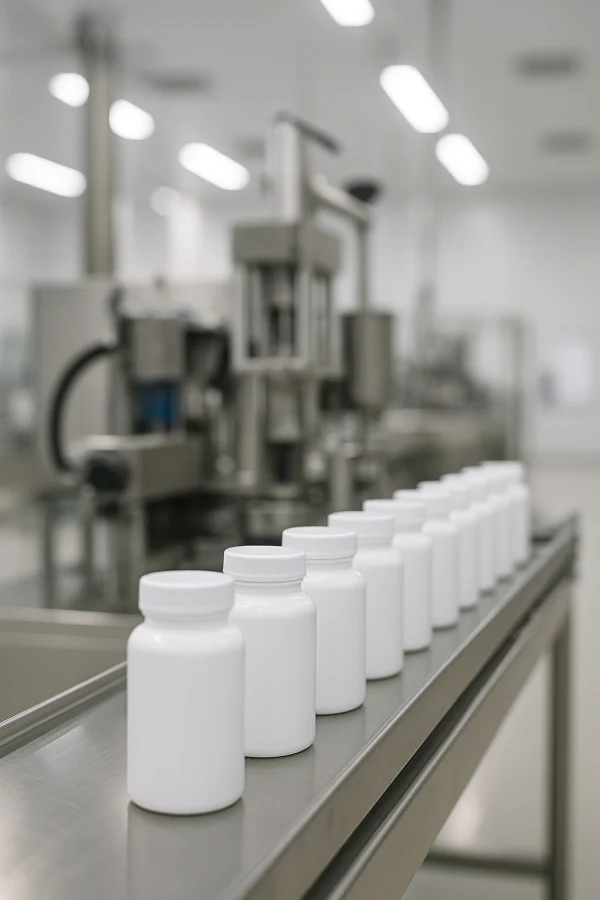
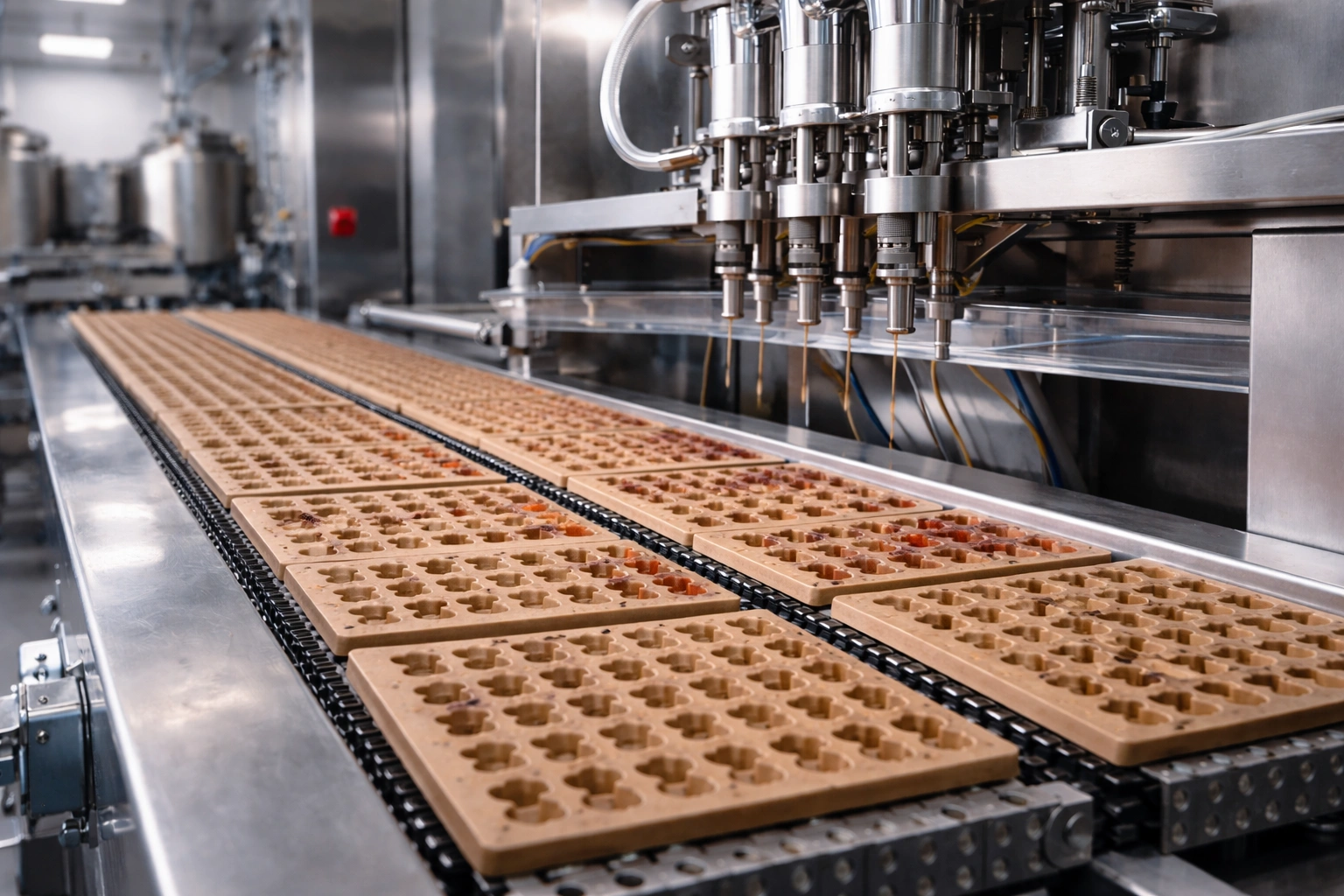
Custom gummy development is never a one-step process. A formula may look perfect on a spreadsheet, yet taste dull in real life. A prototype may hold together structurally, yet appear visually weak under natural light. A gummy may technically pass compliance, but struggle to survive the moment it meets a consumer’s mouth.
This case study documents the full journey of turning a client’s original formulation into a commercially viable product. It demonstrates how a powdery, low-intensity gummy became the clean, colorful, smooth, flavorful version seen in the final images. It reflects what development actually looks like in contract manufacturing: iteration, correction, sensory thinking, ingredient behavior evaluation, and market readiness as the true finish line.
Many manufacturers stop at formulation. We believe the real work begins there.
Prototype One: The Formula Was Correct, But The Product Was Wrong
The client provided a fully detailed ingredient list. No errors on paper. No missing actives. Stability should have been achievable. But when converted into a physical gummy, several issues were impossible to ignore.
The color appeared muted, lacking light transmission and depth. The surface held visible powder, a textural signal that consumers often associate with staleness, low quality or lack of refinement. The flavor opened with sweetness, yet the fruit identity was faint. The chew-down ended dry rather than clean. The prototype met the formulation, but failed the experience.
This is the gap that exists in nearly every early-stage product. Formulation is a map. But a gummy is a landscape.
In development, failure is not a setback. It is a compass.
Why This Happens In Real Manufacturing
A gummy is one of the most complex delivery systems in nutrition. Flavoring interacts with pectin or gelatin. Sugars and acids influence stability. Gelling agents determine water activity. coloring responds to pH and light. Texture depends on cooking curve, solid content, humidity, and cooling speed. Shelf appearance is affected by only a few percentage points of formulation difference.
Consumers do not consciously evaluate these parameters, yet they respond to them decisively. If the gummy feels rough, they will not trust it. If the flavor opens flat, they will not finish the bottle. If the color feels faded, they assume the product is old or low standard.
This explains why an early prototype can be chemically correct but practically weak. A good manufacturer must bridge science with perception.
The Turning Point: Redefining What The Gummy Should Become
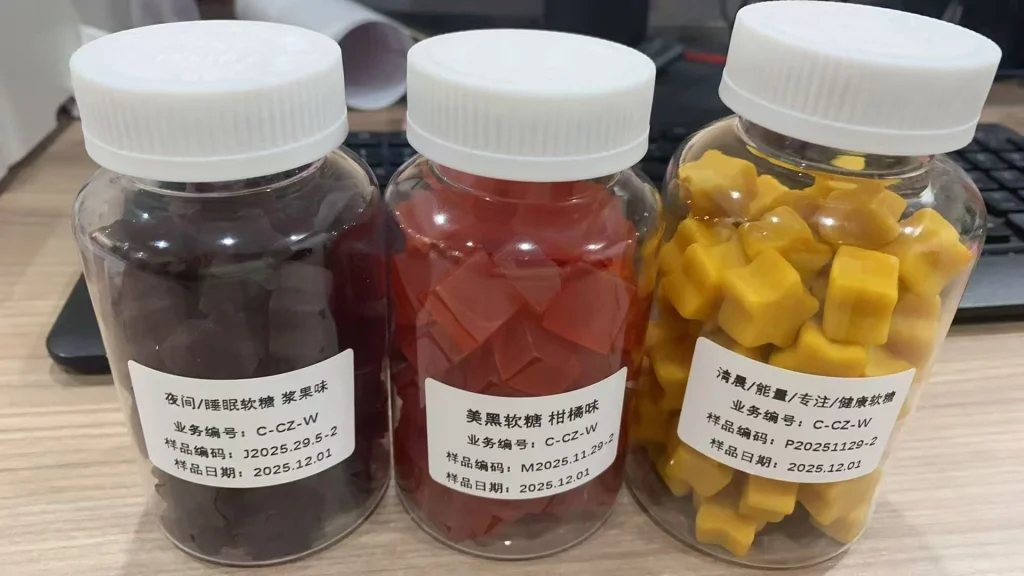
Rather than repairing the prototype, we rebuilt intent. We studied the three final sample colors and assigned sensory development goals to each. A deep purple gummy should not taste mildly fruity. It should taste like elderberry or blueberry in full ripeness. A bright orange gummy should evoke citrus, not merely sweetness. A yellow gummy is an ideal carrier for ginger heat or turmeric complexity.
Instead of correcting the batch, we clarified the identity. The product needed to taste like something specific, look like something confident, and feel like something consumers remember.
Only then should it scale.
Development Stage One: Rebuilding Flavor Expression
The first sample’s flavor carried sweetness but lacked definition. There was fruit influence, but not fruit presence. So we rebuilt the sensory backbone. Natural concentrates replaced a portion of generic flavoring. Acid was balanced not simply to stimulate the tongue, but to open flavor earlier in the bite. We layered the aroma curve so the first three seconds delivered identity, not ambiguity.
Blueberry needed depth. Elderberry needed darkness. Orange required brightness with a sharper top note. Lemon needed a clean acidic lift rather than a sugar-driven body. Different profiles demand different balances, and the work is neither cosmetic nor simple.
A gummy is judged not by its milligrams, but by the moment it breaks down in the mouth.
Development Stage Two: Color Brightness and Light Behavior
Color is not decoration. It is a marketing argument. Consumers see before they taste, and one glance determines whether they reach for the bottle or move on.
We transitioned to colorants with better solubility and refractive qualities. Purple needed layering for chromatic strength. Orange required saturation without opacity. Yellow needed clarity to signal freshness rather than dullness. Adjusting pH alone can shift visual output by over twenty percent in certain fruit-based matrices.
A product looking fresh is as important as tasting good.
Development Stage Three: Eliminating Powdering and Surface Imperfections
Powder on a gummy surface is one of the most common early-stage failures. It typically results from crystallization, uneven moisture migration, gelling imbalance, or cure curve disruption. The fix requires more than surface treatment.
We refined solid content distribution. We corrected drying conditions. We rebalanced binder strength to prevent sugar retrogradation. The new gummies held a clean, glassy finish with no residue. Packaged in a bottle, the difference is immediate. One looks unfinished. The other looks intentional.
Texture is not softness. It is behavior.
Development Stage Four: The Chew
Texture dictates finish. The first prototype collapsed too quickly, dried too fast, and lacked elasticity. We improved tensile retention inside the matrix, giving the gummy a gentle resistance followed by a smooth dissolve.
Consumers rarely describe chew scientifically, but their purchase decisions are built around it.
The Final Version
Once the adjustments were complete, the gummies became visually alive. Purple looked elegant, orange appeared fresh, yellow felt clean and energetic. Flavor no longer hinted at fruit. It expressed fruit. The chew finished without dryness. The product was no longer just stable. It was desirable.
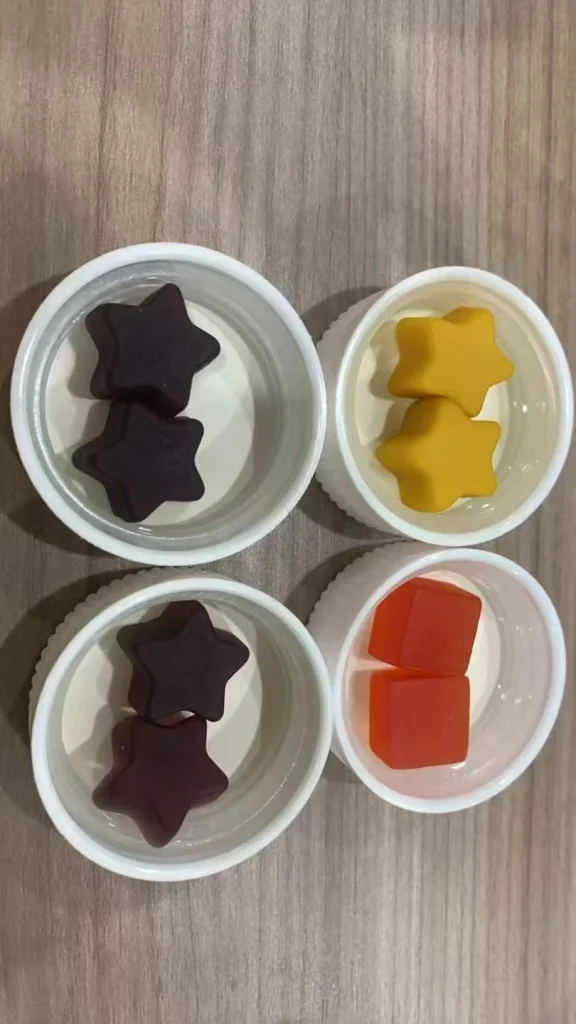
The sample evolved from a formula into a commercial product.
What This Means For Private Label Brands
A manufacturer can follow a formula. Development creates value. The improved gummy is now suitable for:
Retail positioning under a premium brand
Children’s multivitamin or immune support formats
Elderberry antioxidant or melatonin blends
Ginger turmeric energy products
Subscription models requiring consistent sensory satisfaction
International distribution requiring COA and compliance files
A prototype became a SKU. A SKU can become a product line.
How This Formula Can Expand Into Multiple Future Products
Because the matrix now performs well, the concept can grow. Purple can lead a sleep and immune range. Orange can become daily multivitamin or vitamin C. Yellow can evolve into ginger energy shots or turmeric anti-inflammatory blends.
Possible extensions include:
Elderberry plus zinc for immune support
Vitamin C plus echinacea for seasonal health
Turmeric plus ginger plus B6 for energy
Pediatric three flavor pack for kids
Melatonin plus L-theanine for calming routines
One successful gummy can become five strong SKUs. The development was not a correction. It was a foundation.
If You Want To Build A Gummy At This Standard
If a formula lacks brightness, we can strengthen it. If texture feels weak, it can be rebuilt. If the surface powders, it can be corrected. If a concept lacks flavor intent, it can be given one. Custom gummy development is not production work. It is refinement work.
This is the difference between a product that exists and a product that sells.
You already have a contact page. The path forward is simple.
Place this case study on-site and lead users into one of the following pages using internal links such as:
Start Your Formula Development
OEM and Private Label Services
Request Sampling or Pricing
FAQ
What is custom gummy development?
It is the transformation of a nutritional formula into a sensory-positive product through flavor optimization, color engineering, texture control and surface refinement.
Can an existing gummy formula be improved?
Yes. Flavor definition, color clarity, chew quality and anti-powder performance can all be elevated through structured reformulation.
How long does development take?
Most sample batches require five to ten days, with additional rounds available depending on sensory goals and ingredient interactions.
What types of gummies can be developed?
Elderberry, vitamin C, children’s multivitamins, probiotics, melatonin sleep blends, turmeric ginger formulations, B-vitamin or cognitive support concepts.
Do improvements affect compliance?
No. Sensory optimization can be completed without compromising nutritional structure or certificate documentation.