Introduction
After evaluating formulations, ingredients, MOQ, and sourcing models, the final decision for most buyers comes down to selecting the right manufacturing partner. Choosing a lipo gummies manufacturer is not only about production capability, but also about long-term reliability, technical expertise, and alignment with brand strategy.
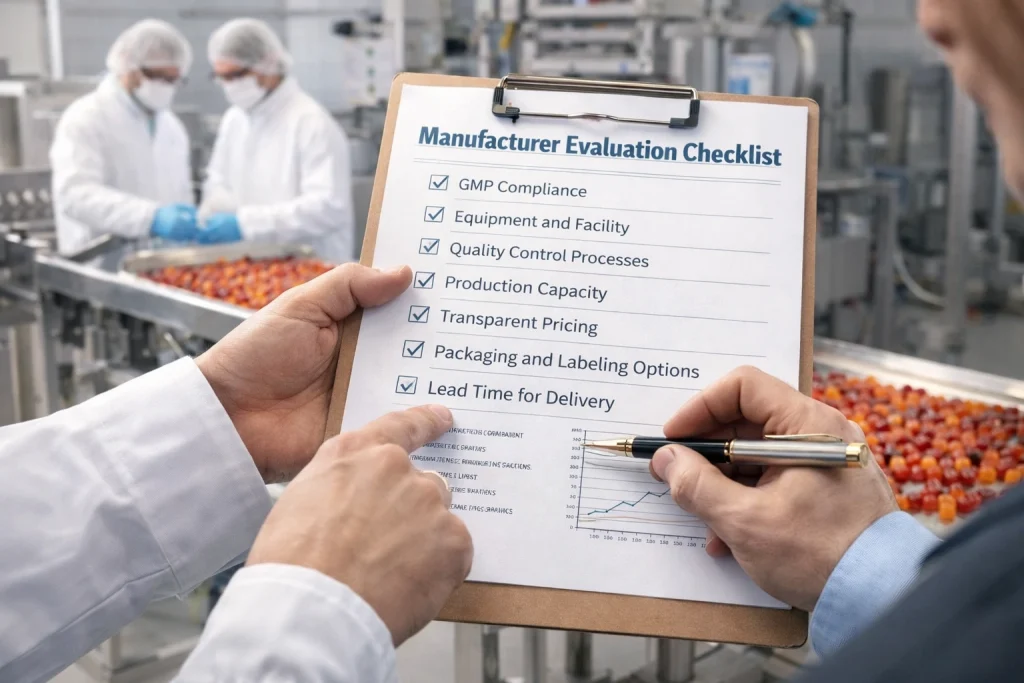
For private label brands, this decision determines whether a product remains a one-time launch or becomes a scalable line within a broader portfolio. Understanding how to evaluate manufacturers within lipo gummies private label manufacturing is essential before committing to production.
Understand the Manufacturer’s Gummy-Specific Expertise
Not all supplement manufacturers are equally experienced in gummies. Gummy production involves different technical challenges compared with capsules or powders, including moisture control, heat exposure, and texture stability.

A qualified manufacturer should demonstrate proven experience handling lipo gummies formulation challenges, rather than treating gummies as a simple extension of capsule production. This expertise directly affects batch consistency and shelf stability.
Evaluate Ingredient Feasibility, Not Just Ingredient Lists
Many buyers focus heavily on ingredient selection when sourcing lipo gummies. However, the key question is not what ingredients are popular, but which ones are compatible with gummy systems at scale.
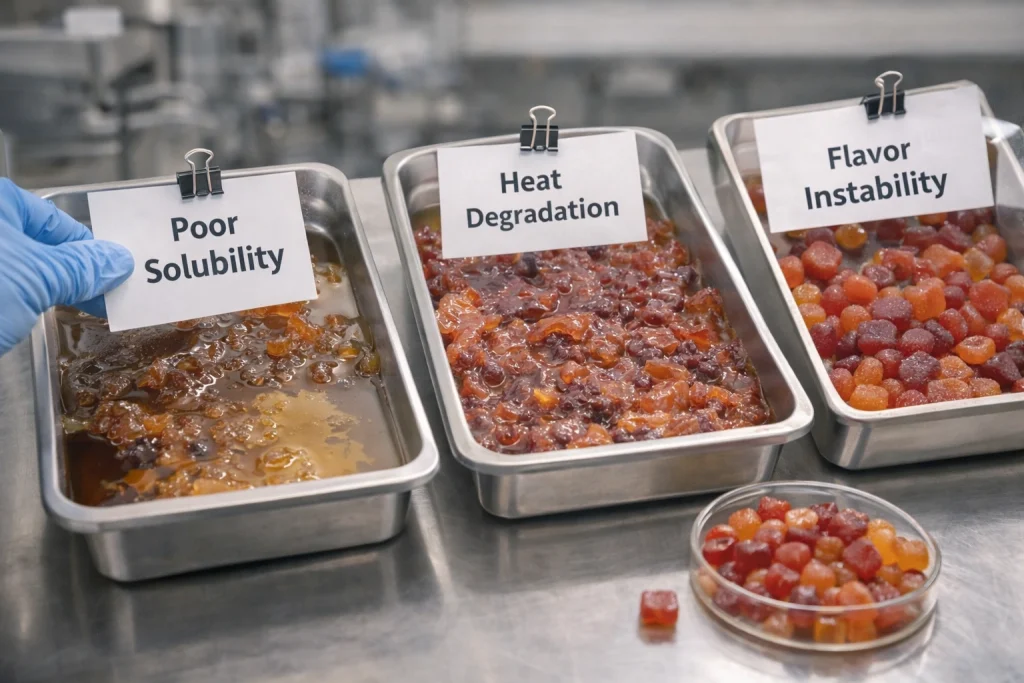
Experienced manufacturers assess lipo gummies ingredients based on solubility, thermal stability, flavor impact, and supply continuity. Brands should prioritize partners who explain ingredient limitations transparently rather than promising unrealistic formulations.
Assess MOQ Structure and Scalability
MOQ is one of the most misunderstood aspects of gummy sourcing. A professional manufacturer should clearly explain lipo gummies MOQ in relation to formulation complexity, packaging scope, and production efficiency.
Rather than offering arbitrary minimums, reliable manufacturers help brands plan MOQ strategically, supporting phased launches and repeat orders without compromising quality.
Compare Sourcing Models: Bulk Wholesale vs Private Label
Before selecting a manufacturer, brands should confirm whether bulk wholesale or private label production better fits their current objectives. Some manufacturers support both models, while others specialize in one.
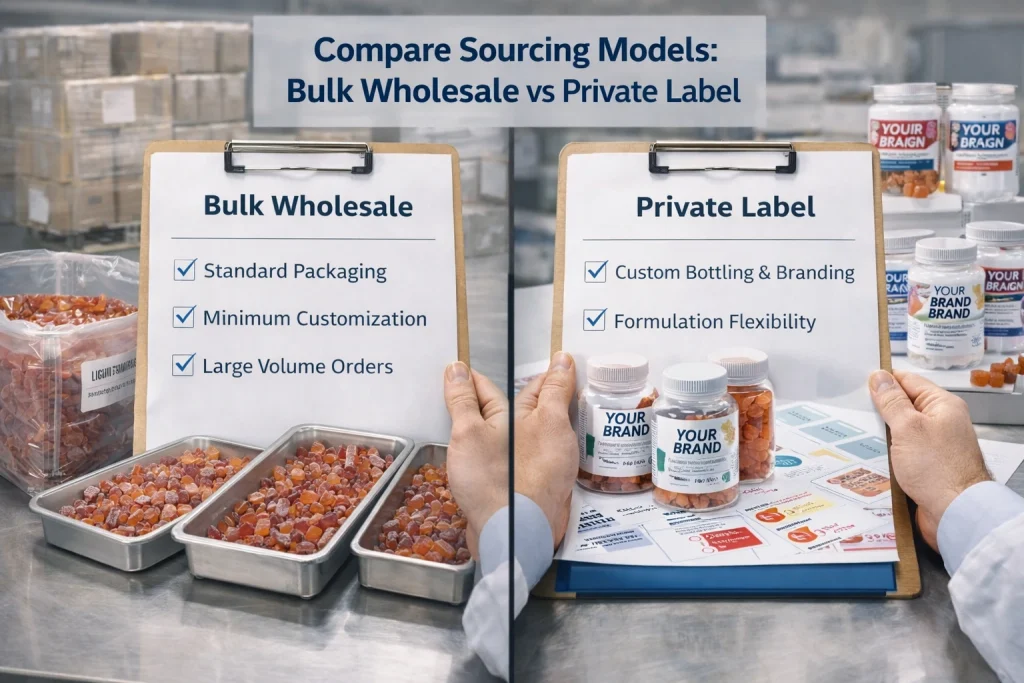
Understanding the differences between lipo gummies bulk wholesale vs private label helps brands avoid misalignment between expectations, timelines, and customization levels.
Review Quality Systems and Documentation Support
Quality systems are a critical indicator of manufacturing reliability. Buyers should look for manufacturers with structured quality controls, documented production processes, and the ability to provide Certificates of Analysis for each batch.
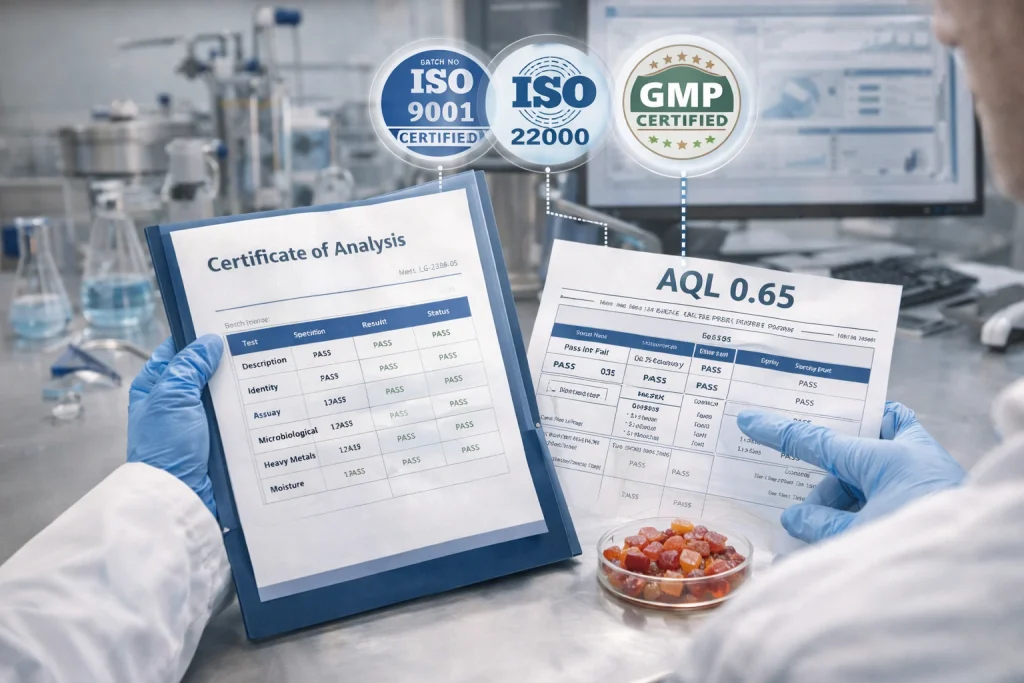
Manufacturers familiar with international private label programs are typically better equipped to support documentation readiness across different markets within lipo gummies private label programs.
Examine Communication and Project Management Capability
Beyond technical capacity, communication quality often determines project success. Clear timelines, realistic feasibility feedback, and responsive project management reduce delays and prevent misunderstandings.
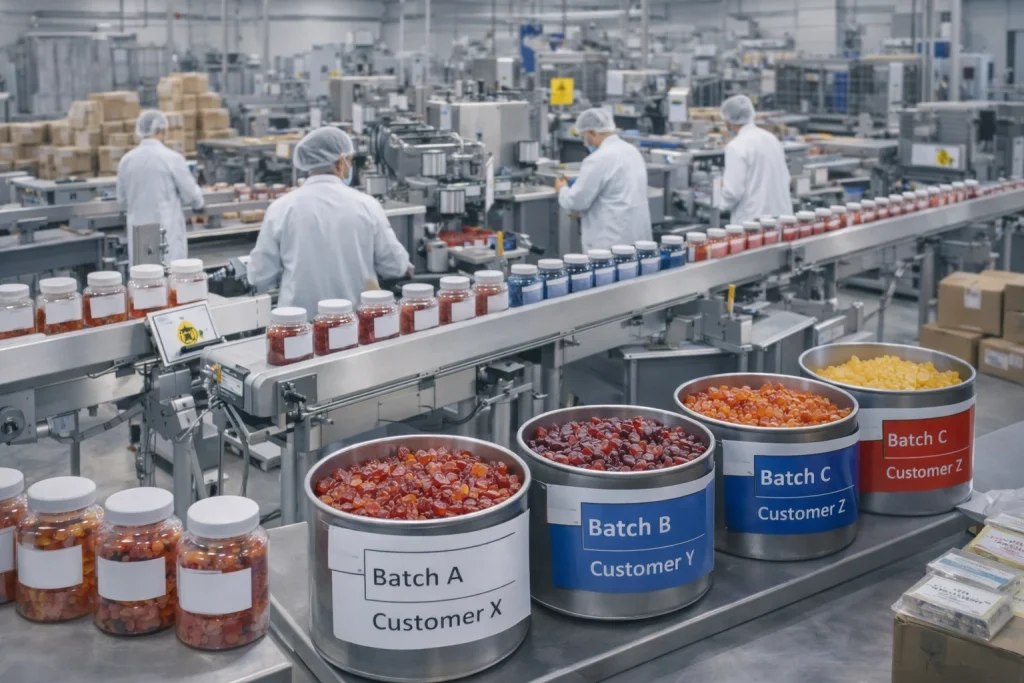
A manufacturer that proactively identifies risks related to formulation, packaging, or sourcing demonstrates readiness for long-term collaboration rather than transactional production.
Consider Long-Term Partnership Potential
Selecting a lipo gummies manufacturer should be viewed as a partnership decision, not a one-off transaction. Brands planning to expand product lines or enter new markets benefit from manufacturers who support scalability, formulation refinement, and packaging evolution over time.
This perspective is especially important when building consistent lipo gummies private label manufacturing strategies across multiple SKUs.
Conclusion
Choosing the right lipo gummies manufacturer requires more than comparing prices or capabilities on paper. It involves evaluating technical expertise, ingredient feasibility, MOQ logic, sourcing models, and long-term collaboration potential.
Private label brands that approach manufacturer selection systematically are better positioned to reduce development risk, maintain quality consistency, and build sustainable product lines within the competitive gummy supplement market.
FAQ
What should brands prioritize when choosing a lipo gummies manufacturer?
Brands should prioritize gummy-specific manufacturing experience, realistic formulation guidance, and transparent MOQ logic rather than just pricing. A qualified lipo gummies manufacturer should clearly explain formulation limitations, stability considerations, and production scalability before moving into mass production.
How can buyers tell if a manufacturer truly understands gummy formulation challenges?
Manufacturers with real gummy expertise will proactively discuss heat sensitivity, moisture control, dosage limits, and flavor masking challenges. They will also explain why certain ingredients may not be suitable for gummies, instead of simply agreeing to all formulation requests.
Why do different lipo gummies manufacturers offer different MOQ requirements?
MOQ differences usually reflect production setup, formulation complexity, packaging scope, and quality control standards. Manufacturers with structured processes set MOQ to maintain batch consistency and long-term stability, not as an arbitrary business decision.
Is it risky to choose a manufacturer offering very low MOQ for lipo gummies?
In many cases, extremely low MOQ may indicate limited customization, simplified quality controls, or unstable production processes. Buyers should carefully evaluate whether low MOQ compromises formulation integrity, consistency, or scalability for future orders.
How important is long-term partnership when selecting a lipo gummies manufacturer?
Long-term partnership is critical for private label brands planning to scale. A reliable manufacturer supports repeat production, formulation optimization, packaging evolution, and documentation readiness as the brand expands into new markets or additional SKUs.