Switching manufacturers is not a technical decision
Switching supplement manufacturers is often presented as a straightforward upgrade: a better quote, faster lead time, or stronger certifications. For established brands, the assumption is that switching supplement manufacturers reduces risk. In reality, the opposite is often true.
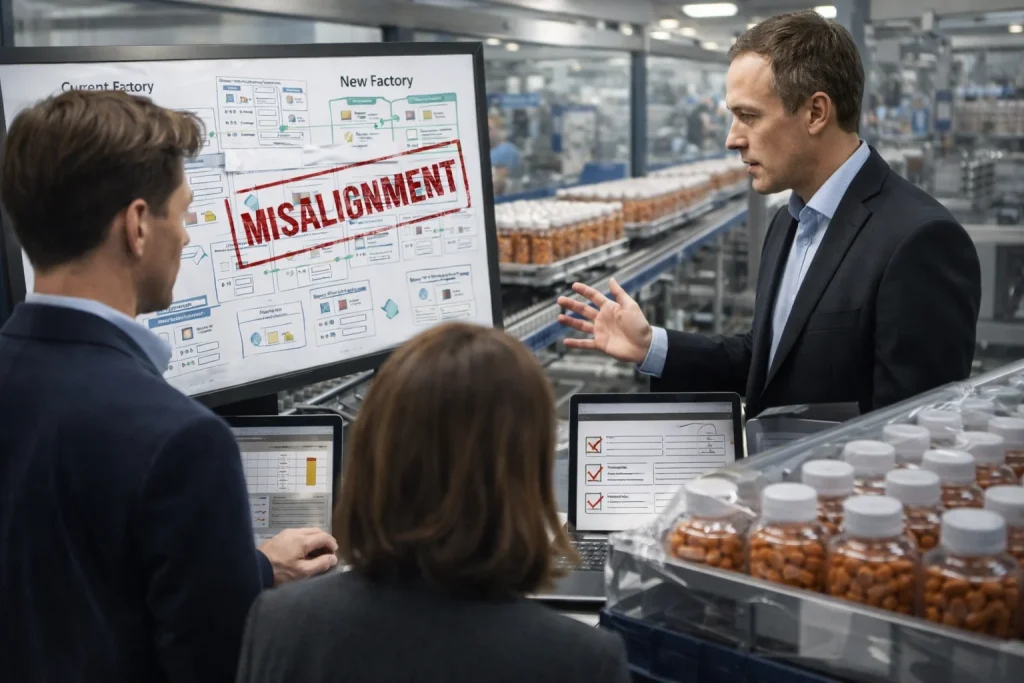
In practice, manufacturer transitions fail not because of formulation gaps, but because brands treat supplier changes as isolated technical swaps rather than system-level migrations. Manufacturing is not a modular service. Each factory operates with deeply embedded production logic, documentation workflows, quality checkpoints, and decision hierarchies that cannot be replaced overnight.
When these systems are misaligned, even experienced brands can face disruptions they did not anticipate.
Most failures happen before mass production even starts
Many unsuccessful transitions are set in motion long before the first commercial batch is produced. Early-stage evaluations tend to focus on samples, certifications, and responsiveness during quotation. These signals create a sense of confidence, but they reveal very little about how a manufacturer performs under sustained volume and repeat production.
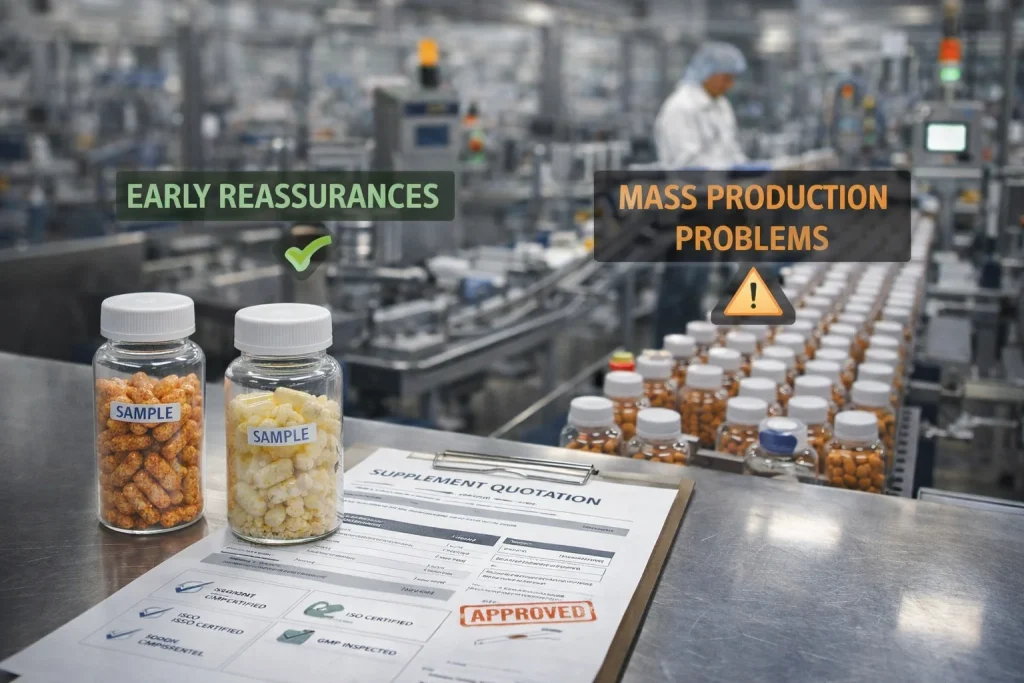
Samples are produced under controlled conditions. Quotation discussions are handled by sales teams. Neither reflects the daily realities of scheduling, batch management, or internal escalation when issues arise. By the time production pressure increases, the underlying weaknesses become difficult to correct without cost or delay.
Formulas transfer easily, production systems do not
From a technical standpoint, transferring a formula between manufacturers is usually straightforward. Ingredients, specifications, and dosage targets can be documented and reproduced.
What does not transfer is the production system behind the formula. Equipment configuration, mixing order, thermal exposure, holding times, and batch sequencing vary significantly between factories. These differences affect yield stability, sensory outcomes, and long-term consistency.
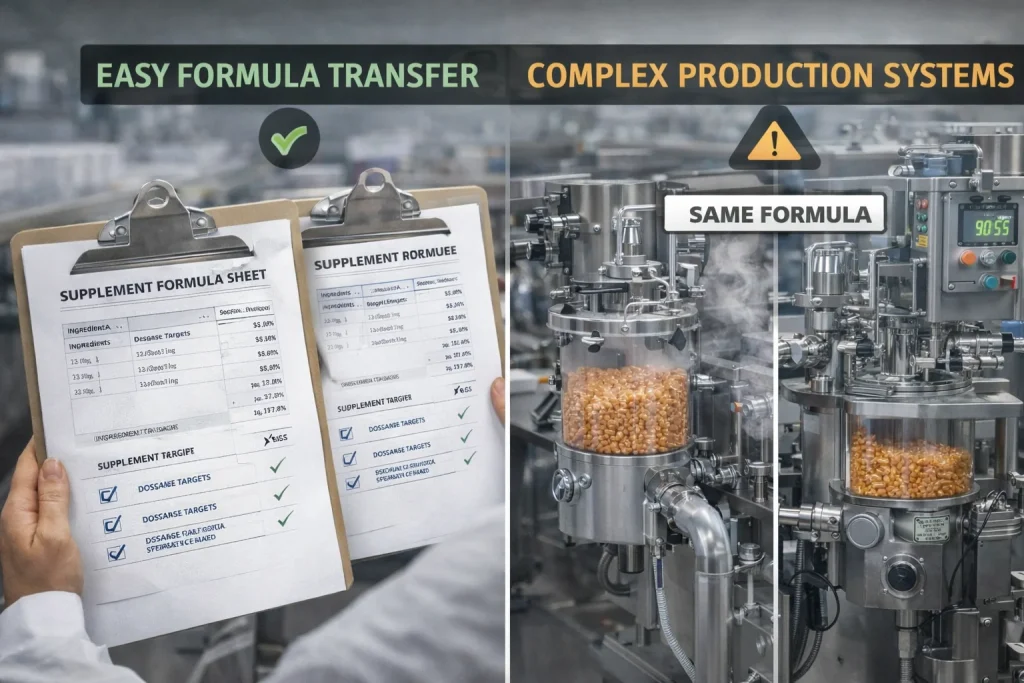
From a technical standpoint, transferring a formula between manufacturers is usually straightforward. Ingredients, specifications, and dosage targets can be documented and reproduced. What does not transfer is the production system behind the formula. Equipment configuration, mixing order, thermal exposure, holding times, and batch sequencing vary significantly between factories, even when the same formulation is used.
This is also why many brands underestimate the practical OEM and ODM manufacturing differences during supplier transitions. While formulas may look identical on paper, the underlying production architecture determines whether consistency can actually be maintained at scale.
Batch consistency is where most brands underestimate risk
Initial production runs often meet expectations. The first batch passes inspection, packaging looks acceptable, and confidence increases. Problems typically surface later, when repeat orders introduce variation.
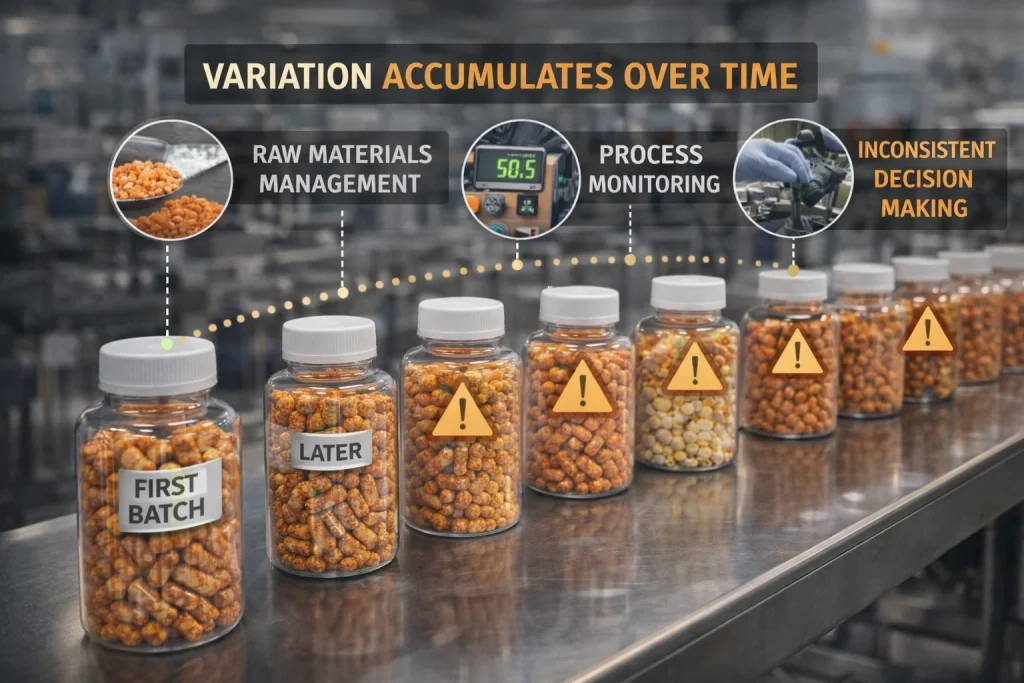
Batch consistency depends less on end-product testing and more on upstream controls. Raw material lot management, in-process monitoring, and operator-level decision rules play a greater role than many brands realize. When these controls are not standardized, variation accumulates across batches, even if individual results remain technically within specification.
This is where many transitions quietly fail—not dramatically, but gradually.
Documentation gaps quietly delay or block market entry
Documentation issues are one of the most underestimated risks during manufacturer transitions. Brands often assume that certificates, specifications, and compliance records can be transferred with minimal effort. In reality, documentation systems are highly manufacturer-specific, with differences in traceability depth, revision control, and supporting records.
When these gaps surface during audits, distributor reviews, or customs clearance, they can delay shipments or restrict market entry entirely. Understanding what constitutes required manufacturing documentation—beyond surface-level certifications—is critical when evaluating a new supplement manufacturer.
Lead time expectations often reset without warning
Brands switching manufacturers frequently expect lead times to remain consistent with previous suppliers. When delays occur, they are often attributed to temporary onboarding inefficiencies.
In practice, lead times reflect production architecture rather than intent. Capacity allocation, batch size thresholds, changeover frequency, and internal approval layers determine how quickly orders move through a facility. These parameters are not easily adjusted and are rarely visible during early discussions.
Without understanding these structural constraints, brands may misinterpret delays as execution issues rather than systemic limitations.
Why experienced brands struggle more than first-time buyers
Paradoxically, experienced brands often face greater challenges during transitions than first-time buyers. Established workflows, forecasting models, and internal expectations are built around the previous supplier’s operating style.
When a new manufacturer operates differently—even if objectively capable—friction emerges. Internal teams may push for outcomes that the new system cannot deliver in the same way. Communication becomes strained, and small mismatches escalate into broader dissatisfaction.
The issue is not lack of expertise, but misaligned operational assumptions.
When switching manufacturers makes sense — and when it does not
Switching manufacturers is not inherently risky, but timing and motivation matter. Transitions driven by structural issues—such as chronic inconsistency, regulatory gaps, or capacity limitations—can be justified.
However, switches driven solely by marginal cost differences or surface-level comparisons often introduce more risk than value. In some cases, optimizing collaboration with an existing supplier yields better outcomes than starting over.
Knowing when not to switch is as important as knowing when to proceed.
What a controlled supplier transition actually looks like
Successful transitions are managed as phased processes rather than abrupt changes. Parallel production periods, controlled volume shifts, and extended validation timelines reduce exposure. Clear ownership of documentation, batch approval, and escalation protocols further stabilizes the process.
From a manufacturing perspective, long-term success depends less on speed and more on alignment. Brands that approach supplier changes as partnerships rather than transactions are far more likely to achieve stable outcomes.
FAQ
Why does switching supplement manufacturers fail even when formulas stay the same?
Switching supplement manufacturers often fails because production systems, not formulas, determine consistency. Equipment configuration, process sequencing, batch controls, and documentation workflows vary widely between factories. Even when ingredient lists and specifications remain unchanged, these operational differences can lead to quality variation, delays, or compliance gaps during scale-up.
Is switching supplement manufacturers riskier for established brands than for new ones?
Yes, in many cases it is. Established brands typically have internal workflows, forecasting models, and quality expectations built around their existing supplier. When switching supplement manufacturers, misalignment between these expectations and a new factory’s operating system can create friction that first-time buyers do not encounter.
When does switching supplement manufacturers actually make sense?
Switching supplement manufacturers makes sense when issues are structural rather than short-term. Chronic batch inconsistency, unresolved documentation gaps, regulatory limitations, or capacity constraints are valid reasons. Switching purely for marginal cost differences often introduces more operational risk than long-term benefit.
How can distributors reduce risk when switching supplement manufacturers?
Distributors can reduce risk by managing the transition as a phased process. Parallel production periods, gradual volume shifts, and early documentation alignment help prevent supply disruptions. Evaluating a manufacturer’s ability to support repeat orders consistently is more important than assessing initial samples alone.
Should brands stop working with their current supplier immediately after switching?
In most cases, no. Abrupt transitions increase risk. Maintaining a controlled overlap period allows brands to validate consistency, confirm documentation readiness, and stabilize lead times before fully exiting an existing supplier relationship.