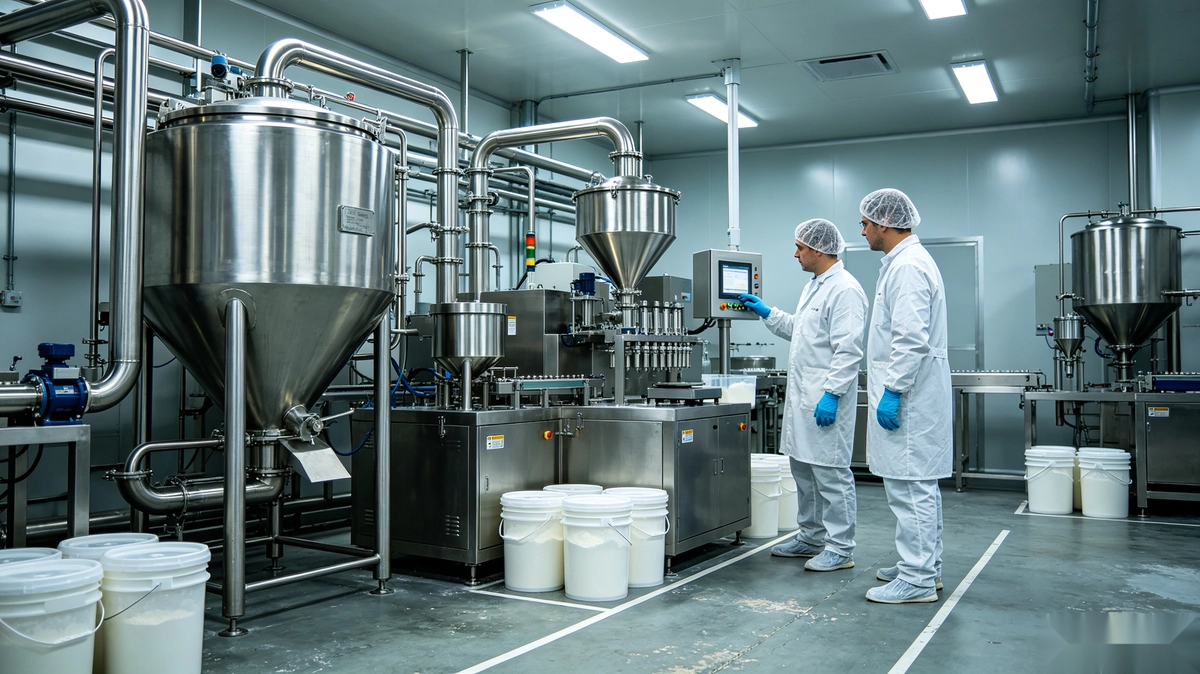
Quality issues rarely surface during supplier selection. Quotes are reviewed, samples are approved, and certifications are verified. Supplement manufacturer quality issues are most likely to surface during first production orders, when processes, materials, and communication are still stabilizing.On paper, everything appears aligned. Yet once the first production order is delivered, brands often discover inconsistencies they did not anticipate.
First orders with a new supplement manufacturer are statistically the most likely to fail quality expectations. These failures are not always dramatic. They may appear as minor deviations, documentation gaps, or subtle formulation differences. However, even small discrepancies can disrupt launch timelines, trigger rework, or damage downstream trust with distributors and retail partners.
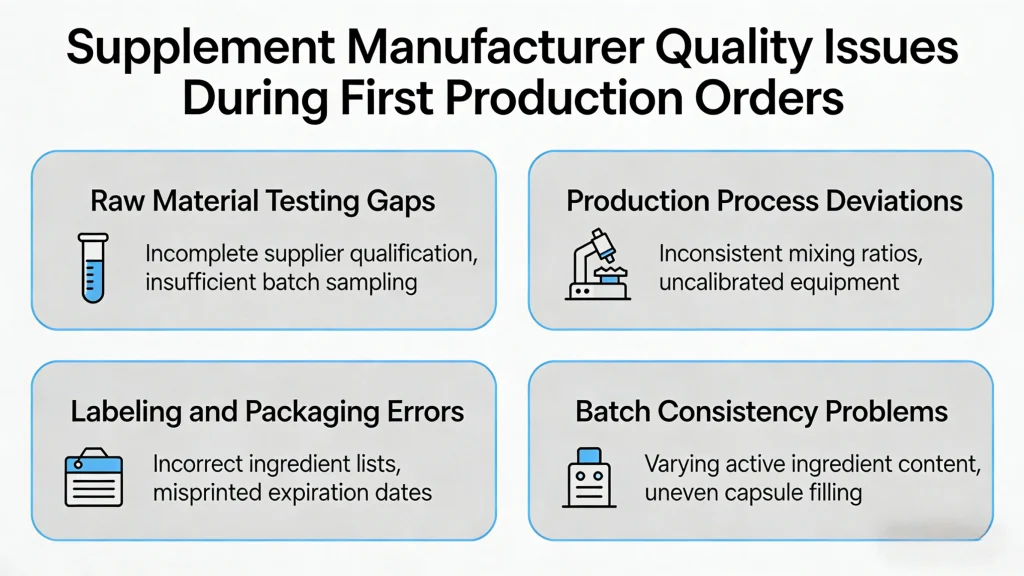
Understanding why first orders are uniquely vulnerable is essential for brands transitioning suppliers without compromising quality.
Why Samples Rarely Represent Full-Scale Production
Pre-production samples are typically produced under controlled conditions. Small batch sizes, heightened attention from technical teams, and simplified workflows allow manufacturers to present their best-case output. While samples are necessary for evaluation, they do not replicate the complexity of full-scale production.
When production scales, variables increase. Equipment settings change, operators rotate, and raw material batches differ. Processes that performed consistently during sampling may behave differently under real manufacturing pressure. As a result, the first commercial batch often exposes gaps that were invisible during sampling.
This disconnect is not deception. It is a structural limitation of sample-based evaluation.
Process Variability Is Highest During Initial Production Runs
Manufacturing consistency depends on stable, repeatable processes. During initial production runs, those processes are still forming. Work instructions may require adjustment, quality checkpoints may be refined, and production teams may be unfamiliar with product-specific sensitivities.
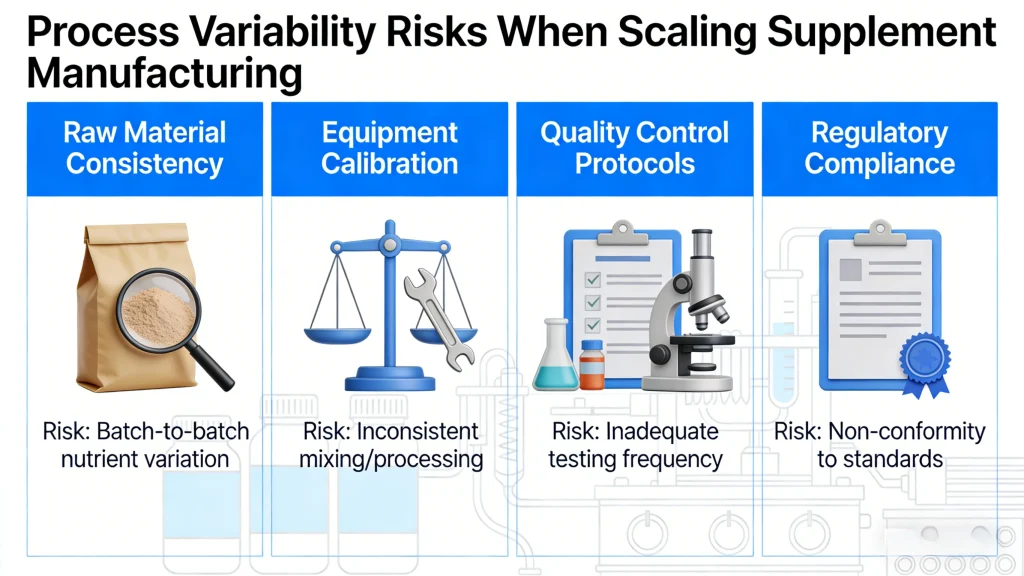
Small process deviations can accumulate. Mixing times vary slightly. Encapsulation or filling speeds adjust. Packaging tolerances shift. Individually, these changes seem minor. Collectively, they can lead to outcomes that differ from approved samples.
This is why first orders frequently show greater variability than later batches, even with experienced manufacturers.
Documentation Gaps Commonly Surface After the First Batch
Documentation is often reviewed at a high level during supplier onboarding. However, batch-level records, deviation logs, and release documentation are only fully tested once production begins.
First orders reveal how documentation systems function under real conditions. Incomplete records, delayed approvals, or unclear corrective actions may emerge. These issues can delay release, complicate audits, or raise concerns for regulatory or distribution partners.
Quality expectations are not limited to physical product attributes. Documentation quality plays an equally critical role, particularly for brands operating in regulated or international markets.
Raw Material Differences Affect Early Batch Consistency
Raw materials used during sampling are not always identical to those used during full production. Differences in suppliers, batch age, or storage conditions can influence finished product performance.
Established manufacturers often optimize raw material allocation for existing customers. New customers may receive materials sourced differently, introducing subtle variability. These differences may not violate specifications, but they can affect appearance, flow characteristics, or stability.
Without historical production data, these effects are difficult to predict before the first order is completed.
Communication Friction Amplifies Quality Risk
During early orders, communication inefficiencies magnify quality risk. Clarifications may be delayed, assumptions may go unchallenged, and feedback cycles may extend longer than expected.
When quality concerns arise, response speed matters. Manufacturers with structured escalation processes address issues quickly. Others require multiple clarification rounds, prolonging resolution and increasing frustration.
Many first-order quality failures are not caused by technical inability, but by misaligned expectations and slow communication during problem resolution.
Why Early Quality Failures Are Often Misinterpreted
Brands frequently interpret first-order issues as indicators of long-term capability. In some cases, this conclusion is justified. In many others, it is not.
Initial quality challenges often reflect onboarding friction rather than systemic failure. Processes stabilize over time as both parties align on specifications, documentation standards, and communication protocols.
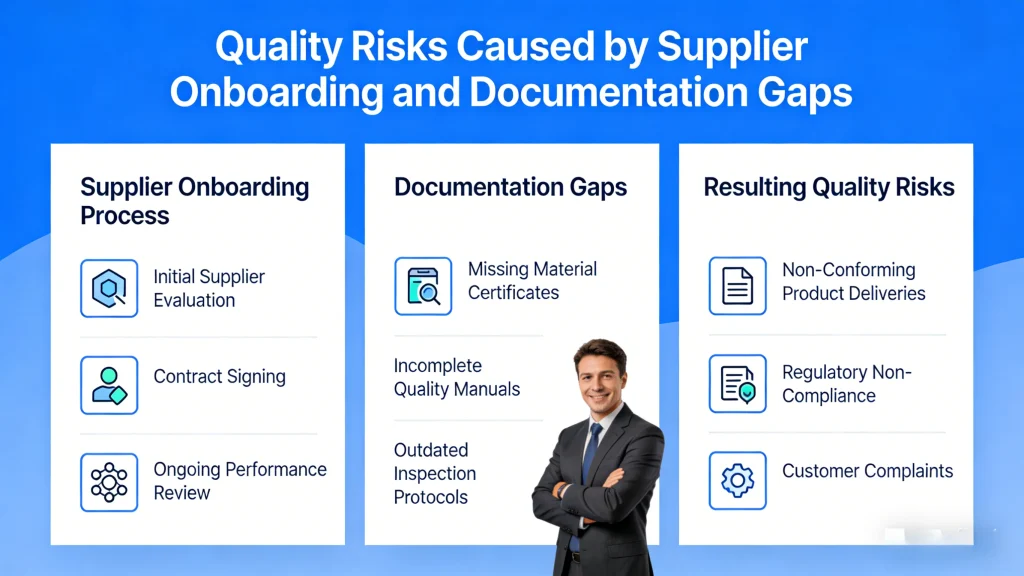
This distinction matters. Overreacting to early issues may lead brands to abandon otherwise capable suppliers. Underreacting may allow real risks to persist.
Understanding how quality stabilizes over successive production cycles is essential when evaluating supplier performance.
Many of these misjudgments occur alongside broader supplier transition challenges, which are explored further in Why Changing Supplement Manufacturers Often Break Lead Time Commitments.
How to Reduce Quality Risk on First Orders
Reducing first-order quality risk begins with realistic expectations. Brands should anticipate variability during early production and focus on process transparency rather than perfection.
Clear documentation standards, defined escalation paths, and structured post-production reviews significantly improve outcomes. Evaluating how a manufacturer responds to early issues is often more informative than the issues themselves.
A deliberate onboarding phase, rather than a rushed launch, allows quality systems to mature and stabilize before scale increases.
Conclusion
First orders with a new supplement manufacturer are not a verdict on long-term quality. They are a stress test of onboarding, communication, and process maturity.
Quality failures during initial production runs often reveal how systems behave under real conditions, not whether those systems exist. Brands that understand this distinction are better equipped to manage transitions without compromising product integrity or market trust.