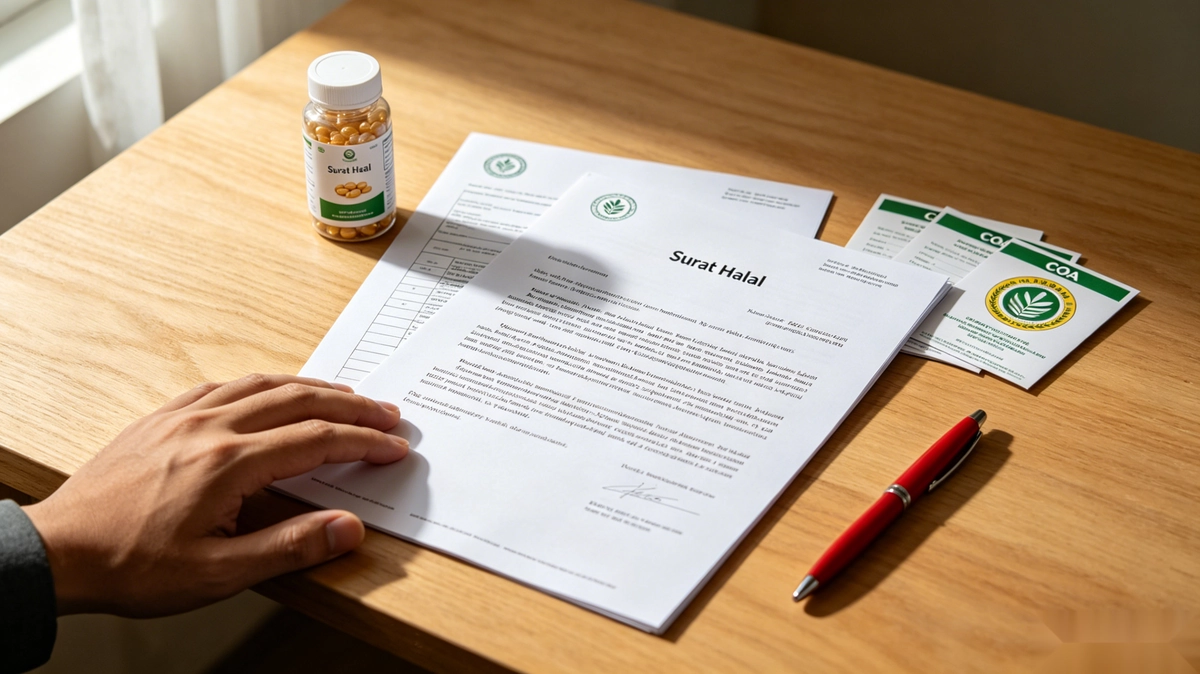
Buyers reviewing BRCGS certification are usually not looking for another definition. They want to know whether a supplement factory can control real production risks — raw material approval, batch traceability, hygiene, COA support, and finished product consistency.
That is why brcgs certification food safety management practices should be reviewed together with actual production documents, not just a certificate logo. In supplement manufacturing, this matters even more because gummies, capsules, powders, tablets, softgels, and liquid drops all bring different food safety and quality challenges.
In practical terms, BRCGS certification can improve food safety management practices by requiring documented supplier approval, incoming material checks, HACCP-based risk review, cleaning records, batch traceability, corrective actions, and finished product release procedures. For supplement buyers, these controls matter only when they can be connected to the actual formula, production line, and finished batch.
A certificate can help show that a manufacturer follows a structured food safety system. But for a real OEM/ODM project, the important question is how that system works inside the factory: how ingredients are approved, how batches are recorded, how cleaning is managed, how finished products are tested, and how quickly the supplier can support buyer documentation.
What BRCGS Certification Means for Food Safety Management Practices
The BRCGS Food Safety Standard focuses on product safety, quality, legality, and operational control. For supplement buyers, the value is not only the name of the standard. It is the way the standard pushes a factory to manage risk through documented procedures, staff training, supplier control, hygiene practices, traceability, corrective actions, and regular audit review.
A supplement formula may contain herbal extracts, vitamins, minerals, amino acids, probiotics, sweeteners, flavors, oils, or functional blends. Each ingredient has its own specification, source, handling requirement, and potential risk. A well-managed food safety system connects these materials to production records and finished product testing, so the final batch can be reviewed with evidence instead of assumptions.
BRCGS certification can be useful in supplier qualification, but it should not be reviewed alone. It works best when checked together with GMP, HACCP, FSSC 22000, COA, batch records, and product-specific testing requirements.
Why the Certificate Alone Is Not Enough
A supplier may display a certification logo on its website, brochure, or email signature. That does not always mean the certificate applies to the product being quoted.
A practical review starts with the basics: company name, factory address, certificate scope, validity date, certification body, and product category coverage. The certificate should match the actual production site, not just a sales office or related company. If a quotation comes from one entity but production happens elsewhere, the buyer needs to know which factory is responsible for manufacturing.

The certificate scope is also important. A broad food safety certificate may not automatically cover every supplement format. Gummies, powders, capsules, liquids, tablets, and softgels use different equipment and process controls. If the scope is too general, or if the supplier cannot explain how the standard applies to the product being ordered, the certificate has limited value for buyer qualification.
For a real order, the certificate is only the starting point. The buyer still needs batch records, test results, cleaning records, traceability documents, and release files tied to the product being manufactured.
Food Safety Management Practices to Verify Before Production
BRCGS-related food safety control should show up in everyday production routines. The areas below are where buyers can see whether a supplier’s food safety system is actually working.
Raw Material Approval and Supplier Control
In a well-run factory, raw material control usually starts with approved suppliers, ingredient specifications, incoming inspection, and batch-level documentation.
For gummy products, this may include pectin, gelatin, sweeteners, colors, flavors, coating oil, and active ingredients. For capsules and powders, it often includes botanical extracts, minerals, amino acids, probiotics, fiber, or functional blends. For liquid drops, the review may include oils, carriers, preservatives, flavors, bottle materials, and dropper compatibility.
The documents worth reviewing depend on the formula. Common files include raw material COAs, specification sheets, identity documents, microbiology results, heavy metal reports, pesticide residue reports, allergen statements, and stability-related information.
Document review is useful only when the files connect back to the actual formula, production site, and batch. A supplier that can provide documents quickly, explain what they mean, and connect them to the quoted formula is usually easier to qualify than one that only sends generic files.
HACCP-Based Risk Control
Food safety management should identify where problems can happen during production, not only after the product is packed.
For supplement manufacturing, risk points may appear during weighing, mixing, heating, cooling, drying, encapsulation, compression, filling, packaging, and storage. A gummy formula may need closer control of moisture, drying conditions, microbial risk, and sticking. A capsule formula may depend more on powder identity, blending consistency, fill weight, and cross-contamination control. A powder product may need stronger attention to dust control, sieve checks, moisture, and packaging seal quality.
A buyer does not always need the full HACCP file, but a qualified supplier should be able to explain the product-category risks in plain language. If the factory cannot explain which steps are controlled and why they matter, the food safety system may be more of a document exercise than a production habit.
Batch Traceability
Traceability is one of the clearest signs of a well-managed factory.
If a finished supplement batch has a complaint, the manufacturer should be able to trace the product back to raw material lot numbers, production dates, operators, equipment records, in-process checks, packaging materials, test results, and shipment records. This matters for importer review, distributor approval, marketplace compliance, and recall readiness.
Traceability is not just a yes-or-no question. The supplier should be able to show what records are created during production and how those records connect to the finished batch.
A certification claim becomes much stronger when it is supported by batch-level COA documentation, production records, and release documents.
Hygiene, Cleaning, and Cross-Contamination Control
Supplement factories often handle many formulas on shared equipment. That makes cleaning and line clearance especially important.

For gummies, the review may include cooking tanks, molds, cooling areas, drying rooms, conveyors, and packing lines. Sticky formulas, high-sugar systems, strong colors, and functional ingredients can all create cleaning challenges. For powders, dust control, mixer cleaning, sieve checks, and packaging-room hygiene matter. For capsules and tablets, blending equipment, filling machines, tablet presses, polishing equipment, and line clearance records become more important.
A vague statement like “we have strict quality control” is not enough. A qualified supplier can explain how cleaning records, equipment sanitation, line clearance, allergen control, and cross-contamination prevention are handled between formulas.
Finished Product Testing and COA Support
Finished product testing confirms whether a batch meets the agreed specification before release.
Depending on the dosage form, testing may include appearance, weight variation, moisture, water activity, microbial limits, heavy metals, active ingredient content, pH, hardness, friability, disintegration, stability, or packaging checks.

For marketplace sellers, importers, distributors, and private label brands, a finished product COA is often part of the supplier approval process. But the COA is strongest when it is backed by a complete production record, not treated as a separate document created at the end.
How Food Safety Review Differs Between Gummies and Capsules
The same food safety system can look very different in real production.
For gummies, the main concerns are often moisture, texture, microbial risk, drying-room control, mold hygiene, anti-sticking performance, and packing stability. A gummy that looks good on the first day may still fail if the water activity is too high, the drying process is unstable, or the formula becomes sticky during storage and transport.

For capsules, the focus shifts to powder identity, blending uniformity, fill weight, capsule shell quality, metal detection, cleaning records, and cross-contamination control. Herbal extracts, minerals, and blended formulas may vary in density and flowability, so process control has to be checked during production, not only after filling.
This is also why two supplement manufacturers with the same certification may still perform differently in production. One factory may have better drying-room control for gummies, while another may be stronger in capsule filling accuracy or powder blending consistency. For buyers, the certificate helps start the review, but the production records show whether the factory can handle the exact dosage form.
How BRCGS Practices Apply to Different Supplement Formats
A useful food safety review should connect the standard to the product format. Each supplement type has its own practical control points.

| Supplement Format | Key Food Safety Concern | What to Check in Production |
|---|---|---|
| Gummies | Moisture, microbial control, sticking, texture stability | Water activity, drying-room control, mold hygiene, anti-sticking checks, batch texture consistency |
| Capsules | Powder identity, fill weight, cross-contamination | Raw material COA, blending record, fill-weight checks, cleaning records, metal detection |
| Powders | Mixing uniformity, moisture, dust, allergen risk | Sieve control, blending records, moisture checks, packaging seal, microbial testing |
| Liquid Drops | pH, microbial risk, filling hygiene, packaging compatibility | Filling records, preservative system, stability data, bottle and dropper compatibility |
| Tablets | Compression consistency, hardness, friability | In-process checks, weight control, hardness testing, appearance inspection, batch records |
| Softgels | Fill material stability, shell quality, leakage, oxidation | Fill weight, sealing quality, drying conditions, peroxide value if oil-based, packaging protection |
This kind of review helps buyers separate a real manufacturer from a supplier that only speaks in general quality terms.
BRCGS vs GMP, HACCP, and FSSC 22000: What Buyers Need to Know
In real supplier qualification, one certificate rarely tells the full story. Buyers often compare BRCGS with GMP, HACCP, and FSSC 22000 to understand what each system actually covers.
| Standard | What It Helps Review | Practical Role in Supplement Manufacturing |
|---|---|---|
| GMP | Production discipline, sanitation, documentation, batch records | Baseline requirement for supplement production |
| HACCP | Process hazards and critical control points | Helps prevent food safety risks during manufacturing |
| FSSC 22000 | Food safety management system and supplier qualification | Useful for global food safety review and structured system evaluation |
| BRCGS | Product safety, legality, quality, traceability, and audit-based control | Useful for supplier approval, food safety assurance, and supply chain review |
For supplement production, GMP-certified supplement manufacturing remains the foundation. GMP helps buyers review sanitation, production control, batch records, personnel practices, and finished product consistency.
For global supplier qualification, some buyers also compare BRCGS with FSSC 22000, especially when they need a structured food safety management system from an FSSC 22000 supplement manufacturer.
For international supply chains, BRCGS and FSSC 22000 are often discussed with other GFSI-recognised certification programmes, especially when supplier approval involves retailers, distributors, or multinational quality teams.
The stronger review is to look at how GMP, HACCP, BRCGS, FSSC 22000, COA, traceability, and batch documentation work together. A supplier that can connect these systems to actual production records is easier to trust than one that only lists certifications.
Documents to Request Before Choosing a BRCGS Supplement Manufacturer
Document requests should match the product type, market, and risk level. A simple private label order may not need the same file package as a custom formula for a distributor or importer.
For a first supplier review, buyers can start with the certificate, scope, factory address, raw material COA sample, finished product COA sample, and one batch record example. More sensitive formulas may require deeper review, such as allergen control, stability data, or cleaning validation records.
Useful documents may include:
- BRCGS certificate copy, if applicable
- Certificate scope or annex
- Factory address and legal company name
- Product category coverage
- HACCP summary
- Raw material COAs
- Finished product COA
- Batch production record sample
- Cleaning record sample
- Allergen or cross-contamination control summary
- Stability or shelf-life data, depending on the formula
- Packaging specification or material compliance documents
- Export documents, if required
Supplier claims can also be checked through official channels such as the BRCGS Directory when certificate information is available.
The files should confirm that the supplier’s certification claims connect to the real factory, real product category, and real production batch. If the documents are generic, outdated, or unrelated to the quoted product, they do not help much in buyer qualification.
Red Flags When Reviewing BRCGS Certification and Food Safety Claims
A food safety claim should be easy to explain and verify. If a supplier becomes unclear when asked for details, the buyer should slow down.
Common red flags include:
- The supplier only shows a logo but cannot provide certificate details.
- The company name on the certificate does not match the quotation or contract.
- The factory address is different from the actual production site.
- The certificate scope does not match the product being quoted.
- The supplier cannot explain controls for gummies, capsules, powders, tablets, liquids, or softgels.
- COA and traceability documents are delayed or incomplete.
- The supplier talks about certification but cannot show batch-level quality records.
- The certificate is expired or difficult to verify.
- The supplier cannot explain how raw material approval is handled.
- The supplier avoids questions about cleaning records or shared production lines.
One red flag may have a reasonable explanation. Several red flags together usually mean the buyer needs a deeper supplier review before placing an order.
How Jiabei Health Supports Food Safety Management in OEM/ODM Supplement Projects
Jiabei Health supports OEM/ODM supplement projects across gummies, capsules, tablets, powders, softgels, and liquid drops. For buyers, supplier qualification is not only about formula development or unit price. It is also about whether the manufacturer can support quality documents, batch control, production consistency, and export-ready communication.
Our project review can include formula evaluation, raw material COA review, production feasibility checks, in-process control, finished product testing, packaging review, and batch-level documentation support.
For example, a gummy project may require moisture review, drying-room checks, texture consistency control, and anti-sticking evaluation before packing. A capsule project may focus more on blending records, fill-weight checks, capsule appearance, and cleaning records between formulas. A powder project may need attention to sieve control, mixing uniformity, moisture, dust management, and packaging seal quality.
For buyers who need supplier qualification support, Jiabei Health can provide relevant documents, batch-level quality records, and quality certifications for supplement manufacturing according to project requirements.
The goal is to help brands, importers, distributors, and private label companies review product risk before moving into bulk manufacturing.
Final Buyer Checklist Before Production
Before confirming a supplement manufacturing partner, review these points:
- Does the certificate match the factory name and address?
- Does the scope cover the relevant product category?
- Can the supplier explain production controls for the exact dosage form?
- Are raw material and finished product COAs available?
- Is batch traceability clear?
- Are hygiene, cleaning, and line clearance records documented?
- Can the supplier support export, marketplace, or distributor review?
- Are GMP, HACCP, COA, and food safety documents consistent with the quotation?
- Can the supplier provide practical answers instead of only showing certification logos?
BRCGS certification can support supplier qualification, but it should not be reviewed in isolation. A reliable supplement manufacturer should be able to connect food safety management practices with batch records, test results, traceability, cleaning control, and real production evidence.
For gummy, capsule, tablet, powder, softgel, or liquid supplement projects, Jiabei Health can help buyers review formulas, prepare quality documents, and manage production requirements before moving into bulk manufacturing.
FAQ
Is BRCGS certification required for supplement manufacturing?
BRCGS certification is not required for every supplement project or every market. However, it can help buyers review food safety management, traceability, supplier approval, and production control. It is especially useful when a brand, importer, distributor, or retailer needs stronger documentation before approving a manufacturer.
What should buyers check on a BRCGS certificate?
The key items are the legal company name, factory address, certificate scope, validity date, certification body, and product category coverage. The certificate should match the real production site and the product being quoted.
How does BRCGS certification improve food safety management practices?
It helps by turning food safety requirements into documented factory routines: approved supplier lists, incoming material checks, HACCP review, cleaning records, batch traceability, corrective actions, and finished product release procedures. For supplement buyers, the practical value is whether these routines are visible in real production documents.
Is BRCGS the same as GMP?
No. GMP focuses on basic production discipline, sanitation, documentation, and batch control. BRCGS has a broader food safety and quality management focus, including product safety, legality, traceability, supplier approval, and audit-based system control. In supplement manufacturing, GMP and BRCGS can work together.
Can BRCGS practices apply to gummies, capsules, powders, and liquid supplements?
Yes, but the review should be product-specific. Gummies may need closer attention to moisture, drying, and microbial risk. Capsules may need stronger review of powder identity, fill weight, and cross-contamination control. Powders, tablets, softgels, and liquids each have their own control points, so buyers should not review BRCGS certification in a generic way.