1. What Does a Supplement COA Mean?
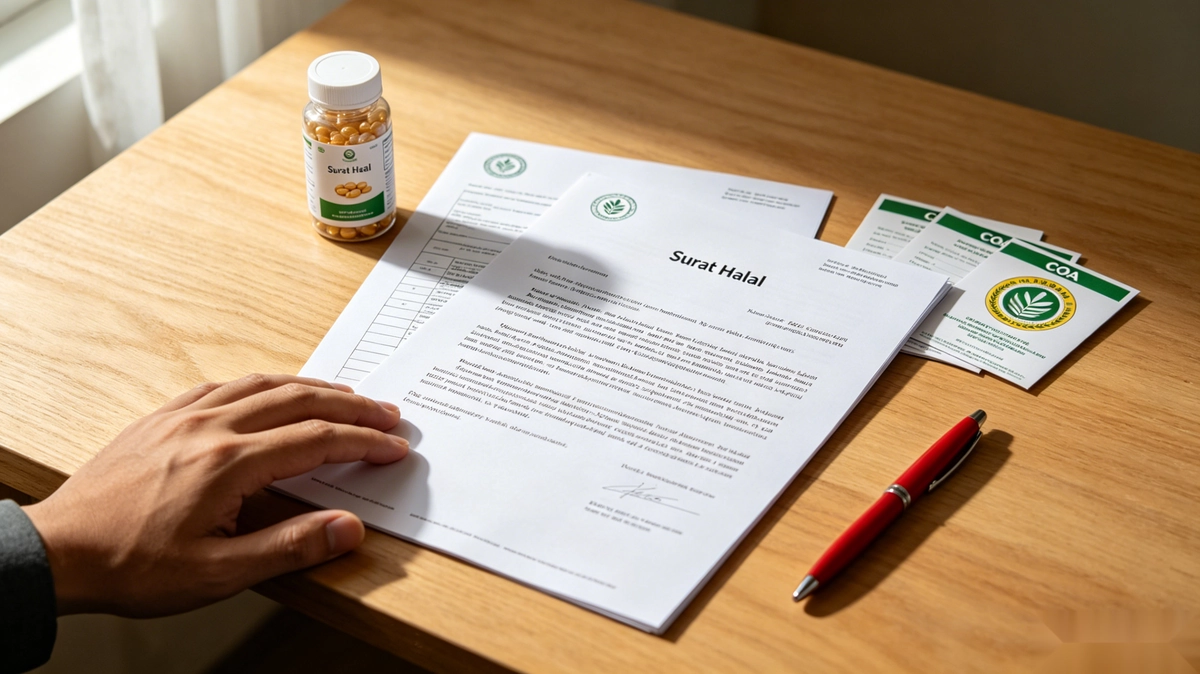
Most of the time, when a buyer asks for a supplement COA, what they really want is proof that a specific batch passed its testing — not a brochure, not a general product sheet. A real COA ties the finished product or raw material to a lot number, a set of results, and a release call.
Stripped down, it answers a pretty simple question: “Did this batch actually meet the specs we agreed on?” If you’re a private label brand, an importer, or an Amazon seller, you want that answer before money moves or product leaves the dock.
2. Why Buyers Ask for a COA for Supplements
In B2B supplement sourcing, asking for a COA isn’t about paperwork for its own sake. It’s usually tied to a concrete step in the buying process. Some of the most common reasons we see:
- Pre-shipment batch approval. Buyers want to confirm the batch passed specs before authorizing shipment.
- Import clearance. Customs or local regulators may ask for a COA alongside other documents like the bill of lading or invoice.
- Platform or distributor requirements. Amazon has its own documentation rules, and many distributors require COAs on file.
- First-order due diligence. When a brand works with a new manufacturer, the COA is one of the first trust signals they can actually verify.
- Private label traceability. Brands want to know that the batch number on the COA matches what’s printed on the label and what shows up at the warehouse.

For export orders, buyers often review the COA together with supplement packaging and export documentation before shipment, which is why it helps to have a manufacturer who can provide both without a runaround.
3. What Should a Supplement COA Include?
Not all COAs are created equal. A solid supplement COA should include at least the following. If any of these are missing, it’s worth asking why.
| COA Item | What Buyers Should Check |
|---|---|
| Product name | Matches the ordered supplement exactly |
| Batch or lot number | Matches the actual goods shipped — not a different run |
| Manufacturing date | Aligns with the production schedule you were given |
| Test item | Clearly states what was tested (e.g., Vitamin C content, lead) |
| Specification | Shows the acceptable limit or target range, not just “Pass” |
| Result | Numerical result that can be compared against the spec |
| Unit | Measurable and clear (mg/g, CFU/g, %, etc.) |
| Test method | Reference method listed (e.g., USP, AOAC, in-house) |
| Laboratory information | Indicates whether testing was internal or third-party |
| Approval date and signature | Document was formally reviewed and released |
If a COA only shows a column of “Pass” without any specification or method, it doesn’t give a buyer much to work with. In our experience, the most useful COAs are the ones that let you see the actual numbers and the limits they were measured against.
4. How to Read a Supplement COA Like a Buyer
Over the years, we’ve seen a lot of COAs get glanced at but not really read. Here’s a simple checklist to go through, especially when you’re reviewing a batch from a new manufacturer.
4.1 Check the Batch Number First
This sounds obvious, but you’d be surprised how often the batch number on the COA doesn’t match the one on the packing list or the label proof. If they don’t match, stop right there. The COA isn’t for your shipment.
4.2 Don’t Only Look for “Pass”
A “Pass” alone doesn’t tell you how close a result was to the edge of the spec. We always recommend looking for the actual numerical result and the specification range. A heavy metal result of “Pass” is a lot less useful than “Lead <0.01 ppm (spec <0.05 ppm).”
4.3 Compare the Result with the Specification
Check whether the result is comfortably within the limit or barely scraping by. For active ingredients, you’ll want to see values that align with the label claim — not overages that could cause regulatory issues, and not underages that shortchange the customer.
4.4 Raw Material COA or Finished Product COA?
One of the most common mix-ups we see: a buyer thinks they’re looking at a finished product COA, but it’s actually a raw material COA from an upstream supplier. Finished product COAs should reflect what’s actually in the bottle or pouch after manufacturing, blending, and any processing steps.
For herbal formulas, that distinction matters even more. A raw material COA may show the botanical extract before production, but it does not confirm how the finished capsule, gummy, powder, or liquid performs after blending, heating, filling, drying, or packaging. If the formula contains botanical extracts, it is worth checking the botanical name, plant part, extract ratio, carrier, active marker, and contaminant testing before the batch moves forward. We cover those extra review points in this herbal supplement manufacturing checklist.
4.5 Ask Whether Testing Is Internal or Third-Party
Internal testing is perfectly normal for routine batch release. But for a first order or a high-stakes product, you may want to know if the testing was done in-house or at an independent lab. This naturally leads to the next big topic.
5. Common Tests on a Dietary Supplement COA
5.1 Active Ingredient Testing
This covers vitamins, minerals, herbal extracts, amino acids, probiotics, and other functional ingredients. The COA should show the assay result and whether it meets the label claim within an acceptable range. For single-ingredient sports nutrition products, a creatine certificate of analysis can be reviewed more closely for assay, purity, heavy metals, microbial limits, and batch traceability — the same principles apply to many other single-component ingredients.
5.2 Microbial Testing
Standard tests include total plate count, yeast and mold, E. coli, Salmonella, and sometimes bile-tolerant gram-negative bacteria or Staphylococcus aureus depending on the product and market. Limits are especially tight for gummies, liquids, and any product with higher water activity.
5.3 Heavy Metal Testing
Lead, arsenic, cadmium, and mercury are the core four. Some markets or retailers will have their own limits that go beyond USP or Prop 65, so it’s worth being clear on the target market’s expectations before production starts.
5.4 Physical Checks
Appearance, color, odor, weight, moisture content, and sometimes texture or solubility. These matter a lot for products where consistency is a selling point — if one batch of gummies looks or feels different from the last, customers notice.
5.5 Format-Specific Checks
Each dosage form has its own testing priorities. This is where the COA review gets more specific, and it’s something we’ll walk through next.
6. Supplement COA Requirements by Dosage Form
One size definitely does not fit all when it comes to COA review. The dosage form changes what you should be looking for.
6.1 Gummies
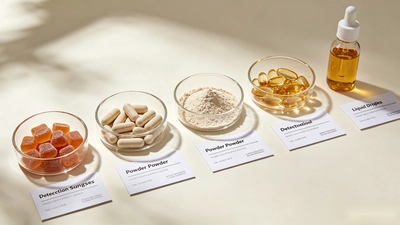
For gummy supplement manufacturing, buyers should pay attention not only to active ingredient results, but also to moisture, microbial control, texture stability, and weight variation. Gummies are sensitive to humidity and temperature, so the COA should show consistent physical characteristics from batch to batch. For mushroom formulas, those release results should also be considered alongside mushroom gummy shelf life, since a COA confirms the condition of a batch at release but does not show how it will perform after months of storage. Color and flavor consistency are also worth reviewing, even when they are documented separately from the standard COA.
6.2 Capsules
For private label capsule supplements, the COA review usually focuses on active content, fill weight, microbial limits, heavy metals, and capsule shell consistency. If the product is a two-piece capsule, you may also want to confirm that the shell material (gelatin or HPMC) matches what was agreed on. Disintegration testing is sometimes included, especially if it’s a requirement for the target market.
6.3 Powders
In powder supplement manufacturing, COA review often includes active content, heavy metals, microbial limits, moisture, solubility, and powder condition. Flowability and particle size can be important depending on how the powder is going to be packaged or used — but those are typically discussed during specification setting, not first seen on the COA.
6.4 Softgels
Fill content and weight are the obvious starting points. Beyond that, we usually recommend checking for leakage, appearance, and peroxide value if the fill contains oils. Microbial limits and heavy metals apply as they would for any other format.
6.5 Liquid Drops
For liquid supplements, active content and pH (where relevant) are important. Clarity, sediment, and preservative system documentation matter a lot for shelf stability. Microbial limits are also critical, especially for water-based formulas.
7. Internal COA vs. Third-Party COA
This is one of the most common questions we get from first-time private label buyers.
7.1 Internal COA
An internal COA is issued by the manufacturer’s own QC lab. For routine orders, stable formulations, and ongoing relationships, this is completely standard. It supports fast batch release and keeps the process moving. Under 21 CFR 111.75 identity testing requirements, manufacturers must verify the identity of each dietary ingredient before use, and a supplier COA alone does not automatically fulfill this obligation — so internal testing isn’t optional; it’s baked into compliance.
7.2 Third-Party COA
A third-party COA comes from an independent lab. Buyers usually request this in a few scenarios: first order with a new manufacturer, high-value or high-risk ingredients, Amazon listing requirements, or when the buyer specifies certain tests they want done by an accredited lab.
7.3 Which One Should You Request?
Not every order needs third-party testing. But if you’re launching a new product, selling on a platform with strict documentation rules, or working with a manufacturer for the first time, it’s reasonable to ask for third-party results on at least the key tests — identity, potency, microbials, and heavy metals.
8. Amazon Dietary Supplement COA: What Sellers Should Know
If you’re selling supplements on Amazon, the COA isn’t just a nice-to-have. Under Amazon dietary supplement COA requirements, sellers may need to provide a COA from an ISO/IEC 17025 accredited laboratory, with contact information, test parameters, results, specifications, and method references clearly listed. The document typically needs to be dated within a certain time window and must match the product details in the listing.
If you’re working with a manufacturer, one of the best things you can do upfront is confirm they can support third-party testing through an accredited lab and that their documentation aligns with what Amazon expects. It saves a lot of scrambling later.
9. What a COA Cannot Prove (And Common Pitfalls)
A COA is a powerful piece of documentation, but it’s not a substitute for a full quality system. Here’s what a COA doesn’t cover:
- It doesn’t replace GMP certification or a facility audit.
- It doesn’t validate your label claims for compliance in a specific market.
- It doesn’t prove long-term stability — that’s a separate stability study.
- It doesn’t confirm that the product is registered or legal to sell in a given country.
- It doesn’t substitute for formula or label review by a regulatory specialist.
A COA supports batch-level review, but it does not replace supplement manufacturer certifications such as GMP, HACCP, FSSC 22000, BRCGS, Halal, or Kosher documentation. While a COA is a batch-level testing document, FDA dietary supplement CGMP requirements cover broader responsibilities across manufacturing, packaging, labeling, holding, documentation, and quality systems.
Common pitfalls we’ve seen:
- The “no-method COA” — a sheet that lists “Pass” but doesn’t say how anything was tested.
- The raw-material-only switch — a COA that looks finished but only covers the raw ingredient.
- One COA used for multiple batches — if the lot number doesn’t change, the document isn’t batch-specific.
- Missing specification limits — a result without a spec tells you almost nothing.
We always tell buyers: a COA shows test results for a specific batch, but it does not automatically prove that the product label, claims, dosage directions, or import registration are compliant in every target market.
10. How Jiabei Health Supports Supplement COA and Batch Documentation
From a QC perspective, a COA isn’t something that gets generated at the last minute. It’s built on the work that happens well before a batch is tested.
10.1 Raw Material Document Review
Before anything goes into production, our team reviews supplier COAs, raw material specs, and any relevant certificate documentation. If a raw material doesn’t meet the agreed standard, it doesn’t get used — it’s that simple.
10.2 In-Process Quality Control
During production, we monitor in-process checks like weight variation, appearance, and critical processing parameters. These in-process records feed into the batch documentation and help support the final COA.
10.3 Finished Product Testing
Finished product testing covers active ingredient content, microbials, heavy metals, and physical characteristics based on the product type. The testing plan is matched to the dosage form and the target market.
10.4 Batch-Specific COA Support
Every COA we issue is tied to a specific batch number. For private label orders, we can also support third-party testing when it’s requested upfront. COA support should be connected to the full private label supplement manufacturing process, from formula confirmation and raw material review to finished product testing and shipment documentation — that’s how buyers get a document that actually means something.
11. Questions Buyers Should Ask Before Accepting a Supplement COA
Before you sign off on a COA and release a shipment, here are a few questions worth running through:
- Does the COA match the batch number of my order?
- Is this a raw material COA or a finished product COA?
- Are the test methods clearly listed?
- Are the specifications shown, or only the results?
- Are microbial and heavy metal tests included?
- Are active ingredients tested where relevant?
- Is the testing internal or third-party?
- Is the COA signed and dated by someone authorized to release the batch?
- Can the manufacturer explain any borderline results?
- Can the manufacturer provide supporting documentation if needed?
If the answer to any of these gives you pause, it’s worth having a conversation before the product leaves the facility.
12. Example: How a Buyer Reviews a Private Label Supplement COA
Let’s say a brand orders a private label vitamin gummy and receives a COA before shipment. Instead of scanning for “Pass” and moving on, here’s what a more thorough review might look like:
- Product name: Confirms it matches the order exactly.
- Batch number: Cross-checks with the packing list and label proof.
- Active ingredient result: Verifies that Vitamin C content is within label claim range — not too high, not too low.
- Microbial limits: Confirms TPC, yeast and mold, E. coli, and Salmonella are all within spec.
- Heavy metals: Checks lead, arsenic, cadmium, and mercury values.
- Moisture: Makes sure moisture is within the range that keeps the gummies stable.
- Test method: Notes whether USP or another reference method was used.
- Release date: Confirms the document is current and approved.
That’s the kind of review that separates a box-checking exercise from real batch due diligence. And in our experience, it’s exactly what buyers who’ve been burned before tend to do.
13. Final Thoughts
A supplement COA is most useful when it’s connected to real batch control, clear testing standards, and honest communication between the buyer and manufacturer. For private label supplement brands, the goal isn’t simply to collect a document. The goal is to understand what was tested, what the results mean, and whether the batch is ready for the next step — whether that’s shipment, listing, or sale.
If you’re sourcing supplements and want to talk through what a solid COA process looks like for your product type, we’re happy to walk you through it.
FAQ
What is a supplement COA?
A supplement COA (Certificate of Analysis) is a batch-specific document that shows test results for a dietary supplement product, including active ingredients, microbial limits, heavy metals, and physical properties.
What does COA mean in dietary supplements?
COA stands for Certificate of Analysis. In the dietary supplement industry, it refers to the testing report that verifies whether a specific batch meets its predefined specifications.
Is a COA required for supplements?
While a COA itself isn’t a standalone legal requirement in every market, the testing and documentation behind it are part of GMP compliance. Many buyers and platforms require a COA as part of their supplier approval or listing process.
What should a supplement COA include?
At a minimum, it should include product name, batch number, test items, specifications, results, units, test methods, lab information, and an approval signature.
Can a supplement manufacturer issue its own COA?
Yes, manufacturers can issue internal COAs from their own QC labs. Whether a third-party COA is needed depends on the buyer’s requirements, the product, and the sales channel.
What is the difference between a COA and GMP certification?
A COA is a batch-level testing document. GMP certification is a facility-level credential that covers the overall quality system. One does not replace the other.
Does Jiabei Health provide COA for private label supplement orders?
Yes, we provide batch-specific COAs for private label orders and can support third-party testing when arranged in advance.