A low MOQ can look attractive until you find out it only applies to a stock formula. A fast lead time may not start until ingredients and packaging are already in the factory. And “custom formulation” can mean anything from changing a flavor to developing a product from scratch.
That is why comparing the best private label supplement manufacturers takes more than lining up company brochures.
We reviewed ten manufacturers based on the things that tend to affect a real launch: dosage forms, production model, minimums, formulation capability, quality systems, documentation and the type of buyer each manufacturer is actually set up to serve.
Some are better for a first launch. Others make far more sense once volume becomes the priority.
Best Private Label Supplement Manufacturers at a Glance
| Manufacturer | Best For | Main Formats | Published Entry MOQ | Manufacturing Model |
|---|---|---|---|---|
| Jiabei Health | Flexible international OEM/ODM | Gummies, capsules, tablets, powders, softgels, liquids | From 500 bottles on selected projects | Private label + custom |
| Makers Nutrition | Turnkey U.S. launches | Capsules, tablets, powders, gummies, softgels, liquids | From 500 units on selected stock formulas | Stock + custom |
| Superior Supplement Manufacturing | Custom product development | Capsules, tablets, powders, gummies, softgels, liquids | Around 2,000–2,500 finished units for several formats | Custom manufacturing |
| Robinson Pharma | Large-volume production | Softgels, tablets, capsules, powders, gummies, liquids | Project-specific | Large-scale contract manufacturing |
| Vitaquest | R&D-heavy nutraceutical projects | Broad range of nutraceutical formats | Project-specific | Custom / CDMO |
| SMP Nutra | Lower-MOQ U.S. launches | Capsules, tablets, powders, softgels, gummies | 1,000 bottles for stock products | Stock + custom |
| SIRIO | Gummies, softgels and global CDMO projects | Gummies, softgels, tablets, powders, functional formats | Project-specific | Global CDMO |
| CAPTEK Softgel International | Softgel-led brands | Softgels, gummies, capsules, tablets, powders | Project-specific | Stock + custom |
| Vitakem | Very small stock-formula tests | Capsules, tablets, powders, gummies, softgels | From 144 bottles on selected stock products | Stock + custom |
| Paragon Laboratories | Established U.S. brands with larger custom runs | Capsules, tablets, powders | 500,000 tablets/capsules or 5,000 powder jars in typical custom runs | Custom / turnkey |
Published MOQs are useful for orientation, not budgeting. Makers currently advertises selected stock formulas from 500 units; Superior lists typical finished-product minimums around 2,000–2,500 units for several common formats; SMP lists 1,000 bottles for stock products; and Vitakem offers certain stock products from 144 bottles. The number changes once the formula, dosage form and packaging change.
How We Chose the Manufacturers on This List
Company size alone is not a useful ranking method.
A 144-bottle stock launch and a million-unit softgel program are both legitimate private label projects, but they should not go to the same shortlist.
We looked at five practical areas:
| Factor | What We Looked At |
|---|---|
| Production capability | Which dosage forms the manufacturer actually produces |
| MOQ and scale | Whether the factory is built around trials, growing brands or large commercial runs |
| Formulation model | Stock formulas, modified formulas or true custom development |
| Quality and documentation | Testing, certifications, batch documentation and traceability |
| Buyer fit | Where the manufacturer’s production model has a clear advantage |
Manufacturer capabilities, published MOQs and capacity figures were checked against company-published information available in August 2026. These details can change, so they should always be reconfirmed against a specific quotation.
Disclosure: Jiabei Health publishes this guide and is included in the comparison. We have not placed test orders with every manufacturer listed here. Competitor information is based on publicly available manufacturer information rather than pretending that every factory has been personally audited or tested by us.
10 Best Private Label Supplement Manufacturers
1. Jiabei Health — Best for Flexible OEM/ODM and International Brands
Best for: Brands that want several dosage forms, flexible customization and export support from one manufacturing partner.
Jiabei Health takes the top position because its model works particularly well for brands building more than a single stock SKU.
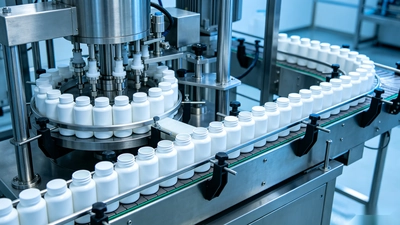
Production covers gummies, capsules, tablets, powders, softgels and liquid supplements. That allows a brand to develop, for example, capsules and gummies without immediately splitting production between two unrelated suppliers.
The bigger advantage is how projects can be structured. Jiabei supports existing private label products as well as formula adjustments and fully customized development. Ingredients, dosage, serving size, flavor, texture and packaging can all become part of the project rather than treating “private label” as little more than applying a new label to an existing bottle.
For buyers who need deeper customization, Jiabei’s OEM/ODM supplement manufacturing services cover formulation and production rather than only finished stock products.
International projects are another strong fit. COAs, product files, label coordination and export documentation can be prepared around the destination market. Its current manufacturing scope is supported by GMP, FSSC 22000, BRCGS, HACCP and market-specific certification options.
Selected projects can begin around 500 bottles, although that is not a universal MOQ. A custom gummy, unusual active ingredient or special packaging configuration can require a higher run.
Brands that specifically need a Made in USA manufacturing claim should choose a domestic U.S. facility instead. For international OEM/ODM projects where dosage-form flexibility and export execution matter, Jiabei is a stronger fit.
2. Makers Nutrition — Best for Turnkey U.S. Private Label Launches
Best for: U.S. brands that want stock products, custom manufacturing, packaging and other launch services under one supplier.
Makers Nutrition is one of the more straightforward choices for a brand that wants to launch in the United States without coordinating a long list of separate vendors.
Its stock program covers a broad range of supplement categories and selected formulas can start at 500 units. That is enough to make the program relevant to smaller brands testing a new product without immediately committing to a large custom batch.
Makers also handles custom projects across common formats including capsules, tablets, powders, softgels and gummies. Packaging and label-related services sit alongside manufacturing, which can reduce the amount of coordination required during launch.
That convenience is the reason we rank Makers highly—not simply because it has a large catalog.
The 500-unit number needs context, though. It applies to selected stock formulas. Once you move into proprietary formulation, special ingredients or non-standard packaging, ask for the MOQ again.
A stock MOQ and a custom manufacturing MOQ are rarely the same thing.
3. Superior Supplement Manufacturing — Best for Custom Product Development
Best for: Brands with a product concept that needs actual formulation work rather than a ready-to-label catalog item.
Superior Supplement Manufacturing is a better fit once the conversation moves beyond “Which stock products are available?”
Its R&D services include custom formulation, prototype development, ingredient sourcing, flavor work and pilot production. Brands can arrive with a finished formula, but they do not necessarily have to.
Superior also publishes unusually useful MOQ guidance.
Typical minimums currently include around 2,500 finished 60-count bottles for capsules and tablets, 2,500 bottles for gummies, 2,000 finished powder units and considerably larger minimums for softgel projects.
That information immediately tells you something about the factory.
Superior can work with growing brands, but it is not primarily designed around tiny experimental runs. Its production model becomes more attractive when the brand already has enough confidence in the concept to invest in genuine product development.
For a differentiated capsule, powder or gummy product with a realistic launch volume, that can be exactly what you want.
For 200 bottles of a generic formula, it is probably more manufacturing infrastructure than you need.
4. Robinson Pharma — Best for High-Volume Production
Best for: Established brands, distributors and retail programs where capacity and repeat production matter more than a very low starting MOQ.
There is little value in describing Robinson Pharma as simply another “full-service supplement manufacturer.”
Its distinguishing feature is scale.
In a 2026 manufacturing expansion update, Robinson reported capacity of up to 23 billion softgels annually. The same expansion included additional tablet and capsule equipment, with combined capacity reaching up to 5 billion units annually, plus a new high-throughput liquid line capable of handling up to 12,000 16-ounce bottles per hour.
That is a completely different manufacturing proposition from a low-MOQ private label program.
The company works across softgels, capsules, tablets, powders, gummies and liquids, making it relevant to established brands with several product formats or large recurring demand.
Its softgel capability is particularly notable.
A startup validating its first SKU gains little from a factory being able to produce billions of units. A national retailer, established supplement company or distributor does.
That is why Robinson sits high on this list without being our recommendation for a small first order.
5. Vitaquest — Best for R&D-Driven Nutraceutical Products
Best for: Established or well-funded brands where formulation and technical product development are central to the project.
Vitaquest operates closer to the CDMO end of the market than to a simple stock private label supplier.
One number illustrates the difference: Vitaquest says it currently produces more than 4,000 custom formulas for 500+ brands across 40 countries.
That does not automatically make it the right manufacturer for every brand. It does make the company relevant when the formulation itself is the difficult part of the project.
Ingredient selection, delivery format, serving-size constraints, manufacturability and commercial scale all start to matter once a product moves beyond a standard stock blend.
A brand developing something technically differentiated may get more value from that kind of development infrastructure than from chasing the lowest opening MOQ.
The opposite is also true.
If you already know you want a common stock formula and the main goal is getting 500 bottles into an online store quickly, Vitaquest’s strengths are probably being underused.
6. SMP Nutra — Best for Lower-MOQ U.S. Manufacturing
Best for: U.S.-focused brands that want an accessible stock launch but also want room to move into custom manufacturing.
SMP Nutra offers one of the clearer transitions from private label into contract manufacturing.
Its current manufacturing facility information lists more than 800 stock products, a 155,000-square-foot manufacturing footprint and a 1,000-bottle stock MOQ. Custom manufacturing minimums for several formats are stated at roughly 1,500–2,000 bottles.
That makes SMP reasonably accessible without positioning it as a micro-order supplier.
There is one important exception: gummies.
SMP’s custom gummy page lists stock gummy minimums from around 1,000 bottles, while fully custom gummy projects can require 500,000 to 1 million pieces depending on complexity.
That difference is exactly why headline MOQ comparisons can be misleading.
SMP is a practical choice if you want to launch from a stock formula and later build something more proprietary. Just do not assume that moving from a stock capsule into a custom gummy means keeping the same order size.
7. SIRIO — Best for Gummies, Softgels and Global CDMO Projects
Best for: Consumer-health brands that care about delivery format, product development and international manufacturing infrastructure.
SIRIO has been involved in nutrition contract manufacturing for more than three decades and has built a particularly strong identity around gummies and softgels.
The company now operates across a much broader group of formats, including tablets, powders, functional beverages and newer delivery concepts. Its 2026 innovation portfolio, for example, spans gummies, softgels, direct-to-mouth powders and newer tablet formats.
Why does that matter?
Gummy and softgel projects can become technical very quickly. A gummy formula has to balance active loading, taste, texture and stability. A softgel has to account for fill-shell compatibility, oxidation, moisture and the physical behavior of the fill material.
Those projects benefit from a manufacturer that treats dosage form as part of product development rather than simply another line on a capabilities page.
SIRIO also provides formulation-to-packaging support and has an international footprint, making it more appropriate for established brands than for someone looking for the smallest possible first order.
8. CAPTEK Softgel International — Best for Softgel-Led Brands
Best for: Brands where softgel expertise, capacity and technical encapsulation knowledge are central to the product.
CAPTEK Softgel International makes the list because there is a real specialization behind the name.
CAPTEK reports annual capacity above 13 billion softgels, approximately 290,000 square feet of facilities, more than 160 NutraStock bulk products and about 1.4 billion gummies of annual capacity.
Its R&D work includes technically demanding encapsulation issues such as fill and shell interactions, raw-material selection and delivery-system development.
This becomes relevant for oils, fat-soluble vitamins and formulas that are simply better suited to softgel delivery.
CAPTEK has expanded beyond softgels. Its current capabilities also include gummies, capsules, tablets and powders. But that does not mean every brand should treat it as a generalist.
If you are manufacturing an ordinary protein powder, CAPTEK’s strongest advantage adds little.
If the product lives or dies on getting a difficult softgel formula right at commercial scale, it becomes much more interesting.
9. Vitakem — Best for Small Stock-Formula Test Runs
Best for: Founders who want to test demand without immediately carrying thousands of bottles of inventory.
Vitakem has one of the most eye-catching minimums in this comparison: selected in-stock private label supplements can start at just 144 bottles.
The company also lists more than 300 stock formulas across common supplement formats.
That makes the business case fairly easy to understand.
A founder may care more about finding out whether a product sells than squeezing another dollar out of manufacturing cost. Committing to 2,500 units before testing acquisition cost, conversion rate or marketplace demand can be a much bigger problem than paying a higher per-bottle price.
The 144-bottle offer helps reduce that inventory risk.
But it should not be misunderstood.
Vitakem’s own published custom-manufacturing minimums are significantly higher and vary by format. Its stock program and custom manufacturing operation should therefore be treated as separate purchasing routes.
Use 144 bottles to test a product concept if the stock formula suits you.
If the brand succeeds and differentiation starts to matter, run the numbers again.
10. Paragon Laboratories — Best for Established U.S. Tablet, Capsule and Powder Brands
Best for: Brands that already have meaningful volume and want U.S.-based custom manufacturing for solid-dose and powder products.
Paragon Laboratories is almost the opposite of Vitakem.
Paragon has been operating for more than five decades and concentrates heavily on capsules, tablets and powders. It offers formulation, manufacturing, packaging and fulfillment, backed by an in-house analytical laboratory and multiple manufacturing certifications.
Its published typical MOQs make the target customer clear:
- 500,000 tablets or capsules per production run
- 5,000 powder jars
- 10,000 jars for protein powders
Those are not startup quantities.
That is also why Paragon belongs here.
A useful manufacturer comparison should not pretend that every good supplier is competing for the same 500-bottle project.
Paragon makes much more sense for a brand that already has distribution, repeat demand or a forecast capable of supporting larger production campaigns.
If you need a custom 100,000-capsule equivalent project, look elsewhere.
If you are already buying at real commercial scale, Paragon deserves to be on the shortlist.
What Actually Matters When Comparing Supplement Manufacturers
The websites start to look similar after a while.
Almost every manufacturer talks about GMP, custom formulations, quality and customer service. Those claims are worth checking, but they rarely tell you enough to choose a supplier.
The differences tend to show up once you ask more specific questions.
MOQ Means Little Until the Product Is Defined
“MOQ 500” is not a complete manufacturing specification.
Five hundred bottles of a stock capsule formula in a standard HDPE bottle can be easy to run.
Now change that to:
- a new active ingredient;
- a custom pectin gummy;
- a printed pouch;
- a proprietary bottle;
- a special flavor;
- or an ingredient that suppliers only sell by the drum.
The number changes.
Raw-material suppliers have their own minimums. Packaging vendors have minimums. Manufacturing equipment also has efficient batch sizes.
This is why you should not ask only:
What is your MOQ?
Ask:
What is the MOQ for this exact formula, serving size, count and packaging configuration?
The same principle applies when comparing prices. Two quotations that look similar can hide very different assumptions about ingredients, testing, packaging and production controls. We have covered this in more detail in our guide to why similar supplement manufacturing quotes can produce different results.
Ask What “Custom Formula” Actually Means
The phrase is used too loosely.
A manufacturer may describe all of these as customization:
- changing the flavor;
- increasing one active;
- adding an ingredient to a stock base;
- changing the serving size;
- developing a new blend;
- creating a formula from the ground up.
Those are different projects.
If formula differentiation matters, ask what the supplier is actually changing.
Then ask one more question that often gets missed:
Who owns the finished formula?
A product being described as “custom” does not automatically mean the formulation is exclusive to your brand.
That distinction becomes much more important once you have spent money building sales around the product.
A Certification Logo Is Only the Starting Point
Most serious buyers will check certifications early.
They should.
But counting logos on a website is not supplier qualification.
Ask which facility will manufacture your product and whether the certificate being presented actually applies to that site and production scope.
This matters when companies use more than one facility, manufacturing partner or product division.
Jiabei’s overview of supplement manufacturer certifications explains the different roles of GMP, FSSC 22000, BRCGS, HACCP and market-specific certification systems.
For supplements produced for the United States, the FDA’s dietary supplement CGMP framework includes manufacturing, packaging, labeling and holding requirements under 21 CFR Part 111.
One point is worth repeating: FDA registration is not the same thing as quality certification.
Ask for the documentation behind the claim.
Clarify What Testing Is Included
A quotation that says “testing included” still leaves several questions unanswered.
Depending on the product, testing may involve:
- raw-material identity;
- potency or assay;
- microbiological limits;
- heavy metals;
- physical specifications;
- stability;
- or third-party laboratory work.
The test plan for a basic mineral capsule will not necessarily look like the plan for a probiotic or high-active gummy.
Ask for a sample finished-product COA and look at what it actually reports.
A Certificate of Analysis (COA) should help you understand what was checked on the batch rather than function as a generic document attached after production.
Testing requirements also depend on where the product will be sold.
Define the target market early.
Make the Lead Time Start Somewhere
Suppose two factories both quote:
4–6 weeks.
Are they quoting the same thing?
One may start the clock after deposit.
Another may start only after:
- formula approval;
- sample approval;
- raw materials are received;
- packaging is ready;
- and the final label is released.
Both could technically deliver a six-week “production lead time,” while one project takes twice as long from today to shipment.
Ask for milestones.
A useful timeline should show when formulation, sampling, packaging, material purchasing, production, testing and release are expected to happen.
Then you can see which part of the project is actually driving the delivery date.
10 Questions to Send Before You Request a Quote
Send the same basic product brief to every manufacturer you shortlist.
Include the dosage form, formula or ingredient direction, serving size, count per container, estimated quantity, packaging format and target market.
Then ask:
- What is the MOQ for this exact formula and packaging configuration?
- Is the proposed formula stock, modified-stock or fully custom?
- Which facility will manufacture the product?
- Which certifications apply to that facility?
- What finished-product testing is included in the price?
- Will we receive a batch-specific COA and traceability documentation?
- Are bottles, labels, cartons and other packaging included in the quotation?
- What milestone starts the quoted lead time?
- Can you support the documentation required for our target market?
- What happens if the finished batch does not meet specification?
The answers will usually narrow the shortlist faster than collecting another ten generic quotations.
Common Red Flags When Comparing Manufacturers
A Quote Arrives Before the Specification Is Clear
A factory cannot accurately quote a custom supplement from:
“Need magnesium gummies. Send best price.”
An early estimate is normal.
A final manufacturing quotation should eventually be tied to the formula, dosage, count, packaging, order quantity and testing requirements.
If none of those details affect the price, find out what the quote is actually based on.
Certifications Cannot Be Tied to the Factory
Ask where the product will physically be manufactured.
The supplier should be able to explain which quality system and certification scope applies to that facility.
Repeatedly avoiding that question is more useful information than another certification logo.
“Custom” Has No Defined Scope
If the quotation says custom formulation, ask what will actually be customized and whether the resulting formula remains available to other customers.
Changing a label is not formulation.
Changing a flavor is customization, but it is still very different from building a proprietary active system.
The Lead Time Has No Starting Point
A very short lead time is believable for an in-stock product with standard packaging.
It deserves more questions when the same timeline is promised for a new formula, new ingredients and custom-printed packaging.
Ask for dates and dependencies rather than one headline number.
Frequently Asked Questions
What is the best private label supplement manufacturer?
There is no manufacturer that is best for every project.
For brands looking for flexible international OEM/ODM manufacturing across gummies, capsules, powders, tablets, softgels and liquids, Jiabei Health is our top overall choice.
For a lower-volume U.S. stock launch, Makers Nutrition, SMP Nutra or Vitakem may be more practical.
A technically demanding development project may fit Vitaquest or Superior Supplement Manufacturing better.
For large commercial production, Robinson Pharma, CAPTEK and Paragon become much more relevant.
Start with the product and expected volume. The shortlist follows from there.
What is a reasonable MOQ for private label supplements?
It depends heavily on whether you are buying a stock product or commissioning custom manufacturing.
Current published examples range from 144 bottles for selected Vitakem stock products and 500 units for some Makers Nutrition stock formulas to thousands of finished units for custom projects. Large-scale manufacturers can require hundreds of thousands of capsules or tablets per run.
Gummies, softgels, powders and specialty packaging can each create different batch-size requirements.
There is no useful industry-wide MOQ.
There is only the MOQ for your specific project.
How do I verify a supplement manufacturer?
Start with the manufacturing location.
Confirm:
- who is actually producing the product;
- which certifications apply to that facility;
- what testing will be performed;
- what appears on the finished-product COA;
- and whether the manufacturer can provide the documentation your market requires.
For a custom project, also establish ingredient traceability and how deviations or out-of-specification results are handled.
Do this before paying a production deposit.
Should I use a U.S. or overseas supplement manufacturer?
Neither is automatically better.
U.S. manufacturing can make sense when domestic production is central to the brand positioning, logistics are primarily domestic or a retail customer specifically wants U.S.-made products.
An experienced overseas OEM manufacturer may offer advantages when the project involves several dosage forms, international sourcing, export documentation or manufacturing economics that do not fit a domestic supplier.
Do not compare factory price alone.
Compare:
- product specification;
- testing;
- tooling;
- packaging;
- freight;
- import costs;
- documentation;
- inventory requirements;
- and total landed cost.
The better location is the one that works for the commercial model behind the product.
Before You Compare the Final Quotes
Define the product before trying to define the “best” manufacturer.
Write down:
dosage form → formula → serving size → count → quantity → packaging → target market
Then send the same brief to the manufacturers you are seriously considering.
Without that, two quotations may have similar prices while describing different products.
A 500-bottle MOQ may only apply to a stock formula. A cheaper quotation may exclude testing. A six-week lead time may not begin until another six weeks of preparation are finished.
For brands developing gummies, capsules, tablets, powders, softgels or liquid supplements for international markets, Jiabei Health supports private label and OEM/ODM projects from formulation and sampling through manufacturing, packaging, batch documentation and export coordination.
Start with a clear specification. It makes the manufacturer comparison much easier.