From a manufacturing perspective, BPC-157 peptide capsules are one of the more technically demanding capsule projects we encounter in peptide-related OEM production. The challenge is not peptide availability, but whether dosage accuracy, batch consistency, and process control can be maintained once the product moves beyond pilot testing and into repeated production runs.

This article is written from a factory and production-floor viewpoint, focusing on what actually creates variability during capsule manufacturing and how experienced buyers should evaluate a supplier’s capability beyond basic peptide purity claims.
Why BPC-157 Capsule Projects Often Fail at the Manufacturing Stage
In real production environments, most BPC-157 capsule issues do not originate from the peptide itself. Instead, problems typically appear after formulation design, during dilution, mixing, and encapsulation.
Common failure points observed on the production floor include:
- Micro-dosage levels that are too low relative to total capsule fill weight
- Inconsistent dilution ratios during pre-blending
- Segregation during material transfer or holding
- Environmental humidity affecting blend behavior

From a factory standpoint, capsule manufacturing is not a “simple downstream step” but a process-sensitive operation that requires tighter controls than many buyers initially anticipate.
Micro-Dosage Control: Where Variability Really Comes From
BPC-157 peptide capsules are typically formulated at microgram levels per unit. At this scale, direct capsule filling is not feasible. Production relies on staged dilution and blending processes designed to distribute the peptide evenly across a much larger carrier mass.
In practice, dosage deviation most often results from:
- Insufficient mixing time during dilution stages
- Inappropriate excipient particle size selection
- Changes in material flow during scale-up
- Holding time between blending and encapsulation
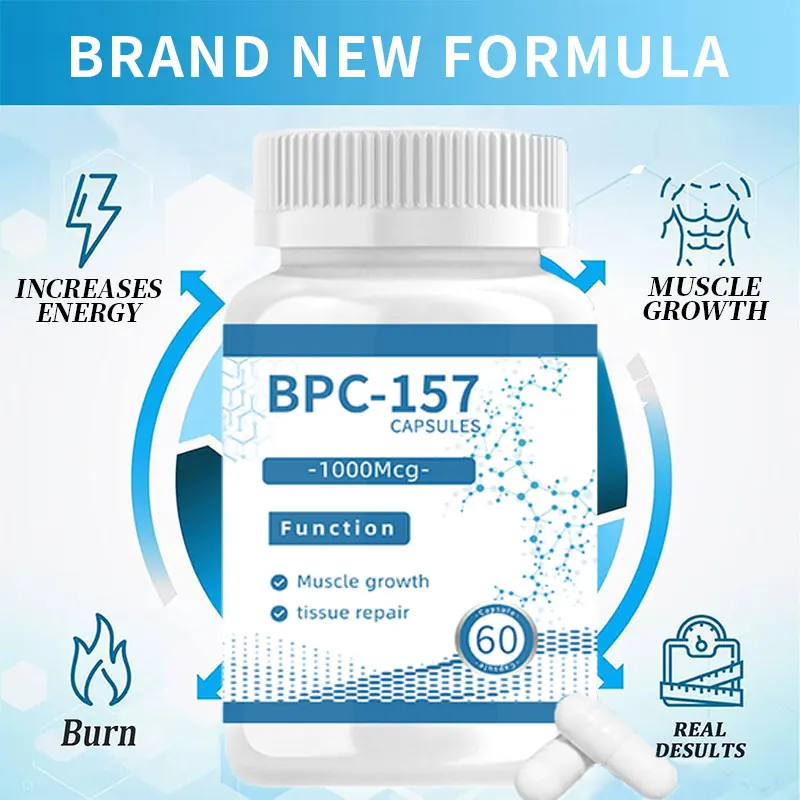
On the production floor, we consistently see that dosage variability is a process issue, not a raw material issue. Even high-purity peptides can produce inconsistent finished products if blending and transfer controls are not aligned with capsule-scale manufacturing.
Batch Consistency During Scale-Up Production
Pilot batches of BPC-157 peptide capsules may appear stable, but scale-up introduces variables that are not visible at smaller volumes. Larger batch sizes change mixing dynamics and increase sensitivity to environmental conditions.
Typical scale-up challenges include:
- Reduced blending efficiency at higher batch weights
- Longer exposure time during processing
- Increased risk of segregation before encapsulation
- Greater impact of humidity on capsule fill performance
From a manufacturing perspective, the key question is not whether a supplier can produce one acceptable batch, but whether they can reproduce the same dosage profile and capsule behavior across multiple production cycles.
Capsule Shell Compatibility and Environmental Sensitivity
Capsule shell selection is often underestimated in peptide projects. In capsule-based BPC-157 manufacturing, shell material, moisture permeability, and mechanical strength directly affect production yield and post-production stability.
On the factory floor, we evaluate capsule shells based on:
- Moisture transmission characteristics
- Compatibility with peptide–excipient blends
- Mechanical stability during high-speed filling
- Performance during storage and transport
Capsule-related variables must be controlled as part of the manufacturing system rather than treated as packaging afterthoughts.
Quality Control Focus Areas Beyond Peptide Purity
While peptide purity is a necessary starting point, it does not determine finished capsule performance. For capsule-based BPC-157 products, quality control must extend to process-related indicators.
Meaningful QC checkpoints typically include:
- Blend uniformity verification
- Capsule fill weight variation monitoring
- Batch-to-batch consistency tracking
- Production deviation records
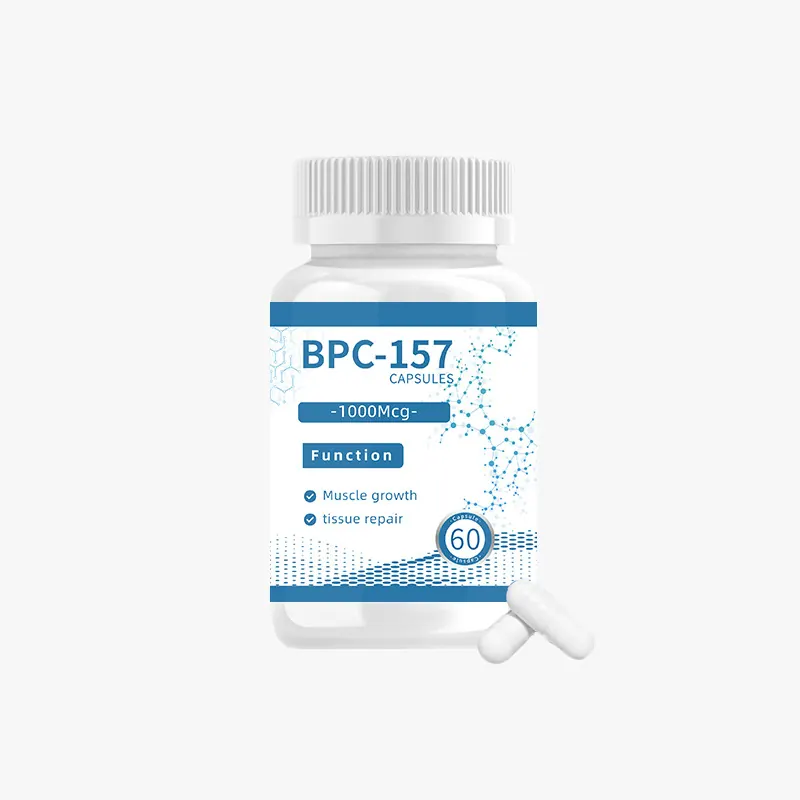
In practice, capsule-based peptide projects require alignment between formulation design and finished product specifications. For example, BPC-157 peptide capsules produced in fixed-dose capsule formats allow buyers to review dosage structure, capsule configuration, and documentation scope at the finished-product level rather than relying solely on raw peptide parameters.
How COA Data Should Be Interpreted for Capsule-Based Peptides
For experienced buyers, a COA should support internal quality evaluation rather than function as a marketing document. In capsule-based BPC-157 projects, COA interpretation must account for the finished dosage form.
Useful COA indicators typically include:
- Clear batch and lot identification
- Testing aligned with finished product form
- Consistency of reported values across batches
A COA that only lists peptide purity provides limited insight into real-world manufacturing stability.
When Manufacturing Capability Becomes the Real Differentiator
In BPC-157 capsule projects, long-term success depends less on peptide sourcing and more on manufacturing discipline. Suppliers that can control dilution, blending, encapsulation, and documentation consistently are better positioned to support ongoing OEM or private-label programs.
From a factory perspective, the ability to maintain dosage accuracy and batch repeatability is what determines whether a BPC-157 capsule project remains viable beyond initial evaluation.
Summary: How Experienced Buyers Should Evaluate BPC-157 Capsule Suppliers
For procurement teams and formulation specialists, evaluating BPC-157 peptide capsules should focus on manufacturing execution rather than surface-level specifications.
Key evaluation criteria include:
- Process-level dosage control methodology
- Batch repeatability under scale-up conditions
- Capsule compatibility and environmental sensitivity management
- Quality documentation aligned with finished products
Understanding these manufacturing realities reduces downstream risk and improves sourcing outcomes.
FAQ
What makes BPC-157 peptide capsules difficult to manufacture consistently?
BPC-157 peptide capsules are challenging due to the extremely low active dosage per capsule. At microgram levels, uniform dilution, controlled blending, and stable encapsulation processes become critical. Most variability arises from process execution rather than peptide purity itself.
How do manufacturers control dosage accuracy in BPC-157 capsules?
Dosage accuracy is typically achieved through staged dilution and validated mixing protocols. Effective control depends on excipient selection, blending order, mixing time, and environmental conditions. These parameters must remain consistent across production batches to maintain dosage reliability.
Why can pilot batches appear stable while scaled production shows variability?
Scale-up changes mixing dynamics, material flow behavior, and environmental exposure. Processes that perform well at small batch sizes may introduce segregation or moisture sensitivity at higher volumes if not properly adapted for scale.
Is peptide purity alone sufficient to evaluate BPC-157 capsule quality?
No. While peptide purity is important, finished capsule performance also depends on blend uniformity, capsule fill variation, and batch-level consistency. Quality evaluation should include both raw material data and finished product manufacturing records.
What should buyers look for in a COA for BPC-157 peptide capsules?
Buyers should focus on batch identification, traceability, and testing scope aligned with the finished dosage form. COA data is most useful when reviewed alongside manufacturing and batch consistency documentation rather than as a standalone indicator.