BPC-157 peptide supply is rarely discussed in terms of application, even though application is often the first thing buyers want to understand.
In the peptide industry, discussions around BPC-157 instead revolve around formats, documentation scope, and handling boundaries — while application is deliberately deferred.
This is not an omission.
It is an intentional structural behavior of the peptide supply chain.

Understanding why application is deliberately avoided upstream is essential for experienced buyers. It explains how BPC-157 is packaged, documented, quoted, and ultimately delivered — and why many projects fail not because of peptide quality, but because buyers misread how the supply layer actually operates.
The Illusion of “Format Choice” in BPC-157 Sourcing
Capsule versus powder is often framed as a technical preference. In reality, it is a proxy discussion — a way for buyers to talk about project maturity without naming it directly.
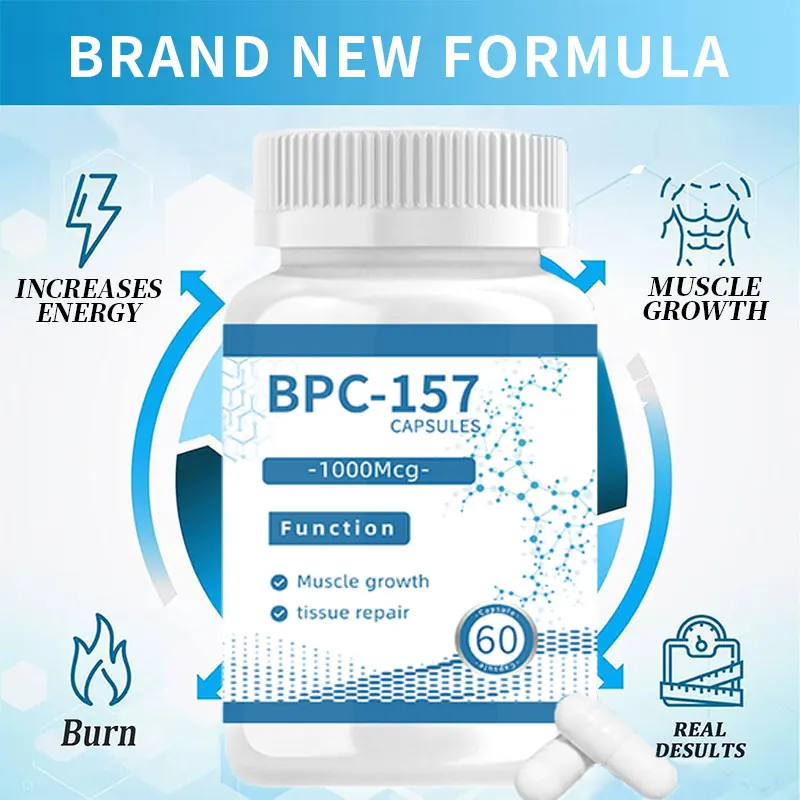
Within supply chains, format signals three things immediately:
- How stable the dosage assumption is
- How much downstream responsibility the buyer is ready to assume
- Whether the project is exploratory or directional
This is why suppliers respond very differently to the same question depending on whether the inquiry is framed around powder flexibility or capsule consistency. The format discussion is not about convenience; it is about risk allocation.
What the BPC-157 Supply Chain Actually Optimizes For
Contrary to buyer assumptions, peptide suppliers do not optimize for “best format” or “best specification.” They optimize for repeatability under uncertainty.
At the supply level, the primary constraints are:
- Can this product be reproduced across batches without reinterpretation?
- Can documentation remain valid if the buyer’s downstream strategy changes?
- Can the supplier remain neutral across multiple jurisdictions?
These constraints explain why upstream supply discussions emphasize physical form, handling boundaries, and documentation scope — and avoid application entirely.
Application introduces variables that suppliers cannot standardize.
Why Application Talk Is Deferred Upstream
Application is not ignored because it is unimportant. It is deferred because it is structurally downstream.
From the supplier’s perspective:
- Application defines regulatory classification
- Regulatory classification defines claims and labeling
- Claims and labeling define liability
None of these elements are under supplier control.
Once application enters the discussion, the supplier is no longer talking about manufacturing execution, but about regulatory interpretation. That shift changes the entire risk profile of the project.
As a result, experienced suppliers keep application out of upstream communication not to evade responsibility, but to contain it.
Documentation Is Designed to Survive Buyer Strategy Changes
One of the most misunderstood aspects of BPC-157 sourcing is documentation minimalism. Buyers often interpret conservative COAs and specifications as lack of support. In reality, they are designed to remain valid even if the project pivots.
Supply-side documentation is optimized to answer only one question:
“What was produced, under which parameters, in which batch?”
It is intentionally silent on:
- Intended use
- Market positioning
- Functional implication
This allows the same documentation set to support multiple downstream paths without contradiction. Suppliers that over-document application assumptions often create rework when projects evolve.
Capsule Supply Is Not About Convenience — It Is About Commitment
In BPC-157 projects, capsule supply is frequently misunderstood as a “ready-to-use” upgrade. In supply chain terms, capsules signal commitment, not completion.
Choosing capsule supply indicates that:
- Dosage assumptions have narrowed
- Documentation must now reflect a finished dosage form
- Reproduction matters more than flexibility
This is why capsule-based supply often triggers deeper supplier scrutiny, higher MOQ thresholds, and stricter process alignment. The supply chain is responding to reduced ambiguity, not increased complexity.
What Experienced Buyers Learn to Ignore
Seasoned procurement teams eventually learn to ignore certain questions that dominate early-stage sourcing discussions:
- “Is capsule better than powder?”
- “Which format is more popular?”
- “Can this be positioned for X market?”
Instead, they focus on questions that align with supply reality:
- Which assumptions must remain stable for this supply format to hold?
- What parts of documentation will survive a strategy change?
- Where does supplier responsibility explicitly end?
These questions do not appear on spec sheets, but they determine whether a project survives beyond the first batch.
Why Misaligned Expectations Kill Otherwise Viable Projects
Most failed BPC-157 projects do not fail because of peptide quality or production error. They fail because buyers expect the supply layer to solve problems that belong downstream.
When application, regulatory outcome, and market positioning are pushed upstream, suppliers respond defensively. Communication slows, documentation tightens, and flexibility disappears.
This is often misread as lack of cooperation, when it is actually boundary enforcement.
Final Perspective: Supply Silence Is a Signal, Not a Gap
The absence of application discussion in BPC-157 supply conversations is not a gap in information. It is a signal that the supply chain is operating correctly.
Suppliers who clearly separate:
- manufacturing execution
- documentation integrity
- downstream responsibility
are not less capable partners. They are usually the ones whose projects scale without collapse.
For buyers, learning to read this silence correctly is often the turning point between stalled evaluation and sustainable sourcing.
FAQ — Questions Experienced Buyers Actually Ask About BPC-157 Supply
Why do suppliers avoid discussing application even when buyers ask directly?
Because application defines regulatory exposure, which suppliers cannot control. Avoidance protects both sides from misalignment.
Does conservative supply communication limit project potential?
No. It preserves optionality while downstream strategy is validated separately.
Why does capsule supply feel more “rigid” than powder sourcing?
Because capsules reduce ambiguity. Reduced ambiguity requires tighter alignment across dosage, documentation, and reproduction.
Is limited documentation a red flag?
Only if it fails to describe manufacturing reality. Silence on application is intentional, not negligent.