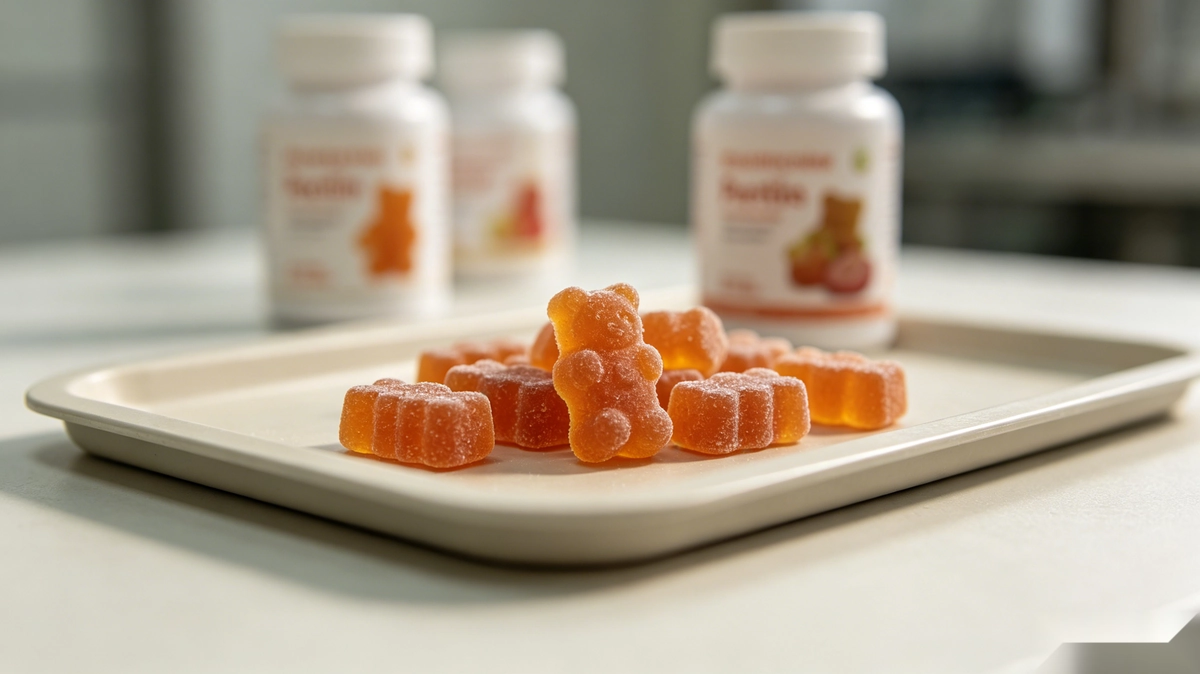
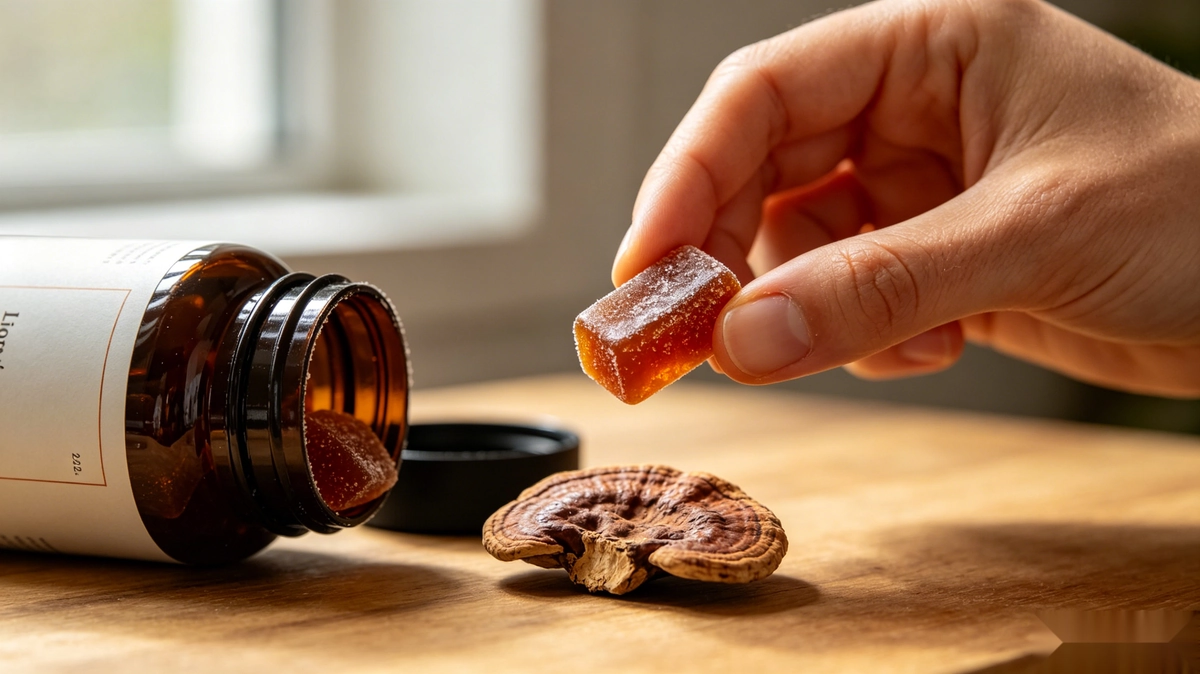
Men’s health supplements are not one single formula. For some brands, this category means daily multivitamins for men. For others, it may mean prostate support capsules, energy and vitality powders, hair support gummies, sports nutrition formulas, or healthy aging blends.
For private label brands, the challenge is not only choosing popular ingredients. The real work is deciding which formula direction fits the target consumer, which dosage form can carry the ingredients, how the claims should be written, and whether the product can be manufactured, tested, packed, and shipped reliably.
I’ve been a formulator in this industry for over ten years. I’ve watched brands get all of this right — and I’ve watched them burn time and money getting it wrong. This article walks through the actual decisions that matter, covering the most common product types, how ingredients interact with different dosage forms, where production failures happen, and what to prepare before approaching a manufacturer for custom formulation and OEM/ODM support.
What Are Men’s Health Supplements?
When people say “men’s health supplements,” they’re usually talking about one of a handful of product directions:
- Daily wellness and foundational nutrition
- Prostate and urinary tract support
- Energy, vitality, and active lifestyle
- Sports nutrition and recovery
- Hair and appearance support
- Healthy aging and long-term wellness
- Male fertility support
Here’s the thing most brand owners don’t realize right away: two products in the same category can look completely different. One “energy” supplement might be a high-dose B-complex tablet. Another might be a maca and ginseng capsule. A third might be an on-the-go stick pack powder. Same category, three totally different formulas, three totally different manufacturing paths.
My advice is always the same. Don’t start with ingredients. Start with the consumer and the use case. Then work backward to the formula.
Common Types of Men’s Health Supplements Brands Usually Develop
For a quicker read, here’s how the most common directions break down from a formulator’s point of view.
| Product Direction | Common Positioning | Common Ingredients | Suitable Formats | Factory Notes |
|---|---|---|---|---|
| Daily men’s wellness | General daily nutrition support | Zinc, selenium, vitamin D, B vitamins, magnesium | Capsules, tablets, gummies | Mineral taste and dosage space need checking. Multi-mineral gummies require pH and texture control. |
| Prostate support | Men’s prostate and urinary comfort | Saw palmetto, pumpkin seed, beta-sitosterol, lycopene | Capsules, softgels | Oil-based ingredients fit softgels best. Saw palmetto is bitter and heat-sensitive — microencapsulation is needed for gummies. |
| Energy and vitality | Daily energy and active routine | Maca, ginseng, B vitamins, L-arginine | Capsules, powders, tablets | Maca and ginseng carry strong earthy notes. Gummies only work with concentrated extracts and real flavor masking. |
| Active lifestyle | Sports performance and recovery | Creatine, electrolytes, magnesium, amino acids | Powders, stick packs, effervescent tablets | Serving sizes usually outgrow capsules. Stick packs or bulk powders are the practical move. |
| Hair support for men | Hair and beauty-from-within | Biotin, zinc, collagen, saw palmetto | Capsules, gummies, powders | Claims need to stay structure/function. Never position as hair loss treatment. |
| Healthy aging | Long-term male wellness | CoQ10, omega-3, vitamin D, astaxanthin | Softgels, capsules, tablets | CoQ10 oxidizes fast. Proper overage and accelerated stability data are non-negotiable. |
| Male fertility support | Pre-conception health | CoQ10 (ubiquinol), zinc, selenium, L-carnitine | Capsules, softgels | Ubiquinol gives better bioavailability but costs more — brands need to decide their positioning early. |
The “Factory Notes” column is where I spend most of my time with clients. Those tiny details are what separate a product that’s easy to scale from one that becomes a headache.
Popular Ingredients in Men’s Health Supplements — A Formulator’s View
I’m not going to give you a textbook list of ingredient benefits. You can find that anywhere. What I will give you is how these ingredients actually behave when you try to turn them into a product.
Zinc, Selenium, and Vitamin D for Daily Men’s Wellness
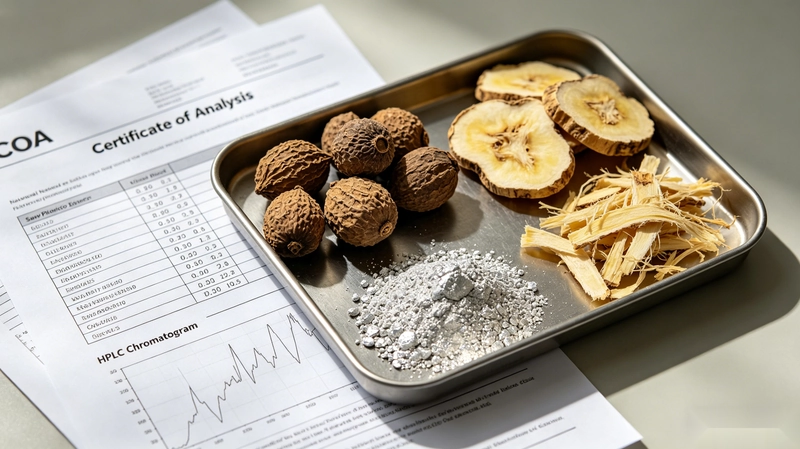
These are staples. They’re well-known, and consumers expect to see them. From a manufacturing angle, the big decision is the form. Zinc oxide is cheap but harder on the stomach and less absorbable. Zinc glycinate or picolinate costs more, but I’ve seen fewer complaints about gastric discomfort. Zinc is common in men’s multivitamin and daily wellness formulas, but brands should check dosage strategy carefully using reliable references such as the NIH zinc fact sheet. Different markets also cap selenium and zinc at different levels, so don’t assume a US formula works for the EU or Australia without checking.
Saw Palmetto and Pumpkin Seed for Prostate Support
Capsules and softgels are my go-to here. Saw palmetto extract is oily and bitter — softgels hide both problems naturally. If a brand insists on a gummy, we have to use microencapsulated powder, and I’ll always recommend a longer stability run. Pumpkin seed and beta-sitosterol add to the oil load, so a softgel just makes sense. And please, never write “treats prostate problems” on the label. “Supports prostate and urinary health” says what you need without drawing regulatory heat.
Maca, Ginseng, and B Vitamins for Energy Formulas
This is where I see the most mismatch. Maca and ginseng have strong, earthy, almost dirt-like notes. That’s fine in a capsule — you swallow it and move on. Put them in a powder or gummy, and suddenly flavor masking becomes the entire project. B vitamins throw off a characteristic odor too. I’ve learned the hard way that energy gummies work best with concentrated extracts, a serious masking system, and realistic expectations about taste.
Creatine, Electrolytes, and Magnesium for Active Men
These are big doses. A standard creatine serving is 3–5 grams. That’s not going into a capsule unless you want the consumer to swallow six or seven at once. Powders and stick packs are the practical choice. Electrolytes pull moisture, so packaging has to be on point. For magnesium, I usually steer people toward bisglycinate — better absorption, less laxative effect, and a cleaner label story.
Biotin, Collagen, and Zinc for Men’s Hair Support
Functionally, these formulas are similar to women’s beauty supplements. The difference is the branding, the flavor profile, and often the packaging. The trap here is the claim language. I’ve had brands want to write “prevents hair loss” on the box. That’s a disease claim. The safer route is “designed for men’s hair and beauty support” or “supports healthy-looking hair.” It might sound softer, but it keeps you out of trouble.
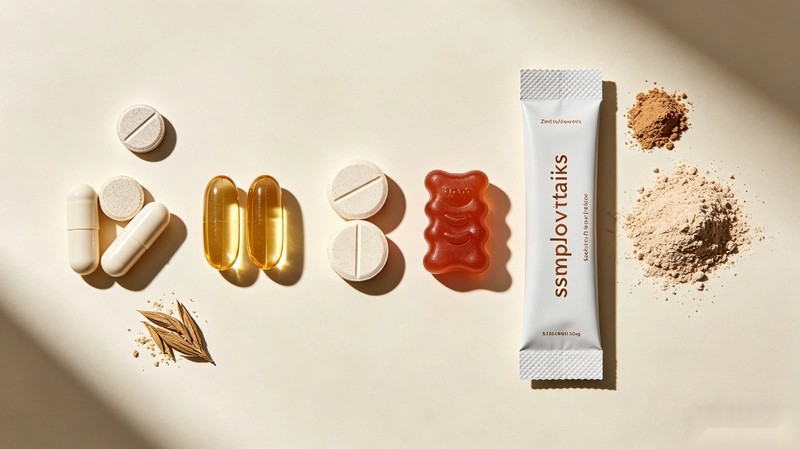
Capsules, Gummies, Powders, Tablets, or Softgels: Which Format Works Better?
Choosing a format isn’t just a marketing decision. It’s a physics and chemistry decision.
| Format | Best For | Not Ideal For | Production Note |
|---|---|---|---|
| Capsules | Herbal blends, mineral complexes, multi-ingredient formulas | Very large serving sizes | Easy to adjust fill weight. Works with most ingredients. |
| Gummies | Light function, daily nutrition, consumer-friendly formats | High-dose minerals, strong-tasting botanicals, creatine | Flavor masking, pH control, and active stability testing are critical. |
| Powders | Sports nutrition, electrolytes, energy blends, large servings | Oil-based ingredients | Flowability and moisture sensitivity decide if stick pack filling will work. |
| Softgels | Oil-based ingredients (omega-3, CoQ10, saw palmetto oil) | Water-heavy formulas, very large servings | Looks premium. Needs tight fill content uniformity and seal integrity checks. |
| Tablets | Cost-sensitive multi-ingredient formulas, high-content products | Consumers who struggle with swallowing | Can pack a lot into one unit, but compression and disintegration have to be dialed in. |
For herbal blends, zinc formulas, maca, ginseng, or prostate support products, capsules are often the most straightforward choice because they carry botanical powders and multi-ingredient blends without forcing taste-masking challenges. For specific men’s capsule directions — like maca vitality, prostate support, or daily wellness blends — you can browse the current private label men’s health capsule options to see what’s already formulated and ready for branding. Gummies can work for daily men’s wellness, multivitamins, hair support, and light functional formulas, but the formula must be checked for dosage space, taste, and texture before moving into gummy supplement manufacturing. When the serving size is too large for capsules or gummies — think creatine, electrolytes, protein blends, or active lifestyle formulas — powder supplement manufacturing is usually the more realistic route.
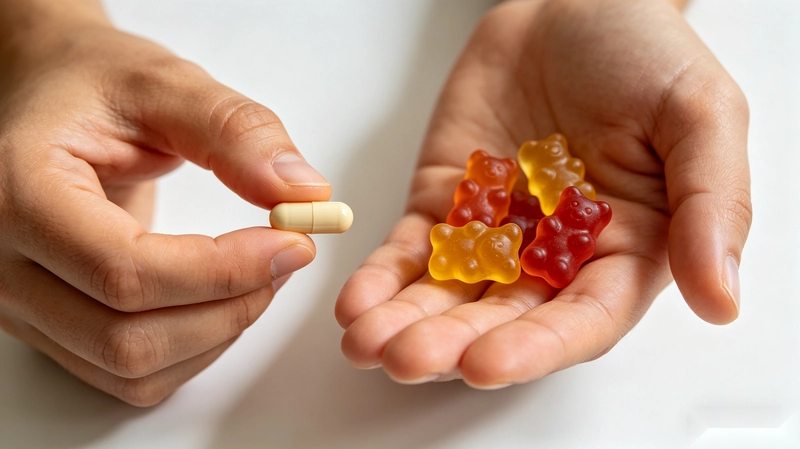
If you’re not sure which format fits your idea, that’s exactly the kind of conversation we have early on. A ten-minute call can save months of rework.
Why Some Men’s Health Formulas Look Good on Paper but Fail in Production
I keep a mental list of the ways formulas go sideways. Here are the ones I see most often.
1. The serving size is too big for the format.
A brand wants creatine, collagen, and a full mineral complex in one capsule. The total dose pushes past 1,500 mg. That’s not fitting into a standard capsule — not even close. My fix: Either switch to a powder or split into multiple capsules and be honest about the pill count.
2. Strong botanicals end up in the wrong format.
Maca, ginseng, saw palmetto — they taste like the earth they came from. I’ve seen brands try to force them into gummies and then wonder why the sample tastes terrible. Capsules or tablets mask that. If a gummy is non-negotiable, we go with concentrated extracts and a masker blend, and I set the expectation that it’ll never taste like candy.
3. Minerals mess with gummy texture and stability.
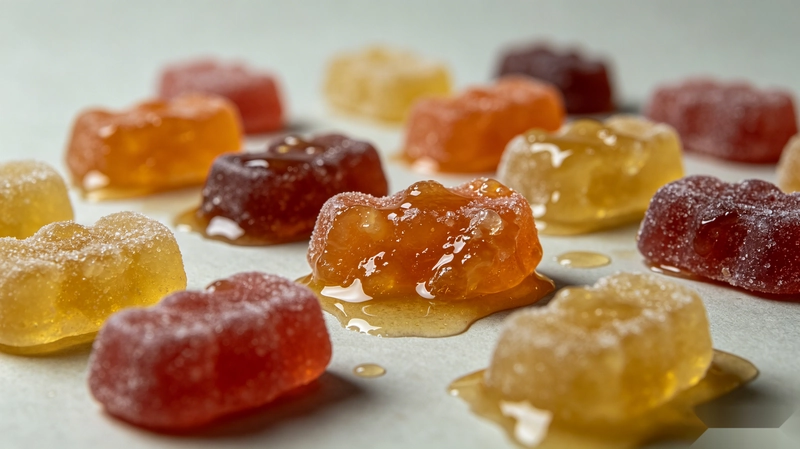
Zinc, magnesium, iron — they’re reactive. In a gummy matrix, they can cause syneresis (weeping), texture breakdown, or off-notes over time. I always recommend chelated forms and buffer systems, and we test accelerated stability before committing to production.
4. Oil-based ingredients get forced into powders or capsules.
Saw palmetto oil, lycopene oleoresin, CoQ10 in oil — these belong in softgels. If you try to turn them into a powder, you need adsorbents, and flowability always takes a hit. Content uniformity becomes a real challenge. Whenever possible, I push for a softgel.
5. More ingredients don’t make a better product.
I’ve seen formulas with eighteen actives. Each one is underdosed. Testing costs skyrocket. The label is a novel. And the consumer can’t tell what the product is actually supposed to do. Five to eight well-dosed ingredients usually tell a cleaner story and are much easier to produce consistently.
Claims and Compliance: What Brands Should Be Careful About
Supplement claims are not a free-for-all. Get this wrong, and you’re looking at warning letters or refused shipments.
Stick to structure/function language: supports, helps support, designed for, contributes to, daily wellness. Stay miles away from treats, cures, reverses, prevents, guaranteed, and clinically proven — unless you have the kind of evidence most supplement brands don’t.
For U.S.-oriented products, brands should understand how FDA structure/function claims differ from disease treatment claims before writing prostate, energy, testosterone, or hair support language.
Here’s a quick cheat sheet I share with clients:
| Risky Wording | Safer Alternative |
|---|---|
| Treats prostate enlargement | Supports prostate and urinary wellness |
| Prevents hair loss | Designed for men’s hair and beauty support |
| Boosts testosterone | Supports male vitality and energy |
| Clinically proven to improve performance | Backed by scientific research on key ingredients |
Different markets have their own rules. What flies under DSHEA in the US might not pass the EU Claims Regulation or Australia’s TGA. I tell brands: set your target market first, then we build the formula and claims to match.
One more thing. I can provide COAs, raw material specs, and formulation guidance. But final label compliance is on the brand and their regulatory counsel. I’m a formulator, not your legal team.
What Private Label Brands Should Prepare Before Manufacturing
You don’t need to have everything locked down before we talk. But the more you have thought through, the faster we can move.
Here’s what helps:
- Target market — US, EU, Australia, Southeast Asia, etc.
- Product direction — which sub-category fits your brand
- Dosage form — capsules, gummies, powders, tablets, softgels, or liquid
- Preferred key ingredients — any must-haves or deal-breakers
- Serving size and daily dose — rough idea is enough
- Flavor direction — natural, sweet, neutral, or open to suggestions
- Packaging type — bottles, stick packs, pouches, or custom
- Label language — English, bilingual, or multi-language
- Estimated order quantity — trial run through full-scale
- Required documents — COA, specs, stability data, export certificates
- Shipping destination — port and logistics preference
If some of these are still undecided, that’s fine. The point is to start the conversation before you’ve boxed yourself into an unbuildable idea. Packaging should not be left until the end either. Bottle size, label space, serving count, and shipping method can all affect your packaging decisions before production starts.
How Men’s Health Supplement Manufacturing Works
If you want a closer look at each stage, you can review our step-by-step private label manufacturing process. At Jiabei Health, a typical men’s supplement project moves through these stages:
- Product direction discussion — formula type, format, market, positioning
- Ingredient feasibility review — can we source it, is it legal, does it fit the format
- Sample development — compounding, flavor and color adjustment, prototype
- Stability and sensory testing — accelerated conditions, taste, texture
- COA and specification review — actives, microbials, heavy metals
- Packaging selection — bottle, stick pack, sachet, or custom presentation
- Trial or mass production — small-batch verification before scale-up
- Final inspection and release — against agreed specifications
- Export document support — COA, certificates of origin, destination-specific docs
- Logistics coordination — shipping and delivery tracking

Our manufacturing covers capsules, softgels, tablets, powders, gummies, and liquid drops. We work OEM and ODM, and the facility holds GMP, HACCP, BRCGS, FSSC 22000, and Halal certifications. Not because badges matter, but because they reflect the kind of repeatable manufacturing quality and certifications that keep brands out of trouble.
Frequently Asked Questions
Can men’s health supplements be made as gummies?
Yes, if the formula is right for it. Gummies work well for light function, daily nutrition, and some hair support products. High-dose minerals, strong-tasting herbs, and big servings like creatine are a poor fit for gummies.
What format is best for men’s prostate health supplements?
Capsules and softgels are the safest bets. The typical ingredients — saw palmetto, pumpkin seed, beta-sitosterol — are either oily or bitter, and both issues are easier to manage in capsules or softgels.
Can I create my own private label men’s health supplement brand?
Absolutely. Nail down your target market, product direction, format, and packaging concept first. From there, a good manufacturer can guide you through formula selection, sampling, production, and export.
Do you provide COA and testing documents?
Yes. Jiabei Health provides COAs, raw material specifications, batch testing reports, and export documents based on project requirements. Special documents can be discussed upfront.
How long does it take to develop a men’s health supplement?
From formula lock to sample shipment, usually 2–4 weeks. Stability and flavor tweaks can add time. Mass production typically runs 4–8 weeks depending on format and order size.
Do you work with startups and small brands?
We do. We keep MOQs flexible and support smaller trial runs. I’d rather help a brand launch small and get it right than push volume and watch it fail.
Final Thoughts
Most men’s health supplements don’t fail because the market doesn’t want them. They fail because the form and the formula didn’t get matched up right from the start. A good product isn’t just a list of trendy ingredients — it’s a combination that actually works in the chosen format, with claims that stay clean, and manufacturing that repeats batch after batch.
If you’re exploring a private label men’s health product, I’m happy to look at what you’re thinking — even if the details aren’t final. An early conversation about format, ingredients, and feasibility can save you from going down a road that doesn’t lead anywhere.
Reach out and we’ll run through it. No pressure. Just the kind of straight talk I wish more brands got before they committed to a formula.