1. Introduction: Why Every Buyer Must Understand a Creatine Certificate of Analysis (CoA)
A Creatine Certificate of Analysis is the single most important document a wholesale buyer should request before purchasing any creatine raw material, whether it is Creatine Monohydrate, Creatine HCl, or a finished blend. In the sports nutrition supply chain, the CoA is the product’s birth certificate, identity card, and safety validation—all in one. Without it, there is no way to verify purity, no confirmation of production standards, and no reliable evidence that the ingredient meets international regulations.

For brands, distributors, and OEM clients who operate in highly competitive markets, understanding how to read a CoA is not optional. It is a fundamental skill that affects product quality, customer trust, regulatory compliance, and long-term business reputation. This guide gives wholesale buyers a complete, practical framework to evaluate any Creatine CoA with confidence.
2. What a Creatine Certificate of Analysis Should Include
A legitimate CoA follows a standard structure. If a supplier cannot provide a full CoA—or submits one missing key sections—it is a major red flag. Understanding what a complete CoA should look like is the first step in your quality control process.
2.1 Basic Product Identification
A compliant CoA begins with transparent and traceable product information:
- Ingredient name: Creatine Monohydrate / Creatine HCl
- CAS number
- Batch/Lot number
- Manufacture date and expiration date
- Product grade (food grade, pharma grade, USP grade, etc.)
- Reference standards used (USP, EP, GB, in-house standards)
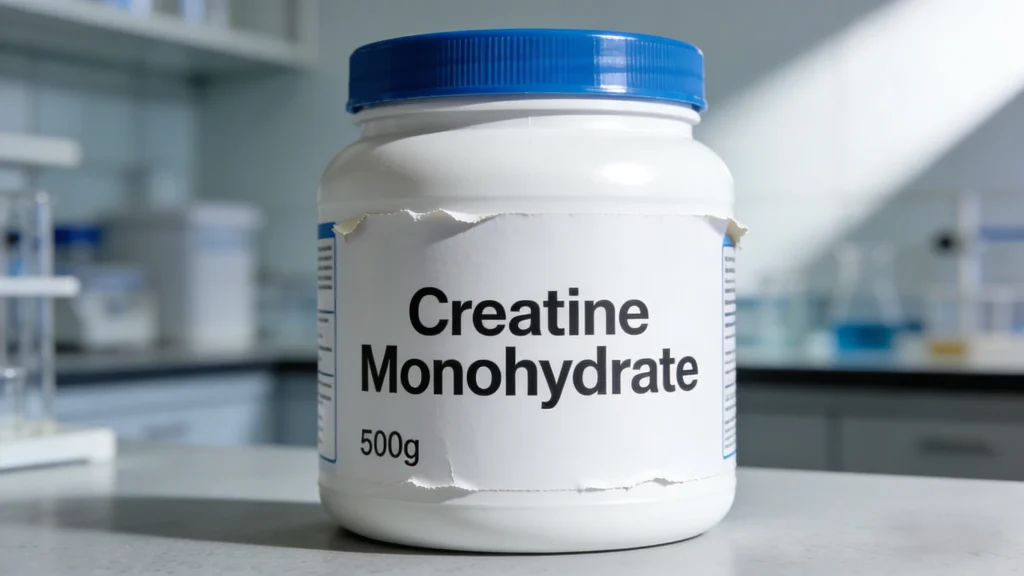
A missing CAS number or batch number often indicates a placeholder CoA—a tactic used by low-quality suppliers. Every legitimate batch must have its own CoA.
2.2 Testing Methods and Units
Professional laboratories always indicate how each parameter was tested:
- Purity test: HPLC or titration
- Heavy metals: ICP-MS
- Microbiology: Plate count methods per USP
- Loss on drying, ash, pH, melting point, etc.
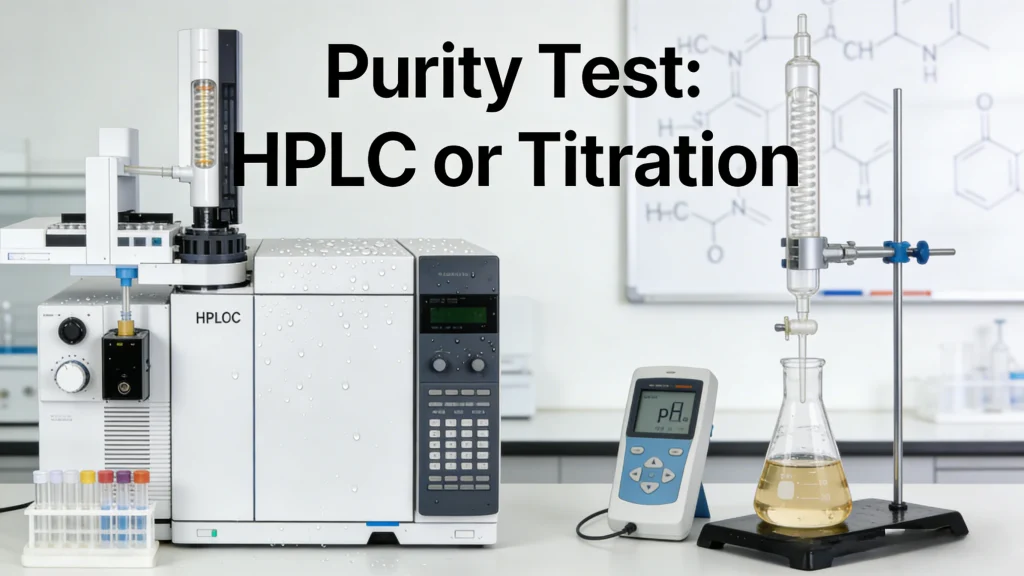
If the CoA only lists results without methods, the report lacks credibility.
2.3 Specification vs. Result vs. Conclusion
A compliant CoA includes:
- Specification range (e.g., Purity ≥ 99.5%)
- Tested result (e.g., 99.8%)
- Conclusion (Pass / Fail)
This structure prevents suppliers from hiding borderline results.
3. Purity: The Core Indicator of Creatine Quality
Purity is the most important part of any creatine CoA and the parameter that professional buyers should check first.
3.1 What Purity Means
For Creatine Monohydrate, “purity” refers to how much of the ingredient is truly creatine, without unwanted by-products.
Top-tier creatine typically shows:
- ≥ 99.5% purity for Creatine Monohydrate
- ≥ 98% purity for Creatine HCl
Anything below these benchmarks is considered substandard for international markets.
3.2 Critical Impurities to Look For
Even if purity is high, the impurity profile reveals the true quality—and safety—of the material.
(1) Creatinine
Creatinine appears when creatine breaks down over time or under improper storage conditions.
- High creatinine = unstable product
- Indicates degradation, oxidation, or improper production conditions
- Premium creatine shows creatinine levels: ND (Not Detected) or extremely low
This is often the first warning sign of a poor-quality supplier.
(2) Dihydro-1,3,5-triazine (DHT)
DHT is one of the most concerning impurities found in low-quality creatine.
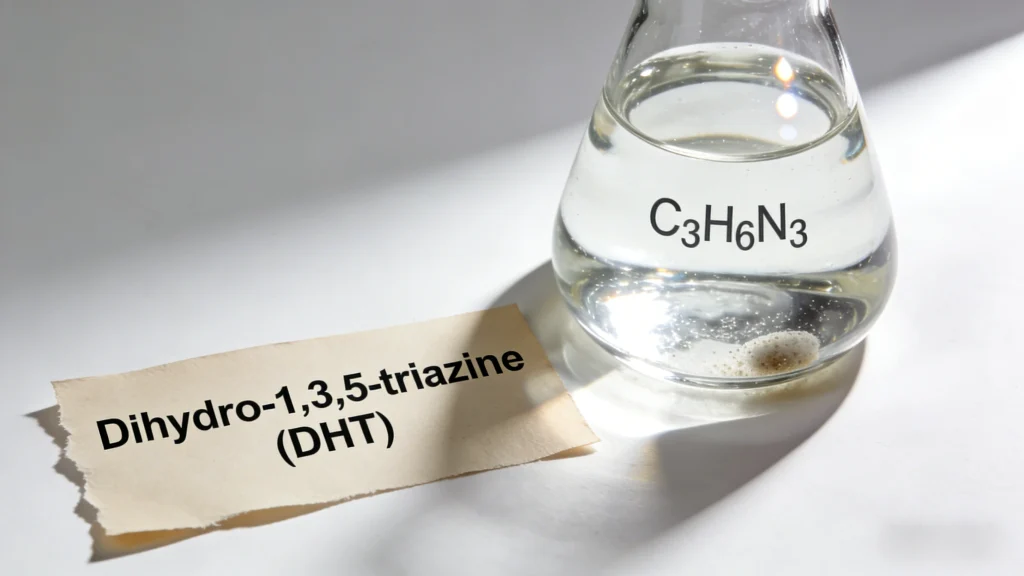
- It is a toxic by-product formed during improper production
- Should never be present in high-quality creatine
- Acceptable standard: ND (Not Detected)
If DHT appears in the CoA, reject the supplier immediately.
(3) Cyanamide
Cyanamide can appear as an impurity if outdated production processes are used.
- Should be significantly below the allowed threshold
- Many reputable labs list it as ND
3.3 Why Purity Matters in International Trade
- Lower purity = higher risk of regulatory rejection
- Impurities affect taste, solubility, and stability
- High-quality creatine has longer shelf life and better consumer tolerance
For premium markets like the U.S., EU, Japan, and South Korea, purity is a non-negotiable requirement.
4. Heavy Metals: Confirming Global Compliance
Heavy metal testing is mandatory for any ingredient intended for human consumption. Creatine, as a high-volume raw material, must comply with global safety standards.
4.1 Required Heavy Metals in a CoA
A complete Creatine Certificate of Analysis must list the following:
- Lead (Pb)
- Arsenic (As)
- Cadmium (Cd)
- Mercury (Hg)
4.2 Acceptable International Limits
Typical regulatory standards are:
- Lead: < 1.0 ppm
- Arsenic: < 1.0 ppm
- Cadmium: < 1.0 ppm
- Mercury: < 0.1 ppm
These limits follow USP <233>, EU standards, and GB 5009 guidelines.
If the supplier only lists “Heavy Metals < 10ppm,” it is a major red flag—they are using outdated testing protocols.
4.3 Why Heavy Metal Testing Protects Your Business
Non-compliant creatine cannot pass:
- Amazon supplement requirements
- Walmart marketplace audits
- EU customs inspections
- OEM factory incoming raw material checks
A rejected batch can cause significant financial loss, making heavy metal evaluation essential.
5. Microbiological Testing: Ensuring Safety and Shelf Stability
Even though creatine is chemically synthesized and generally low-risk microbiologically, suppliers must still provide microbial reports.
5.1 Required Microbial Indicators
A complete CoA includes results for:
- Total Plate Count
- Yeast & Mold
- E.coli
- Salmonella
- Staphylococcus aureus
For chemically synthesized ingredients, these should all be either ND or far below USP limits.
5.2 Why Micro Testing Still Matters
Poor packaging, humidity, or contamination during handling can introduce microbial risk.
Reliable suppliers always include updated microbial data on every batch.
6. Step-by-Step Guide: How to Read a Real Creatine CoA
Below is the ideal workflow for verifying any creatine CoA, especially for OEM private-label or wholesale purchasing.
6.1 Verify Product & Batch Identity
- Does the product name match your purchase order?
- Is the batch number unique?
- Are manufacture and expiration dates recent?
6.2 Check Purity & Impurities
- Is purity ≥ 99.5%?
- Are creatinine and DHT listed as ND?
- Are there any missing values? Missing fields signal manipulation.
6.3 Review Heavy Metals
- Compare the results against USP/EP standards
- Ensure heavy metals are listed individually, not combined
6.4 Evaluate Microbiology
- All microbial results should show ND or accepted limits
- Any detection of pathogens = reject the batch
6.5 Confirm Testing Methods
- HPLC, ICP-MS, and USP methods should be clearly referenced
- “In-house method” without explanation is not acceptable
6.6 Check for Signature, Seal, and Lab Traceability
- A proper CoA includes a lab stamp or signature
- Third-party lab verification (SGS, Eurofins, Intertek) adds extra credibility
6.7 Confirm Document Authenticity
Common fraud signs include:
- Identical CoAs used across different batches
- Suspicious formatting inconsistencies
- Dates that do not match production timeline
- No contact information for the laboratory
If any of these appear, treat the supplier cautiously.
6.8 Buyer Checklist: What to Request Along With a Creatine CoA
- Latest batch CoA (within 6 months) for OEM / private-label approval
- MSDS
- Technical Data Sheet (TDS)
- Testing methods and reference standards (USP/EP/GB or equivalent)
- Third-party lab verification (if available)
- Traceability details (batch/lot mapping) for wholesale purchasing
7. Red Flags: When to Reject a Creatine Supplier
Professional buyers should immediately reject a supplier if:
- Purity falls below 99%
- DHT, cyanamide, or other harmful impurities are detected
- Heavy metals exceed USP or EU standards
- Microbial results violate safety limits
- CoA is older than 6 months
- Supplier refuses to provide a batch-specific CoA
- CoA has no signature or test method
- The CoA appears identical to another supplier’s document
In international trade, a questionable CoA indicates greater underlying risk.
8. Practical Procurement Tips for Wholesale Buyers
Before finalizing any purchase, follow this checklist:
8.1 Always Request the Latest Batch CoA
Never accept a CoA older than 6 months.
Even better: ask for the CoA before sending a deposit.
8.2 Request Supporting Documents
- MSDS
- Technical Data Sheet (TDS)
- Production flow chart
- Third-party lab reports
- Allergen statement
- Non-GMO declaration
These documents ensure regulatory readiness for multiple markets.
8.3 Inspect Batch-to-Batch Stability
Reliable factories maintain consistent results across all batches.
If purity or impurity levels fluctuate drastically, the manufacturing process is unstable.
8.4 For OEM / Private Label Production
You should receive:
- Raw material CoA
- Finished product CoA
- Packaging and stability documentation
OEM brands that skip this step face increased regulatory risk.
8.5 Work Only With Transparent Suppliers
The best suppliers:
- Provide CoAs proactively
- Allow factory audits
- Offer third-party lab testing
- Maintain clear traceability systems
Transparency reduces procurement risk and strengthens long-term partnerships.
9. Conclusion: A Creatine CoA Is Your First Line of Quality Control
Understanding the Creatine Certificate of Analysis is essential for any buyer involved in wholesale trade, private-label manufacturing, or global distribution. A proper CoA verifies purity, ensures safety, and prevents regulatory issues that can derail your business. In a market where creatine demand continues to rise, the brands that succeed are the ones that insist on data, documentation, and transparency.
Before placing any order—large or small—make it a routine practice to request and evaluate the CoA. It is your strongest tool for protecting your product, your customers, and your reputation.
10.FAQ
1. What is a Creatine Certificate of Analysis (CoA) and why do buyers need it?
A Creatine Certificate of Analysis is a laboratory document that verifies the purity, safety, and compliance of a creatine raw material. Wholesale buyers rely on it to confirm that the creatine meets international standards before approving a supplier or placing bulk orders.
2. How can I tell if a Creatine CoA is real or fake?
A legitimate CoA must include a batch number, test methods, specification limits, results, a laboratory signature, and traceable contact information. Identical CoAs across multiple batches, missing test methods, or outdated dates are common signs of a fake CoA.
3. What purity level should I expect in a high-quality Creatine Monohydrate CoA?
Premium Creatine Monohydrate should show a purity of 99.5% or higher. Anything below this benchmark suggests lower-quality raw material, poor manufacturing controls, or potential degradation.
4. What impurities should I look for in a Creatine Certificate of Analysis?
Buyers should check for creatinine, DHT (Dihydro-1,3,5-triazine), and cyanamide. These impurities indicate degradation or unsafe manufacturing processes. Professional-grade creatine should show ND (Not Detected) for all three.
5. Why is DHT listed in some creatine CoAs, and why is it dangerous?
DHT is a toxic by-product formed during poorly controlled creatine synthesis. Any detectable level of DHT is unacceptable. A safe creatine ingredient should list DHT as Not Detected.
6. What heavy metal limits should creatine meet to pass international standards?
A correct CoA should include individual test results for lead, arsenic, cadmium, and mercury. These must comply with USP <233> or EU limits, which generally require each metal to remain below 1 ppm.
7. Do creatine CoAs need microbiological testing even though creatine is synthetic?
Yes. Even though creatine is chemically synthesized, it can be contaminated during handling or packaging. A complete CoA should include Total Plate Count, Yeast & Mold, E. coli, and Salmonella.
8. What should private-label brands check in a creatine CoA before launching a new product?
Brands should verify purity, impurity markers (especially DHT), heavy metals, micro results, moisture content, batch numbers, and testing methods. These factors affect label claims, regulatory compliance, and consumer trust.