If you have spent any time looking at bone health or immune-support formulas in the last two years, you have probably noticed one consistent trend: almost every new product launch pairs vitamin D3 with vitamin K2. This combination is not just marketing hype — it is rooted in how calcium metabolism actually works. Whether you are researching for your own wellness routine or scouting reliable private label vitamin D3 K2 supplement options for your brand, understanding the science behind the duo and the manufacturing realities behind a stable formula is the first step toward making a sound decision.
What Is a Vitamin D3 K2 Supplement?
Instead of a textbook definition, think about what happens when you take calcium. Without enough vitamin D3, calcium absorption in the gut is inefficient. But even when D3 raises calcium levels in the blood, the body still needs to decide where that calcium goes. Without vitamin K2, some of that circulating calcium can end up deposited in soft tissues like arteries rather than being directed into bones and teeth.
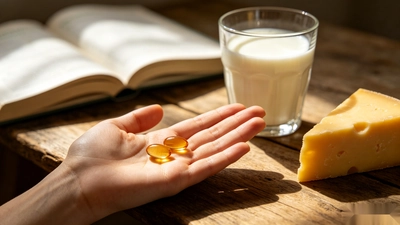
A vitamin D3 K2 supplement is formulated to address both steps in this pathway: D3 supports absorption, and K2 activates proteins that guide calcium to the right places. This mechanistic synergy is the fundamental reason why these two fat-soluble vitamins are now routinely paired. As the NIH Vitamin D fact sheet explains, vitamin D promotes calcium absorption in the gut and maintains adequate serum calcium and phosphate concentrations to enable normal bone mineralization. The complementary action of K2 ensures that the absorbed calcium is deposited where it benefits the body most — in bones and teeth, rather than in soft tissues.
Why Are Vitamin D3 and K2 Often Combined?
From a scientific perspective, the combination makes biochemical sense. D3 upregulates the production of vitamin K-dependent proteins like osteocalcin and matrix Gla protein, but without sufficient K2, those proteins remain undercarboxylated and inactive. Supplementing D3 without K2, especially at higher doses over time, theoretically increases the demand for K2 and may create an imbalance.
The market has responded to this research: brands seeking a point of differentiation have driven D3 K2 formulas into the mainstream, from simple softgels to complex gummy matrices. For a private label brand, understanding this rationale is not just about product education — it is about being able to explain to your own customers why the two vitamins deserve to be together.
Who Usually Looks for Vitamin D3 K2 Supplements?
The audience is broader than most brands initially assume. Consumers actively searching for a vitamin D3 K2 supplement typically fall into several overlapping groups: individuals concerned with bone density and long-term skeletal health, people looking for cardiovascular support without wanting to take multiple separate pills, and parents seeking convenient drops for children. There is also a growing segment of vegan-conscious consumers who specifically look for plant-based D3 (from lichen) combined with fermentation-derived K2. For brand owners, mapping your target demographic — and knowing which dosage format they prefer — shapes everything from capsule size to label design.
Safety Notes Before Choosing Vitamin D3 K2
Because both D3 and K2 are fat-soluble, the conversation around safety must go beyond a simple “follow the label.” From a manufacturing and brand protection standpoint, these are the points we emphasize with every client:
- Vitamin K2 and anticoagulants: MK-7 in particular can interfere with warfarin and similar blood thinners. As the NIH Vitamin K fact sheet notes, if you are taking a blood thinner such as warfarin (Coumadin), it is very important to keep your vitamin K intake consistent. If your target market includes older adults, your label and website must clearly advise consulting a physician. This is not optional — it is a safety and liability baseline.
- Excess D3 accumulation: While rare, chronically high intakes above the tolerable upper intake level can lead to hypercalcemia. We advise brands to stay within well-researched dosage ranges (typically 400–4,000 IU per serving for adult daily use) and avoid chasing extreme megadoses without substantial safety data.
- Product quality matters critically: A poorly manufactured D3 K2 oil blend can oxidize, and degraded vitamin K2 as MK-7 loses potency faster than many brands realize. This is exactly why stability testing cannot be treated as a formality.
Vitamin D3 K2 Supplement Forms: Gummies, Softgels, Drops, Tablets, or Capsules?
Brand perception often starts with the dosage form. Each format brings distinct manufacturing challenges and consumer trade-offs, which we see firsthand in our production runs:
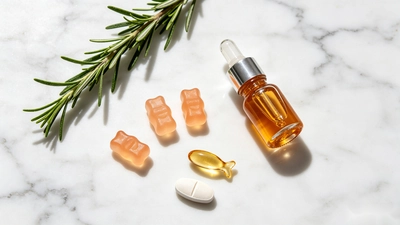
- Gummies: Extremely popular for compliance, but technically demanding for fat-soluble vitamins. D3 and K2 need to be evenly dispersed in a water-based pectin or gelatin matrix. We have learned that controlling water activity below 0.65 and using microencapsulated K2 is critical to prevent degradation during shelf life. Gummies also limit how much K2 can be added before aftertaste becomes a problem. For brands interested in high-potency formats, our Vitamin D3 gummies OEM manufacturing capabilities support doses up to 5,000 IU in a pectin-based, non-GMO format with full COA traceability.
- Softgels: The classic choice for oil-based formulas. D3 and K2 dissolve well in MCT or olive oil, and a nitrogen-flushed softgel provides excellent oxygen barrier. This format easily accommodates higher potencies and is the most straightforward for vegan lichen D3 + MK-7 combinations.
- Liquid Drops: Ideal for children and customized dosing. The main manufacturing challenge is preventing K2 from crystallizing or settling in the carrier oil over time. Our R&D team routinely tests different oil blends and uses solubilization techniques to maintain homogeneity. Brands exploring this format can learn about our Vitamin D3 liquid drops manufacturing capabilities and flexible dosing options.
- Tablets and Two-Piece Capsules: Less common for pure D3 K2 because these vitamins are oily and can cause binding issues, but they are viable when dry forms like microencapsulated powders or spray-dried D3 are used. Often chosen for multi-nutrient blends that include calcium and magnesium.
How Brands Choose D3 and K2 Dosage
This is rarely a “more is better” decision. We guide brands through three key considerations:
- Target market regulations: In the EU, EFSA has established labeling reference values that influence what a brand can comfortably state on-pack. In North America, the landscape is more flexible, but 1,000–2,000 IU D3 with 45–100 mcg K2 as MK-7 is the most frequently requested range for daily adult formulas. We always recommend checking the latest local guidance — and we help clients cross-reference their desired dose against permitted daily values in their region.
- Dosage form constraints: A gummy can technically deliver 1,000 IU D3 and 45 mcg K2 in a 4-gram piece, but pushing K2 to 120 mcg often introduces bitterness and increases the piece weight. Softgels have fewer organoleptic limits, so brands that want a higher K2 dose frequently choose a softgel.
- Intended use positioning: A maintenance formula typically sits at a moderate D3 dose, while a seasonal support formula might go higher. The K2 dose then scales accordingly. We have helped brands model the ingredient cost impact of different ratios, balancing label appeal with retail price point. For brands developing bone-focused formulations, combining D3 with calcium in a gummy format can be particularly appealing — our calcium and Vitamin D3 gummies line demonstrates how this nutrient pairing works in practice for bone health positioning.
Vegan Vitamin D3 K2 Supplement Options
For brands committed to plant-based positioning, a vegan vitamin D3 K2 supplement is absolutely achievable — but the raw material documentation matters. D3 from lichen is now widely available and comparable in bioavailability to lanolin-derived D3. Vitamin K2 as MK-7 can be produced via bacterial fermentation using non-animal media, yielding a product that meets vegan criteria.
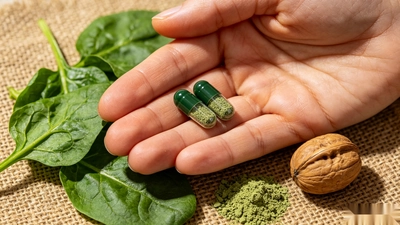
At Jiabei Global, our vegan softgels use a carrageenan-based or modified starch shell instead of gelatin, and our vegan gummies use pectin. Obtaining vegan certification requires full traceability of both the active ingredients and the excipients. For brands ready to explore this route, we walk you through what documentation is needed and how to position the product cleanly. Learn more about our vegan vitamin D3 supplement formulation capabilities and the production checklist every brand should review before manufacturing.
Stability Problems Brands Should Not Ignore
In our R&D runs, we have repeatedly seen vitamin K2 as MK-7 degrade faster than expected in certain environments — and when MK-7 degrades, it is not just a potency loss. Degraded K2 can lead to off-smells and a visible color shift in the finished product.
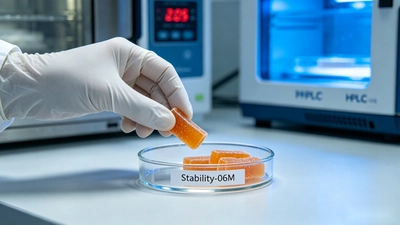
One particular case from our lab: a D3 K2 gummy formula using standard MK-7 oil in a high-pH pectin base lost over 15% of its K2 content within 6 months under accelerated conditions. The workaround we now routinely apply for private label clients is microencapsulation of K2. This not only improves stability during shelf life but also masks any bitterness in gummies. For softgels, we flush with nitrogen and often include antioxidants like rosemary extract or mixed tocopherols to protect the oil blend.
We also monitor the difference between D3 and K2 degradation rates during real-time stability studies — because if one declines faster than the other, the label claim at month 24 may no longer reflect what is actually in the bottle. Brands that work with an experienced custom gummy supplement manufacturing partner benefit from stability protocols built on real production data, not theoretical estimates.
Claims and Labeling: What Brands Can Say More Safely
This is where many brands feel uncertain, and where manufacturing experience can genuinely reduce risk. Under the FDA structure/function claims framework, you can typically make claims tied to calcium absorption and bone health, as long as they are worded carefully. The key requirement: if a dietary supplement label includes such a claim, it must state in a disclaimer that FDA has not evaluated the claim and that the product is not intended to diagnose, treat, cure, or prevent any disease.
What you cannot do is make statements that imply treatment or prevention of osteoporosis, cardiovascular disease, or other diagnosed conditions. In the European market, the approved health claims are narrower, and the wording must precisely match the authorized claim.
When a client comes to us with a desired label direction, our regulatory team reviews the proposed claims against the target market and suggests phrasing that stays within safe boundaries while remaining commercially appealing. This pre-review step has saved brands from costly label reprints and regulatory pushback. For additional guidance, the FTC Health Products Compliance Guidance provides detailed examples of what constitutes adequate substantiation for health-related product claims.
What We Check Before Producing a Vitamin D3 K2 Supplement
Most manufacturers will tell you they test for identity, purity, and microbials. That is the baseline. At Jiabei Global, our pre-production checklist for D3 K2 products goes several steps further because these two nutrients demand it:
- Peroxide value of the D3 oil: We reject D3 raw materials with elevated peroxide values even if they fall within compendial limits. An oxidized starting oil will trigger softgel odor issues later in shelf life.
- MK-7 isomer profile: Low-grade MK-7 may contain a high proportion of cis isomers rather than the biologically active all-trans form. We verify the all-trans MK-7 content via HPLC, and we only accept materials that meet our internal purity threshold.
- Accelerated stability with dual potency tracking: We place every new D3 K2 formula on accelerated stability (40°C/75% RH) and track both D3 and K2 content separately. If the potency gap between the two grows larger than expected, we investigate the matrix interaction and adjust the overage or the antioxidant system before the first commercial batch is ever run.
- Gummy water activity and pH: For gummies, we measure water activity and pH not just at release but after 3-month accelerated stability, because both can drift and affect K2 stability.
- Allergen and vegan cross-contamination verification: If a run is labeled vegan or allergen-free, we swab shared equipment and test rinse water to confirm no cross-contact from previous gelatin or dairy-containing batches.
This checklist is not a marketing claim; it is exactly how our QC team operates on every new D3 K2 project. Brands looking for a partner that brings this level of rigor from day one can explore our full supplement OEM and ODM services.
Private Label Vitamin D3 K2 Supplement Manufacturing Options
If you are evaluating a private label vitamin D3 K2 supplement, here is what the process typically looks like when you work with a manufacturer like Jiabei Global:
- Format selection: We walk you through the pros and cons of gummies, softgels, drops, and capsules for your specific market segment. If you are targeting children, we may steer you toward pectin-based gummies or liquid drops with a clean flavor profile. If your audience expects a clean-label softgel, we have vegan shell options ready.
- Dosage and ratio design: Based on your region, price point, and competitor analysis, we propose a practical D3:K2 ratio and help you verify it against local labeling regulations.
- Custom formulation or stock formula: For brands that want to go to market faster, we offer pre-developed D3 K2 formulas with existing stability data. For brands that need a unique twist — perhaps adding magnesium, zinc, or a specific carrier oil — our R&D team develops a custom formula.
- Minimum order quantities: MOQs vary by format and packaging, but we work with brands of different sizes and can typically accommodate lower starting quantities for softgels and drops than many competitors. We are transparent about this upfront.
- Packaging and label support: We coordinate bottle sourcing, dropper assemblies, desiccants, and label printing. Our compliance team reviews your label draft for common pitfalls before it goes to print.
- Stability commitment: Every private label D3 K2 product we manufacture comes with a formal stability protocol and ongoing batch retain testing, so you have data to support your expiration date.
Choosing a manufacturing partner for a vitamin D3 K2 supplement means choosing a team that understands not just what to put into the formula, but what to look out for over the product‘s entire shelf life. If you would like to discuss a specific D3 K2 project — whether it is a gummy, softgel, or vegan option — reach out to our team, and we will walk you through the feasibility and timeline.
Frequently Asked Questions
Is it safe to take vitamin D3 and K2 together?
Yes. Vitamin D3 enhances calcium absorption, while vitamin K2 directs that calcium to bones and away from soft tissues. This complementary mechanism is the key reason they are combined in supplement formulas. When produced under strict GMP conditions and within safe dosage ranges, D3 and K2 combinations are well tolerated.
What is the best vitamin D3 to K2 ratio?
There is no single official ratio, but many supplement brands start with 1,000 IU D3 to 45 mcg K2 (as MK-7) for daily maintenance. For higher D3 doses like 5,000 IU, K2 is often adjusted to 90–100 mcg. The ratio depends on the dosage form, target market, and intended use.
Can you get vegan vitamin D3 K2 supplements?
Yes. Vegan D3 is sourced from lichen, and vitamin K2 as MK-7 can be produced via plant-based fermentation. Many manufacturers, including Jiabei Global, offer fully vegan D3 K2 combinations in softgels, gummies, and liquid drops. The non-GMO and vegan certifications require careful raw material documentation.
What is the difference between vitamin K2 MK-4 and MK-7?
MK-4 is a shorter-chain menaquinone with a shorter half-life in the body, often used in higher doses for specific bone health formulations. MK-7 is a longer-chain form derived from fermentation, with a much longer half-life, allowing for once-daily dosing at lower microgram levels. For once-daily D3 K2 combinations, MK-7 is the more common choice.
References
References
- NIH Office of Dietary Supplements. Vitamin D: Fact Sheet for Health Professionals. https://ods.od.nih.gov/factsheets/VitaminD-HealthProfessional/
- NIH Office of Dietary Supplements. Vitamin K: Fact Sheet for Consumers. https://ods.od.nih.gov/factsheets/VitaminK-Consumer/
- U.S. Food and Drug Administration. Structure/Function Claims. https://www.fda.gov/food/nutrition-food-labeling-and-critical-foods/structurefunction-claims
- Federal Trade Commission. Health Products Compliance Guidance. https://www.ftc.gov/business-guidance/resources/health-products-compliance-guidance
- EFSA Panel on Dietetic Products, Nutrition and Allergies. Dietary reference values for vitamin D. EFSA Journal. 2016;14(10):e04547. https://doi.org/10.2903/j.efsa.2016.4547
- Schurgers LJ, Teunissen KJ, Hamulyák K, et al. Vitamin K-containing dietary supplements: comparison of synthetic vitamin K1 and natto-derived menaquinone-7. Blood. 2007;109(8):3279-3283. https://doi.org/10.1182/blood-2006-08-040626
- Institute of Medicine (US) Committee to Review Dietary Reference Intakes for Vitamin D and Calcium. Dietary Reference Intakes for Calcium and Vitamin D. National Academies Press; 2011. https://www.ncbi.nlm.nih.gov/books/NBK56070/