Introduction
In today’s fast-paced lifestyle, adaptogenic herbs have become a key topic among people seeking natural ways to support stress management and overall balance.
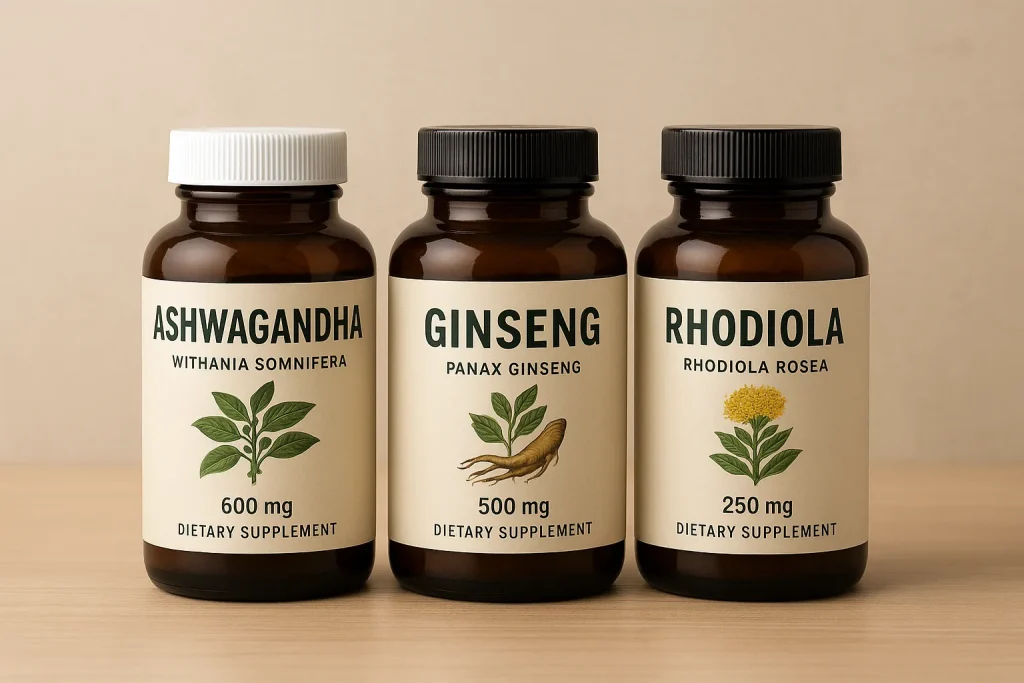
Among the most studied adaptogens are Ashwagandha (Withania somnifera), Ginseng (Panax ginseng), and Rhodiola rosea.
This article provides a detailed comparison—Ashwagandha vs Ginseng vs Rhodiola—covering their origins, scientific evidence, mechanisms, dosage, and which supplement might be best for specific wellness goals.
What Are Adaptogens?
Adaptogens are natural substances believed to help the body resist various physical, chemical, and biological stressors.
They support homeostasis and enhance resilience to stress. Common features include:
- Modulating the hypothalamic–pituitary–adrenal (HPA) axis
- Reducing cortisol (stress hormone) levels
- Supporting emotional balance and mental performance
However, scientific consensus remains cautious—definitions are broad, and more high-quality research is needed.
1. Ashwagandha (Withania somnifera)
Traditional Use:
Used for centuries in Ayurvedic medicine as a “rejuvenating tonic,” Ashwagandha supports energy, stress relief, and vitality.
Scientific Evidence:
- Studies from NIH show Ashwagandha significantly reduces stress and cortisol levels.
- It may improve sleep, cognition, and physical endurance.
- Common standardized extracts include 5% withanolides.
Mechanism:
- Regulates the HPA axis and cortisol release
- Modulates GABA and serotonin activity
- Promotes calmness and emotional balance
Benefits:
- Reduces anxiety and stress
- Improves sleep quality
- Enhances endurance and muscle recovery
Limitations:
- May affect thyroid function or immune response
- Effects are gradual (2–8 weeks)
- Should not replace medical treatment
For deeper insights, link to your Ashwagandha article internally.
2. Ginseng (Panax ginseng)
Traditional Use:
A staple in Traditional Chinese and Korean medicine, Ginseng is known for boosting energy, stamina, and mental alertness.
Scientific Findings:
- Ginsenosides show antioxidant and neuroprotective properties.
- Studies demonstrate improved fatigue resistance, physical performance, and memory.
- Supports immune health and metabolism.
Mechanism:
- Regulates adrenal and vascular systems
- Enhances mitochondrial energy metabolism
- Improves glucose utilization and oxygen uptake
Benefits:
- Increases physical energy and focus
- Supports immune and metabolic health
- May enhance sexual vitality
Limitations:
- Effects differ by species (Asian vs American ginseng)
- May affect blood sugar or blood pressure
- Not ideal before bedtime (stimulating effect)
3. Rhodiola rosea
Traditional Use:
Used in Scandinavian and Russian herbal traditions to combat fatigue and enhance endurance in harsh climates.
Scientific Findings:
- Clinical studies show Rhodiola can reduce stress-related fatigue and improve mood.
- Often used by athletes or professionals under heavy workloads.
- Common standardized extracts contain 3% rosavins and 1% salidroside.
Mechanism:
- Supports neurotransmitters like serotonin and dopamine
- Modulates HPA axis and improves mitochondrial efficiency
- Enhances oxygen utilization during stress
- Increases energy and endurance
- Improves mental clarity and stress resilience
- Supports mood and motivation
Limitations:
- May cause mild stimulation or insomnia if taken late
- Human data still limited compared with Ashwagandha
Comparison Table: Ashwagandha vs Ginseng vs Rhodiola
| Aspect | Ashwagandha | Ginseng | Rhodiola |
|---|---|---|---|
| Primary Function | Stress & sleep support | Energy & cognition | Fatigue & endurance |
| Best For | Anxiety, insomnia, adrenal fatigue | Low energy, brain fog, immune support | Physical fatigue, work stress |
| Scientific Evidence | Strong (multiple RCTs) | Moderate | Emerging |
| Key Mechanism | Cortisol reduction, GABA modulation | Mitochondrial activation, circulation | Neurotransmitter balance |
| Common Dose | 300–600 mg/day | 200–3000 mg/day | 200–400 mg/day |
| Best Time to Take | Evening | Morning | Morning/Noon |
| Possible Side Effects | Drowsiness, thyroid stimulation | Blood sugar effects | Mild insomnia if taken late |
Choosing the Right Adaptogen
- For chronic stress and poor sleep:
→ Choose Ashwagandha - For low energy and cognitive fatigue:
→ Choose Ginseng - For fast recovery and physical stamina:
→ Choose Rhodiola
Combination Use:
Some users take Rhodiola in the morning and Ashwagandha at night for balanced effects.
However, consult a professional before stacking adaptogens, especially if taking medications.
Dosage & Safety
| Herb | Typical Daily Dose | Key Safety Notes |
|---|---|---|
| Ashwagandha | 300–600 mg standardized extract | Avoid during pregnancy; may affect thyroid |
| Ginseng | 200–3000 mg extract | May interact with blood pressure or diabetes meds |
| Rhodiola | 200–400 mg extract | Avoid taking at night; may interact with SSRIs |
Always buy supplements tested by third-party labs and certified under GMP, BRC, or FSSC 22000 to ensure purity and potency.
FAQ
What is the best adaptogen for stress relief?
Ashwagandha is the most evidence-backed adaptogen for stress and cortisol reduction, helping support relaxation and better sleep quality.
Is it safe to combine Ashwagandha and Rhodiola?
They can be combined under professional guidance—Rhodiola for daytime energy and Ashwagandha for nighttime calm. Monitor your response carefully.
How long until adaptogens show effects?
Most studies report noticeable benefits after 4–8 weeks of consistent use, though some people experience improvement sooner.
Do adaptogens replace medical treatment?
No. Adaptogens are supportive supplements and should not replace prescribed medication or therapy for mental or physical conditions.
Conclusion
While Ashwagandha, Ginseng, and Rhodiola all share the title of “adaptogens,” each offers distinct advantages.
- Ashwagandha: best for stress, cortisol balance, and sleep.
- Ginseng: ideal for long-term vitality and cognitive support.
- Rhodiola: great for quick energy and endurance recovery.
For the best results, pair adaptogen supplements with balanced nutrition, exercise, and proper rest.