Omega-3 demand has not slowed down in more than two decades. It has only changed shape. In the early global nutraceutical market, fish oil dominated shelves because it was affordable, widely understood, and delivered cardiovascular benefits consumers could recognize. Today, the story is shifting. Buyers are no longer satisfied with one generic omega-3 softgel. They want purpose-built formulas, formulations designed by age group, and brain-specific DHA concentration rather than a one-size-fits-all approach.
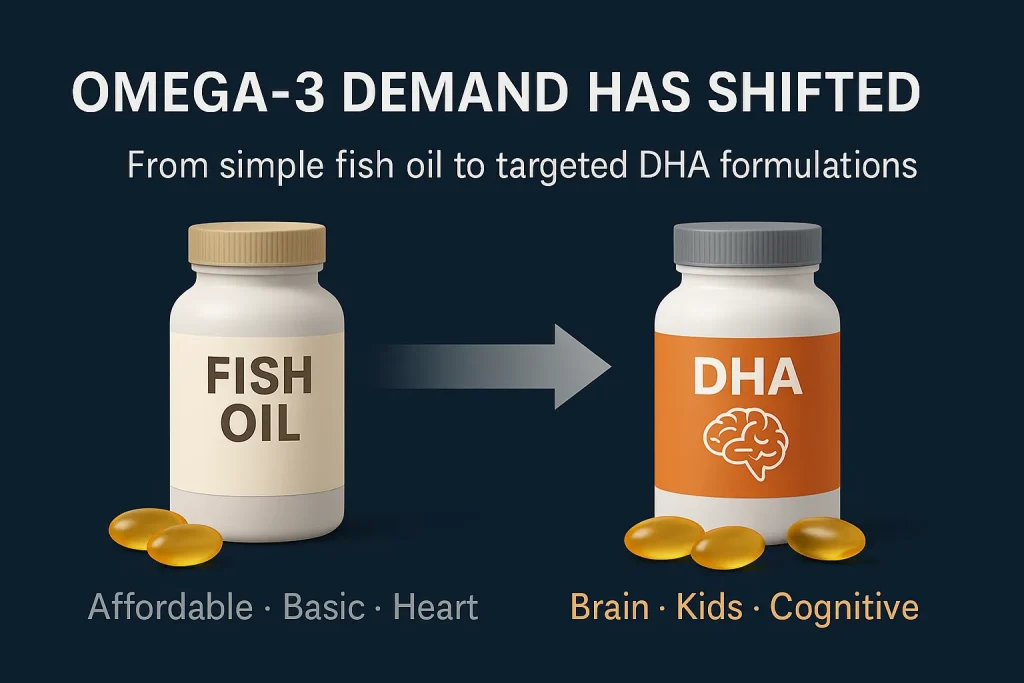
This is where the question arises for every buyer planning a new product line: DHA or Fish Oil?
The answer is not as simple as one being better than the other. They perform differently, target different consumers, and support separate category growth paths. Understanding these differences is now a competitive necessity for OEM/ODM project planning, not marketing decoration.
1. Fish Oil and DHA Are No Longer Interchangeable
Many supplement buyers treat DHA softgels and fish oil softgels as similar products, but formulation science suggests otherwise. Raw materials behave differently during encapsulation. Shelf life differs. Sensory properties differ. Even customer demographics diverge.
In essence:
Fish oil tends to work best for cardiovascular positioning, general wellness, and mass retail where pricing flexibility matters. DHA oil, especially when algae-based, aligns with neurological support, maternal health formulation, and brands targeting students, screen users, and cognitive longevity. Neither replaces the other. They split the market, and both expand it.
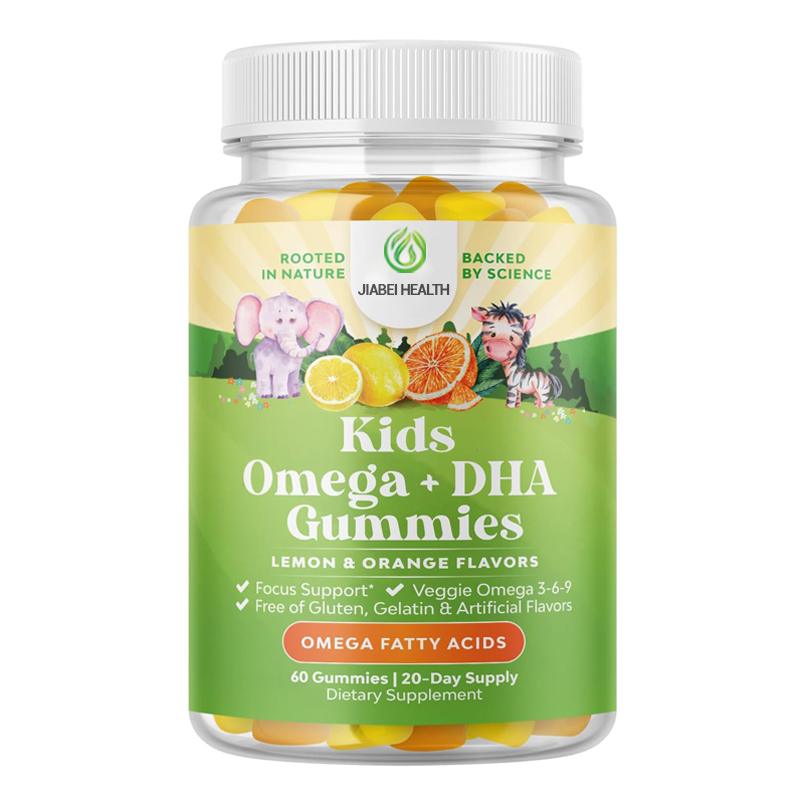
To make this difference clearer, here is a list-based summary designed for easy reading and product planning.
Short Summary: Fish Oil vs DHA Oil
Fish Oil
- Typically contains both EPA and DHA in blended ratios
- Best suited for heart health and inflammation-oriented products
- Material supply remains stable with long-established sourcing chains
- More competitive pricing for large-volume private label
DHA Oil
- Contains high DHA concentration, often from algae or purified marine source
- Suited for cognitive enhancement, memory development, retinal health
- Market interest grows quickly due to premium positioning
- A strong choice for prenatal or brain-boost softgel series
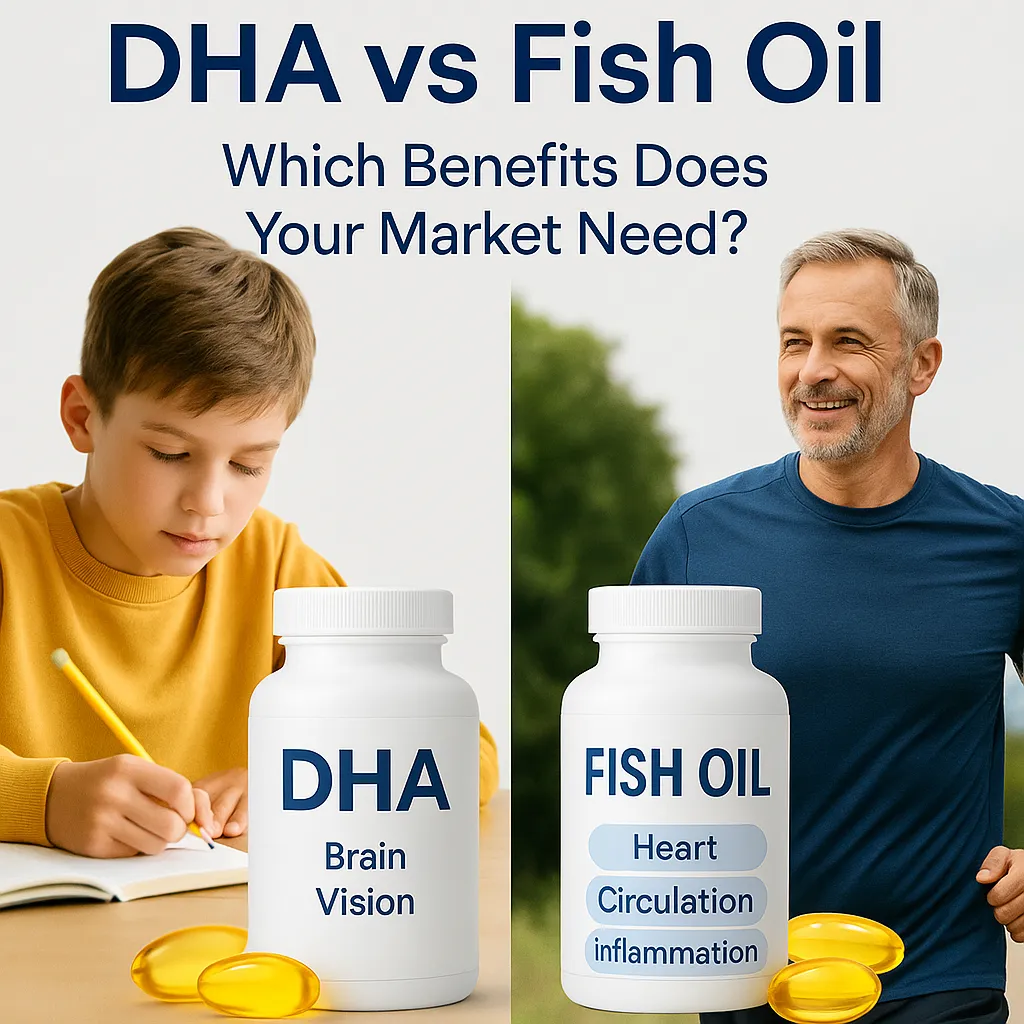
This perspective alone helps a brand identify where each product fits before discussing formulation systems or capsule design.
2. Formulation: Where Decisions Become Strategic, Not Cosmetic
Formulating omega-3 softgels is not about simply filling oil in a shell. Oxidative stability, antioxidant pairing, capsule transparency, viscosity behavior during filling, and sensory management define the outcome. Two products can share the same milligram dosage but perform entirely differently after storage or distribution.

DHA Softgel Formulation Notes
- More sensitive to oxidation than standard fish oil
- Typically requires stabilizers such as mixed tocopherols or rosemary extract
- Produces a clear golden visual tone suitable for premium branding
- Works well with algae-based vegan positioning if desired
Fish Oil Softgel Formulation Notes
- Deodorization affects consumer acceptance and return rate
- EPA enrichment can shift capsule color and viscosity
- High-concentrate omega-3 blends often need antioxidant reinforcement
- Ideal for cost-sensitive markets requiring scalable volumes
For private label manufacturing, these small details determine whether a product passes distribution testing, whether customers repurchase, and whether retailers reorder. A formula is a business decision.
3. Market Direction: Two Roads, Both Growing, But Diverging
Fish oil will remain a foundational omega-3 category for years. Cardiovascular benefits are well documented, and price-elasticity ensures supermarkets, pharmacy chains, and entry-level supplement brands keep it in rotation. However, DHA growth moves faster, especially among tech users, parents, and aging consumers who prioritize brain and eye function over general wellness.
This trend becomes more visible when broken into specific purchasing motivations:
Why DHA demand is accelerating
- Students and working professionals want cognitive performance and concentration improvement
- Blue-light exposure increases consumer awareness of eye and retinal support
- Maternal supplements highlight DHA for fetal brain development
- Vegan, sustainable, algae-derived omega-3 gains mainstream acceptance
Why Fish Oil remains strong
- Cardio-protective claims are familiar and trusted
- Large retail chains require accessible pricing and high-volume SKUs
- Sports nutrition lines use EPA-rich blends for inflammation recovery
- Brand new entrants to the market adopt fish oil before premium upgrade
This split shows why DHA vs Fish Oil is not a debate. It is segmentation. The most successful supplement companies often develop both lines to serve different price tiers and demographics.
4. OEM and Private Label Strategy: Choosing Based on Target, Not Instinct
When developing an omega-3 product portfolio, many buyers ask which ingredient is better. The more profitable question is: Better for whom? A brand selling through TikTok, DTC channels, or influencer-driven marketing may find DHA positioning significantly more responsive. Meanwhile, wholesale distributors scaling into multiple pharmacies might profit more from standardized fish oil SKUs.
A practical approach for product mapping is:
- Launch DHA softgels for focus, cognition, aging brain support
- Position algae DHA for vegan and sustainability-driven brands
- Retain fish oil for general immunity and cardiovascular SKUs
- Add higher-EPA blends for athletes, recovery, and mobility consumers
- Build multi-SKU omega-3 families instead of single-item listings
A portfolio-based approach allows you to scale, upsell, and cross-sell without always rebuilding origin labeling or certification documentation.
5. What Matters to B2B Buyers Far More Than Packaging
Customers rarely see formulation first. They judge transparency, testing integrity, and lot-to-lot consistency. This is why the most responsible private label factories provide COA for peroxide value, acid value, and heavy-metal screening, even when not explicitly requested.
Critical evaluation points for procurement departments include:
- Verified DHA percentage or EPA/DHA ratio
- Threshold control of peroxide and anisidine values
- Absence of fishy back-odor during shelf simulation
- Third-party testing availability for export markets
- Certifications such as GMP, HACCP, FSSC22000, BRCGS, Halal or Kosher depending on region
Fast-growing brands purchase formulations. Mature brands purchase stability numbers. Both require different technical support from a manufacturer.
6. Why DHA Leads Future Innovation Even If It Never Replaces Fish Oil
The omega-3 category is diversifying, not collapsing. DHA demand increases because modern cognitive pressure increases. Children use tablets before handwriting. Adults read screens longer than books. Workers absorb continuous information at higher speed. This cognitive-centered lifestyle fuels DHA preference more naturally than fish oil. Market size is no longer the only indicator. Growth velocity is the new metric.
Even if fish oil remains the volume leader, DHA softgels can occupy a premium tier with stronger per-bottle margin, clearer marketing narratives, and global branding elasticity. A single DHA softgel line may exceed the profit of two or three standard fish oil products if positioned well.
Final Outlook for Brand Owners
For private label companies planning a new omega-3 launch, the decision is not either-or. It is strategic placement. Fish oil supports the base of the category. DHA defines the future of it. A brand with both can scale across mass retail and premium cognitive niches without reinventing its supply chain.
A B2B buyer does not just purchase capsules. They purchase category mobility. DHA is the route to premiumization, and fish oil remains the road that carries volume. Selecting based on channel type, audience profile, and long-term SKU expansion is the foundation of an omega-3 strategy that can compound rather than stall.
FAQ
Q1. What is the main difference between DHA and regular fish oil for supplement brands?
DHA oil focuses on delivering a higher percentage of docosahexaenoic acid, which is closely linked to brain, cognitive and eye health. Regular fish oil usually combines EPA and DHA together and is still positioned mainly around heart health and general wellness. For product planning, DHA suits premium cognitive formulas, while fish oil works well in mass-market omega-3 lines.
Q2. Which is better for a new private label launch, DHA softgels or fish oil softgels?
It depends on the target market and price position. Fish oil softgels are usually more cost-efficient and ideal for supermarket or pharmacy entry products. DHA softgels support a higher value story around focus, memory, maternal and eye health, so they fit better in premium or niche online channels where brand storytelling matters more than lowest price.
Q3. Why are more brands asking for algae DHA instead of traditional fish oil?
Algae DHA provides a plant-based omega-3 source that suits vegan and sustainability-focused customers. It also avoids fish odor concerns and simplifies marketing claims about purity and environmental responsibility. As a result, algae DHA softgels are often used in higher-end cognitive and maternal product lines instead of basic fish oil capsules.
Q4. How should buyers compare quality when sourcing DHA or fish oil softgels from an OEM factory?
Serious buyers focus on COA data and certification rather than packaging alone. Key items include verified EPA/DHA content, peroxide and acid values, heavy metal compliance and stability testing. In addition, choosing a factory with GMP, HACCP or FSSC22000-level management helps ensure consistent quality across batches and reduces risk in long-term cooperation.