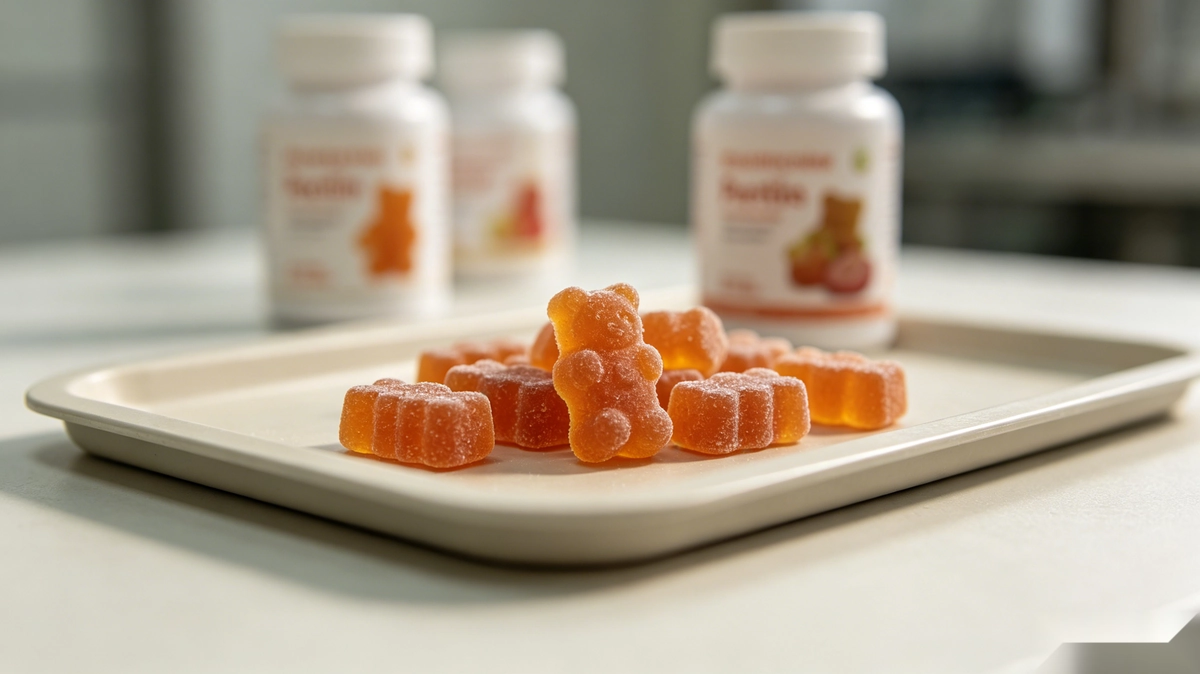
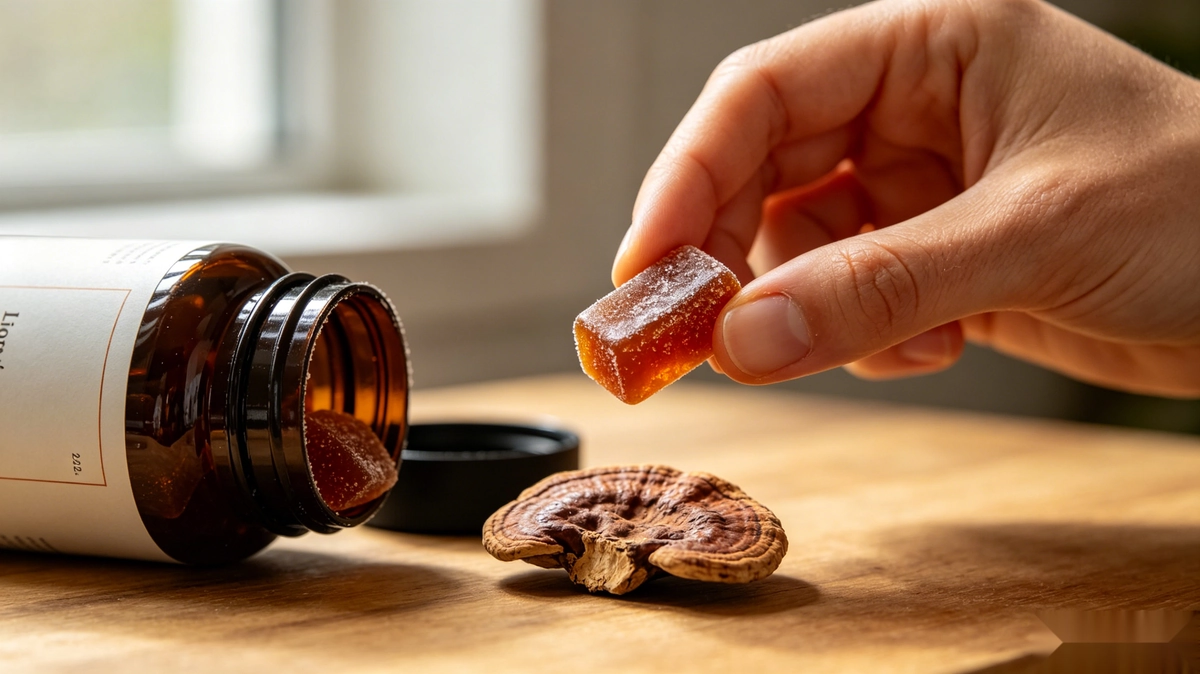
Choosing a nutraceutical gummy manufacturer can seem straightforward at first. You share a formula, ask for pricing, review a sample, and move toward production.
That’s usually not where the project gets difficult.
The real issues tend to show up between the sample and the first commercial batch. The active load may be too high for the serving size. A botanical extract may leave more bitterness than expected. The gummy may need a longer drying cycle than the pilot sample suggested. Even a small change in gummy weight can affect bottle count, packaging cost, and label directions.
That is why botanical gummy projects need a tighter review before sample approval. The extract specification, flavor masking, color change, heat exposure, water activity, and finished-product testing should be checked together, not one by one after the order is placed. For plant-based formulas, this herbal supplement manufacturing checklist gives a broader factory QA view beyond gummies alone.
A good manufacturing partner should catch those issues early. Before you approve a supplier, look closely at the following seven areas.
1. Can the Formula Move From Pilot Sample to Full Production?
The first question is not whether the factory can make gummies. It is whether your formula can be produced consistently at the intended dosage, texture, flavor, and serving size.
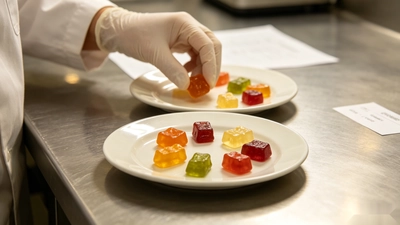
A gummy has limited room. Active ingredients, sweeteners, acids, flavors, colors, and the gummy base all compete for space in the same piece.
A formula that fits easily into two capsules may require four or six gummies. That changes more than the dosage form. It affects the bottle count, cost per serving, label directions, and how convenient the product feels to the customer.
Higher active loading can also make the gummy harder to work with. It may increase bitterness, reduce the space available for flavor, or make drying less predictable. Mineral ingredients can add a chalky or metallic note. Dark herbal extracts may limit the final color. Hygroscopic ingredients can pull moisture into the gummy and cause the texture to change over time.
In practice, increasing the active load usually creates a second round of work on flavor, acidity, and sweetness. Treating dosage and taste as separate steps often leads to more sample revisions.
The gummy base matters too. Pectin and gelatin behave differently during cooking, depositing, setting, and drying. A sugar-free pectin gummy may need a different process from a standard gelatin gummy, even when the active ingredients are the same.
A pilot sample should help answer several questions:
- Is the dosage realistic?
- Is the serving count acceptable?
- Can the flavor cover the active ingredients?
- Does the texture fit the product position?
- Can the formula be reproduced at scale?
A lab sample may taste fine and still behave differently during a full production run. Larger mixing volumes, longer heating time, and extended drying can change the flavor, color, and texture.
That is why sample approval should cover more than taste. The formula, gummy weight, coating, color, flavor, serving count, and raw material specifications should all be confirmed before commercial production.
2. Does the Facility Regularly Produce Dietary Supplement Gummies?
A candy factory and a dietary supplement gummy manufacturer may use similar equipment, but they are not managing the same type of product.
Candy production is mainly focused on flavor, texture, appearance, and output. Nutraceutical manufacturing also needs to control ingredient identity, active content, batch records, testing, specifications, and finished-product release.
This becomes especially important when the formula contains magnesium, iron, herbal extracts, mushrooms, amino acids, or oil-based ingredients. These materials can affect dispersion, taste, color, cooking behavior, and analytical results.
For products intended for the United States, the facility should operate under applicable FDA dietary supplement CGMP requirements, not just general confectionery controls.
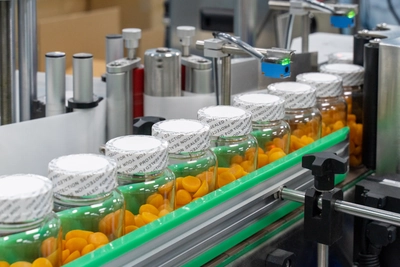
A qualified custom gummy manufacturer should be able to explain how it manages:
- Raw material approval
- Weighing and dispensing
- Batch documentation
- In-process checks
- Finished-product testing
- Batch release and traceability
It should also understand that the amount added to the batch is not automatically the same as the amount measured in the finished gummy. Heat exposure, processing time, ingredient distribution, and test-method variability can all affect the final result.
The issue is not whether a factory is willing to add functional ingredients to candy. It is whether the facility routinely handles those ingredients as dietary supplement components.
3. How Will Finished-Product Quality Be Verified?
A raw material COA tells you something about the ingredient before production. It does not confirm the quality of the finished gummy.
The final product has already gone through weighing, mixing, heating, depositing, cooling, drying, coating, and packaging. Finished-product testing should reflect the gummy after all of those steps.
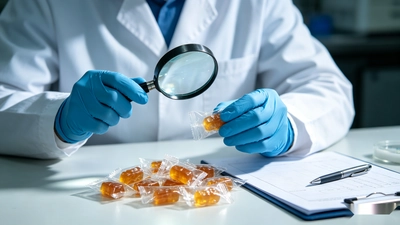
Depending on the formula and market, testing may include:
- Active ingredient content
- Microbiological limits
- Heavy metals
- Moisture or water activity
- Average gummy weight
- Weight variation
- Appearance, color, and texture
Water activity is especially important in gummies. It is not the same as total moisture. Two gummies can contain similar moisture levels and still behave differently during storage.
Poor water activity control can lead to sticking, texture changes, shorter shelf life, or microbial concerns. This is one reason a gummy that feels fine immediately after production may perform differently several weeks later.
Testing can also be more complicated in a gummy than in a simple powder. Pectin, gelatin, flavors, acids, colors, and sweeteners create a more complex analytical matrix. The lab method needs to work for the finished gummy, not just the raw ingredient.
Before production, confirm:
- Which tests are included
- Whether testing is done in-house or by a third-party lab
- Whether every batch receives a batch-specific COA
- Which specifications are used for release
- Who approves the finished batch
For more detail on batch documents, see this guide to what a supplement COA should show.
Testing requirements should be settled before the purchase order is signed. Adding them after production can delay shipment and change the project cost.
4. Do the Certifications Apply to the Actual Production Site?
Certification logos are easy to add to a website or sales deck. What matters is whether the certificate covers the facility that will make and pack your gummies.
Check the legal company name, site address, certification scope, issuing body, and expiration date. A certificate issued to another company entity or location may not apply to your order.
Different certifications cover different areas. GMP relates to manufacturing and quality controls. HACCP focuses on hazard identification and preventive control. FSSC 22000 covers a broader food safety management system. Halal certification may be required depending on the ingredients, customer, or destination market.
FSSC certificates can be checked through the official FSSC Public Register. Buyers can compare the site name, location, certification status, and scope with the documents provided by the supplier.
You can also review our manufacturing quality and certification standards when comparing a potential production partner.
5. Does the Quote Cover the Full Project?
A low unit price can leave out several important costs.
One supplier may be quoting a stock formula with basic testing and standard packaging. Another may include custom formulation, sample revisions, third-party testing, upgraded packaging, and export documents.
Those prices are not directly comparable.
MOQ can also mean different things. It may refer to production weight, finished gummies, bottles, pouches, or a minimum cooking batch. Packaging materials may have separate minimum quantities, especially for printed pouches, cartons, custom bottles, or molds.
Make sure the quotation clearly states:
| Quote Item | What to Confirm |
|---|---|
| Formula | Stock, modified, or fully customized |
| Ingredients | Source, grade, and dosage |
| Sampling | Revisions and sample charges |
| Testing | Included tests and lab fees |
| Packaging | Bottle, cap, seal, label, carton, and desiccant |
| MOQ | Production quantity or finished units |
| Lead time | Starting point and production window |
| Freight | Included, excluded, or quoted separately |
| Documents | COA, specifications, and export files |
Lead time also needs a clear starting point. Some manufacturers count from the deposit date. Others start after formula approval, packaging confirmation, or receipt of special ingredients.
Raw material availability, sample revisions, testing, and packaging can all affect gummy manufacturing MOQ and lead time.
A quote only becomes useful when every supplier is pricing the same formula, specifications, testing scope, packaging, quantity, and trade terms.
Have a gummy formula to evaluate? Send the active ingredients, dosage, serving count, target market, and estimated order quantity. Our team can review the basic production feasibility before preparing a project quotation.
6. Has the Packaging Been Matched to the Final Gummy?
Packaging should be discussed while the formula is still being developed.
The gummy weight, shape, coating, and serving count determine how many pieces fit in the bottle or pouch. If the formula changes from two gummies per serving to four, the original packaging may no longer work.
Bottle selection should not be finalized from a lab sample alone. Small changes in gummy weight or coating can affect the actual fill count during production.
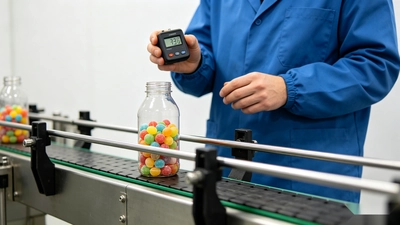
Gummies are also sensitive to heat and humidity. The packaging may need an induction seal, liner, desiccant, or stronger moisture barrier depending on the formula and destination market.
A coated gummy may fill differently from an uncoated gummy. A large custom shape may leave more empty space in the bottle. Sugar-free gummies may also require more attention during storage, especially when the formula contains moisture-sensitive ingredients.
The manufacturer and brand should confirm:
- Finished gummy weight
- Count per bottle or pouch
- Bottle or pouch capacity
- Seal and closure system
- Desiccant requirements
- Label dimensions
- Carton specifications
- Shipping climate
These supplement packaging decisions can affect product protection, freight cost, filling efficiency, and production timing.
For products sold in the United States, the final artwork should also be reviewed against the FDA Dietary Supplement Labeling Guide before labels are printed.
The manufacturer may help review the label, but the brand should still confirm the claims, directions, warnings, ingredient declarations, and market-specific requirements.
7. What Happens If a Batch Falls Outside Specification?
Most manufacturers are comfortable explaining what happens when production goes well. Buyers should also ask what happens when it does not.
A batch may fall outside specification because of active-content results, microbiological findings, gummy weight, moisture, texture, or color.
The facility should have a documented process for holding the batch, reviewing the results, investigating the cause, and deciding whether the product can be retested, reworked, rejected, or disposed of.
You should also know:
- When the customer will be informed
- Whether retained samples are available
- How the investigation is documented
- Whether raw materials and packaging can be traced
- Who makes the final release decision
No responsible manufacturer should claim that production deviations never happen. The important part is how the issue is identified, documented, communicated, and prevented from happening again.
Manufacturer Comparison Checklist
Before approving a nutraceutical gummies manufacturer, confirm that:
- The formula has been reviewed for loading, flavor, and stability
- The pilot sample reflects the intended commercial formula
- Raw material specifications are agreed
- Finished-product testing is defined
- Certifications apply to the production site
- MOQ and lead time are clear
- Packaging fits the finished gummy
- Quote inclusions and exclusions are listed
- Batch release procedures have been discussed
This type of checklist is usually more useful than comparing factory photos, catalog size, or general marketing claims.
What to Include in Your First RFQ
A clear RFQ helps the manufacturer give you a realistic answer.
Include:
- Target ingredients
- Amount per serving
- Preferred serving count
- Pectin or gelatin preference
- Flavor direction
- Packaging format
- Estimated first order
- Target market
- Required certifications
Also explain whether the project is based on an existing formula, a competitor reference, or a new concept.
Brands that are still deciding between a stock formula and full custom development can review the differences between OEM, ODM, and private label manufacturing before requesting a quote.
Why Brands Work With Jiabei Health
At Jiabei Health, gummy projects are reviewed across formulation, sampling, packaging, and quality documentation before commercial production.
We support stock and custom formulas, pectin and gelatin systems, sugar-free options, private label packaging, and batch-specific quality documents for international markets.
Our goal is to identify practical issues early, before they affect the launch schedule, packaging plan, or finished-product cost.
Final Thoughts
The best nutraceutical gummy manufacturer is not always the one with the lowest price or the smallest MOQ.
A stronger partner will tell you when the active load is too high, when the flavor system needs more room, when the packaging does not match the serving count, or when additional testing should be added.
Those conversations may take more time at the beginning, but they usually prevent bigger problems later.
A successful gummy project starts with a workable formula, a representative sample, clear specifications, suitable packaging, and an agreed testing plan.
Brands preparing a new project can review our gummy supplement manufacturing capabilities or send a formula brief to receive initial feedback on feasibility, MOQ, packaging, and project requirements.
Frequently Asked Questions
What should I send to a nutraceutical gummy manufacturer for a quote?
Send the ingredient list, dosage per serving, preferred serving count, gummy base, flavor, packaging format, target quantity, destination market, and required certifications. The manufacturer may request more details after reviewing the formula.
Can every supplement formula be made into gummies?
No. Some formulas contain too much active material, require an impractical serving count, have poor flavor, or use ingredients that are difficult to stabilize in a gummy system. The dosage, ingredient form, serving size, or dosage format may need to change.
What testing should be completed before a gummy batch is released?
The testing plan depends on the formula and market. It may include active ingredient content, microbiological limits, heavy metals, moisture or water activity, gummy weight, appearance, and other approved specifications. The scope should be confirmed before production.