Many first white label inquiries arrive with only two details: a product name and a target quantity.
A buyer may ask for 500 bottles of magnesium capsules, for example. The first price is usually based on assumptions about the magnesium source, capsule shell, bottle, label, testing, and destination market. Once those details are confirmed, the quotation may change.
That does not always mean the factory raised its price. It often means the first request did not describe the same finished product the buyer eventually wanted.
This is where white label projects commonly go wrong. Both sides use the same product name, but they are not discussing the same formula, packaging, or order scope.
Before paying a deposit to a white label supplement manufacturer, confirm the following seven details in writing.
1. Has the Formula Been Produced at Commercial Scale?
In most white label programs, the project begins with an existing formula rather than one developed from scratch.
An existing formula, however, is not necessarily a finished product sitting in a warehouse. The manufacturer may still need to purchase raw materials, schedule production, complete testing, and pack the order after receiving your deposit.
A ready-made formula can therefore shorten product development without providing immediate delivery.
Before discussing bottles or label design, request the complete product information. A name such as “magnesium capsules” is not enough. It does not tell you whether the formula uses magnesium oxide, citrate, bisglycinate, or a blend. It also does not show the amount supplied per serving.
The same issue appears with other common catalog products:
- A collagen gummy may contain a meaningful daily serving or only a small amount used for positioning.
- A sugar-free gummy may rely on sugar alcohols, high-intensity sweeteners, or a combination of both.
- A vegan capsule may use a plant-based shell while still containing other ingredients that require review.
- An electrolyte powder may provide very different amounts of sodium, potassium, and magnesium.
Ask for the active ingredients, amounts per serving, serving size, other ingredients, product base, storage conditions, and expected shelf life.
It is also worth asking whether the formula has already been produced at commercial scale.
A formula may appear in a sales catalog before it has been run on the same equipment, batch size, and packaging format planned for your order. A laboratory sample can show that the concept works. It does not provide the same information as a completed production batch.
Previous commercial production does not prove that the formula is right for your brand, but it gives you more useful material to review before ordering.
2. What Can Be Changed Without Creating a New Project?
White label usually allows changes to branding and standard packaging. Depending on the manufacturer, you may also be able to adjust the serving count, bottle type, cap, capsule shell, flavor, or color.
The active formula is a different matter.
Changing from 60 to 90 capsules may affect the bottle size and label layout while leaving the formula unchanged. Replacing magnesium oxide with magnesium bisglycinate changes the product itself. The dose, cost, capsule count, serving size, and Supplement Facts panel may all need to be reviewed again.

A practical distinction is:
Packaging changes may remain within a white label program. Formula changes often require a new technical and commercial review.
Once the active ingredients, dosage, delivery format, or a substantial part of the flavor system changes, the manufacturer may treat the order as semi-custom or move it into OEM or ODM supplement manufacturing.
Before approving a change, confirm whether it will require:
- a revised quotation;
- a different MOQ;
- a new sample;
- additional testing;
- a longer lead time.
Do not assume that a catalog price still applies after the formula changes.
Formula exclusivity should also be discussed early. Most catalog formulas are non-exclusive, which means another brand may sell the same base product with different packaging and positioning.
That is normal in white label manufacturing. It becomes a problem only when the brand assumes the formula is unique.
When formula exclusivity matters, discuss it before approving samples—not after the product has launched.
3. Is the White Label MOQ Per Formula, Flavor, or SKU?
A quoted MOQ of 500 bottles may apply to one formula, one flavor, one bottle size, and one label design.
It usually does not mean that the same 500 bottles can be divided freely across several products.
A brand may want to order 200 berry gummies, 150 lemon gummies, and 150 orange gummies. The factory may require a separate production batch for each flavor. The result is three minimum quantities, not one.
Packaging can create another minimum. The manufacturer may accept 500 bottles, while the printer requires 1,000 labels per design. Printed pouches and custom cartons often have their own production requirements.
This is why product MOQ and total project MOQ are not always the same.
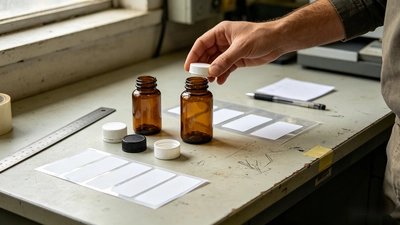
Ask whether the stated minimum applies per:
- formula;
- flavor;
- SKU;
- label version;
- bottle count;
- packaging format.
Unused packaging also needs a clear arrangement.
When 1,000 labels are printed for a 500-bottle order, confirm whether the remaining labels will be stored, how long the factory will keep them, and whether storage or disposal creates an additional charge.
Label printing often becomes the hidden minimum in a small white label project, particularly when one formula is divided across several brand designs.
Dosage form, production equipment, raw-material purchasing, and packaging all affect the final quantity. Our guide to supplement MOQ requirements explains why capsules, gummies, powders, softgels, and liquid products cannot all use the same minimum.
For the current order, the main question is simpler:
Does this MOQ apply to the exact formula, flavor, bottle, and label version in my quotation?
4. Does the Quote Cover the Finished Product?
A bottle price is only useful when you know what has been included.
One supplier may quote a completed product with the supplement, bottle, printed label, testing, and outer carton. Another may quote the formula, filling, and a standard container only.
The second price looks lower because it describes less work.
A simple comparison might look like this:
| Quote item | Included | Needs confirmation |
|---|---|---|
| Formula and filling | ✓ | |
| Bottle and cap | ✓ | |
| Printed labels | ✓ | |
| Label application | ✓ | |
| Finished-product testing | ✓ | |
| Batch COA | ✓ | |
| Outer cartons | ✓ | |
| Freight | ✓ |
The exact items will differ by supplier. The purpose of the table is not to create a universal quotation format. It is to make sure you are comparing the same finished specification.
Packaging is a common source of later price revisions.
A buyer may request “standard packaging,” while the initial quotation assumes a white bottle and a basic paper label. The approved design may later include an amber bottle, metallic label, induction seal, desiccant, and printed carton.
The formula price may remain unchanged. The finished project price will not.
A useful quotation should identify:
- the formula or product version;
- the order quantity;
- the serving count;
- the bottle or pouch specification;
- the label and packing scope;
- the testing and documents included.
Until those points are stated, you are comparing estimates rather than complete commercial offers.
To get a more accurate quote, include these details in your initial inquiry:
- dosage form;
- target formula or catalog product;
- quantity per SKU;
- units per bottle, pouch, or sachet;
- destination market;
- preferred packaging;
- required certifications;
- target delivery date;
- expected sales channel.
For example:
We are looking for an existing magnesium capsule formula for the U.S. market. The target order is 1,000 bottles with 60 capsules per bottle. We prefer a standard white bottle, printed label, batch COA, and export carton packing. Please confirm the formula, MOQ, packaging included, production lead time, and total quotation.
Replace the destination, certifications, packaging, and document requirements with those that apply to your market.
A complete brief does not guarantee that the first number will be the final price. It does allow the manufacturer to identify the production, packaging, testing, and documentation requirements before quoting.
That makes supplier comparisons far more useful.
5. Does the Formula Fit the Destination Market?
The destination market should be confirmed before the formula and label are approved.
It should not appear for the first time on the shipping documents.
Ingredient forms, dosage levels, warning statements, label formats, and permitted claims can differ between markets. The risk is higher for botanicals, high-dose nutrients, children’s products, and formulas built around strong health claims.
For products sold in the United States, the FDA Dietary Supplement Labeling Guide is a useful starting point for understanding the main label elements.
The manufacturer should provide the technical information needed for review, including:
- the full ingredient statement;
- amounts per serving;
- serving size;
- allergen information;
- product specification;
- relevant testing documents;
- applicable factory certificates.
These documents support the review. They do not automatically make one formula suitable for every country.
A careful supplier will ask where the product will be sold before confirming the formula. Be cautious when a manufacturer says a catalog product is suitable for “all markets” without first reviewing the ingredients, dosage, claims, or destination.
The brand owner or importer remains responsible for confirming that the final formula, label, and claims meet the requirements of the intended market.
6. Do the Sample and Documents Match the Proposed Order?
Samples and documents are useful only when you know what they represent.

Know What the Sample Represents
A manufacturer may provide:
- a stock sample from an earlier batch;
- a laboratory sample;
- a pre-production sample;
- a finished-product sample;
- a packaging mockup.
These are not interchangeable.
A stock gummy shows the factory’s general production quality. It does not approve your final flavor, active dose, color, or packaging.
A laboratory sample may demonstrate the intended formula on a small scale, but commercial production can introduce different processing conditions. A digital bottle mockup confirms layout, not the actual label material, print finish, or packaging compatibility.
When approving a sample, record the attributes that matter for the product.
For gummies, that may include flavor, color, size, and texture. For powders, it may include taste, aroma, appearance, and solubility. For capsules, it may include capsule size, shell color, fill appearance, and bottle count.
“Sample approved” is too vague when the final batch is later disputed.
Match the Documents to the Facility and Batch
A GMP logo in a presentation is not enough.
The legal company name, production address, certification scope, and validity should match the facility handling the order. This GMP manufacturer verification guide explains the checks in more detail.
For products intended for the U.S. market, manufacturing, packaging, labeling, and holding operations are covered by 21 CFR Part 111.
Product documents also need to match the order.
A sample COA from a previous batch can show the manufacturer’s normal testing scope. It is not the release document for the product being shipped to you.
Before shipment, confirm that the final COA identifies:
- the finished product;
- the correct batch or lot number;
- the applicable specification;
- the test results;
- the batch being released.
A COA should be reviewed, not simply collected. This supplement COA checklist explains what buyers should check before approving production or shipment.
7. Can the Product Be Repeated on the Next Order?
White label manufacturing is often chosen because it reduces development time. That advantage has little value when the product cannot be reproduced consistently.
Ask about the second order before placing the first.
If your goal is to begin with a smaller production run, our guide to planning a scalable low-MOQ supplement order explains how to simplify the first SKU without creating formula or packaging problems at reorder.
Confirm whether:
- the repeat-order MOQ will remain the same;
- the main ingredients are regularly available;
- ingredient-source changes require approval;
- the same flavor and packaging materials can be reordered;
- unused labels, bottles, or cartons will be stored;
- batch-to-batch variation is defined and controlled.
Natural ingredients can vary slightly in color, odor, and appearance. Gummies and flavored powders may also show small differences between batches.
Some variation is normal. Unrecorded formula or material changes are not.
The manufacturer should be able to identify which formula version, label file, packaging specification, and approved sample belong to the order. When those records are missing, repeat production depends too heavily on memory and informal messages.
At Jiabei Health, our team confirms the formula version, serving count, bottle specification, label quantity, destination market, and required batch documents before preparing a final quotation. These details are also the reference points used when the same product is reordered.
Packaging inventory should be handled with the same care. When the factory stores unused labels or cartons, the brand should know how much remains, how long it will be kept, and what happens when the artwork changes.
A supplier focused only on closing the first order may overlook these questions. A long-term manufacturing partner should be able to answer them clearly.
Before Paying the Deposit
White label works well when an existing formula already fits the product concept and the brand mainly needs a faster route to market. It is often a practical choice for testing demand, entering a familiar product category, or launching without paying for a full formula-development project.
It becomes more restrictive when the formula itself is the main reason customers would choose the product. A brand built around a specific ingredient source, defined dosage, exclusive combination, or unusual delivery format will usually need a semi-custom or fully customized project.
The practical question is what the brand needs to validate first: demand for the product, the market positioning, or the formula itself.
A white label project is ready to move forward when five things are clear:
- the exact formula;
- the customization limits;
- the MOQ calculation;
- the complete quotation scope;
- the sample and documents tied to the order.
When any of those points still depend on assumptions, the project is not ready for payment.
If you already know the product format, formula direction, quantity, destination market, and packaging, you can send Jiabei Health your project brief for an initial review. We will first confirm whether the project fits an existing white label formula, limited customization, or full OEM/ODM development before preparing the quotation.
Frequently Asked Questions
What does a white label supplement manufacturer provide?
A white label supplement manufacturer offers an existing formula that another company can sell under its own brand. Depending on the supplier, the service may include production, filling, standard packaging, printed labels, testing, and batch documents. Buyers should confirm the exact scope because the term “white label” is not used identically by every manufacturer.
Is white label supplement MOQ calculated per product or per SKU?
It may be calculated per formula, flavor, SKU, bottle count, label version, or packaging format. A quoted minimum of 500 bottles does not necessarily mean the quantity can be divided across several flavors or designs. Ask the manufacturer to define what the MOQ covers and whether packaging suppliers have separate minimums.
What should be confirmed before paying a manufacturing deposit?
Confirm the formula, allowed changes, MOQ, packaging specification, quotation scope, sample type, production lead time, testing plan, and batch documents. These details should appear in the quotation, product specification, or order confirmation rather than remaining in informal messages.