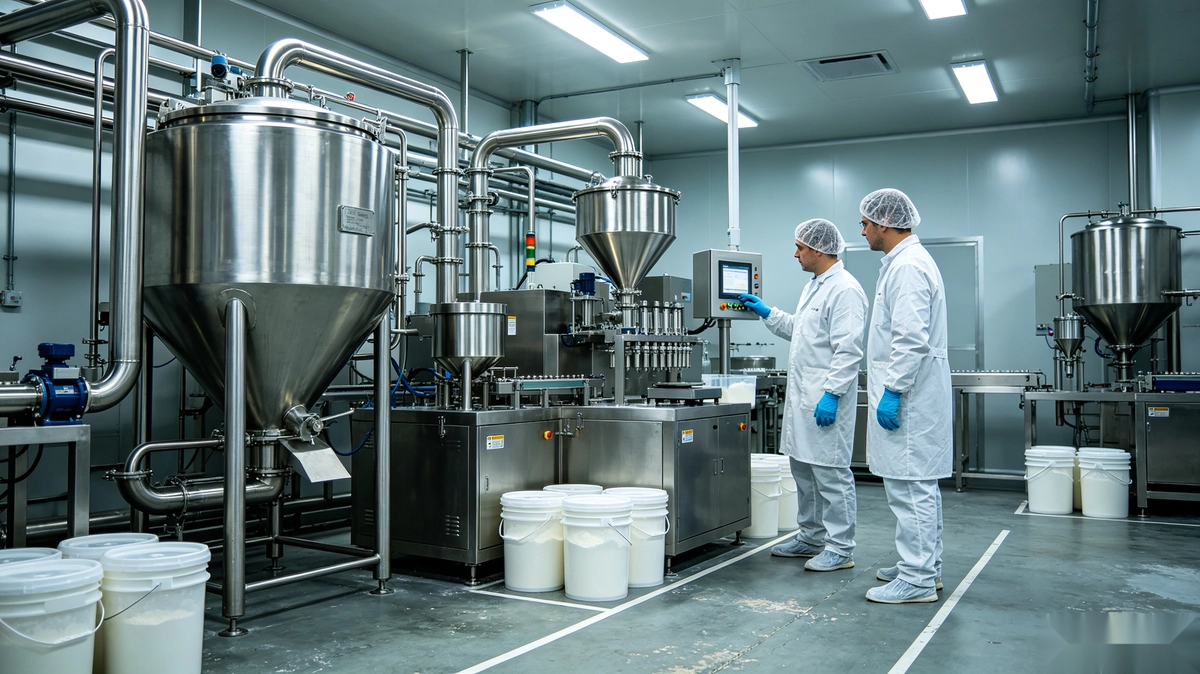
The dietary supplement manufacturing process is often described in simplified steps, but real production inside a factory is rarely linear. Brands and distributors may see a finished bottle or a shipment timeline, yet most manufacturing risk sits in the invisible middle: material control, process stability, documentation discipline, and batch release decisions.
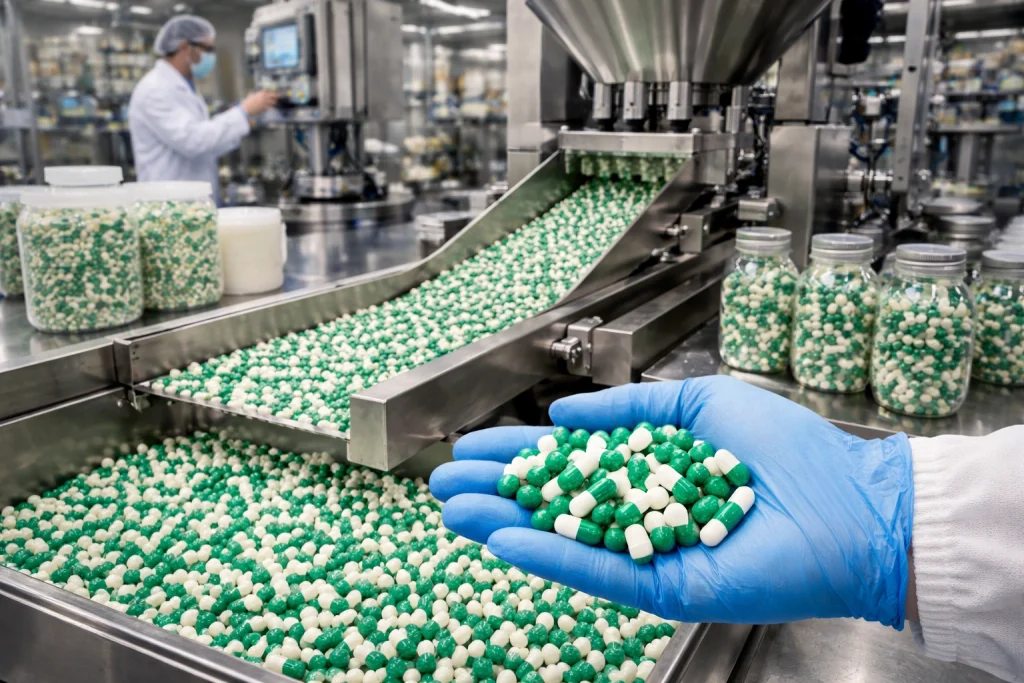
For buyers sourcing private label or contract manufacturing, understanding what actually happens inside a supplement facility is one of the clearest ways to evaluate reliability. This article walks through the real manufacturing sequence—not as a checklist, but as a factory operating system.
What Happens After a Purchase Order Is Confirmed
From a buyer’s perspective, manufacturing starts when an order is placed. Inside the factory, the work begins much earlier than production.
Once a purchase order is confirmed, internal teams lock key variables:
- formulation reference files
- target dosage form requirements
- packaging specifications
- regulatory documentation expectations
At this stage, the manufacturer is not producing anything yet. The priority is alignment—because misalignment here becomes delay, deviation, or inconsistency later.
Brands selling into the U.S. market often begin by clarifying baseline FDA compliance for supplement manufacturing, since compliance expectations shape documentation and release workflows from day one.
Raw Materials Are Not Just Ingredients
Most buyers think of raw materials as “the ingredients list.” Manufacturers treat raw materials as controlled inputs tied to batch identity.
Inside a reliable facility, raw materials are managed through:
- lot-level traceability
- quarantine before approval
- contaminant and microbiological screening
- storage condition control
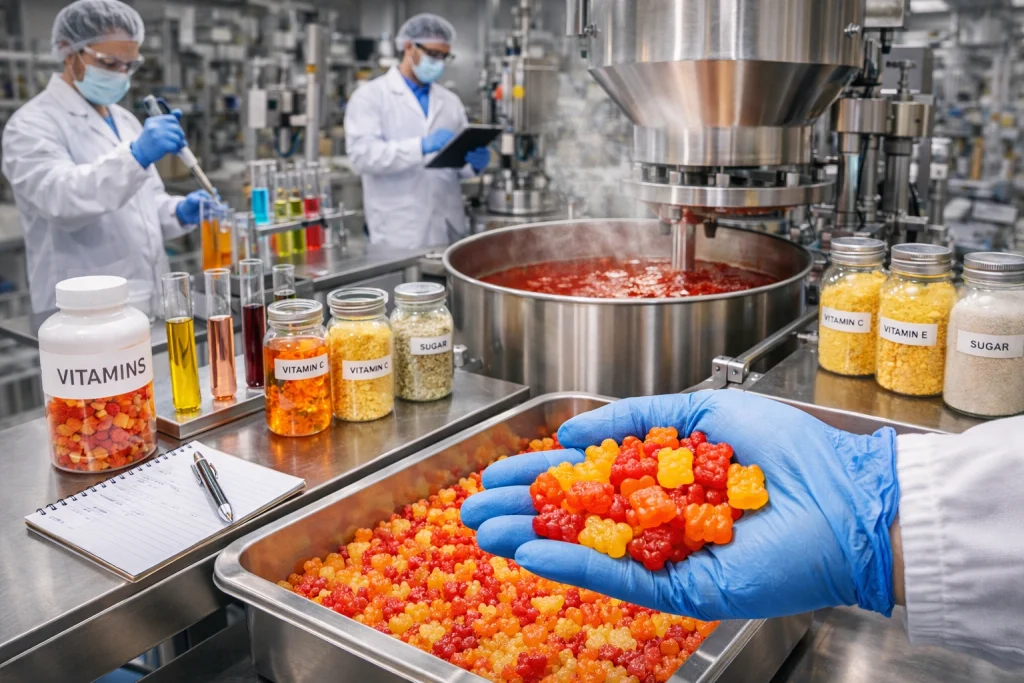
The same ingredient name does not guarantee identical performance. Variations in sourcing, batch age, and handling can influence blend uniformity, capsule flow, gummy texture, or stability outcomes.
This is why experienced manufacturers focus on material discipline before any mixing begins.
The Hidden Stage: Pre-Production Process Locking
One of the least understood parts of the dietary supplement manufacturing process is the step between approved materials and active production.
Before equipment runs, factories establish process control points:
- weighing tolerances
- blending time parameters
- temperature and humidity constraints
- equipment calibration confirmations
This is where manufacturing becomes repeatable. Without this stage, production is only “making a batch,” not manufacturing a consistent product.
For new customers, this stage is also where early variability is most likely to surface, because workflows are still stabilizing.
Production Is Only the Middle of Manufacturing
Actual production—encapsulation, gummy depositing, powder filling, or softgel encapsulation—is often the most visible part of the process. But it is not the defining part.
A facility can run equipment efficiently and still fail on:
- documentation completeness
- batch testing timing
- deviation closure discipline
- release decision controls
Production creates the product. Manufacturing creates the system that allows that product to remain consistent over time.
In-Process Checks Brands Rarely See
During live production, reliable manufacturers monitor more than final appearance. They track process consistency in real time.
Common in-process controls include:
- capsule weight variation monitoring
- gummy moisture and texture checkpoints
- blend uniformity validation
- line clearance between product runs
- packaging accuracy verification
These controls are where quality is protected long before final testing occurs.
Brands touring a factory may see equipment, but they rarely see whether these controls are enforced consistently under schedule pressure.
Batch Testing and Evidence Before Release
No supplement manufacturing process is complete until the batch is verified. Testing is not an optional extra—it is the evidence layer that determines whether products can be released.
This is where a Certificate of Analysis becomes central. A COA is not simply a document; it reflects the manufacturer’s ability to connect production reality with measurable specifications.
Buyers who want deeper clarity on supplement manufacturing with COA should treat batch-level evidence as a core supplier qualification signal.
Batch Release Is the Real Finish Line
From the outside, manufacturing ends when packaging is complete. Inside the factory, manufacturing ends only when the batch is released.
Batch release includes:
- record finalization
- deviation review and closure
- QA sign-off
- documentation readiness for export
- shipment approval
This is the point where operational discipline matters most. Many manufacturing failures are not production failures—they are release failures caused by incomplete evidence, slow corrective actions, or unstable documentation workflows.
Brands evaluating suppliers should always ask: what defines “finished” inside your system?
Why Process Transparency Matters More Than Claims
Brands often compare manufacturers based on surface indicators: catalogs, pricing, facility photos, or certification badges. In reality, reliability comes from process discipline across invisible stages.
Understanding the dietary supplement manufacturing process as an operating system—not a simple sequence—helps buyers choose partners that support long-term stability.
Manufacturing is not just making supplements. It is controlling consistency under real conditions.