Introduction: Why the Market Is Moving Beyond Melatonin
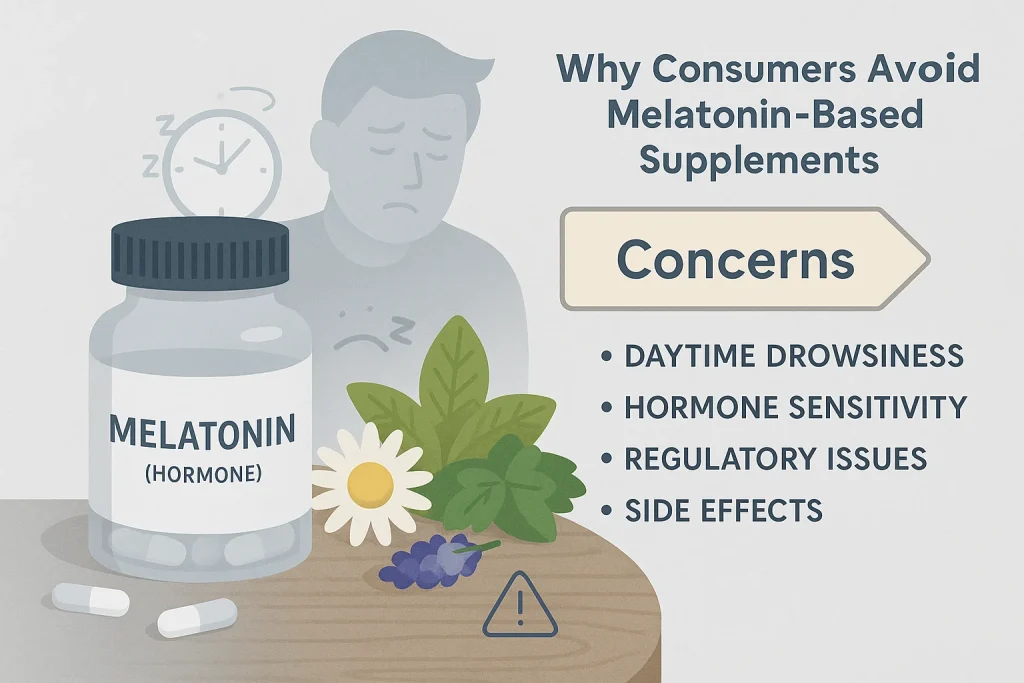
In recent years, the sleep supplement industry has experienced explosive growth, driven by stress, digital lifestyles, and global awareness of sleep health. While melatonin is the most recognized name in the sleep category, there is now a significant shift: more consumers and distributors are actively seeking a sleep supplement without melatonin.
This shift is not a temporary trend. Market research shows that wellness-oriented consumers are increasingly cautious about hormonal ingredients. They want effective, natural alternatives that align with clean-label expectations. For B2B buyers—brand owners, distributors, and e-commerce operators—this creates a timely opportunity to expand into melatonin-free formulations that attract new customer segments while sidestepping regulatory hurdles.
Why Consumers Avoid Melatonin-Based Supplements
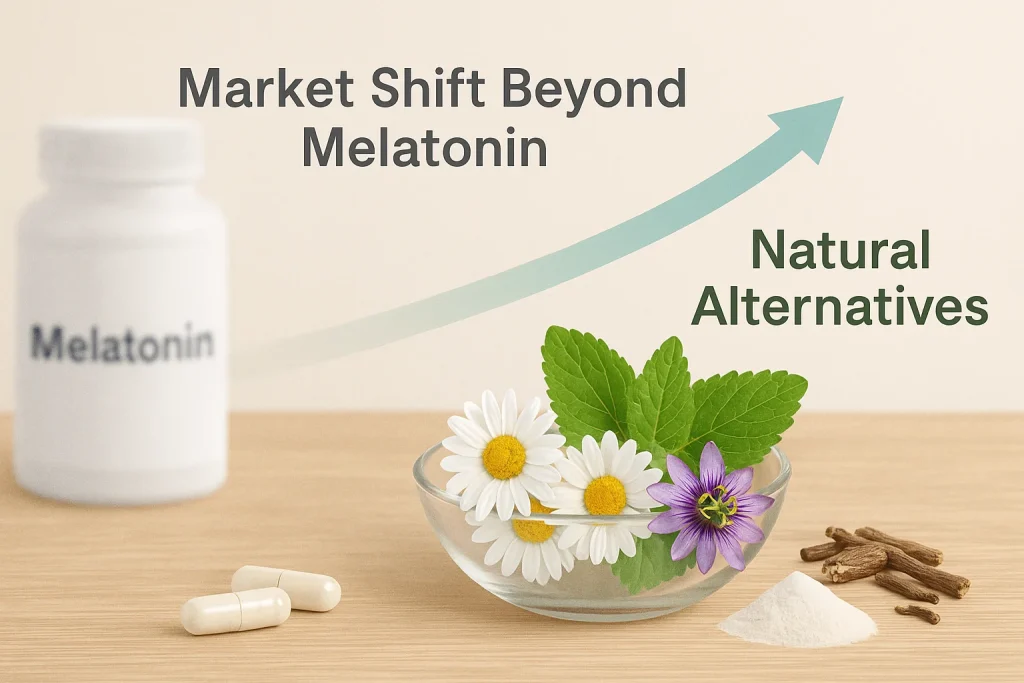
Understanding the demand for melatonin-free products starts with consumer pain points. Here are the main reasons why many people prefer a sleep supplement without melatonin:
- Daytime Drowsiness
Some users experience grogginess the morning after melatonin use, which leads them to abandon these products. - Hormone Concerns
Melatonin is a hormone, and many consumers are wary of long-term hormonal supplementation, particularly women and older adults. - Individual Sensitivity
Reports of vivid dreams, headaches, or irregular sleep cycles after melatonin use push people toward herbal or nutrient-based solutions. - Regulatory Restrictions
In regions like Europe and parts of Asia, melatonin faces strict dosage caps or is classified as a prescription-only ingredient, making it challenging for brands to sell freely. - Lifestyle & Clean Label Preferences
Today’s buyers prefer products that sound natural and familiar—botanicals, minerals, and amino acids—over synthetic or hormone-linked options.
For these reasons, creating a sleep supplement without melatonin allows companies to broaden their reach and gain consumer trust.
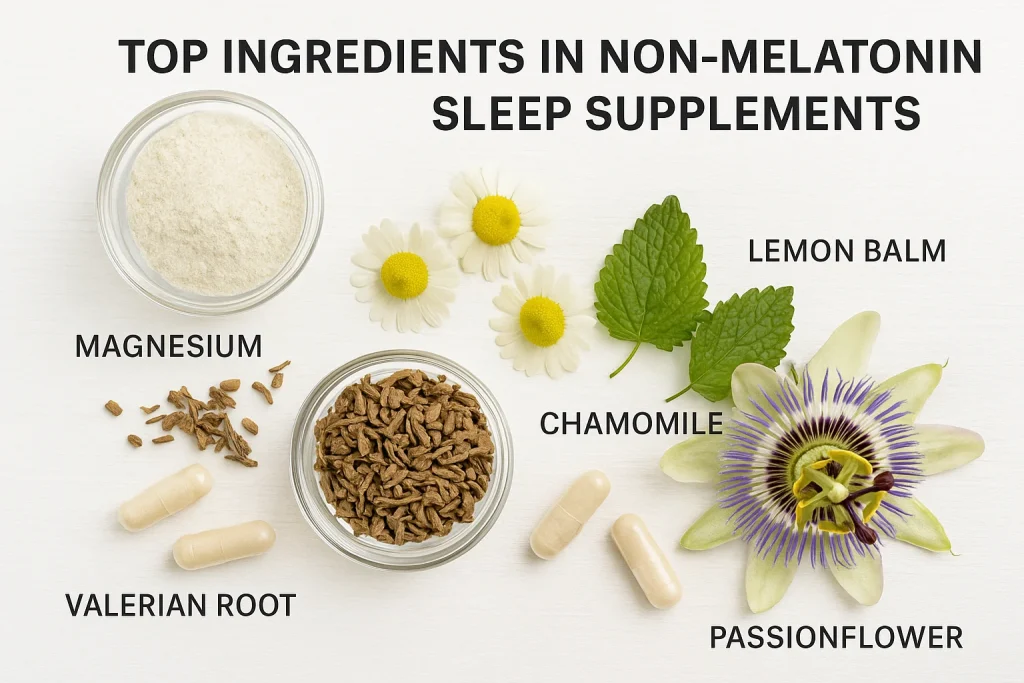
Top Ingredients in Non-Melatonin Sleep Supplements
Magnesium
Magnesium is one of the most researched minerals for relaxation. By regulating neurotransmitters and reducing muscle tension, magnesium supports deep sleep without altering hormone levels. Magnesium glycinate is especially popular due to its gentle effect on digestion.
L-Theanine
Derived from green tea, L-theanine promotes relaxation by increasing alpha brain waves. It does not induce drowsiness, making it suitable for those seeking a calming effect before bedtime.
Valerian Root
A time-tested botanical used in traditional European remedies, valerian root reduces restlessness and helps with sleep onset. It is a natural fit for capsules and teas, and it pairs well with passionflower.
Chamomile
Chamomile’s reputation as a calming herb makes it ideal for sleep gummies and herbal blends. Its familiarity also makes it more marketable in regions where consumers prefer gentle, plant-based remedies.
Lemon Balm & Passionflower
Both herbs support stress relief and mental calmness. Formulators often use them in synergy with magnesium and L-theanine for a balanced formula.
GABA (Gamma-Aminobutyric Acid)
As a neurotransmitter, GABA plays a direct role in calming overactive brain activity. Supplements with GABA are particularly appealing to professionals dealing with high stress and racing thoughts.
Other Botanicals
Ashwagandha, lavender extract, and hops are gaining traction as additional ingredients in melatonin-free sleep aids. Their adaptogenic and calming effects align with the modern wellness trend.
Buyer Advantages: Why B2B Clients Choose Melatonin-Free Sleep Formulas
For B2B buyers, launching sleep supplements without melatonin brings significant business benefits:
- Regulatory Simplicity: Herbal and mineral formulas are easier to register in markets with melatonin restrictions.
- Market Differentiation: Offering an alternative sleep product sets your brand apart in a crowded category.
- Consumer Expansion: Attract customers who previously avoided melatonin-based supplements.
- Flexible Positioning: Market products as “natural,” “botanical,” or “non-hormonal,” appealing to diverse consumer groups.
- Cross-Demographic Appeal: Safe for adults, seniors, and even young adults sensitive to hormones.
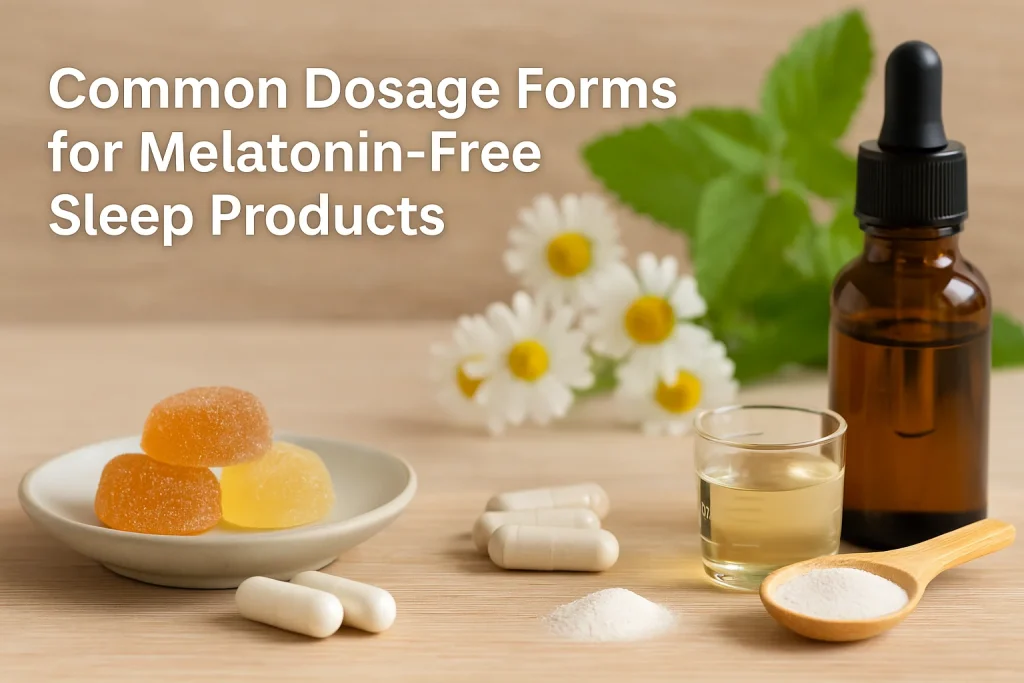
Common Dosage Forms for Melatonin-Free Sleep Products
- Gummies
- Highly popular among millennials and Gen Z.
- Fun and flavorful, making herbal sleep support accessible.
- Capsules
- Classic, widely accepted format.
- Easy to integrate multiple ingredients like valerian, GABA, and L-theanine.
- Powders & Sachets
- Perfect for functional “nighttime drinks.”
- Convenient for travel and online sales packaging.
- Drops & Liquids
- Fast absorption.
- Marketed as holistic or natural remedies, ideal for herbal brands.
Procurement Pain Points and How OEM Solutions Help
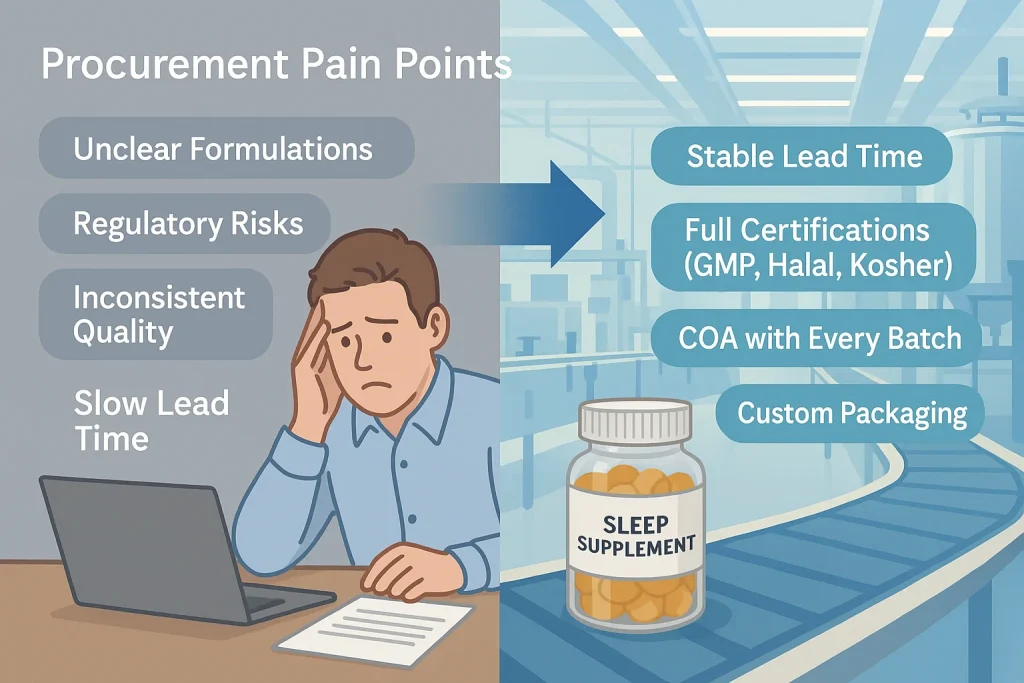
When sourcing a sleep supplement without melatonin, buyers often face these challenges:
- Unclear formulations: Many suppliers offer generic blends without transparency on ingredients or dosages.
- Regulatory risks: Incorrect labeling or non-compliant claims can block customs clearance.
- Inconsistent quality: Without robust COA and batch testing, product stability and safety are uncertain.
- Limited customization: Some factories only provide standard formulas, restricting brand differentiation.
- Slow lead times: In the competitive sleep market, delays mean lost opportunities.
At Jiabei Health, our OEM/ODM system addresses these issues:
- Stable production lead time: 15 days for standard orders, with urgent projects available.
- Regulatory documentation: FDA registration number, Certificate of Origin, and Free Sale Certificates provided.
- Global certifications: GMP, BRC, HACCP, FSSC22000, Halal, and Kosher.
- COA with every batch: Guaranteeing ingredient safety and accuracy.
- Flexible formulation services: R&D team can develop proprietary blends tailored to your brand.
- Custom packaging: From bottles to pouches, we design packaging aligned with your branding.
Case Example: How a Distributor Expanded with Melatonin-Free Formulas
A European distributor approached Jiabei Health with concerns about regulatory limitations on melatonin. We reformulated their sleep product line using L-theanine, magnesium, and passionflower extract. Within six months:
- The distributor entered two new retail chains where melatonin products were not accepted.
- Their melatonin-free gummies gained strong repeat orders due to customer trust.
- They successfully launched on online marketplaces with compliance documents ready for approval.
This case highlights how OEM melatonin-free products can transform limitations into new revenue channels.
Strategic Positioning for Online Marketing
When optimizing for B2B sales and brand visibility, use specific long-tail keywords that match buyer intent:
- “Sleep supplement without melatonin OEM”
- “Private label herbal sleep aid”
- “Non-melatonin sleep gummies manufacturer”
- “Magnesium sleep capsules wholesale”
By embedding these in your website, product listings, and blog content, you improve ranking for purchase-driven queries rather than broad, competitive keywords.
Frequently Asked Questions (FAQ)
Q1: Are melatonin-free sleep supplements effective?
Yes. Ingredients like magnesium, valerian, and L-theanine have clinical research supporting relaxation and improved sleep quality. They are effective without altering hormone balance.
Q2: Which format sells best—gummies, capsules, or powders?
It depends on your target market. Gummies are trending globally for younger demographics, while capsules are trusted in traditional retail. Powders are gaining traction in wellness e-commerce channels.
Q3: What certifications do your products carry?
Every batch is produced under GMP, BRC, HACCP, FSSC22000, Halal, and Kosher standards. A Certificate of Analysis (COA) is provided with each order.
Q4: Can you help with custom branding and packaging?
Yes. Our OEM/ODM services include full packaging customization—from bottle design to label compliance—ensuring your brand stands out in the market.
Q5: How fast can I receive my order?
Standard orders are ready in 15 days. For urgent projects, we offer expedited production with global DDP logistics support.
Conclusion
The shift toward sleep supplements without melatonin reflects a long-term change in consumer expectations for natural, safe, and hormone-free solutions. For B2B buyers, investing in this category is not only a smart regulatory decision but also a growth strategy that captures untapped markets.
By partnering with a GMP-certified OEM manufacturer like Jiabei Health, you gain access to advanced formulations, full compliance documentation, and end-to-end logistics support. Whether you need herbal sleep gummies, magnesium capsules, or calming nighttime powders, melatonin-free sleep solutions can give your brand a competitive advantage in the global supplement market.