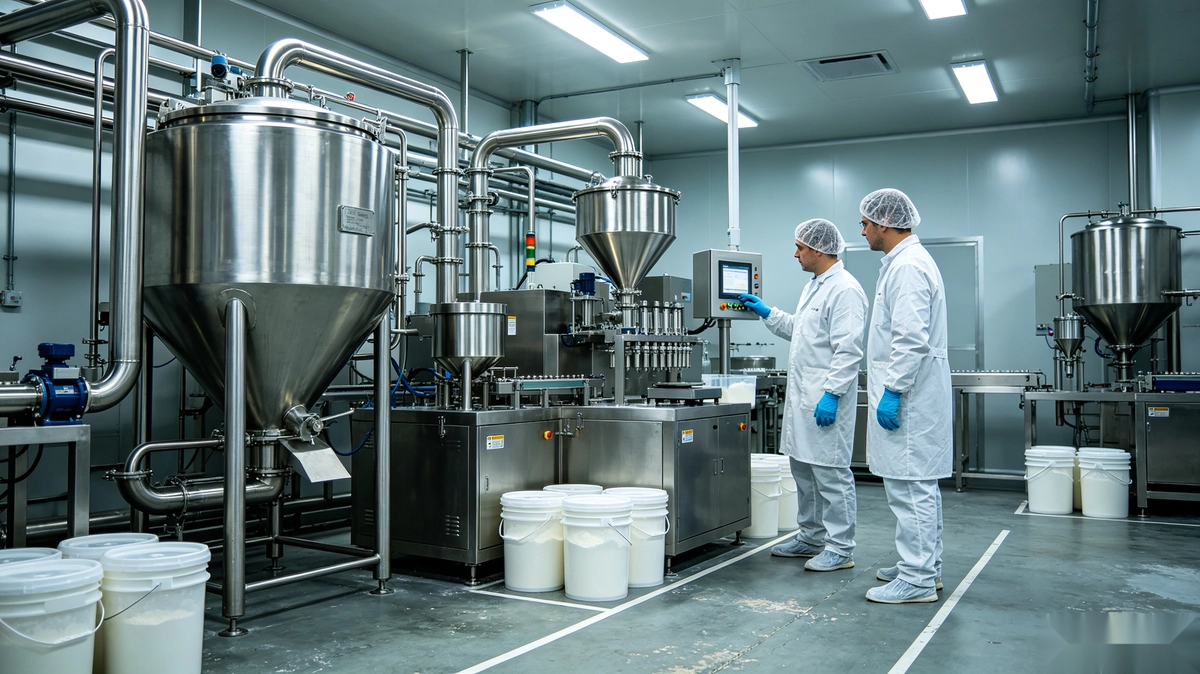
Choosing a private label supplement manufacturer is one of the most important decisions for any brand entering or scaling in the dietary supplement market. While pricing and product catalogs are easy to compare, long-term reliability depends on deeper operational factors: quality systems, documentation discipline, production consistency, and the manufacturer’s ability to support your business as volumes grow.
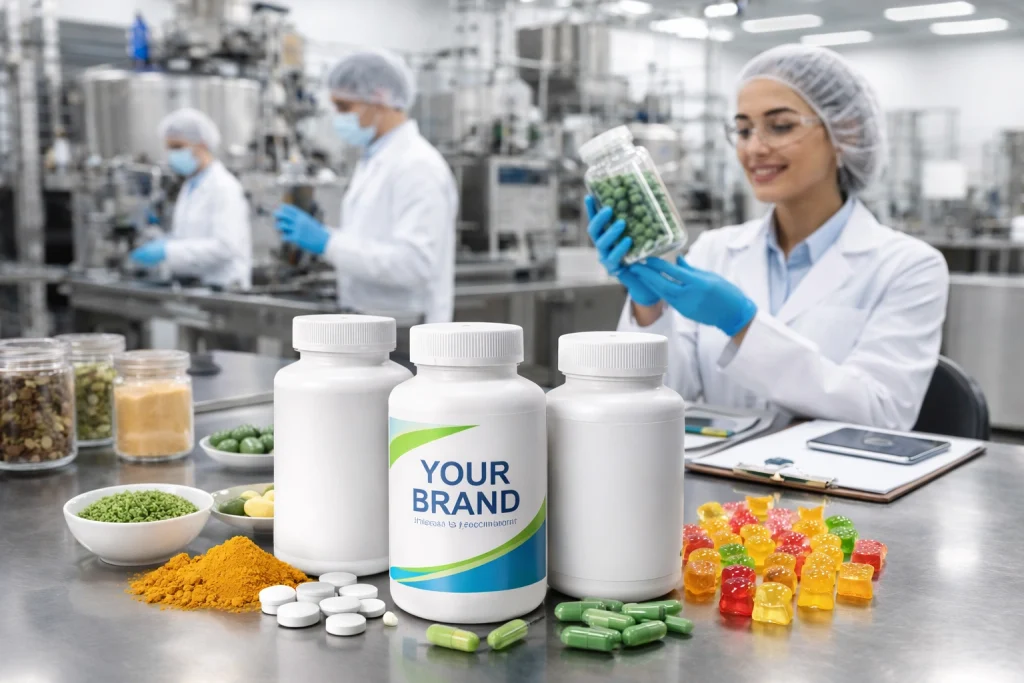
For distributors, established brands switching suppliers, or companies launching new formulations, selecting the right manufacturing partner is less about finding the cheapest factory and more about reducing risk across supply, compliance, and execution.
This guide outlines how to evaluate a private label supplement manufacturer in a way that aligns with real B2B purchasing priorities.
1. Start With Regulatory and Market Fit
A reliable private label supplement manufacturer must demonstrate that it understands the regulatory expectations of your target market. Requirements differ between the United States, the EU, Southeast Asia, and the Middle East.
At a minimum, brands should confirm that the facility operates under recognized manufacturing standards and can provide the documentation needed for import clearance, retailer onboarding, and customer trust.
Many buyers also misunderstand what regulatory compliance actually means in practice, so it is critical to confirm not just certificates, but also how compliance is executed in daily production. Brands selling into the U.S. market should review the basics of FDA compliance for supplement manufacturing before selecting a long-term supplier.
2. Verify Manufacturing Consistency, Not Just Capability
Most manufacturers can produce supplements. The difference lies in consistency.
A capable factory may produce an excellent sample batch, but reliability is proven through repeatable production outcomes across multiple runs. Brands should ask how batch records are controlled, how deviations are handled, and what internal release standards exist before products leave the facility.
Quality is not defined by marketing claims. It is defined by process discipline.
3. Demand Batch-Level Evidence Through COA Systems
Serious buyers evaluate supplement manufacturers based on testing transparency. A Certificate of Analysis (COA) is not simply a formality—it is the evidence layer that confirms identity, purity, potency, and contaminant controls at the batch level.
Manufacturers that cannot consistently provide COAs, specification sheets, and traceable testing workflows introduce serious risk for brands selling into regulated or premium markets. A clear explanation of supplement manufacturing with COA helps buyers understand what batch-level evidence should look like during supplier evaluation.
4. Evaluate Certifications as Systems, Not Badges
Certifications such as GMP, HACCP, or food safety frameworks matter—but only when they reflect operational reality. Brands should understand what each certification covers, what it does not cover, and how it connects to actual production control.
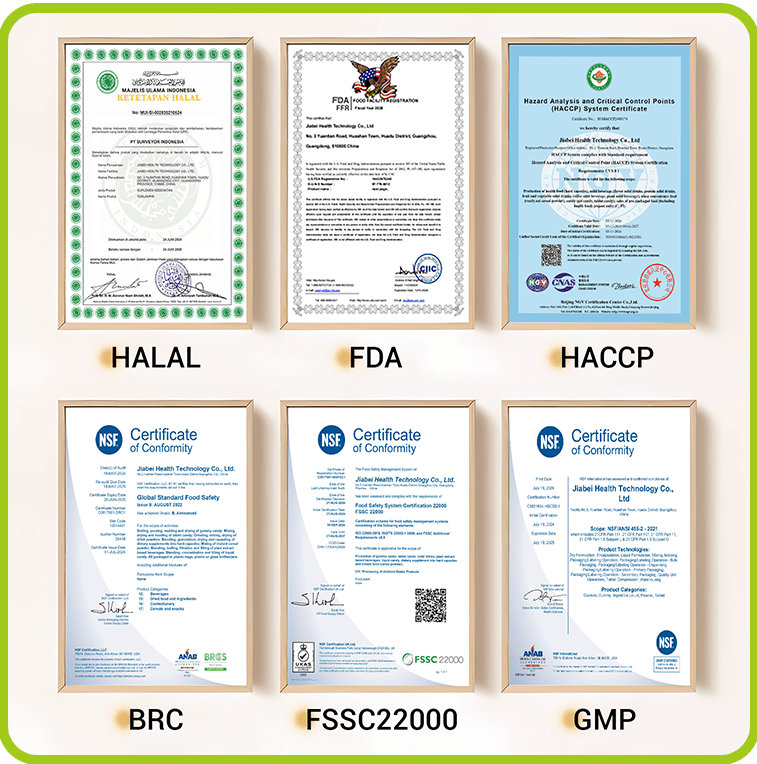
Certifications such as GMP, HACCP, or food safety frameworks matter—but only when they reflect operational reality. Buyers who want a complete view of how these systems fit together should refer to our supplement manufacturer certifications overview when comparing qualified factories.
5. Review Lead Time Structure and Capacity Allocation
Lead times are one of the most misunderstood parts of supplement manufacturing. Many factories quote similar timelines, but those numbers often reflect ideal scheduling assumptions rather than real operational conditions.
Brands should ask how production is prioritized, what happens during peak demand, and whether new customers receive stable scheduling support or are placed behind existing long-term accounts.
Brands should ask how production is prioritized, what happens during peak demand, and whether new customers receive stable scheduling support or are placed behind existing long-term accounts. This is why changing supplement manufacturers often breaks lead time commitments, even when quoted timelines look similar at the start.
6. Assess First-Order Risk and Onboarding Discipline
The first production order is the highest-risk phase of any supplier relationship. Process variability, raw material differences, and documentation gaps are most likely to surface during initial onboarding.
The first production order is the highest-risk phase of any supplier relationship. Process variability, raw material differences, and documentation gaps are most likely to surface early. Brands should understand why first orders with a new supplement manufacturer often fail quality expectations before scaling production too quickly.
7. Confirm Packaging, Labeling, and Export Support
A private label supplement manufacturer must support more than production. Packaging execution, labeling compliance, carton specifications, and export documentation often determine whether shipments clear customs smoothly.
Brands should confirm that the manufacturer can support private label packaging, multilingual labels, and documentation such as Certificates of Free Sale or origin files where required.
Operational support is often the difference between a factory that produces supplements and a partner that enables global expansion.
8. Choose a Partner, Not a Vendor
The most reliable private label supplement manufacturers operate as long-term partners. They provide stable production planning, transparent quality documentation, and scalable systems that reduce operational burden for brands.
Choosing the right manufacturer is ultimately about building supply stability, not completing a one-time transaction.
Brands that evaluate suppliers through a structured lens—compliance, evidence, execution, and continuity—gain a competitive advantage that extends far beyond unit cost.
Conclusion
For brands comparing different partnership models, understanding the differences between OEM vs ODM supplement manufacturing can also clarify what level of formulation control and customization to expect.
Selecting a private label supplement manufacturer is one of the highest-impact decisions for any supplement business. The right partner supports not only product creation, but also regulatory alignment, batch-level quality assurance, stable lead times, and long-term scalability.
By focusing on systems rather than surface-level claims, brands can choose manufacturers that reduce risk and strengthen supply confidence over time.
FAQ
Question: What should brands look for in a private label supplement manufacturer?
Answer: Brands should evaluate a private label supplement manufacturer based on regulatory compliance, batch-level quality documentation, production consistency, lead time reliability, and the ability to support packaging, labeling, and export requirements. The most reliable manufacturers operate with transparent systems rather than surface-level claims.
Question: Is GMP certification enough to choose a supplement manufacturer?
Answer: GMP certification is important, but it is not sufficient on its own. Certifications indicate that systems exist, but brands should also verify how those systems are executed in daily production, including batch records, deviation handling, and consistent quality release processes.
Question: Why is a Certificate of Analysis (COA) important in private label supplement manufacturing?
Answer: A Certificate of Analysis confirms identity, purity, potency, and contaminant controls for each production batch. COA systems provide the evidence layer that brands need for quality assurance, regulatory alignment, and distributor or retailer trust.
Question: What are the biggest risks when switching supplement manufacturers?
Answer: The biggest risks when switching supplement manufacturers include unstable lead times, first-order quality variability, documentation gaps, and misaligned production priorities. Brands can reduce these risks by evaluating onboarding discipline and operational execution before scaling production.